
The Slippery Science of Very Cold Ice
When one thinks of ice, the mind often conjures images of a frozen solid, a rigid structure that offers a stable surface. This perception holds true for the ice we encounter in everyday life – the ice cubes in a drink, the frost on a windowpane, or the frozen surface of a pond in winter. However, as temperatures plummet to extreme lows, the behavior of ice undergoes a dramatic and counterintuitive transformation, revealing a far more complex and slippery science. The study of ice at these frigid extremes, particularly as it approaches absolute zero, unveils phenomena that challenge our fundamental understanding of matter and its interactions.
The seemingly simple act of sliding on ice, a common experience, becomes a nuanced scientific puzzle when considering extremely low temperatures. What makes ice slippery is not a simple layer of liquid water, as is often assumed, but a far more intricate interplay of pressure, friction, and molecular dynamics. At typical freezing temperatures, the pressure exerted by an object, like a skate blade, slightly melts the ice beneath it, creating a thin lubricating film. But as the temperature drops, this mechanism becomes less effective. Instead, other forces come into play, revealing a fascinating and sometimes perplexing slipperiness that scientists continue to unravel.
The journey into the frigid realm of ice physics is one of scientific curiosity and technological innovation. Researchers, armed with sophisticated equipment and theoretical models, delve into the microscopic world of water molecules, exploring their arrangements and interactions at temperatures that would freeze conventional experiments solid. This exploration has not only deepened our understanding of ice itself but has also shed light on broader principles of condensed matter physics, materials science, and even planetary science, as understanding super-cold ice is crucial for comprehending the icy moons and comets within our solar system.
At its core, the slipperiness of ice, especially at very cold temperatures, is deeply rooted in its crystalline structure and the various phases it can adopt. While most people are familiar with “normal” ice, known as Ice Ih, the pressure and temperature conditions can force water molecules into a dizzying array of configurations. Understanding these different forms is paramount to grasping the unusual properties that emerge at the extreme cold.
The Ubiquitous Ice Ih
The hexagonal crystalline structure of Ice Ih is the most common form of ice found on Earth. In this structure, each water molecule is tetrahedrally bonded to four neighboring water molecules via hydrogen bonds. These bonds are strong enough to maintain a rigid lattice at typical freezing points. However, the arrangement of these hydrogen bonds is not perfectly ordered, leading to the presence of “proton disorder,” where the protons can shift between different positions within the bonds. This proton disorder is a key factor that contributes to certain properties of ice, though its direct role in slipperiness at extreme cold is complex.
Beyond Ih: High-Pressure and Low-Temperature Polymorphs
As pressure and temperature change, water can solidify into numerous other crystalline forms, known as polymorphs. At very low temperatures, even at atmospheric pressure, scientists have discovered various metastable phases of ice. These include amorphous ices, where the water molecules lack long-range crystalline order, and other crystalline structures like Ice Ic (cubic), Ice II, Ice III, and many more, each with distinct arrangements of hydrogen bonds and molecular packing. The discovery and characterization of these exotic ice phases have dramatically expanded our understanding of the phase diagram of water, revealing that it is far more complex than previously imagined.
The Role of Hydrogen Bonds
Hydrogen bonds are the invisible glue that holds ice together. They are formed between the slightly positive hydrogen atoms of one water molecule and the slightly negative oxygen atom of another. At very low temperatures, these bonds become even more rigid and ordered, but their inherent flexibility still plays a crucial role. The collective behavior of these hydrogen bonds, their ability to stretch, bend, and even break and reform under specific conditions, dictates the macroscopic properties of ice, including its slipperiness.
The phenomenon of very cold ice being slippery can be attributed to the thin layer of water that forms on its surface, which reduces friction. This intriguing property is explored in detail in the article “The Science Behind Slippery Ice,” where various scientific principles are discussed to explain why ice behaves this way. For more information, you can read the article here: The Science Behind Slippery Ice.
The Slipperiness Puzzle: Challenging Conventional Wisdom
The common explanation for ice slipperiness – a thin layer of liquid water due to pressure – starts to falter as temperatures plunge far below freezing. At extremely low temperatures, the latent heat required to melt ice becomes significantly higher, and the equilibrium vapor pressure of water drops drastically. Therefore, simple pressure-induced melting becomes less plausible as the sole or primary mechanism for lubrication.
Pressure Melting: A Limited Role at Extreme Cold
While pressure does lower the melting point of ice, the effect diminishes at very low temperatures. For ice to melt significantly under the pressure of a skate blade at, say, -50°C, the melting point would need to be pushed down to extremely low values. This requires immense pressure, far exceeding what a typical skate or a falling object would exert. Therefore, while pressure melting might contribute at the very edge of frigid temperatures, it cannot fully explain the observed slipperiness at the extreme cold.
The Frictionless Frontier: A Misconception?
The idea of frictionless sliding on ice is a captivating one, but the reality is more nuanced. Even at extremely low temperatures, some form of friction is always present, though its nature and magnitude change dramatically. Scientists are actively investigating the origins of this reduced friction, and the answer is not as simple as a complete absence of resistance.
Surface Effects Dominate: The Microscopic Landscape
At very cold temperatures, the behavior of the ice surface becomes critical. Imperfections, impurities, and the very arrangement of molecules at the interface between the ice and another object are the primary drivers of slipperiness. This is where the science truly gets slippery, as these microscopic features dictate macroscopic motion.
Quantum Effects and the Enigmatic Surface Layer
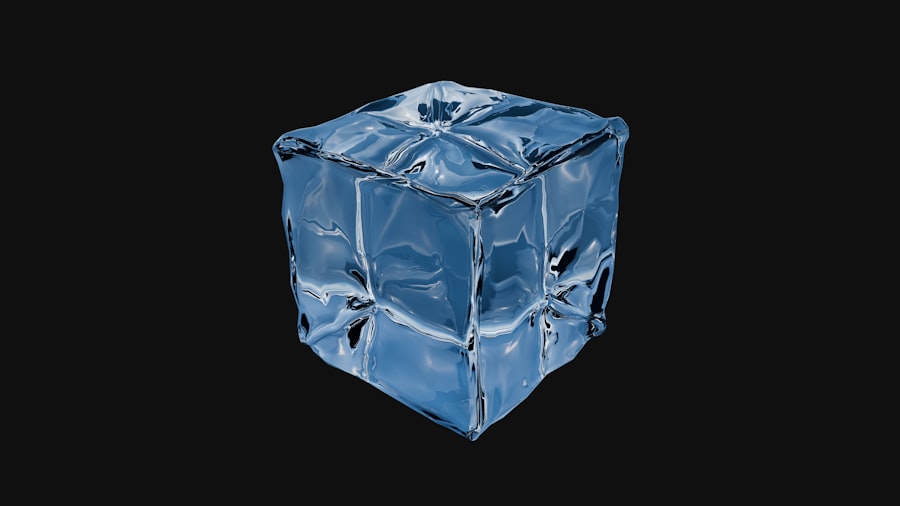
As temperatures approach absolute zero, the quantum mechanical nature of water molecules becomes increasingly significant. These quantum effects, combined with the specific properties of the ice surface, contribute to its surprising slipperiness.
Phonons: Vibrations in the Ice Lattice
Even at extremely low temperatures, ice molecules are not perfectly still. They vibrate within their lattice structure. These vibrations, quantized as phonons, can interact with objects sliding across the surface. The way these phonons propagate and scatter can influence the frictional force. At very low temperatures, the behavior of phonons can lead to reduced energy transfer from the sliding object to the ice, thus decreasing friction.
Tunneling and Quantum Delocalization
At extremely low temperatures, molecules can exhibit quantum mechanical tunneling, where they can pass through energy barriers that they classically could not surmount. While not directly causing slipperiness, this quantum delocalization of molecules within the hydrogen bond network might subtly alter the surface’s interaction with external objects. The probabilistic nature of quantum mechanics starts to play a role in the dynamics of the surface layer.
Electron Interactions at the Interface
The interaction of electrons at the interface between the sliding object and the ice surface also contributes to friction. At very low temperatures, the electrical conductivity of ice can change, and the way electrons are exchanged or repelled can influence the frictional force. This is an area of active research, with some theories suggesting that specific electron interactions could lead to a reduction in drag.
Amorphous Ice and its Slippery Secrets
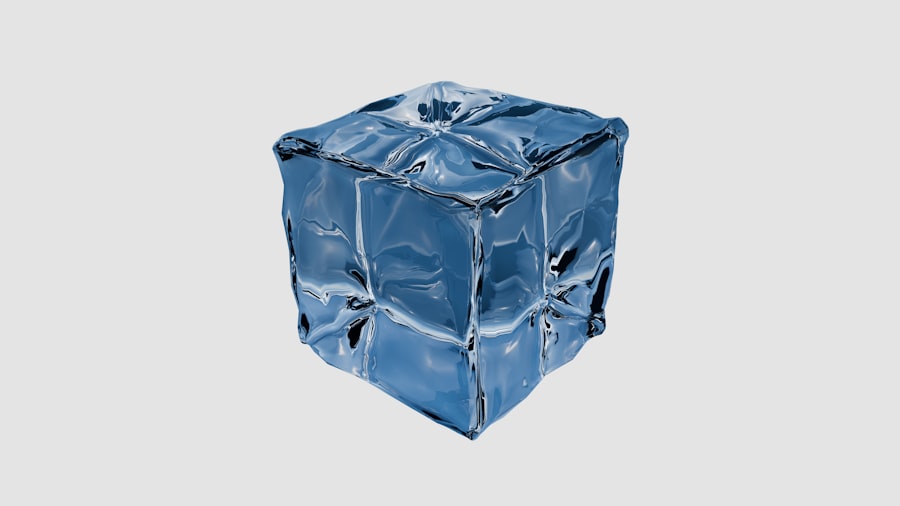
One of the most fascinating aspects of very cold ice is the prevalence and unusual properties of amorphous ice. Unlike crystalline ice, amorphous ice lacks a regular, ordered structure, and it exists in various forms depending on the conditions under which it is formed.
Formation of Amorphous Ice
Amorphous ices are typically formed by rapidly cooling water vapor onto a very cold substrate, preventing the water molecules from arranging themselves into a crystalline lattice. This rapid quenching freezes the molecules in a disordered state. Different cooling rates and pressures can lead to different densities and structures of amorphous ice, each with unique properties.
Low-Density Amorphous Ice (LDA) and High-Density Amorphous Ice (HDA)
Two prominent forms of amorphous ice are low-density amorphous ice (LDA) and high-density amorphous ice (HDA). LDA has a structure similar to that of normal crystalline ice but without the long-range order. HDA, on the other hand, is more densely packed, with molecules closer together. The transition between LDA and HDA can occur under pressure and temperature changes, and it is accompanied by significant changes in their properties.
The “Supercooled Liquid” Analogy and Slipperiness
While amorphous ice is solid, its disordered nature has led to analogies with supercooled liquids. In a supercooled liquid, the molecules are still in motion, albeit restricted. Some researchers propose that the surface of amorphous ice might exhibit a highly mobile layer of molecules, akin to a very viscous liquid, which facilitates sliding. This mobility could be due to the absence of strong, directional hydrogen bonds that characterize crystalline ice.
The Role of Defects in Amorphous Ice
The disordered nature of amorphous ice implies the presence of numerous defects, such as vacancies and interstitials. These defects can act as “soft spots” or points of weakness on the surface, allowing for easier deformation and sliding when an object is pressed against it. The collective movement of these defects could contribute to the observed slipperiness.
The phenomenon of very cold ice being slippery can be attributed to a thin layer of water that forms on its surface, which reduces friction. This interesting property of ice is explored in more detail in a related article that discusses the science behind slippery surfaces and the conditions that contribute to this effect. For those curious about the intricate workings of ice and its behavior, you can read more in this informative piece on Freaky Science. Understanding these principles not only sheds light on winter sports but also on various natural processes involving ice.
Applications and Future Directions in Extreme Ice Research
| Reasons why very cold ice is slippery |
|---|
| 1. Thin layer of liquid water on the surface due to pressure |
| 2. Reduced friction between the ice and other surfaces |
| 3. Molecules in the ice are less tightly bound at very cold temperatures |
| 4. Ice crystals can break and create a smooth surface |
The study of very cold, slippery ice is not merely an academic pursuit. It holds significant implications for various fields, from planetary science to the development of new materials and technologies.
Understanding Icy Worlds in Our Solar System
Many moons and comets in our solar system are composed of ice at extremely low temperatures. Understanding the behavior of this super-cold ice is crucial for missions exploring these celestial bodies. For instance, the rheology of icy moons like Europa or Enceladus, which are thought to harbor subsurface oceans, is heavily influenced by the properties of their icy shells under immense pressure and frigid temperatures.
Tribology at Cryogenic Temperatures
Tribology is the science of friction, wear, and lubrication. The research into the slipperiness of very cold ice contributes to the broader field of cryogenic tribology. This knowledge is vital for designing and operating equipment that functions in extremely cold environments, such as in space missions, for cryogenics in laboratories, and for advanced refrigeration systems.
Materials Science and Novel Lubricants
The principles learned from studying the slippery nature of cold ice could inspire the development of novel materials with tailored frictional properties. Researchers are exploring ways to create surfaces that are inherently slippery or that exhibit controlled friction at extreme temperatures. This could lead to advancements in areas like ultra-low friction coatings and self-lubricating materials.
The Future of Water Ice Research
The ongoing exploration of water’s phase diagram at extreme conditions continues to surprise scientists. New phases of ice are still being discovered, and their properties are being meticulously investigated. The “slippery science” of very cold ice is a testament to the fact that even seemingly simple substances like water can exhibit profound complexity when pushed to their limits. Future research will likely focus on:
- Advanced Spectroscopic Techniques: Employing cutting-edge spectroscopy to probe the molecular dynamics and vibrational modes at the ice surface at ultra-low temperatures.
- Molecular Dynamics Simulations: Utilizing powerful computational tools to simulate the behavior of water molecules under extreme conditions and to understand the microscopic origins of slipperiness.
- Experimental Cryogenics: Developing more sophisticated experimental setups capable of reaching and precisely controlling temperatures closer to absolute zero, allowing for more detailed investigations.
- Interface Phenomena: Concentrating on the intricate interactions at the interface between different materials and extremely cold ice, as this is where the most dramatic and intriguing phenomena occur.
In conclusion, the slippery nature of very cold ice is a captivating scientific enigma that challenges our everyday intuitions. It is a realm where quantum mechanics, surface physics, and the complex hydrogen bonding network of water molecules converge to create a phenomenon that is far more intricate than a simple layer of meltwater. As scientists continue to push the boundaries of temperature and pressure, the secrets of this frigid frontier will undoubtedly continue to unfold, revealing even more about the fundamental nature of matter and the universe around us. The journey into the slippery science of very cold ice is far from over; it is a continuing exploration into one of nature’s most surprisingly slippery phenomena.

Why Ice Is Slippery Is Stranger Than You Think
FAQs
1. Why is very cold ice slippery?
Very cold ice is slippery because the pressure from an object’s weight causes a thin layer of the ice to melt, creating a slippery surface.
2. What is the science behind the slipperiness of very cold ice?
The slipperiness of very cold ice is due to a phenomenon called “pressure melting,” where the pressure from an object’s weight lowers the melting point of the ice, causing it to briefly melt and create a thin layer of water on the surface.
3. Does the slipperiness of very cold ice differ from that of warmer ice?
Yes, the slipperiness of very cold ice is different from that of warmer ice. Very cold ice is more slippery because the pressure from an object’s weight causes it to melt more readily, creating a thinner layer of water on the surface.
4. Can very cold ice be made less slippery?
Very cold ice can be made less slippery by adding substances such as sand, salt, or gravel to increase traction and reduce the risk of slipping.
5. Are there any safety precautions to take when walking on very cold ice?
When walking on very cold ice, it is important to wear appropriate footwear with good traction, take slow and deliberate steps, and be cautious of areas with potential ice melt or refreeze.