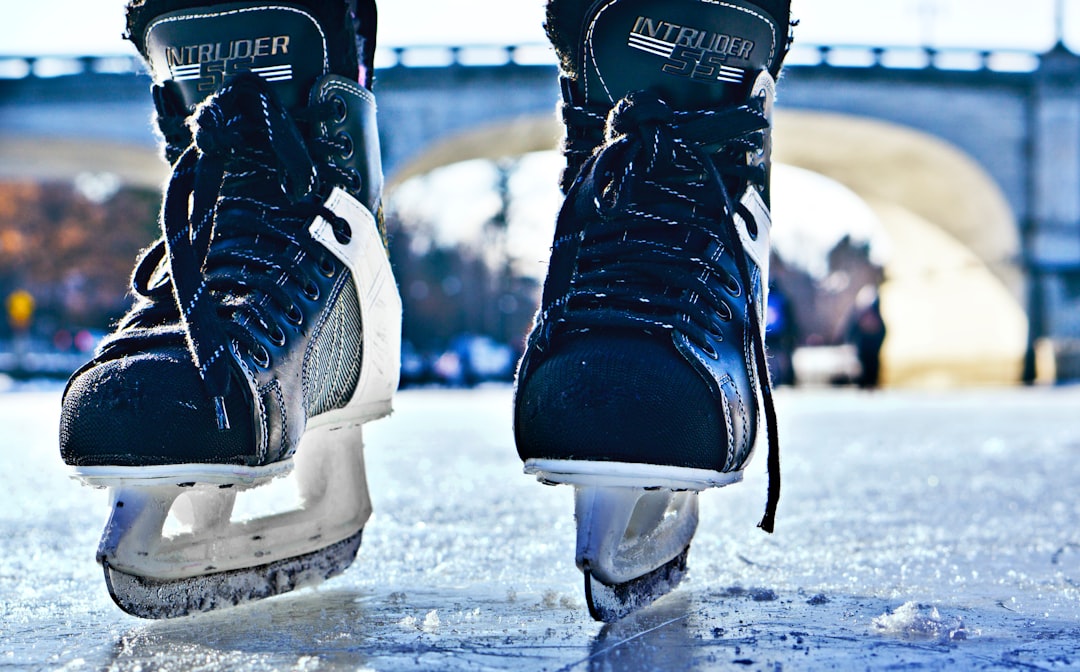
The grace and seemingly effortless glide of an ice skater are a testament to the elegant interplay of fundamental physics principles. Far from being a mere act of balancing, ice skating is a sophisticated dance with friction and momentum, where understanding these forces allows athletes to achieve speeds and perform maneuvers that captivate audiences. The smooth, frictionless surface of ice, a common misconception, is in fact a crucial element in this delicate balance, and it’s the intelligent manipulation of momentum that propels skaters forward and allows them to execute breathtaking turns and jumps.
The image of a perfectly slick ice surface, devoid of resistance, is an appealing one, conjuring images of perpetual motion. However, the reality of ice skating physics reveals a more nuanced and fascinating truth. While ice is significantly less frictional than many other surfaces, it is far from frictionless. The interaction between the skate blade and the ice is a complex phenomenon driven by a combination of factors, all contributing to the surprisingly low coefficient of friction that makes skating possible.
The Role of Pressure and Melting
One of the most significant contributors to the slipperiness of ice is the concept of pressure-induced melting. When a skater applies pressure through the thin blade of their skate, the ice directly beneath the blade experiences a localized increase in pressure. According to the Clausius-Clapeyron relation, which describes the relationship between pressure and temperature for a phase transition, increasing pressure lowers the melting point of ice.
The Science of Pressure Melting
The sharp edge of an ice skate blade, typically measuring less than a millimeter in thickness, concentrates the skater’s weight onto a very small surface area. This concentrated force dramatically increases the pressure exerted on the ice. For typical human weights and skate blade dimensions, this pressure can be sufficient to lower the melting point of ice by several degrees Celsius. The immediate consequence is that a thin layer of water forms between the blade and the ice. This thin film of liquid acts as a lubricant, significantly reducing the frictional forces that would otherwise impede the skater’s motion. It’s this microscopic layer of water that gives ice its characteristic “slippery” feel.
Quantifying the Effect
While pressure melting is a primary factor, its contribution to the overall slipperiness is not the sole determinant. The magnitude of the temperature reduction is dependent on the skater’s weight, the sharpness of the blade, and the ambient temperature of the ice. In colder ice rinks, where temperatures might be below the standard freezing point of water, pressure melting becomes even more critical. Without this localized melting, skating at recreational or competitive speeds would be virtually impossible.
Frictional Forces in Play
Despite the lubricating effect of the water layer, friction is not entirely eliminated. Several types of friction are still at play, each with its own characteristics and impact on the skater.
Kinetic Friction and the Water Layer
The primary frictional force experienced during skating is kinetic friction, which opposes motion. However, the presence of the thin water film fundamentally alters the nature of this friction. Instead of the direct contact between solid surfaces, the friction now arises from the viscous drag of the water layer itself as it is sheared between the moving blade and the stationary ice. This viscous drag is generally much lower than the dry friction between ice and metal.
Adhesion and Surface Irregularities
Even with the water layer, there can be momentary adhesion between the blade and the ice surface, particularly at points where the blade might momentarily press through the water layer. Furthermore, microscopic imperfections on both the ice and the blade can lead to localized points of contact and thus frictional resistance. The skill of a skater often involves minimizing these points of contact and maximizing the lubricating effect of the water.
The Importance of Blade Design and Maintenance
The design and condition of the ice skate blade are paramount in controlling the frictional forces. Skates are not simply flat pieces of metal; they are carefully engineered tools.
Blade Sharpness and Edges
The sharpness of the blade is crucial for achieving the necessary pressure to induce melting. A dull blade distributes pressure over a larger area, reducing the effectiveness of pressure melting. Competitively, skaters maintain extremely sharp blades, often honed to a fine edge, to maximize this effect. This sharpness also allows for precise control and carving into the ice, which is essential for turning and other maneuvers.
Blade Profiling and Hollow Grinding
Modern ice skate blades are not perfectly flat. They are often “rockered,” meaning they have a curved profile, similar to the curve of a guitar string. This curvature allows for easier initiation of turns and provides different edge capabilities for various skating maneuvers. Furthermore, blades are typically “hollow ground,” meaning they have a concave shape along their length, creating two distinct edges. This hollow grinding is deliberate; it allows the skater to utilize either the inside or outside edge of the blade, providing grip and control during turns and preventing the blade from sliding uncontrollably. The depth and radius of this hollow are also critical factors influencing the amount of ice displaced and the effectiveness of the edges.
Ice skating is a fascinating sport that combines artistry and physics, particularly in the way skaters utilize friction and momentum to glide gracefully across the ice. For those interested in exploring the scientific principles behind this elegant activity, a related article can be found at Freaky Science, which delves into the mechanics of ice skating and how physics plays a crucial role in a skater’s performance. This resource provides valuable insights into the forces at play, making it an excellent read for both enthusiasts and aspiring skaters alike.
Momentum: The Engine of the Skater
While friction plays a crucial role in enabling movement, it is the principle of momentum that truly dictates a skater’s ability to move, change direction, and perform. Momentum, the product of an object’s mass and its velocity, is a conserved quantity in a closed system, meaning it can be transferred but not lost. Skaters expertly harness and manipulate momentum to achieve their remarkable feats.
Understanding Linear Momentum
Linear momentum is the most fundamental form of momentum relevant to skating. It is the inertia of a moving object in a straight line. The greater the mass and the greater the velocity, the greater the linear momentum.
Generating Forward Motion
The initial push-off in skating is a prime example of generating linear momentum. Skaters use their legs to push against the ice, applying a force that accelerates their body. According to Newton’s third law of motion (for every action, there is an equal and opposite reaction), the force applied to the ice results in an equal and opposite force pushing the skater forward. This forward force increases the skater’s velocity, and thus their linear momentum. The longer and more powerful the push-off, the greater the initial momentum.
Maintaining Momentum and Gliding
Once a skater has generated momentum, they can glide across the ice. During the glide phase, ideally, the only significant force acting on the skater is the relatively small frictional force. In the absence of significant external forces, the skater’s momentum will remain constant, and they will continue to move at a steady velocity. The effectiveness of the glide phase is directly related to minimizing these external forces, particularly friction. Skaters often adopt an aerodynamic posture, crouching low to reduce air resistance, and extend their glide as much as possible to conserve their hard-earned momentum.
The Power of Angular Momentum
Beyond linear motion, angular momentum is crucial for a skater’s ability to spin, turn, and maintain balance during complex maneuvers. Angular momentum is the rotational equivalent of linear momentum and depends on the object’s mass distribution, its angular velocity, and its moment of inertia.
The Physics of Spinning
The ability of a skater to spin rapidly on the ice is a direct application of the conservation of angular momentum. When a skater begins to spin with their arms and legs extended, they have a relatively large moment of inertia (due to the mass being distributed further from the axis of rotation) and thus a lower angular velocity to conserve a certain amount of angular momentum. As they pull their arms and legs in towards their body, their moment of inertia decreases significantly. To conserve angular momentum, their angular velocity must increase dramatically. This is why skaters appear to spin much faster when they tuck in.
Initiating and Controlling Turns
Turns, whether simple crossovers or complex jump entries, involve the deliberate manipulation of both linear and angular momentum. To initiate a turn, a skater typically uses their edges to create a turning force. This force causes a change in the direction of their linear momentum, initiating an arc. Simultaneously, the act of leaning into the turn and using the edges of the blades generates angular momentum, allowing the skater to rotate around their vertical axis. The ability to control the rate of this rotation and the radius of the turn is a critical skill that relies on a deep, often intuitive, understanding of how to apply forces to manipulate their momentum.
Momentum Transfer and Choreography
In figure skating, partners often engage in intricate lifts and spins that involve complex momentum transfer. The laws of conservation of momentum, both linear and angular, govern how these maneuvers are executed.
Partner Interactions
When one skater lifts another, momentum is transferred between them. For example, in a throw jump, the tossing skater imparts linear and angular momentum to the jumping skater, enabling them to execute aerial rotations. The timing and force of these interactions are meticulously calculated to ensure the safe and successful transfer of momentum. Similarly, in pairs skating spins, the partners will often alter their positions relative to each other to change their combined moment of inertia, thereby influencing their rotational speed in a coordinated manner.
The Art of the Jump
Jumps are arguably the most spectacular demonstrations of momentum in ice skating. To execute a jump, a skater must generate significant upward and rotational momentum. The take-off involves a powerful push-off that converts linear momentum into upward momentum, launching the skater into the air. Simultaneously, the skater initiates rotation by pulling in their limbs, drastically increasing their angular velocity. The precise control over the amount of momentum generated and transferred is what allows skaters to achieve the height and number of rotations required for complex jumps like triples and quadruples.
The Interplay of Friction and Momentum in Skating Maneuvers
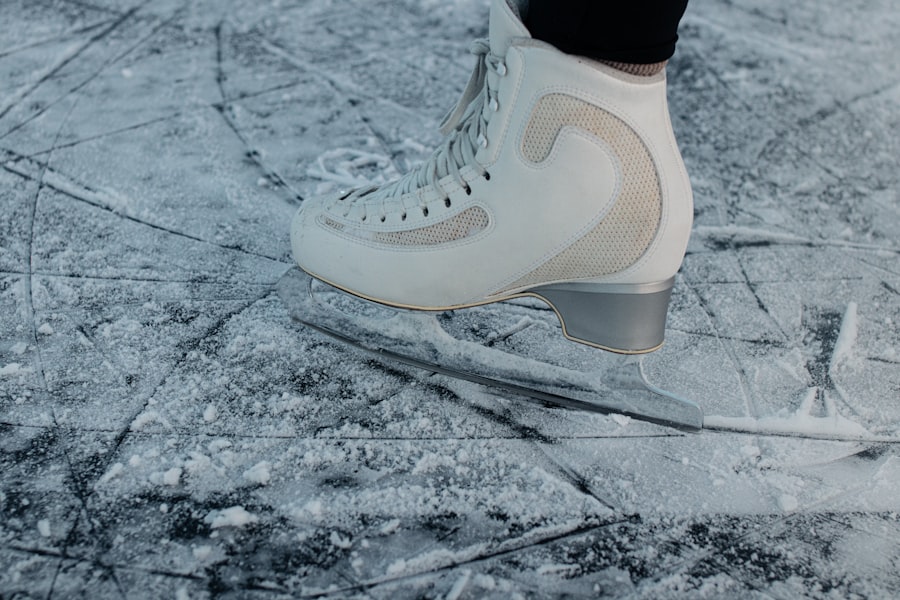
The real magic of ice skating lies not in the isolated understanding of friction or momentum, but in their intricate and dynamic interplay. Every stride, every turn, every jump is a finely tuned execution of these physical principles, often performed with a level of athleticism and artistry that masks the underlying physics.
The Crossover Step: A Momentum-Generating Glide
The crossover step is a fundamental technique used to gain speed and initiate turns. It’s a beautiful example of how skaters use controlled friction and momentum transfer.
Generating Forward Velocity
In a forward crossover, the skater steps one leg across the other, pushing off with the back leg. This push-off is the primary method of generating forward linear momentum. The skater uses the edge of their blade to dig into the ice, creating a frictional force that propels them forward. The angle of the push and the force applied are crucial for maximizing the forward acceleration and thus the momentum gained.
Transitioning into Turns
The crossover also prepares the skater for turning. As the leg crosses over, the skater begins to lean into the desired direction of the turn. This lean, combined with the use of the inside edge of the lead foot, creates a centripetal force that changes the direction of the skater’s linear momentum, causing them to follow a curved path. The controlled friction on the edge of the blade provides the necessary grip to execute this turn without slipping uncontrollably.
The Power Turn: Mastering Angular Momentum and Edge Control
Power turns, executed at high speeds with significant leaning angles, are a testament to a skater’s mastery of angular momentum and their ability to control frictional forces.
Initiating the Rotation
To execute a power turn, a skater typically begins with significant linear momentum. They then lean dramatically into the turn and use a sharp edge to carve into the ice. This carving action creates a turning force that directly alters the direction of their linear momentum. Simultaneously, the lean and the engagement of the edge create a torque, which generates angular momentum, causing the skater to rotate.
The Role of the Edge and Friction
The sharp edge of the blade is critical here. It digs into the ice, providing the necessary frictional force to resist sideways slippage and allow for a controlled rotation. The more pronounced the lean and the sharper the edge, the greater the potential for generating angular momentum and executing a tighter, faster turn. The thin layer of water created by pressure melting still plays a role, but the precise control of the edge through this layer is what allows for the controlled application of frictional forces necessary for the turn.
The Figure Eight: Seamless Momentum Transitions
The figure eight, a common element in figure skating patterns, demonstrates the ability to smoothly transition between linear glides and rotational turns, showcasing the dynamic interplay of momentum.
Linking Glides and Turns
A figure eight involves skating in two opposing circles, creating a figure-eight pattern. This requires the skater to seamlessly transition from a period of gliding with primarily linear momentum to executing a turn with significant angular momentum, and then back to a glide. The transitions are key. The exit of one circle and the entry into the next involve the skillful application and release of forces to manage both linear and angular momentum.
Edge Work and Momentum Conservation
The skater utilizes different edges for each part of the figure eight. One side might use the outside edge for a wider, faster glide, while the other uses the inside edge for a tighter, more controlled turn. The conservation of momentum dictates that as the skater enters a turn, their linear speed may decrease slightly as some of that energy is converted into rotational kinetic energy. The skater’s ability to manage these energy conversions and momentum transfers efficiently is what allows for a fluid and continuous figure eight.
The Aerodynamics of Speed and Stability

While friction and momentum are the primary drivers of ice skating, the skater’s interaction with the air also plays a significant role, particularly at higher speeds. Aerodynamics influences both the skater’s speed and their stability, requiring careful consideration in competitive skating.
Reducing Air Resistance
As a skater increases their speed, the force of air resistance, or drag, also increases. This force opposes the skater’s motion and can significantly impede their progress.
The Importance of Posture
Skaters employ various techniques to minimize air resistance. The most common is adopting a low, crouched posture, often referred to as a “power position” or “aerodynamic tuck.” By tucking their knees and keeping their back relatively straight and parallel to the ice, skaters reduce their frontal area, the surface area exposed to the oncoming air. This smaller frontal area leads to a significant reduction in drag force, allowing them to maintain higher speeds for longer durations.
Streamlining the Body
Beyond the basic tuck, skaters also focus on streamlining their body movements. This involves keeping their arms close to their body and avoiding any unnecessary movements that could create turbulence in the air. Even the design of their skating costumes is considered, with smooth, close-fitting materials used to further reduce drag.
The Effect of Air on Stability
While air resistance primarily affects speed, it can also have a subtle impact on stability, especially for skaters performing jumps and spins.
Turbulence and Balance
The airflow around a skater can become turbulent, particularly during complex aerial maneuvers. This turbulence can create small, unpredictable forces that can affect a skater’s balance. Skaters must be able to react quickly to these minor disturbances, often through subtle adjustments of their core muscles, to maintain their stability. The stability of their landing from a jump, for instance, is influenced by how effectively they can manage the air currents around them.
Wind and External Factors
In outdoor or open-air skating venues, external wind conditions can introduce significant aerodynamic challenges. Skaters must adapt their techniques to account for these forces, using the wind to their advantage when possible and fighting against it when necessary. This requires an even more sophisticated understanding of how air interacts with their body and their skates.
The physics of ice skating is a fascinating topic that delves into the principles of motion, friction, and energy transfer. Skaters utilize the unique properties of ice to glide effortlessly, and understanding the forces at play can enhance both performance and safety. For those interested in exploring this subject further, a related article can be found at Freaky Science, which discusses the science behind various sports, including the mechanics of ice skating and how athletes can optimize their techniques.
The Science Behind the Jumps and Spins
| Aspect | Metrics |
|---|---|
| Friction | Co-efficient of friction between ice and skate blade |
| Force | Force applied by skater on the ice |
| Momentum | Skater’s momentum while gliding on ice |
| Balance | Center of mass and stability on ice |
| Speed | Velocity of skater on ice |
The most dazzling elements of ice skating, jumps and spins, are where the principles of physics are most dramatically displayed. These maneuvers are not simply acts of athleticism; they are precise applications of physics, honed through countless hours of practice.
The Physics of the Jump Take-Off
Every jump begins with a powerful and calculated take-off. This phase is crucial for generating the necessary upward and rotational momentum.
Converting Linear to Vertical Momentum
The initial push-off in a jump is designed to convert linear momentum into vertical momentum. Skaters use their legs to generate an upward force against the ice. This force, applied over a short period, accelerates the skater upwards. The sharpness of the edge used during the take-off is vital for creating the necessary grip to push off effectively. For instance, in a Salchow jump, the skater takes off from the back inside edge of one foot, using the momentum of the free leg swing and a powerful push from the skating leg.
Generating Rotational Momentum
Simultaneously with the upward push, skaters initiate rotation. This is achieved through a combination of the free leg swing and the arm movements. The precise timing and coordination of these movements are critical for generating the initial angular velocity. The way the skater pulls their limbs in after leaving the ice is what dramatically increases this angular velocity.
The Aerial Phase: Conservation of Angular Momentum
Once airborne, the skater is in a relatively free-falling state, where the conservation of angular momentum is paramount.
The Tuck and Spin Acceleration
As mentioned earlier, when a skater pulls their arms and legs in towards their body, their moment of inertia decreases significantly. To conserve angular momentum, their angular velocity must increase proportionally. This is why skaters appear to spin much faster in the air than they do on the ice. The tightness and symmetry of the tuck directly influence the speed of rotation.
Maintaining Balance in the Air
Even in the air, skaters must maintain a degree of control and balance. While the primary forces acting on them are gravity and air resistance (which is minimized in a tight tuck), subtle body adjustments are made to ensure a controlled rotation and prepare for the landing. This is a highly refined skill that comes from extensive practice and a deep understanding of their body’s center of mass.
The Landing: Absorbing Momentum and Recapturing Control
The landing is often the most challenging and potentially dangerous part of a jump. It requires absorbing significant impact forces and regaining stability.
Decelerating and Stabilizing
Upon landing, the skater must absorb the impact of their body hitting the ice. This involves using their legs as shock absorbers, bending their knees to dissipate the kinetic energy of their fall. The goal is to slow their descent and rotational velocity smoothly. The skater typically lands on a back outside edge, which provides stability and allows them to begin gliding out of the jump.
The Role of the Edge and Friction in Landing
The edge used for landing is crucial for stability. It digs into the ice, providing the necessary friction to arrest the rotation and control the forward momentum. A well-executed landing is one where the skater transitions smoothly from rotation to controlled gliding without stumbling or falling. The sharpness of the blade and the skater’s ability to control the pressure on the edge are critical for a successful landing.
The Physics of Spins: Mastering Centripetal Force and Momentum
Ice skating spins are characterized by sustained rotation around a fixed point on the ice. This requires a constant application of centripetal force and a careful management of momentum.
Generating and Maintaining Centripetal Force
To maintain a circular path, a skater needs a centripetal force pulling them towards the center of the circle. On the ice, this force is provided by the skater’s edges. By leaning into the spin and using the edge of their skate, the skater creates a frictional force that acts towards the center of the spin, keeping them from flying outwards due to inertia.
The Importance of the Core and Balance
A strong core is essential for maintaining balance during spins. The skater’s body acts as a unified system, and the core muscles are responsible for keeping the body aligned and stable as it rotates. The ability to maintain a stable axis of rotation is critical for executing clean and fast spins.
Variations in Spins and Momentum Transfer
Different types of spins, such as upright spins, camel spins, and sit spins, involve varying body positions and therefore varying moments of inertia. Skaters can manipulate their speed by altering their body position, much like in a jump. In pairs spins, where one partner spins the other, there is a complex transfer of both linear and angular momentum involved, requiring precise coordination and strength.
Conclusion: The Elegant Symphony of Physics on Ice
The seemingly effortless glide of an ice skater is a profound demonstration of fundamental physics principles in action. The delicate balance of friction, precisely controlled by the skater’s blade and the ice surface, allows for movement to occur. Meanwhile, the intelligent manipulation of momentum, both linear and angular, propels the skater forward, enables breathtaking turns, and sends them soaring through the air. From the subtle pressure melting that lubricates the blade to the dramatic conservation of angular momentum during a quadruple jump, every aspect of ice skating is a testament to the elegant symphony of physics. Skaters are not just athletes; they are living embodiments of scientific laws, transforming the cold, hard surface of ice into a stage for breathtaking displays of physics in motion. Understanding these principles not only enhances our appreciation for the sport but also reveals the inherent beauty and complexity that lies beneath the surface of every graceful glide, every powerful push, and every gravity-defying leap.

Why Ice Is Slippery Is Stranger Than You Think
FAQs
What is the physics behind ice skating?
Ice skating involves the principles of friction, momentum, and centripetal force. When a skater glides on the ice, the friction between the skate and the ice creates a thin layer of water, reducing friction and allowing the skater to glide smoothly.
How does the skater maintain balance while skating?
The skater maintains balance by adjusting their center of mass and using their arms for stability. By leaning slightly forward and keeping their arms out to the sides, the skater can control their balance and maintain stability while skating.
What role does momentum play in ice skating?
Momentum is crucial in ice skating as it allows the skater to maintain their speed and direction. By pushing off the ice with each stroke, the skater increases their momentum, allowing them to glide across the ice with minimal effort.
How does the shape of the skate blade affect skating performance?
The shape of the skate blade, specifically the hollow ground into the blade, affects the skater’s performance. A deeper hollow creates more grip on the ice, allowing for sharper turns and quicker stops, while a shallower hollow reduces grip and allows for faster gliding.
What is the role of centripetal force in ice skating?
Centripetal force is responsible for allowing the skater to make turns while skating. By leaning into the turn and shifting their weight, the skater creates centripetal force, which pulls them towards the center of the turn and allows them to maintain their trajectory.