
The whisper of skates gliding across a frozen pond, the treacherous slide of a car on a patch of black ice, the satisfying crunch of walking on a freshly fallen layer of snow – these are all sensations intimately tied to the physics of ice friction. Far from being a simple, uniform surface, ice presents a surprisingly complex and dynamic frictional landscape. Understanding why ice is slippery, and the factors that influence its coefficient of friction, involves delving into the interplay of thermodynamics, molecular interactions, and the mechanical properties of both ice and the sliding object. This exploration not only satisfies a scientific curiosity but also has profound implications for everything from sports performance and transportation safety to the design of winter equipment.
At first glance, a surface of ice might appear perfectly smooth and uniform. However, under microscopic scrutiny, this perception dissolves. Like any solid material, ice possesses inherent surface irregularities. These microscopic bumps and valleys, though often minuscule, play a crucial role in the friction experienced.
Microscopic Imperfections and Real Contact Area
The key to understanding friction lies in the concept of the “real area of contact.” When two surfaces are brought together, even if they appear smooth to the naked eye, they only touch at a limited number of high points, or asperities. The macroscopic “apparent area of contact” is often orders of magnitude larger than this real area. This is especially true for materials that can deform under pressure, like rubber or even ice itself.
On an ice surface, these asperities are not perfectly sharp points but rather microscopic peaks. When an object, such as a skate blade or a tire, is placed on the ice, the pressure exerted is concentrated on these asperities. This concentrated pressure can cause the ice at these contact points to deform or even melt, effectively increasing the real area of contact. The more the ice deforms or melts, the larger the real area of contact becomes, and consequently, the greater the friction. However, it is not simply the magnitude of the real area of contact that dictates friction, but rather the nature of the forces holding these contacting surfaces together.
The Role of Surface Roughness
The roughness of the ice surface itself is a significant factor. A perfectly polished ice surface, while appearing smoother, can in some instances lead to higher friction. This is because the asperities are more uniformly distributed, and the forces holding them together can be more effectively transmitted. Conversely, a rougher ice surface, with larger and more scattered asperities, might offer less resistance to sliding. However, this can be counteracted by other factors, such as increased susceptibility to pressure melting. The relationship between roughness and friction on ice is not linear and is heavily influenced by the specific conditions of the sliding event. For instance, the sharpness and angle of a skate blade can interact with surface roughness in complex ways, influencing edge grip and maneuverability.
In exploring the fascinating physics of ice friction, one can gain deeper insights by examining related studies and articles. A particularly intriguing piece is available at this link: Freaky Science, which delves into the various factors that influence friction on icy surfaces, including temperature variations and surface roughness. Understanding these principles is essential for applications ranging from winter sports to transportation safety.
The Surprising Role of Heat: Pressure Melting and Frictional Heating
The most counterintuitive aspect of ice friction is the role of heat. While one might intuitively assume that colder ice would be more slippery, the opposite is often true under certain conditions. This phenomenon is primarily explained by two distinct but related thermal processes: pressure melting and frictional heating.
Pressure Melting: Lowering the Freezing Point Under Load
At the molecular level, water molecules in ice are held together by hydrogen bonds. These bonds, while strong, are also subject to disruption. When pressure is applied to ice, it slightly alters the equilibrium of these hydrogen bonds. The application of pressure tends to favor the liquid state of water over the solid state of ice. This means that the freezing point of water decreases under pressure. This effect, known as pressure melting, is crucial for understanding why ice skates glide so effortlessly.
A sharp skate blade, with a very small cross-sectional area, concentrates the weight of the skater onto a thin line of ice. This immense pressure, even at temperatures below freezing, causes a thin layer of ice directly beneath the blade to melt, forming a film of liquid water. This water acts as a lubricant, significantly reducing the friction between the blade and the ice. The thinner the blade and the greater the weight of the skater, the more pronounced this pressure melting effect will be, leading to lower friction and a smoother glide. This principle is also relevant in other scenarios where ice is subjected to significant pressure, such as during the formation of glaciers or the crushing of ice.
Frictional Heating: Generating Heat Through Motion
While pressure melting is a static phenomenon, frictional heating is a dynamic one that occurs as an object slides across the ice. When surfaces rub against each other, the kinetic energy of the motion is converted into thermal energy. This generated heat can also contribute to the formation of a lubricating water layer.
The rate of frictional heating depends on several factors, including the coefficient of friction, the normal force (the force pressing the surfaces together), and the velocity of sliding. At higher velocities, more kinetic energy is converted into heat per unit time, leading to more rapid melting. This is why faster skaters often appear to generate more of a “spray” of water or ice particles – it’s evidence of the frictional heating process at work. In some extreme cases, particularly at high speeds and high normal forces, frictional heating can become the dominant mechanism for lubrication, even more so than pressure melting. This is a key consideration in high-performance sports like speed skating and ice hockey, where optimizing for frictional heating can lead to significant performance gains.
The Molecular Dance: Intermolecular Forces and Adhesion

Beyond macroscopic pressure and heat, the behavior of ice friction is also dictated by the intricate interactions occurring at the molecular level between the sliding surfaces. These intermolecular forces, particularly those between water molecules and the molecules of the sliding object, play a subtle yet significant role.
Van der Waals Forces and Hydrogen Bonding
At the interface between the ice and the sliding object, several types of intermolecular forces are at play. Van der Waals forces, which arise from temporary fluctuations in electron distribution, are always present between molecules. While individually weak, their cumulative effect can be considerable, especially over a larger real area of contact.
More importantly, the hydrogen bonding network of the water molecules in ice can interact with the molecules of the sliding surface. If the sliding surface is polar (meaning it has regions of positive and negative charge), it can form weak chemical bonds, or “adhere,” to the water molecules on the ice. This adhesion, or “sticking,” can contribute to frictional resistance. For example, certain polymers used in ski bases or skate blade coatings are designed to minimize this adhesive interaction, thereby reducing friction.
The Hydrophobic Effect and Water Repellency
Conversely, if the sliding surface is hydrophobic (water-repelling), it will have less affinity for the water molecules. This can lead to a reduced real area of contact and less adhesion, contributing to lower friction. This is why many winter sports equipment manufacturers focus on creating surfaces that are both smooth and hydrophobic to enhance glide. The “hydrophobic effect” essentially encourages the water layer to stay as a distinct lubricating film rather than interacting strongly with the sliding surface itself.
Beyond Pure Ice: The Influence of Contaminants and Surface Properties
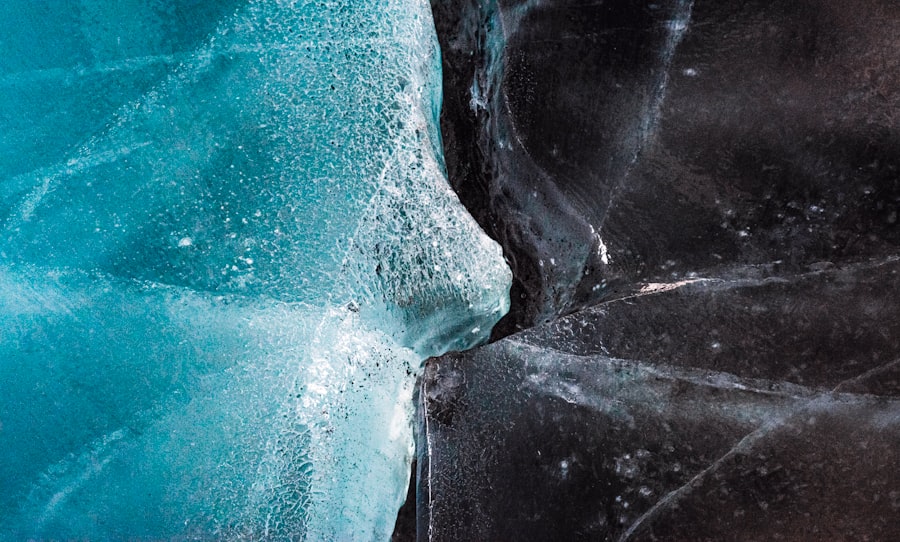
The friction experienced on ice is rarely on a perfectly pristine surface. The presence of impurities, variations in ice structure, and the properties of the sliding object itself can all significantly alter the frictional behavior.
Snow, Dirt, and Other Contaminants
Real-world ice surfaces are rarely pure. The accumulation of snow, dirt, grit, and even tiny ice crystals from previous sliding events can dramatically change the friction. Snow, being less dense and more porous than solid ice, can create a much higher coefficient of friction, as it provides a more significant resistance to sliding. Dirt and grit can act as abrasive particles, increasing wear on the sliding surface and also contributing to increased friction by disrupting the smooth flow of the lubricating water layer.
The way these contaminants interact with the ice and the sliding object is complex. For instance, fine dust particles can embed themselves into the lubricating water layer, increasing its viscosity and therefore its frictional resistance. Conversely, some larger, looser particles might actually aid in removing the lubricating water layer, leading to a brief increase in friction before a new lubricating layer forms. Understanding these effects is crucial for maintaining consistent performance in sports like ice hockey, where the ice surface is constantly being disturbed.
Variations in Ice Structure and Crystallinity
Even seemingly uniform ice can exhibit variations in its internal structure and crystallinity. The arrangement of water molecules in the ice lattice can influence its mechanical properties and its susceptibility to pressure melting and frictional heating. For instance, ice that has undergone many freeze-thaw cycles might have a different microstructure compared to newly formed ice, leading to subtle differences in friction. The presence of air bubbles trapped within the ice can also affect its density and strength, potentially influencing how it deforms under pressure.
The Sliding Object: Material Properties and Surface Treatments
The properties of the sliding object are just as important as those of the ice. The material from which the skate blade, tire, or ski base is made dictates its hardness, its ability to deform under pressure, and its chemical affinity for water. Harder materials, like steel for skate blades, can maintain a sharper edge and concentrate pressure more effectively, promoting pressure melting. Softer materials, like certain plastics used in ski bases, might deform more readily, increasing the real area of contact.
Furthermore, surface treatments applied to these objects play a crucial role. Polishing skate blades to a mirror finish, applying waxes to skis, or using specialized rubber compounds for tires are all designed to optimize the interaction with the ice surface and minimize friction. These treatments aim to create a surface that is both smooth and hydrophobic, minimizing adhesion and promoting the formation of a stable lubricating water layer.
The fascinating physics of ice friction has been a topic of interest for researchers exploring the dynamics of sliding objects on icy surfaces. A related article that delves deeper into this subject can be found on Freaky Science, where various experiments and theories are discussed. Understanding the mechanisms behind ice friction not only enhances our knowledge of winter sports but also has implications for climate science and engineering. For more insights, you can check out the article here.
Applications and Implications: From Sports to Safety
| Metrics | Data |
|---|---|
| Friction Coefficient | 0.1 – 0.2 for ice on ice |
| Temperature Effect | Friction decreases with increasing temperature |
| Pressure Effect | Friction increases with pressure |
| Surface Roughness | Affects friction on ice surfaces |
The intricate physics of ice friction has far-reaching implications across a multitude of fields, impacting both performance and safety.
Enhancing Performance in Winter Sports
In sports like speed skating, figure skating, and ice hockey, a deep understanding of ice friction is paramount for achieving peak performance. Skaters strive to create the optimal lubricating water layer through a combination of blade design, weight distribution, and skating technique. The sharpness and profile of a skate blade are meticulously engineered to balance edge grip for turns and propulsion with minimal resistance during straight-line glides. For speed skaters, maximizing speed often involves minimizing the coefficient of friction as much as possible. In figure skating, controlling friction is crucial for executing spins and jumps, requiring a delicate balance between slippage and grip.
Ensuring Transportation Safety
The slipperiness of ice poses significant challenges for transportation. Understanding how tire treads interact with icy surfaces is critical for designing effective winter tires. The patterns of grooves and sipes on winter tires are engineered to channel away water and snow, maximizing grip on potentially treacherous surfaces. Anti-lock braking systems (ABS) and electronic stability control (ESC) are sophisticated technologies that rely on sensors to detect and manage slippage on icy roads, preventing drivers from losing control. The coefficient of friction on ice can vary dramatically depending on temperature, moisture content, and the presence of contaminants, making accurate prediction and mitigation of this friction a constant challenge for automotive engineers.
Designing Effective Winter Equipment
Beyond sports and transportation, the principles of ice friction influence the design of a wide range of winter equipment. Ice axes and crampons used by mountaineers are designed to bite into ice and snow, providing secure footing. The materials and textures of these tools are optimized to maximize their grip. Similarly, the grip patterns on the soles of winter boots are designed to provide traction on icy sidewalks and trails, often incorporating materials that can deform and conform to the ice surface. Even the humble ice fishing lure might be designed with its movement through water and potential contact with ice in mind, demonstrating the pervasive nature of these physical principles.
Conclusion: A Slippery Subject, Deeply Understood
The seemingly simple act of sliding on ice is, in fact, a complex interplay of thermodynamics, molecular interactions, and material science. From the microscopic imperfections of the ice surface to the dynamic generation of heat and the subtle forces between molecules, each factor contributes to the overall frictional experience. While ice might appear to be a uniform and unyielding surface, it is a dynamic medium that melts, heats, and adheres in intricate ways. The ongoing research into the physics of ice friction continues to refine our understanding, leading to innovations that enhance performance in winter sports, improve the safety of our transportation systems, and allow us to navigate the frozen world with greater confidence and efficiency. The next time one glides across a frozen surface, a deeper appreciation for the fascinating physics at play beneath their feet is surely warranted.

Why Ice Is Slippery Is Stranger Than You Think
FAQs
What is ice friction?
Ice friction refers to the resistance or force that occurs when one object moves across the surface of ice. It is caused by the interaction between the object and the ice surface, and is influenced by factors such as temperature, pressure, and surface roughness.
How does the physics of ice friction work?
The physics of ice friction involves the formation of a thin layer of water on the ice surface due to pressure and frictional heating. This layer of water reduces the friction between the object and the ice, allowing for smoother movement. However, at very low temperatures, this layer may not form, leading to increased friction.
What factors affect ice friction?
Several factors can affect ice friction, including temperature, pressure, surface roughness, and the presence of impurities on the ice surface. Additionally, the material and shape of the object moving across the ice can also influence the frictional forces.
How is ice friction measured and studied?
Ice friction is measured and studied using various experimental techniques, such as tribometers and friction testers. Researchers also use mathematical models and simulations to understand the underlying physics of ice friction and its relationship to factors such as temperature and pressure.
What are the practical implications of understanding ice friction?
Understanding the physics of ice friction is important for various practical applications, such as designing winter sports equipment, improving the performance of ice vehicles, and developing strategies for preventing accidents on icy surfaces. It also has implications for fields such as glaciology and climate science.