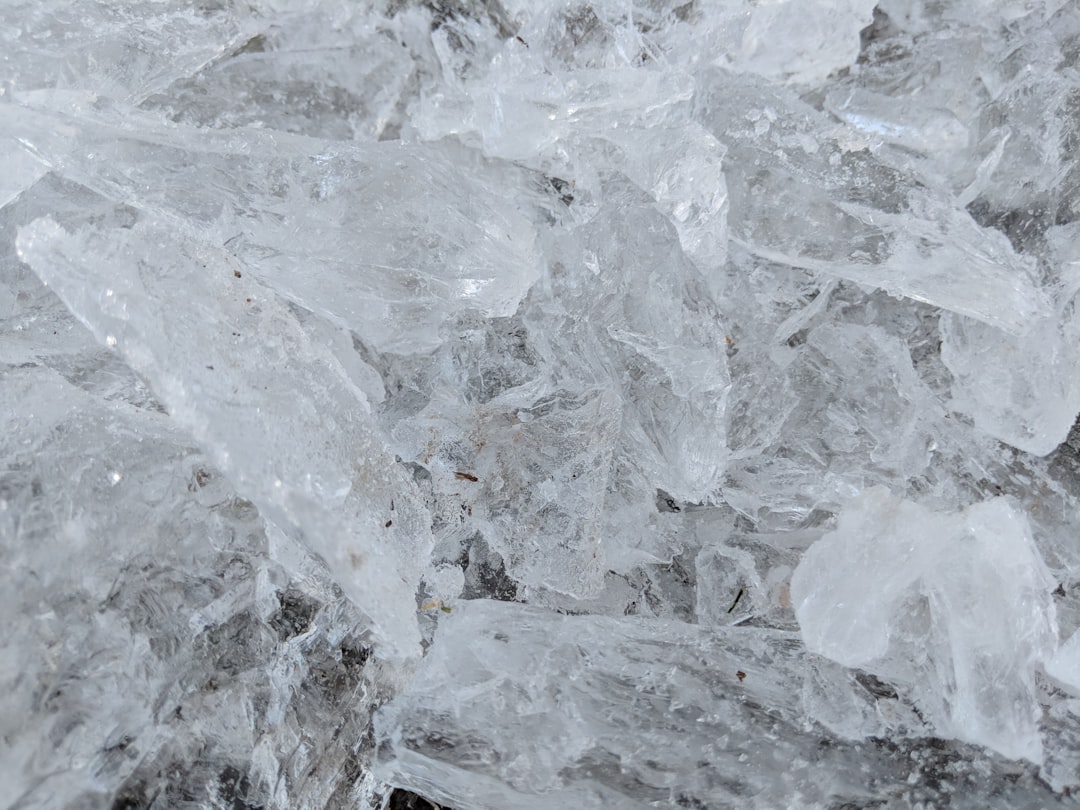
The slick, treacherous nature of ice has long been a source of both amusement and frustration. A poorly judged step can send even the most sure-footed tumbling, while the marvel of ice skating or the efficiency of ice hockey hinges on its very slipperiness. This seemingly simple phenomenon, however, is a complex interplay of physics, involving microscopic details and macroscopic effects. Understanding the physics of slippery ice requires delving into the molecular structure of water, the conditions under which it freezes, and the precise mechanisms that reduce friction between a solid surface and a moving object. Far from being a static, uniform surface, ice possesses a dynamic and intricate nature that explains its notorious slipperiness.
Water’s unique ability to exist as a solid, liquid, and gas within a remarkably narrow temperature range is fundamental to the existence of ice. Its peculiar properties, including its high surface tension and its expansion upon freezing, are all rooted in the molecular structure of H₂O. Understanding the transitions between these states is crucial to appreciating why ice forms and how its surface behaves.
The Hydrogen Bond: The Architect of Ice’s Structure
At the heart of water’s behavior lies the hydrogen bond. Oxygen, being highly electronegative, pulls electrons closer to itself in the H₂O molecule, giving it a partial negative charge. The hydrogen atoms, in turn, develop partial positive charges. This polarity allows water molecules to attract each other, forming weak but numerous hydrogen bonds. In liquid water, these bonds are constantly forming, breaking, and reforming, allowing molecules to slide past one another, hence its fluidity.
When water cools, the kinetic energy of its molecules decreases, slowing their motion. As temperatures approach 0°C (32°F), the hydrogen bonds begin to arrange the molecules into a more stable, ordered structure. Unlike most solids that contract upon freezing, water expands because the hydrogen bonds force the molecules into a crystal lattice that is more open than the liquid state. This hexagonal lattice structure is characteristic of ordinary ice, known as Ice Ih (Ice Ih is the stable form of ice at atmospheric pressure).
The Lattice: A Network of Potential Slippage
The formation of the crystalline lattice is not an instantaneous event, and the surface of ice is not perfectly smooth at the atomic level. The arrangement of water molecules in the lattice creates specific planes and orientations. These planes, particularly those aligned with the basal plane of the crystal, are known to be weaker and exhibit lower surface energy. This means that it requires less energy to disrupt the bonds between molecules along these planes, a critical factor in surface sliding.
The inherent vibrations of the water molecules within the lattice also play a role. Even at temperatures well below freezing, these molecules are not stationary. They jiggle and oscillate, and these thermal vibrations can influence how a surface interacts with another object.
The fascinating physics of slippery ice has been explored in various studies, shedding light on the mechanisms that make walking or skating on ice both challenging and intriguing. For a deeper understanding of this phenomenon, you can read a related article that discusses the science behind ice friction and the unique properties of ice surfaces. To learn more, visit Freaky Science.
The Illusion of Smoothness: Surface Properties of Ice
While we perceive ice as a smooth, uniform surface, at the microscopic level, it is far from it. The imperfections, the molecular arrangement, and the presence of even trace amounts of impurities all contribute to its slippery nature. The true slipperiness of ice is not solely due to an absence of friction but rather a complex phenomenon involving reduced friction coefficients.
The Quasi-Liquid Layer Hypothesis
For a long time, the prevailing theory for ice slipperiness was the “quasi-liquid layer” (QLL) hypothesis. This theory suggests that even below the freezing point, a thin layer of liquid-like water exists on the surface of ice. This layer is thought to arise from several factors.
Pressure-Induced Melting
One contributing factor to the QLL is pressure-induced melting. When an object, such as a skate blade, is placed on ice, the localized pressure can significantly lower the melting point of the ice beneath it. The increased force concentrated over a small area forces the water molecules closer together, weakening the hydrogen bonds and causing them to melt into a liquid layer. This effect is more pronounced at lower temperatures, which might seem counterintuitive, but it’s due to the steeper slope of the melting curve for ice with respect to pressure.
Vibrational Melting
Another proposed mechanism for the QLL is vibrational melting. The constant thermal vibrations of the water molecules at the ice surface can disrupt the crystalline structure, creating transient pockets of liquid. The higher the temperature, the more vigorous these vibrations become, leading to a thicker QLL. This explanation aligns better with the observation that ice is generally slipperier at temperatures closer to its melting point.
Surface Defects and Impurities
The surface of ice is rarely perfectly crystalline. The presence of surface defects, such as steps, kinks, and vacancies in the lattice, can create regions of lower bonding energy, making them more susceptible to melting or forming a quasi-liquid state. Furthermore, impurities within the ice, even in minute quantities, can significantly alter its surface properties. Dissolved gases, salts, or organic compounds can disrupt the formation of a perfect ice lattice and create areas that are more prone to melting or lubrication.
Friction Reduction Mechanisms
The presence of this QLL is believed to be a primary driver of reduced friction. This liquid layer acts as a lubricant, allowing objects to slide with significantly less resistance than they would encounter on a dry solid surface. The forces required to shear this thin liquid layer are much lower than the forces needed to overcome the friction between two solid surfaces.
The Role of Friction in Everyday Ice Encounters

The friction between an object and the ice surface dictates how easily that object can move. Understanding these friction coefficients is key to explaining both why we slip and how activities like ice skating are possible.
Static vs. Kinetic Friction
Two types of friction are relevant here: static friction and kinetic friction. Static friction is the force that resists the initiation of motion between two surfaces. It’s the force you feel when you try to push a heavy object that isn’t moving. Kinetic friction, on the other hand, is the force that opposes motion when two surfaces are already sliding past each other.
On ice, both static and kinetic friction coefficients are remarkably low. This means that very little force is needed to either start an object sliding or to keep it moving once it’s in motion. For typical ice-on-ice friction, the coefficient of kinetic friction can be as low as 0.02, whereas for dry materials, it can range from 0.3 to 0.7. This drastic reduction is what makes ice so slippery.
Factors Influencing Friction Coefficients
Several factors can influence the friction coefficients on ice, further complicating the picture.
Temperature
As mentioned earlier, temperature is a critical factor. Ice tends to be slipperier at temperatures closer to its melting point. This is because the quasi-liquid layer is thicker and more effective as a lubricant at warmer temperatures. Conversely, at very low temperatures, the QLL is thinner or may not exist at all, leading to increased friction. This is why you might notice ice feels less slippery on a very cold day compared to a moderately cool one.
Surface Roughness
While ice might appear smooth to the naked eye, microscopic irregularities exist. The interaction between these irregularities and the surface of the sliding object influences friction. A smoother sliding surface will generally encounter less friction. This is the principle behind the extremely sharp edges of ice skate blades, designed to minimize contact area and thus friction.
Speed of Sliding
The speed at which an object slides across the ice can also affect friction. At very low speeds, the quasi-liquid layer might not be effectively generated or maintained, leading to higher friction. As speed increases, the generation of the QLL can be enhanced, potentially leading to lower kinetic friction. However, at extremely high speeds, other phenomena might come into play, such as increased heating and water film formation, which can further reduce friction.
Nature of the Sliding Surface
The material of the object sliding on the ice also plays a role. The surface properties of the object, such as its roughness, hardness, and material composition, will interact differently with the ice. For instance, the smooth, polished metal of an ice skate blade is designed to minimize friction, while the rubber sole of a shoe will experience much higher friction, providing grip.
Beyond the Quasi-Liquid Layer: Alternative Explanations
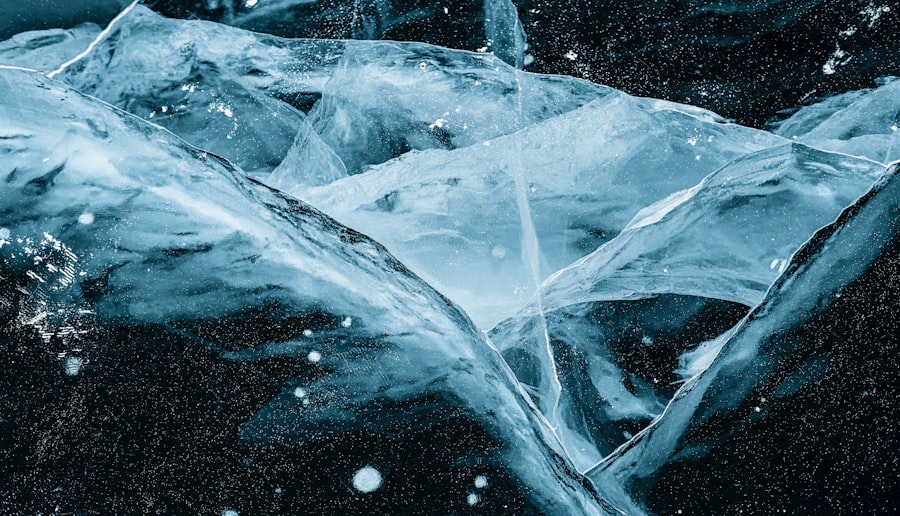
While the QLL hypothesis is widely accepted, it doesn’t account for all observations regarding ice slipperiness, particularly at very low temperatures where a significant QLL is unlikely. This has led to the exploration of other physical mechanisms that contribute to reduced friction.
Capillary Water Bridges
At slightly higher temperatures, above 0°C, a thin film of liquid water can exist on the surface of ice. However, the question of how ice remains slippery far below freezing persists. One proposed mechanism involves capillary water bridges. Even at temperatures below freezing, if there are trace amounts of impurities in the ice or on the sliding surface, they can attract and hold a very thin film of water. These thin films can bridge the microscopic gaps between the two surfaces, effectively creating a lubricated interface.
Phonon Scattering and Energy Dissipation
Another line of research focuses on the vibrational modes of the ice lattice, known as phonons. When an object slides across ice, energy is transferred between the object and the ice through these vibrations. The efficiency of this energy transfer can influence friction. Some theories suggest that specific phonon modes are excited at the interface, which can efficiently dissipate energy and reduce the overall frictional force. This mechanism might be more dominant at lower temperatures where the QLL is less significant.
Surface Adsorption and Disruption of Hydrogen Bonds
The interaction between the sliding surface and the ice surface can also lead to the adsorption of molecules from the sliding surface onto the ice. These adsorbed molecules can disrupt the hydrogen bonding network at the ice surface, making it easier for molecules to slide past each other. Similarly, components of the sliding material might be transferred to the ice surface, creating a less frictional interface.
The fascinating physics of slippery ice has intrigued scientists for years, particularly in understanding how ice can become so slick under certain conditions. A related article explores this phenomenon in depth, discussing the molecular structure of ice and how it affects friction. For those interested in delving deeper into this subject, you can read more about it in this insightful piece on Freaky Science, which examines the intricate balance between temperature, pressure, and the unique properties of ice that contribute to its slippery nature.
Applications and Implications of Understanding Ice Physics
| Metrics | Data |
|---|---|
| Friction Coefficient | Varies with temperature and pressure |
| Surface Roughness | Affects the slipperiness of ice |
| Temperature | Lower temperatures result in icier and more slippery surfaces |
| Pressure | Affects the melting point of ice and its slipperiness |
| Ice Crystal Structure | Affects the slipperiness of ice |
The scientific understanding of why ice is slippery has far-reaching implications, influencing sports, engineering, and even our understanding of planetary science.
The Art and Science of Ice Sports
Ice sports like skating, hockey, and curling are entirely dependent on the controlled slipperiness of ice.
Ice Skating
Ice skates are designed to exploit the low friction of ice. The thin blade minimizes the contact area with the ice, concentrating the skater’s weight and thus increasing the pressure. This pressure lowers the melting point of the ice directly beneath the blade, creating a thin lubricating layer of water. Skaters use their skill to control this layer, propelling themselves forward and maneuvering with precision. The sharpness of the blade is crucial, as a dull blade will have a larger contact area, leading to more friction and less glide.
Ice Hockey
In ice hockey, the ability to accelerate, stop, and change direction quickly relies on the delicate balance between friction and slipperiness. Players need enough friction to push off and gain traction but low enough friction to glide efficiently. The design of hockey skates, with their hollow-ground blades, creates edges that allow for both grip and speed. The quality of the ice surface itself, maintained at specific temperatures, is also paramount for optimal gameplay.
Curling
Curling involves sliding heavy stones across a sheet of ice. The precise control of friction is essential for the stones to travel the desired distance and curl effectively. The “brooms” used by curlers are not for cleaning but for warming the ice surface in front of the stone. This creates a thin layer of meltwater, reducing friction and allowing the stone to travel further and straighter.
Engineering Challenges and Solutions
The slipperiness of ice presents significant engineering challenges in various fields.
Transportation
From roads and bridges to aircraft wings, ice formation poses a serious safety hazard. Understanding the physics of ice accretion and its impact on friction is crucial for developing effective de-icing and anti-icing strategies. This includes the use of chemical de-icers, heated surfaces, and specialized coatings that prevent ice from adhering strongly to surfaces.
Refrigeration and Cryogenics
In refrigeration and cryogenic applications, controlling the formation of ice is essential for efficiency and safety. Understanding how ice forms and its thermal properties helps in designing effective insulation and preventing blockages in pipelines and equipment.
Material Science
The study of ice friction can also inform the development of new materials with specific frictional properties. For example, the principles learned from studying ice might be applied to designing lubricants, non-stick surfaces, or materials for low-friction applications in other domains.
Planetary Science and Extraterrestrial Ice
The physics of ice is not confined to Earth. Understanding how ice behaves under different temperature and pressure conditions is vital for studying icy moons and planets in our solar system and beyond. For instance, the presence and behavior of ice on Mars or the icy moons of Jupiter and Saturn are studied using principles derived from terrestrial ice physics. The nature of these extraterrestrial ices, which might be composed of different substances like methane or ammonia, can have unique frictional properties that influence geological processes on these celestial bodies.
The seemingly simple act of slipping on ice is a testament to the intricate and fascinating world of physics. From the hydrogen bonds that dictate water’s molecular dance to the subtle interplay of pressure, temperature, and surface properties, the slipperiness of ice is a complex phenomenon. Continued research into this area not only enhances our understanding of a ubiquitous natural occurrence but also offers valuable insights with practical applications across a wide spectrum of human endeavors. The next time a patch of ice sends you skidding, take a moment to appreciate the complex physics at play beneath your feet.

Why Ice Is Slippery Is Stranger Than You Think
FAQs
What is the physics behind slippery ice?
Slippery ice is caused by a thin layer of liquid water on the surface of the ice. When pressure is applied, the ice melts slightly, creating a lubricating layer of water that reduces friction and causes slipping.
Why does ice become more slippery at certain temperatures?
Ice becomes more slippery at temperatures near the melting point because the thin layer of liquid water on the surface of the ice increases, making it easier for objects to slide across the surface.
How does the physics of slippery ice affect everyday activities?
The physics of slippery ice can affect everyday activities such as walking, driving, and playing sports. It can increase the risk of slipping and falling, as well as impact the performance of vehicles and athletes on icy surfaces.
What are some strategies for reducing slipping on icy surfaces?
Some strategies for reducing slipping on icy surfaces include wearing shoes with good traction, using ice cleats or crampons, walking with shorter steps, and being cautious when walking or driving on icy surfaces.
How can an understanding of the physics of slippery ice be applied in engineering and materials science?
Understanding the physics of slippery ice can be applied in engineering and materials science to develop better anti-icing materials, improve tire traction on icy roads, and enhance the performance of equipment and structures in cold environments.