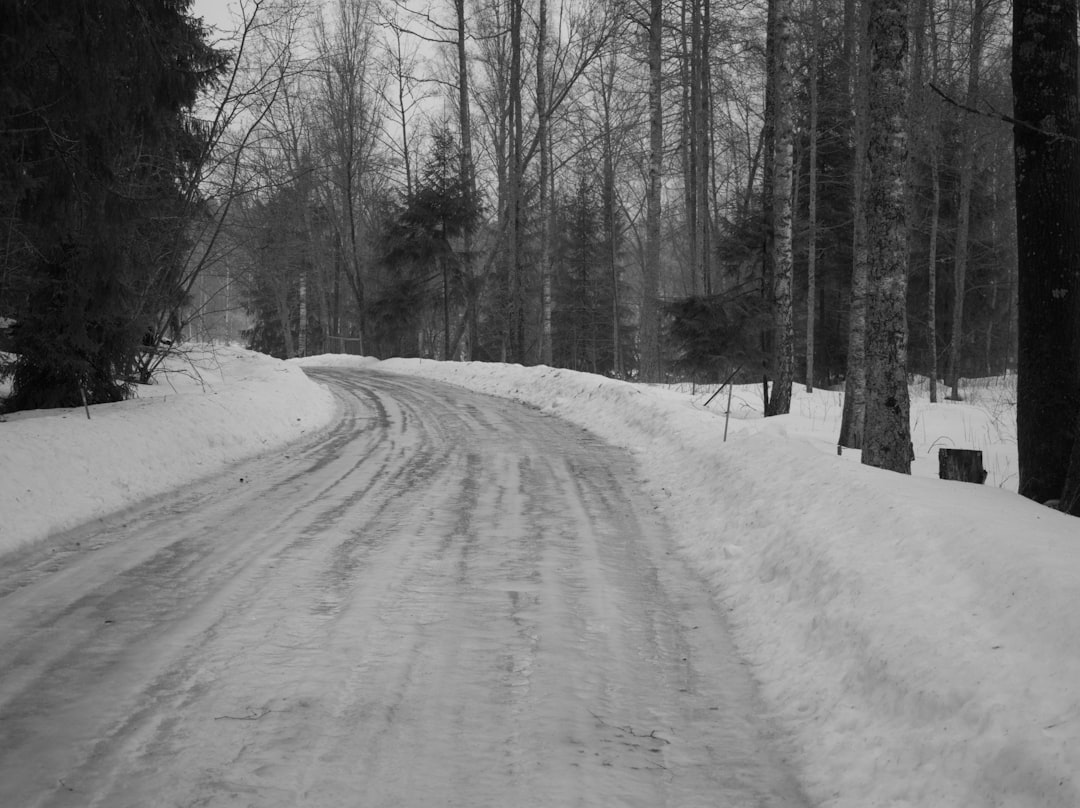
The seemingly simple phenomenon of ice being slippery has long baffled scientists, presenting a deceptively complex puzzle that has spurred decades of research. What appears as a smooth, uniform surface is, in reality, a dynamic interface governed by intricate molecular interactions and environmental factors. The journey to unraveling the science behind this everyday slipperiness is a testament to human curiosity and the persistent pursuit of understanding the fundamental principles of physics and chemistry.
For centuries, the intuitive explanation for why ice is slippery attributed it to friction melting a thin layer of water on the surface. This notion, though appealing in its simplicity, faced significant challenges when put to rigorous scientific scrutiny.
The “Friction Melting” Hypothesis: A Plausible but Incomplete Picture
The idea that rubbing your hand or a skate across ice generates enough heat to melt a thin film of water, thereby reducing friction, was a dominant theory for a considerable time. It was argued that the kinetic energy from the motion is converted into thermal energy, which then melts the ice. This theory gained traction because it seemed to intuitively explain why faster movement or heavier pressure resulted in increased slipperiness. Imagine the pressure from a skater’s blade or the friction from a car tire – it’s easy to see how localized heat could be generated. This was the cornerstone of understanding for a long time, and it certainly holds some truth. However, as scientific tools and understanding advanced, it became clear that this explanation alone couldn’t account for all the observed phenomena.
The Shortcomings of Friction Melting: When Slipperiness Persists Without Heat
Experiments began to reveal situations where ice was remarkably slippery even under conditions where significant friction melting was unlikely. For instance, ice can be slippery even at very low temperatures, far below what would be required for friction alone to melt a substantial layer of water. Furthermore, in situations with very light pressure or slow movement, where friction is minimal, the ice still exhibits a noticeable degree of slipperiness. This led researchers to question whether friction melting was the sole, or even primary, mechanism at play. The very definition of “slippery” implies a low coefficient of friction. If friction were the main culprit creating the slippery layer, then minimizing friction should logically minimize slipperiness. But observations often contradicted this, pointing towards a deeper, more fundamental property of the ice-air interface. The paradox of slippery ice in extremely cold conditions, where friction melting should be negligible, was a particularly thorny issue that pointed towards other contributing factors.
The real reason ice is slippery has intrigued scientists and casual observers alike for years. While many believe it is simply due to the smooth surface of ice, research suggests that a thin layer of water forms on top of the ice, acting as a lubricant. For a deeper understanding of this phenomenon and other fascinating scientific insights, you can read more in this related article on Freaky Science: Freaky Science.
The Microscopic Reality: Interfacial Water Layers
The breakthrough in understanding came with the realization that the surface of ice is not a perfectly solid, crystalline structure. Instead, it possesses a unique, often overlooked, liquid-like layer that exists even below the melting point. This interfacial water layer is the key to unlocking the secrets of slippery ice.
The Existence of Quasi-Liquid Layers: A Paradigm Shift
The concept of “quasi-liquid layers” (QLLs) emerged as a revolutionary idea. Scientists proposed that at the surface of ice, molecules are in a state of constant motion and disorder, behaving more like a liquid than a solid. This layer, typically only a few nanometers thick, exists due to several factors, including the weaker bonding of surface molecules compared to those within the bulk ice. Unlike the rigidly held molecules in the interior of an ice crystal, those at the surface experience fewer neighboring molecules pulling on them. This reduced constraint allows them to move more freely, disrupting the perfect crystalline lattice and creating a more fluid, less structured interface. The temperature at which this transition occurs is not a sharp, definitive point but rather a gradual loosening of molecular bonds as one approaches the surface. This is a crucial distinction from the bulk melting point.
Factors Influencing the Quasi-Liquid Layer Thickness and Properties
The thickness and properties of this quasi-liquid layer are not static. They are significantly influenced by a range of environmental factors, including temperature, pressure, and the presence of impurities.
Temperature’s Role: The Colder, The Thinner, But Still Present
As the temperature decreases, the quasi-liquid layer on ice tends to become thinner. However, it does not disappear entirely, even at very low temperatures. This persistence is what explains the slipperiness of ice in frigid conditions where friction melting is negligible. While the thermal energy for melting might be absent, the inherent disorder at the surface due to the reduced number of intermolecular forces still allows for a degree of fluidity. Think of it as a microscopic “melt” that isn’t dependent on bulk heat. Even when the bulk ice is solid and rigid, the surface molecules retain a certain kinetic energy that keeps them from forming a perfect, immobile crystalline structure.
Pressure’s Impact: Squeezing Out the Water
Increased pressure, such as that exerted by a skate blade or a tire, can compress the ice and, in turn, influence the quasi-liquid layer. Under high pressure, the ice structure can deform, and this deformation can lead to a local increase in temperature, contributing to melting. However, pressure also plays a role in the structure of the QLL itself, potentially forcing molecules closer together and altering their mobility. The effects of pressure are multifaceted; it can both enhance melting via temperature increase and potentially alter the fluidity of the existing interfacial layer. This duality makes it challenging to isolate the precise contribution of pressure to slipperiness.
Impurities: The Unexpected Lubricants
The presence of impurities on the ice surface, such as salt or dirt, can dramatically alter its slipperiness. These impurities can disrupt the crystalline structure of ice and lower its melting point, or they can directly interact with the water molecules in the quasi-liquid layer, further increasing its fluidity. Salt, for example, dissolves in the quasi-liquid layer, forming a brine solution that has a much lower freezing point than pure water, making the ice surface significantly more slippery even at temperatures below 0°C. Even seemingly innocuous contaminants like dust or organic residues can create localized pockets of lower friction.
Beyond Friction Melting: Other Contributing Mechanisms

While the quasi-liquid layer is a central piece of the puzzle, other physical mechanisms also contribute to the slipperiness of ice, further complicating and enriching our understanding.
Sublimation and Desorption: The Vanishing Act of Surface Molecules
At the interface between ice and air, molecules can escape directly from the solid phase into the gaseous phase (sublimation) or detach from the surface (desorption). These processes can contribute to the formation of a thin film of water vapor or even liquid water, reducing friction. While sublimation primarily leads to a loss of ice mass, the very act of molecules gaining enough energy to escape implies a certain level of surface mobility. Desorption, on the other hand, is a direct removal of molecules from the surface, and if these molecules transition into a liquid state before fully dispersing as vapor, they can contribute to a lubricating layer.
Phonons and Vibrational Energy: The Jiggling Surface
The molecules within the ice lattice are not static; they are constantly vibrating. These vibrations, known as phonons, can transfer energy to the surface molecules, promoting their movement and contributing to the formation of the quasi-liquid layer. Essentially, the internal jiggling of the ice crystal provides a constant source of agitation at the surface, even without external forces. This vibrational energy can overcome the intermolecular forces that would otherwise hold surface molecules in a rigid state, promoting their transition to a more fluid-like behavior.
The Role of Surface Roughness: A Counter-Intuitive Factor
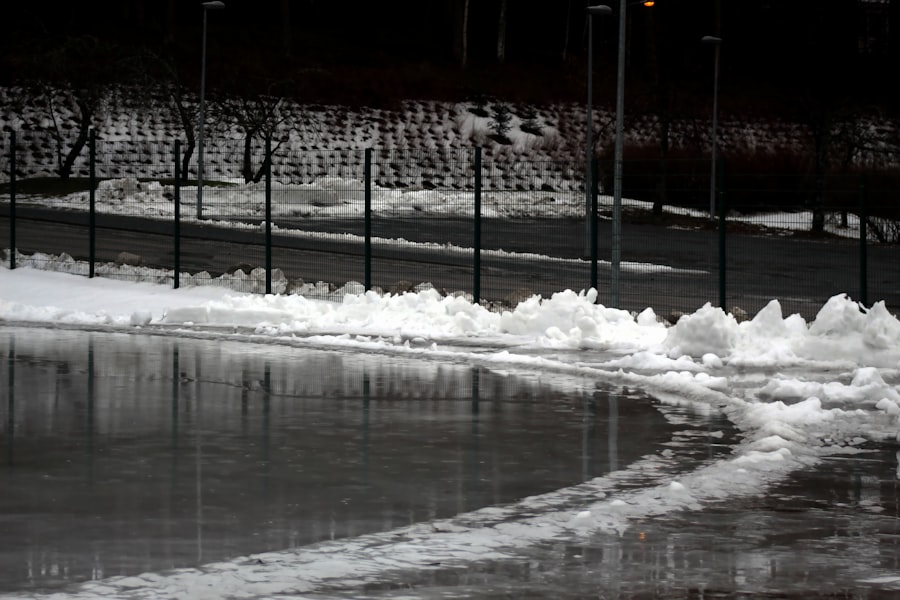
One might assume that a perfectly smooth ice surface would be the slipperiest. However, scientific investigation reveals that surface roughness plays a surprisingly complex and sometimes counter-intuitive role in determining ice slipperiness.
Microscopic Peaks and Valleys: Shaping the Friction
The microscopic topography of an ice surface, characterized by tiny peaks and valleys, influences how objects interact with it. While large-scale smoothness might seem ideal, the presence of certain patterns of roughness can actually facilitate slipperiness by reducing the contact area between surfaces and allowing for easier gliding.
The Impact of Ice Formation Conditions: From Frost to Glacial Ice
The way ice is formed significantly impacts its surface roughness and, consequently, its slipperiness. Rapid freezing can lead to a more uneven, crystalline surface, while slow freezing can result in a smoother, more uniform layer.
Frost Formation: Delicate and Slippery Structures
The intricate and delicate structures of frost, formed by the deposition of water vapor directly onto a cold surface, often create a highly slippery interface. The dendritic patterns of frost crystals offer minimal points of contact, allowing objects to slide with ease.
Glacial Ice: The Unexpected Grip of Extreme Smoothness
Interestingly, the extremely smooth surfaces found in some glacial ice can sometimes offer a surprising amount of grip, especially under certain conditions. This is because the lack of significant asperities (sharp points) means that pressure is distributed over a larger area, potentially increasing adhesion rather than slipperiness.
The real reason ice is slippery has intrigued scientists for years, and it turns out that a thin layer of water forms on the surface, reducing friction. This phenomenon is not only fascinating but also has practical implications in various fields, including sports and transportation. For those interested in exploring this topic further, you can read a related article that delves deeper into the science behind ice and its properties by visiting this link. Understanding the mechanics of ice can enhance our appreciation of winter sports and the challenges they present.
Modern Research and Future Directions: Refining Our Understanding
| Reason | Explanation |
|---|---|
| Thin Layer of Water | When pressure is applied, the ice melts slightly, creating a thin layer of water that acts as a lubricant. |
| Low Friction | The molecules in ice are not tightly bound, resulting in low friction between the ice and other surfaces. |
| Smooth Surface | The smooth surface of ice reduces the grip between the ice and other objects, making it slippery. |
Contemporary research continues to refine our understanding of slippery ice, utilizing advanced techniques and exploring novel applications. The quest to precisely quantify and control ice slipperiness remains an active and exciting area of scientific inquiry.
Advanced Imaging and Spectroscopy: Peering into the Interface
Modern techniques such as atomic force microscopy (AFM), scanning tunneling microscopy (STM), and various forms of spectroscopy allow scientists to visualize and analyze the ice surface at the atomic level. These tools provide unprecedented insights into the molecular structure and dynamics of the quasi-liquid layer.
Tribology and Material Science: Engineering for Controlled Slipperiness
The field of tribology, which studies friction, wear, and lubrication, is actively engaged in understanding and manipulating ice slipperiness. This research has implications for a wide range of applications, from developing better ice skates and tires to designing advanced anti-icing coatings.
Anti-Icing Technologies: Preventing Ice Formation and Adhesion
The development of anti-icing technologies aims to prevent ice from forming or adhering to surfaces. This involves designing materials with specific surface properties that either repel water or reduce the formation of ice crystals, thereby minimizing slipperiness.
De-icing Strategies: Removing Existing Ice Layers
Conversely, de-icing strategies focus on effectively and efficiently removing existing ice. Understanding the science of slipperiness informs the development of more effective de-icing agents and methods, ensuring safety in transportation and other critical areas.
The Future of Slippery Ice: From Sports to Space Exploration
The ongoing research into the science behind slippery ice promises to unlock a wealth of new knowledge and applications. From enhancing athletic performance in winter sports to developing specialized coatings for spacecraft operating in extreme environments, the study of this ubiquitous phenomenon continues to push the boundaries of scientific discovery. The subtle interplay of molecular forces, thermal energy, and surface topography at the ice-air interface ensures that the mystery of slippery ice will continue to engage and inspire scientists for years to come. The seemingly simple act of slipping on ice belies a complex and fascinating world of physics and chemistry, waiting to be fully explored.

Why Ice Is Slippery Is Stranger Than You Think
FAQs
What makes ice slippery?
Ice is slippery because of a thin layer of water that forms on the surface when pressure is applied. This layer reduces the friction between the ice and any object that comes into contact with it, making it slippery.
Why does pressure create a layer of water on ice?
When pressure is applied to ice, the ice molecules are forced closer together, causing them to melt slightly. This creates a thin layer of water on the surface of the ice, which reduces friction and makes it slippery.
Does temperature affect the slipperiness of ice?
Yes, temperature does affect the slipperiness of ice. Warmer temperatures can cause the ice to melt slightly, creating a thin layer of water on the surface and making it more slippery. Colder temperatures can reduce the slipperiness of ice by preventing the formation of a liquid layer.
Can anything be done to reduce the slipperiness of ice?
To reduce the slipperiness of ice, substances such as sand, salt, or gravel can be spread on the surface to increase traction. Additionally, using footwear with good grip and taking slow, deliberate steps can help prevent slipping on ice.
Are there any other factors that contribute to the slipperiness of ice?
Other factors that contribute to the slipperiness of ice include the smoothness of the ice surface, the presence of any contaminants such as oil or dirt, and the angle at which pressure is applied to the ice. These factors can all affect the formation of the thin layer of water that makes ice slippery.