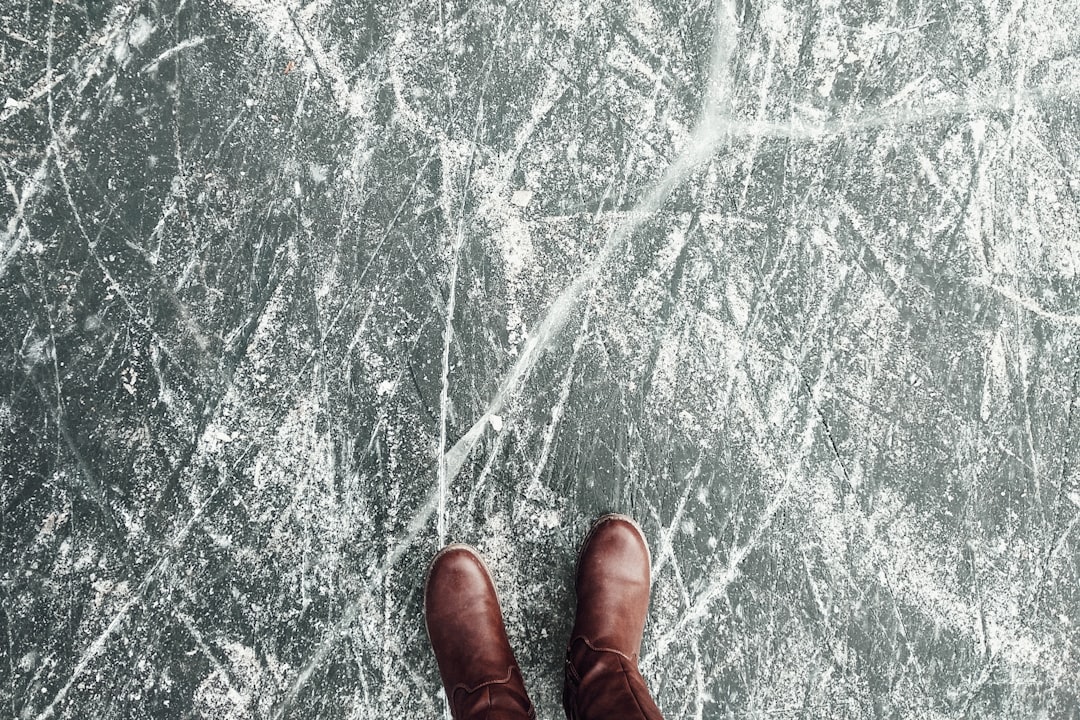
The surface of frozen water, a common yet often underestimated phenomenon, has long intrigued and perplexed humanity. Ice, seemingly simple, possesses a complex and slippery nature that has defied easy explanation for centuries. From the graceful glide of a figure skater to the treacherous descent of a car on a frosty road, its slickness dictates interactions with the world in profound ways. The science behind this slipperiness is not a straightforward equation but a nuanced interplay of physical properties, environmental conditions, and even the materials it encounters. Unraveling this “slippery science” requires delving into the molecular dance of water molecules at the interface, the subtle pressures exerted upon it, and the unique characteristics of its solid form.
At its core, ice is simply water in its solid state. However, the conventional understanding of a solid as a rigid, unyielding structure breaks down when considering ice, particularly its surface. The perceived solidity of bulk ice is undeniable; one can stand on it, build with it, and shatter it with sufficient force. Yet, the outermost layer of ice behaves in a manner that contradicts this inherent rigidity. This discrepancy lies at the heart of its slipperiness.
The Liquid Layer Hypothesis
The most widely accepted explanation for ice’s slipperiness involves a thin, liquid-like layer of water that exists on its surface, even at temperatures well below the freezing point. This layer is not a macroscopic pool of water but rather a molecularly thin film, perhaps only a few nanometers thick.
Pressure-Induced Melting: A Misconception and a Partial Truth
For a long time, a prevailing theory suggested that the pressure exerted by an object sliding on ice caused localized melting. The idea was that the increased pressure would lower the melting point of ice, initiating a thin film of liquid water. While pressure does lower the melting point of ice, the amount of pressure typically applied by a skate blade or a shoe is insufficient to cause significant melting under normal conditions. Experiments have shown that even with extremely high pressures, the melting effect is minimal. Therefore, while pressure plays a role, it is not the sole or primary driver of ice’s slipperiness.
Vibrational Energy and Surface Molecules
A more accurate understanding points to the role of vibrational energy. Even at temperatures below freezing, the molecules on the surface of ice are not perfectly still. They possess a degree of kinetic energy, vibrating around their fixed positions in the crystal lattice. This vibrational energy causes a degree of “disorder” at the surface. The strong hydrogen bonds that hold the bulk ice together are weaker at the surface, where molecules have fewer neighbors. This increased freedom of movement allows for a more fluid-like behavior.
Van der Waals Forces and Intermolecular Interactions
The interaction between the sliding object and the ice surface also plays a crucial role. Van der Waals forces, weak attractive forces between molecules, contribute to the adhesion between the object and the ice. However, the subtle interplay of these forces, combined with the inherent mobility of surface ice molecules, allows for relative motion. The object’s surface molecules are constantly interacting with the ice’s surface molecules, and the liquid-like nature of the ice surface facilitates this sliding.
Ice is often considered slippery due to the thin layer of water that forms on its surface, which reduces friction between the ice and any object in contact with it. This phenomenon can be further explored in a related article that delves into the science behind why ice behaves this way and the factors that contribute to its slipperiness. For more detailed insights, you can read the article on Freaky Science by following this link: Freaky Science.
The Influence of Temperature: A Delicate Balance
Temperature is a critical factor in determining the degree of slipperiness of ice. While ice is slippery below 0°C, its slickness is not uniform across the entire sub-zero range. The relationship between temperature and slipperiness is a delicate balance, with distinct behaviors observed at different temperature points.
The Sweet Spot of Slipperiness
Interestingly, ice is often found to be most slippery at temperatures just below the freezing point, typically between -5°C and 0°C. As the temperature drops further, the ice becomes incrementally less slippery. This observation initially seems counterintuitive, as one might expect colder ice to be harder and therefore potentially more slippery.
Reduced Vibrational Energy at Lower Temperatures
As the temperature decreases, the kinetic energy of the ice molecules diminishes. This means they vibrate less vigorously. Consequently, the surface layer becomes more ordered and less fluid-like. The reduced molecular motion at the surface makes it harder for a sliding object to overcome the intermolecular forces and achieve a smooth glide.
The Role of Freezing Point Depression
While not the primary mechanism, some degree of freezing point depression due to impurities in the ice can contribute to slipperiness, especially in certain natural ice formations. However, for pure ice, the temperature-dependent behavior is mainly attributed to the molecular dynamics of the surface.
The “Less Slippery” Extreme: Very Cold Ice
At extremely low temperatures, ice can feel noticeably less slippery. This is because the liquid-like layer on the surface becomes exceedingly thin, almost negligible. The surface essentially behaves more like a solid, with molecules locked into their crystalline structure. The friction between the sliding object and the ice increases, making it harder to slide.
The Absence of a Significant Liquid Layer
When ice is very cold, the thermal energy is insufficient to promote the formation of a substantial liquid-like layer. The molecules are largely bound in their lattice positions, and the resistance to sliding is primarily governed by the friction between the solid surfaces.
The Friction Factor: A Two-Sided Coin
Friction is inherently linked to slipperiness, and understanding their complex relationship is key to comprehending why ice is so slick. Friction is the force that opposes motion between two surfaces in contact. In the case of ice, friction can either facilitate or hinder the sliding process, depending on the specific conditions.
Static vs. Kinetic Friction
A crucial distinction is made between static and kinetic friction. Static friction is the force that must be overcome to initiate motion between two stationary surfaces. Kinetic friction is the force that opposes motion once it has begun. On ice, the transition from static to kinetic friction is what allows for smooth gliding.
The Low Coefficient of Kinetic Friction
The primary reason ice is slippery is its remarkably low coefficient of kinetic friction. This means that once an object is moving across the ice, the force required to keep it moving is significantly less than the force needed to initiate that motion. This low coefficient is a direct consequence of the thin liquid-like layer that forms under sliding conditions.
The Role of the Sliding Object’s Material
The material of the object sliding on the ice also plays a significant role in the friction experienced. Different materials interact with the ice surface in varying ways, affecting the formation and behavior of the lubricating layer.
The Sharp Edge: Minimizing Contact Area
Objects with sharp edges, like skate blades or the cleats of certain shoes, are designed to minimize the contact area with the ice. This concentration of force over a small area, while not solely responsible for melting, can influence the pressure distribution and the localized behavior of the surface layer, contributing to reduced friction.
Surface Roughness and Adhesion
The roughness of the sliding object’s surface is also important. A smoother surface generally leads to less friction. Conversely, a rougher surface can create more points of contact and potentially increase adhesion, leading to greater resistance to sliding. The interaction between the surface topography of the sliding object and the ice surface is a complex dance that dictates the overall frictional force.
Impurities and Their Icy Influence
While pure water ice is inherently slippery, natural ice often contains impurities – dissolved salts, minerals, and organic matter – that can significantly alter its properties, including its slipperiness. These impurities can behave in fascinating ways at the freezing point.
Freezing Point Depression and Salt
The most common and impactful impurity is salt. When salt dissolves in water, it lowers the freezing point. This phenomenon, known as freezing point depression, is why salt is used to de-ice roads. The salt ions disrupt the formation of the ice crystal lattice, requiring lower temperatures for water to freeze.
The Salty Slush Factor
On a macroscopic level, salt creates a slushy mixture of ice and brine. This brine layer acts as a highly effective lubricant, significantly increasing slipperiness. This is why salted sidewalks and roads are particularly treacherous. The salt doesn’t just make the ice melt; it creates a slippery brine that coats the surface.
Other Dissolved Substances
Other dissolved substances, such as minerals and organic compounds, can also affect the freezing point and the structure of ice crystals. While their effects are generally less pronounced than those of salt, they can still contribute to variations in ice slipperiness. These impurities can affect the nucleation and growth of ice crystals, leading to different surface textures and potentially altered lubricating properties.
The phenomenon of why ice is slippery has intrigued scientists and casual observers alike for years. Recent studies suggest that the surface of ice can create a thin layer of water when pressure is applied, which contributes to its slickness. For a deeper understanding of this fascinating topic, you can explore a related article that delves into the science behind ice’s slippery nature. Check it out here to learn more about the mechanisms at play and how they affect our everyday experiences with ice.
Beyond the Surface: The Physics of Sliding
| Reason | Explanation |
|---|---|
| Thin Layer of Water | Pressure from the weight of a person or object causes the ice to melt slightly, creating a thin layer of water that makes it slippery. |
| Low Friction | The molecules in ice are not tightly bound, leading to low friction and making it easy for objects to slide across the surface. |
| Smooth Surface | The smoothness of ice allows for minimal resistance when objects come into contact with it, resulting in slippery conditions. |
The slipperiness of ice is not solely a surface phenomenon. The underlying physics of how an object interacts with and moves across this surface involves a broader understanding of forces and motion.
The Dynamics of Gliding
The act of gliding on ice, whether by a skater, a sled, or a skier, is a testament to the delicate balance between opposing forces. The forward motion is driven by an applied force (pushing off, gravity), while the resistance comes from friction and air resistance.
Maintaining Momentum: Overcoming Resistance
Once in motion, the low kinetic friction of ice allows an object to maintain its momentum with minimal energy loss. This is why skaters can glide for extended periods after a single push. The lubricating effect of the surface layer is crucial in minimizing the continuous energy input required to stay moving.
The Perils of Instability: Why We Slip
Conversely, the very slipperiness that allows for graceful motion can also lead to instability and falls. The low friction means that small changes in balance or foot placement can have significant consequences.
Loss of Traction and Control
When our feet encounter an unexpectedly slick patch of ice, our muscles may not be able to generate enough friction to maintain our balance. The quick loss of traction can lead to a sudden slip and fall. The sudden reduction in the coefficient of friction between our footwear and the ice is the primary cause of this loss of control.
The Importance of Footwear
The design of footwear is critical for navigating icy conditions. Shoes with deep treads and specialized rubber compounds are designed to maximize friction and provide better grip on slippery surfaces. The ability to create micro-interlocking with the ice surface, or to channel away any lubricating layer, can significantly improve stability.
In conclusion, the slippery science of ice is a captivating blend of molecular dynamics, thermal physics, and material interactions. It is a reminder that even the most common substances can hold intricate scientific secrets. The existence of a thin, liquid-like layer on the surface of ice, influenced by temperature and the pressure exerted by a sliding object, is the primary explanation for its remarkable slickness. While impurities like salt can exacerbate this slipperiness, the fundamental nature of ice’s surface itself provides the foundation for its iconic glide. Understanding these principles not only satisfies scientific curiosity but also informs practical applications, from the design of sports equipment to the safety measures implemented on our winter roads, ensuring we can navigate the icy world with greater knowledge and caution.

Why Ice Is Slippery Is Stranger Than You Think
FAQs
What causes ice to be slippery?
Ice is slippery because of a thin layer of water that forms on the surface when pressure is applied. This layer reduces the friction between the ice and any object that comes into contact with it, making it slippery.
Why does pressure cause ice to become slippery?
When pressure is applied to ice, the ice molecules are compressed, causing them to melt slightly and form a thin layer of water on the surface. This layer of water reduces the friction between the ice and any object that comes into contact with it, making it slippery.
Does temperature affect the slipperiness of ice?
Yes, temperature does affect the slipperiness of ice. Warmer temperatures cause the thin layer of water on the ice’s surface to become thicker, increasing the slipperiness of the ice. Colder temperatures, on the other hand, can reduce the slipperiness of ice by keeping the layer of water thin.
Can anything be done to reduce the slipperiness of ice?
To reduce the slipperiness of ice, substances such as sand, salt, or gravel can be spread on its surface. These substances increase the friction between the ice and any object that comes into contact with it, making it less slippery.
Are there any safety precautions to take when walking on slippery ice?
When walking on slippery ice, it is important to take small, deliberate steps and to wear appropriate footwear with good traction. Additionally, using handrails or walking aids can help provide stability and prevent slips and falls.