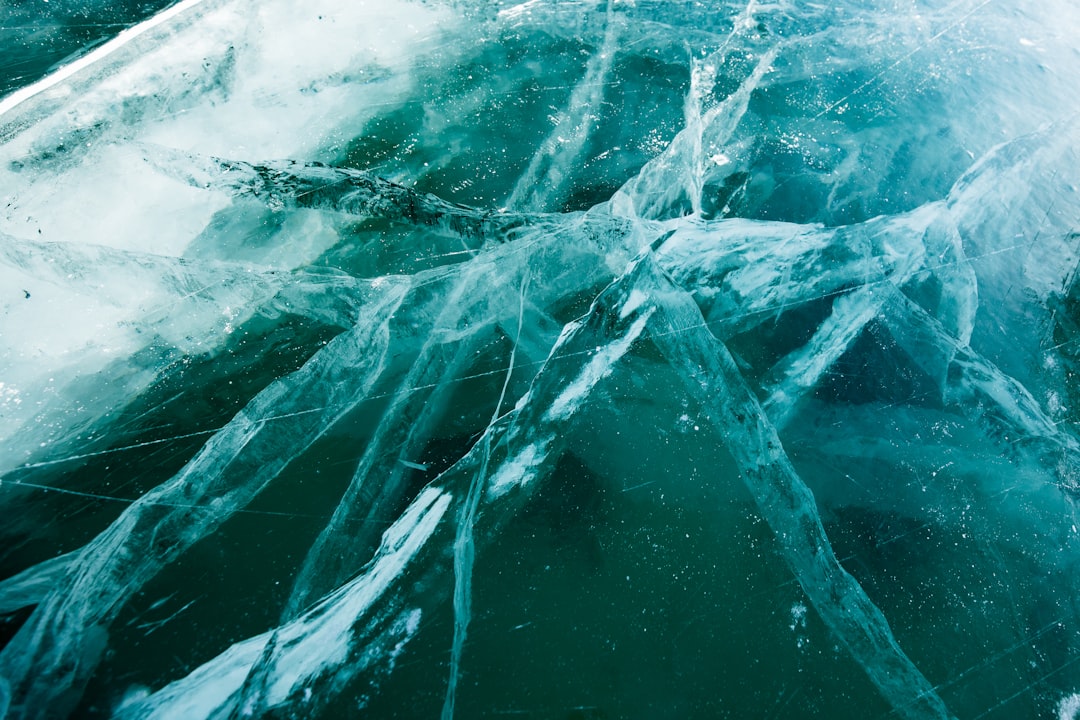
The seemingly simple phenomenon of ice’s slipperiness has long captivated and frustrated humans, from ancient travelers to modern athletes. While common sense might suggest that a smooth, hard surface should offer excellent grip, the reality is a deceptive dance between solid and liquid states. The “slippery science of ice” is not a single, straightforward principle, but rather a complex interplay of factors at the molecular level, primarily revolving around the unique properties of water and its behavior under pressure and friction. Understanding this molecular friction is key to unraveling why ice is so notoriously slippery.
At its core, ice is a solid crystalline structure formed by water molecules. These molecules, each consisting of one oxygen atom covalently bonded to two hydrogen atoms, arrange themselves in a hexagonal lattice in the solid state. This regular arrangement, where hydrogen atoms form weak hydrogen bonds with neighboring oxygen atoms, gives ice its rigidity and apparent solidity. In a perfect world, and in many conditions, this crystalline structure should provide a surface with a high coefficient of friction, meaning it would resist sliding. Imagine two rough surfaces rubbing against each other; the interlocking asperities, or microscopic bumps, would create significant resistance to movement.
Microscopic Roughness and Interlocking
Even seemingly smooth ice surfaces are not perfectly flat at the microscopic level. Tiny imperfections, akin to miniature mountains and valleys, exist. In a solid-to-solid frictional interaction, these asperities would engage and disengage, creating a force that opposes motion. If ice behaved like other common solids under these conditions, friction would be substantial. This is the expected behavior based on fundamental principles of solid mechanics. The molecular structure, with its strong bonds within the molecules and ordered arrangement, suggests a robust surface that should resist shearing. However, the reality of ice’s slipperiness indicates that something more complex is at play, leading to a reduction in this expected friction.
The Role of Solid-State Properties
The strength of the hydrogen bonds between water molecules in the ice lattice is considerable, contributing to the overall integrity of the solid. These bonds are responsible for the relatively high melting point of ice compared to other substances of similar molecular weight. They also dictate the precise geometry of the crystal. If friction were solely dependent on the strength of these intermolecular forces and the surface’s resistance to shear, ice would be far less slippery than it is. This highlights that the solid-state properties alone do not explain the observed slipperiness.
Ice is often considered slippery due to a thin layer of water that forms on its surface, which reduces friction between ice and objects in contact with it. This phenomenon can be attributed to the pressure melting effect and the molecular structure of ice, which allows for a small amount of melting even at sub-zero temperatures. For a more in-depth exploration of the science behind why ice is slippery, you can read a related article at Freaky Science.
The Unseen Liquid: The Quasi-Liquid Layer Hypothesis
For decades, the dominant scientific explanation for ice’s slipperiness was the “quasi-liquid layer” hypothesis. This theory proposes that a thin layer of liquid water exists on the surface of ice, even at temperatures below freezing. This layer, only a few nanometers thick, acts as a lubricant, drastically reducing the friction between ice and any object sliding over it. The existence and nature of this layer have been subjects of intense scientific debate and research, with various models attempting to explain its formation and properties.
Pressure-Induced Melting
One of the primary mechanisms proposed for the formation of the quasi-liquid layer is pressure melting. When pressure is applied to ice, its melting point decreases. This phenomenon, known as the Barlow effect, is particularly pronounced for ice. When an object, such as a skate blade or a shoe sole, presses down on the ice, the localized pressure exerted on the ice surface can be significant. If this pressure exceeds a certain threshold, the melting point of the ice beneath the object drops below the ambient temperature, causing a thin film of water to form. This liquid layer then effectively lubricates the interface.
The Mechanics of Pressure Melting
The relationship between pressure and the melting point of ice is described by the Clausius-Clapeyron relation. For water, the slope of this relation is negative, meaning an increase in pressure leads to a decrease in melting temperature. This is a rather unique property compared to most substances, where pressure increases the melting point. The equation highlights that for every atmosphere of pressure applied, the melting point of ice drops by approximately 0.0074 degrees Celsius. While this might seem small, concentrated pressure from a sharp edge can significantly lower the melting point.
Limitations of Pressure Melting
However, pressure melting alone cannot fully explain the slipperiness of ice, especially at temperatures well below freezing where the pressure required to melt ice would be enormous. For instance, a person standing on ice with typical footwear exerts a pressure that is generally insufficient to cause significant melting. This suggests that other mechanisms must be at play to account for the widespread slipperiness observed across a range of temperatures and pressures.
Vibrational Excitation and Surface Melting
Another crucial aspect contributing to the quasi-liquid layer is the concept of vibrational excitation at the ice surface. Even below the melting point, the molecules at the surface of the ice are in constant motion, vibrating more vigorously than their counterparts deeper within the crystal. These vibrations can weaken the hydrogen bonds at the surface, making them more susceptible to breaking. This increased thermal energy at the surface, even in the absence of external pressure, can lead to a dynamic state where molecules at the interface behave in a manner akin to a liquid.
The Kinetic Energy of Surface Molecules
The kinetic energy of molecules at the surface of a solid is inherently higher than those in the bulk. This is because surface molecules have fewer neighbors with which to interact, and therefore, a portion of their energy is not involved in bonding. In the case of ice, these energetic vibrations can lead to temporary disruptions in the crystalline lattice at the surface, allowing for a degree of mobility that resembles a liquid state. This “pre-melting” or surface melting is a subtle but significant factor.
The Energetics of Surface Bonds
The breaking of hydrogen bonds requires energy. At the surface, the energetic vibrations provide some of this energy. Furthermore, water molecules in the liquid state are in a lower energy state than when they are part of the rigid ice lattice. Therefore, the transition from a frozen state to a quasi-liquid state at the surface is energetically favorable, especially when the surface molecules are already exhibiting significant vibrational motion.
Friction-Induced Heating: The “Friction Melts Ice” Phenomenon
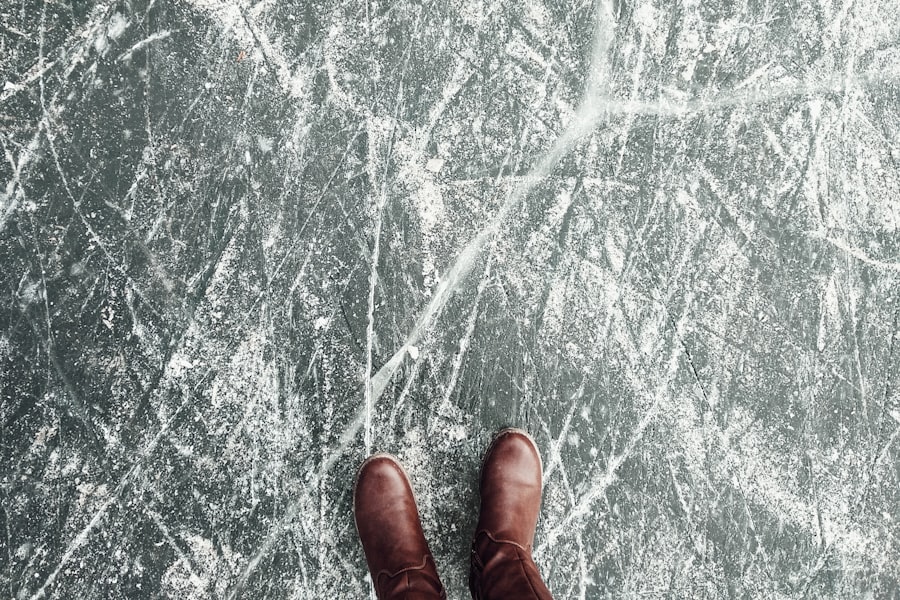
Beyond the inherent properties of the ice surface and the ambient temperature, the act of sliding itself plays a critical role in generating slipperiness. Friction, by its very definition, is the force that opposes motion between surfaces in contact. A byproduct of this opposition is the generation of heat. In the case of ice, this friction-induced heating can further contribute to the formation of a liquid water layer, exacerbating the slipperiness.
The Conversion of Mechanical Energy
When an object slides across an ice surface, the mechanical energy of the motion is converted into thermal energy due to frictional forces. This is a fundamental principle of physics. The work done by friction is dissipated as heat at the interface. While this heat generation might be minuscule in many solid-to-solid interactions, the low melting point of ice makes it highly susceptible to this effect. Even a small amount of generated heat can be sufficient to melt a thin layer of ice.
Energy Dissipation Pathways
The energy dissipated through friction can manifest in several ways: increased kinetic energy of the surface molecules, which we discussed earlier, and the actual breaking of hydrogen bonds to form liquid water. The exact proportion of energy going into each pathway is complex and depends on the specific materials and conditions. However, the net effect is a localized increase in temperature at the sliding interface.
The Self-Perpetuating Cycle
This friction-induced heating can create a self-perpetuating cycle. As more heat is generated, more ice melts, creating a thicker lubricating layer, which in turn reduces friction and allows for faster sliding, potentially generating even more heat. This feedback loop can lead to the characteristic extreme slipperiness observed under certain conditions, such as downhill skiing or ice skating.
The Role of Surface Speed
The faster an object slides across ice, the greater the rate of friction-induced heating. Therefore, the slipperiness of ice can be significantly influenced by the speed of motion. At very low speeds, the effect of friction-induced heating might be negligible, and the slipperiness might be more dominated by the quasi-liquid layer formed by pressure or surface vibrations. However, as speed increases, friction-induced heating becomes a more dominant factor.
Implications for Sports
This understanding has direct implications for sports like ice hockey and speed skating. The blades of skates are designed to be extremely sharp to concentrate the pressure and also to minimize the area of contact, thereby increasing the localized pressure. Furthermore, the high speeds achieved in these sports ensure significant friction-induced heating, contributing to the remarkable gliding ability of the athletes.
Molecular Dynamics and Surface Roughness

While the quasi-liquid layer and friction-induced heating provide macro-scale explanations, a deeper understanding requires delving into the molecular dynamics of the ice surface and how it interacts with the sliding object at the atomic level. The precise arrangement of molecules at the interface, the nature of their interactions, and the dynamic response to shear forces all contribute to the overall frictional behavior.
Interfacial Interactions and Adhesion
When two surfaces come into contact, there are attractive forces between their molecules, known as adhesive forces. In the case of ice, these forces are primarily due to hydrogen bonding and van der Waals forces. The strength of these adhesive forces influences the initial resistance to sliding. If these forces are weak, the object will be more prone to slipping. The presence of a liquid layer significantly weakens these direct adhesive interactions between the solid ice and the sliding object.
The Influence of Contaminants
The presence of impurities on the ice surface, such as dirt, salt, or even microscopic organic molecules, can significantly alter the interfacial interactions. These contaminants can either increase or decrease slipperiness by affecting the hydrogen bonding network or creating a different type of lubricant. For example, salt lowers the freezing point of water, making it easier to melt ice and thus increasing slipperiness.
The Behavior of Asperities at the Molecular Level
Even at the molecular level, the “asperities” of the ice surface can behave differently than predicted by classical friction models. The hydrogen bonds at the tips of these microscopic features might be more prone to breaking under shear. Furthermore, if a liquid layer is present, these asperities would interact with the liquid rather than directly with the opposing surface, leading to a different mode of friction.
Molecular Simulations and Experimental Evidence
Advanced techniques like molecular dynamics simulations have provided valuable insights into the behavior of water molecules at the ice-air and ice-solid interfaces. These simulations, by modeling the interactions of millions of atoms, can reveal how surface layers form and respond to external stimuli. Experimental techniques such as atomic force microscopy (AFM) and tribometry allow scientists to measure friction at the nanoscale and to probe the physical and chemical properties of the ice surface.
The phenomenon of ice being slippery can be attributed to the thin layer of water that forms on its surface, which reduces friction. This layer occurs due to pressure from weight or even the slight melting of ice at its surface. For a more in-depth exploration of this intriguing topic, you can read a related article that delves into the science behind ice and its properties. Understanding these principles can enhance our knowledge of winter sports and safety on icy surfaces. To learn more, check out this fascinating article.
Factors Influencing Slipperiness: Beyond Temperature
| Reason | Explanation |
|---|---|
| Low Friction | Ice has a low coefficient of friction, which means that it is very slippery when pressure is applied. |
| Surface Layer | When you walk on ice, the pressure from your weight causes a thin layer of ice to melt, creating a slippery surface. |
| Smooth Surface | The molecular structure of ice creates a smooth surface, which reduces friction and makes it slippery. |
| Temperature | Ice remains slippery because it stays at a temperature below freezing, preventing the surface from becoming rougher. |
While temperature is a primary driver for the state of water, the slipperiness of ice is not solely determined by whether it is above or below freezing. A multitude of other factors can influence the coefficient of friction between ice and another material. Understanding these nuances is crucial for applications ranging from designing better ice skates to preventing accidents on icy roads.
Ambient Humidity and Atmospheric Conditions
The humidity of the surrounding air plays a role in ice formation and surface properties. High humidity can contribute to frost formation on ice, which can alter its texture and slipperiness. Furthermore, changes in atmospheric pressure can also subtly influence the melting point of ice, although this effect is generally less significant than temperature or direct pressure.
The Impact of Condensation
In humid environments, especially when there are rapid temperature fluctuations, condensation can occur on ice surfaces, leading to a thin film of liquid water even at temperatures below freezing. This liquid film, similar to the quasi-liquid layer, acts as a lubricant, increasing slipperiness.
Surface Material Properties
The material in contact with the ice is equally important. The chemical composition, surface roughness, and adhesive properties of the sliding material all influence the frictional interaction. For example, a hydrophobic surface will interact differently with the ice and its potential liquid layer compared to a hydrophilic surface.
Hydrophobic vs. Hydrophilic Surfaces
Hydrophobic surfaces tend to repel water, which can lead to a more significant reduction in contact area and potentially less efficient lubrication by a water film. Conversely, hydrophilic surfaces might interact more readily with the water film, potentially leading to better adhesion and thus reduced slipperiness in some scenarios, or conversely, a more stable lubricating layer.
Ice Crystal Structure and Anisotropy
While ice typically forms a hexagonal crystal structure, imperfections within this structure, such as stacking faults or grain boundaries, can exist. These defects can affect the mechanical properties of the ice and its frictional behavior. Furthermore, ice exhibits anisotropy, meaning its properties can vary depending on the direction. The crystalline arrangement of water molecules means that sliding along certain crystallographic planes might be easier than sliding along others, leading to variations in slipperiness.
The Influence of Crystal Defects
The presence of impurities or stresses within the ice crystal can lead to the formation of defects. These defects can disrupt the regular lattice structure, potentially affecting the strength of hydrogen bonds and the ease with which molecular layers can slide past each other. This microscopic heterogeneity can contribute to the overall unpredictability of ice slipperiness.
Conclusion: A Dynamic and Complex Surface
The slipperiness of ice, far from being a simple consequence of its frozen state, is a dynamic and complex phenomenon. The quasi-liquid layer, whether formed by pressure, vibrational excitation, or friction-induced heating, is the primary culprit. This thin film of water acts as an effective lubricant, drastically reducing the coefficient of friction. However, the precise thickness and properties of this layer are influenced by a myriad of factors, including ambient temperature, applied pressure, surface speed, humidity, and the nature of the interacting materials.
The Ongoing Quest for Understanding
While significant progress has been made in understanding the molecular mechanisms behind ice slipperiness, research continues. Scientists are constantly refining models and employing advanced experimental techniques to gain a more comprehensive picture of this fascinating interplay between solid and liquid states. From the fundamental physics of hydrogen bonding to the practical implications for sports and transportation safety, the slippery science of ice continues to be a fertile ground for scientific exploration and innovation. The deceptive ease with which we slide on ice belies the intricate molecular ballet occurring at the interface, a testament to the elegant complexity of the natural world. The seemingly simple act of slipping on ice is, in reality, a sophisticated dance orchestrated by the molecular forces and energetic exchanges occurring at the very edge of freezing.

Why Ice Is Slippery Is Stranger Than You Think
FAQs
1. Why is ice slippery?
Ice is slippery because of a thin layer of water that forms on the surface when pressure is applied. This thin layer of water reduces the friction between the ice and any object that comes into contact with it, making it slippery.
2. What causes the thin layer of water on ice?
The pressure from an object, such as a foot or a skate blade, causes the ice to melt slightly, creating a thin layer of water on the surface. This process is known as “pressure melting” and is what makes ice slippery.
3. Does temperature play a role in making ice slippery?
Yes, temperature does play a role in making ice slippery. Warmer temperatures can accelerate the process of pressure melting, leading to a thicker layer of water on the ice and making it even more slippery.
4. Why does ice feel less slippery when it’s very cold?
When it’s very cold, there is less pressure melting and therefore less water on the surface of the ice. This can make the ice feel less slippery because there is less lubrication between the ice and any object that comes into contact with it.
5. Can anything be done to reduce the slipperiness of ice?
One way to reduce the slipperiness of ice is to add traction, such as using ice cleats or sand, to increase friction between the surface and any objects coming into contact with it. Additionally, using salt or other ice-melting substances can help to reduce the slipperiness of ice by lowering the freezing point and preventing the formation of a thin layer of water.