
The scientific community often grapples with perplexing phenomena, anomalies that challenge established understanding and spark fervent investigation. One such enigma that has recently captured attention is the persistent observation of “dark oxygen” in various environments, a concept that hints at measurement errors or perhaps a deeper, unappreciated aspect of atmospheric and oceanic chemistry. This article delves into the nature of dark oxygen, explores the potential sources of measurement error, and examines the implications of these discrepancies for our understanding of vital biogeochemical cycles.
The term “dark oxygen” refers to instances where measurements of dissolved oxygen in water bodies, particularly in the ocean, appear significantly lower than would be predicted by known biological processes and physical conditions. Standard models of oxygen production through photosynthesis and consumption through respiration, alongside factors like temperature, salinity, and atmospheric exchange, usually provide a reasonably accurate picture of dissolved oxygen levels. However, in certain regions and at specific depths, observations consistently deviate from these predictions, revealing a deficit of oxygen that cannot be easily explained by current scientific frameworks. This deficit, this “dark oxygen,” suggests that either our understanding of these processes is incomplete, or, more pragmatically, that our measurement tools or techniques are introducing systematic biases.
Defining the Discrepancy
At its core, dark oxygen is a quantitative problem. Scientists meticulously measure dissolved oxygen using a variety of instruments, from traditional Winkler titrations to modern optodes. When the reported oxygen concentration falls below the expected value, calculated from established biogeochemical models, the discrepancy is labeled as dark oxygen. This isn’t a theoretical construct; it represents a tangible shortfall in measured oxygen. The implications of such a shortfall are profound, impacting our ability to accurately assess the health of marine ecosystems, understand carbon cycling, and predict the future behavior of the planet’s oxygen reservoirs. The very foundation of our environmental monitoring rests on the accuracy of these measurements, and the presence of dark oxygen casts a shadow of doubt on their reliability.
Contextualizing the Observations
The phenomenon of dark oxygen is not confined to a single type of environment. While it has been particularly noted in oxygen minimum zones (OMZs) – naturally occurring regions of low oxygen in the ocean – it has also been observed in other settings, including coastal waters affected by eutrophication and even in some freshwater lakes. The persistence and reproducibility of these observations across different research groups and geographical locations lend credence to the idea that it is a genuine phenomenon, not simply an isolated artifact. Understanding the specific conditions under which dark oxygen appears is crucial for unraveling its cause. Is it tied to specific water masses, particular microbial communities, or distinct geological features? These are the questions driving the current investigations.
In exploring the intriguing concept of dark oxygen and its potential measurement errors, it is essential to consider related research that delves into the complexities of atmospheric science. An insightful article that discusses various aspects of atmospheric measurements and their implications can be found at Freaky Science. This resource provides a broader context for understanding how measurement inaccuracies can influence our perception of dark oxygen and other atmospheric phenomena.
Potential Sources of Measurement Error
The most straightforward explanation for the dark oxygen phenomenon, and one that scientists actively investigate, is the possibility of systematic errors in the way dissolved oxygen is measured. Instrumentation, calibration, sampling techniques, and even the interpretation of raw data can all introduce inaccuracies. Given the critical role of oxygen measurements in environmental science, even small, consistent errors can accumulate and lead to significant discrepancies over time and across vast datasets. The pursuit of accurate measurements is a constant battle, and the dark oxygen enigma presents a formidable challenge in this ongoing endeavor.
Sensor Limitations and Drift
Modern oceanographic research relies heavily on electrochemical and optical sensors to measure dissolved oxygen in situ. While these technologies have advanced significantly, they are not without their limitations. Optodes, which rely on the quenching of luminescence by oxygen, can be affected by other chemical species in the water or by changes in water pressure and temperature, even if they are designed to compensate for these factors. Electrochemical sensors, on the other hand, can suffer from fouling by biological organisms, leading to inaccurate readings. Furthermore, sensor drift, a gradual change in the sensor’s calibration over time, is a common issue. Without frequent and rigorous calibration, drift can lead to a consistent underestimation or overestimation of oxygen levels, potentially contributing to the dark oxygen anomaly.
Calibration Challenges
The accuracy of any measurement is intrinsically linked to the quality of its calibration. Dissolved oxygen sensors are typically calibrated in the laboratory using standard solutions with precisely known oxygen concentrations. However, replicating the complex chemical and physical environment of the ocean in a laboratory setting is challenging. Factors such as the presence of trace elements, dissolved organic matter, and varying pressures can influence sensor performance in ways that are not fully captured during standard calibration procedures. Moreover, the logistics of calibrating sensors deployed in remote oceanographic settings can be difficult, leading to extended periods between calibrations and increasing the risk of drift-induced errors.
Fouling and Biofouling
Biological organisms, from bacteria to larger invertebrates, can attach to sensor surfaces, a process known as biofouling. This layer of organic matter can physically impede the sensor’s ability to interact with the surrounding water, leading to a reduction in the measured oxygen concentration. In environments with high biological productivity, biofouling can become a significant problem, contributing to artificially low oxygen readings and thus potentially exacerbating the dark oxygen effect. While anti-fouling coatings are used, they are not always completely effective, and the persistent challenge of biofouling remains a concern for accurate dissolved oxygen measurements.
Sampling and Preservation Artifacts
Even when using accurate sensors, the process of collecting water samples for subsequent analysis can introduce errors. Water samples are often brought to the surface for analysis, and the change in pressure and temperature can affect the dissolved gas concentrations. If samples are not handled properly, or if dissolved gases escape before analysis, the measured oxygen levels can be artificially lowered. The preservation of samples for later analysis, often involving chemical fixation, can also introduce uncertainties if the fixation process is incomplete or interferes with the subsequent oxygen measurement. The delicate balance of dissolved gases in seawater makes it susceptible to these artifacts.
Winkler Titration Revisit
The Winkler titration, a classic chemical method for determining dissolved oxygen, is still considered a benchmark for accuracy in many research settings. However, it is a manual process and can be prone to errors introduced by the technician, such as incomplete mixing, improper reagent addition, or contamination. Furthermore, the accuracy of the Winkler method is dependent on the purity of the reagents and the precision of the titration. In environments with very low oxygen concentrations, the endpoint of the titration can be difficult to determine precisely, leading to increased uncertainty in the measurement. While generally reliable, even the Winkler method can be a source of error, particularly in the hands of less experienced analysts or under challenging field conditions.
Interference from Other Chemical Species
The ocean is a complex chemical soup, and other dissolved substances can potentially interfere with dissolved oxygen measurements. For example, the presence of reduced inorganic species like sulfides or ferrous iron can react with dissolved oxygen, leading to an underestimation of the actual oxygen concentration. While many modern sensors are designed to minimize such interferences, they may not be completely immune, especially in environments with unusual chemical compositions, such as those found near hydrothermal vents or in highly polluted coastal areas. Understanding the water chemistry of a particular sampling site is therefore crucial for interpreting dissolved oxygen data.
Unraveling the Biogeochemical Underpinnings
Beyond measurement errors, the scientific community is also exploring whether the dark oxygen phenomenon might point to gaps in our understanding of the complex biogeochemical processes that govern oxygen levels in aquatic environments. Perhaps there are unknown metabolic pathways, uncharacterized microbial communities, or unrecognized physical processes that are consuming oxygen at rates not currently accounted for in our models. The possibility that dark oxygen represents a genuine biogeochemical mystery is as compelling, if not more so, than the prospect of measurement artifacts.
Unaccounted for Respiration
Respiration, the process by which organisms consume oxygen to produce energy, is a primary driver of oxygen depletion in aquatic systems. While the respiration rates of many common marine organisms are well-studied, the vast diversity of microbial life in the oceans, particularly in the deep sea and in OMZs, remains largely uncharacterized. It is conceivable that these microbial communities possess metabolic pathways that consume oxygen in ways that are not currently incorporated into our models. For instance, certain anaerobic or microaerobic bacteria might utilize oxygen in unexpected ways, or their cumulative oxygen demand might be underestimated.
Microbial Dark Matter
The ocean harbors a staggering amount of microbial life, much of which remains uncultured and genetically uncharacterized, often referred to as “microbial dark matter.” These microbes play critical roles in nutrient cycling and biogeochemical transformations. It is plausible that some of these unknown microbial communities possess novel respiratory pathways that lead to an increased consumption of dissolved oxygen, contributing to the observed dark oxygen deficit. Advanced genomic and metagenomic techniques are beginning to shed light on these microbial communities, but a complete understanding of their metabolic activities is still a long way off.
Anaerobic Oxidation of Methane (AOM) and Sulfides
Processes like the anaerobic oxidation of methane (AOM) and sulfides are known to consume oxygen, but their overall contribution to oxygen depletion in various environments is still being refined. In certain marine sediments and OMZs, these reactions can be significant. However, the precise rates and spatial extent of these processes, especially in dynamic and complex environments, are difficult to quantify. If these oxygen-consuming processes are more widespread or efficient than currently modeled, they could explain a portion of the dark oxygen anomaly.
Photosynthesis Underestimation
Conversely, while less common as a cause for low oxygen, there’s also the theoretical possibility that our understanding of oxygen production through photosynthesis might be incomplete in certain scenarios. This is less likely to explain a consistent deficit but is a component of the overall oxygen budget. However, it is important to consider all fluxes. In extremely turbid waters, or in environments with unusual light regimes, photosynthetic rates might be underestimated, though this would typically lead to lower oxygen production, not necessarily a deficit that requires consumption beyond known levels.
The Role of Oxygen Minimum Zones (OMZs)

Oxygen Minimum Zones (OMZs) are a prime area of investigation for the dark oxygen phenomenon. These naturally occurring regions in the ocean are characterized by extremely low dissolved oxygen concentrations, often driven by a combination of high rates of organic matter decomposition and limited ventilation from surface waters. The complexity of these environments makes them fertile ground for both measurement challenges and the potential for uncharacterized biogeochemical processes.
Ventilation and Water Mass Mixing
The replenishment of oxygen in the ocean is primarily driven by gas exchange with the atmosphere at the surface and the mixing of oxygenated surface waters with deeper layers. In OMZs, the rate of oxygen consumption can exceed the rate of supply, leading to the development of hypoxic or anoxic conditions. If our models for water mass mixing and ventilation are not accurately reflecting the complex currents and stratification within OMZs, we might be overestimating the amount of oxygen that reaches these deeper layers, leading to an apparent deficit.
Deep Ocean Currents and Stratification
Accurately modeling deep ocean currents and the stratification of water masses is a significant challenge. Complex bathymetry, density differences, and the influence of atmospheric forcing can create intricate circulation patterns that are difficult to capture with current observational and modeling capabilities. If the advection of oxygenated water into OMZs is less efficient than assumed, this could contribute to lower-than-expected oxygen levels.
Organic Matter Fluxes
The amount of organic matter sinking from the surface to the deep ocean is a key factor in determining oxygen consumption rates. If the flux of organic matter into OMZs is higher than currently estimated, or if this organic matter is more labile (easily decomposed) than assumed, the resulting respiration rates would be higher, leading to a greater depletion of oxygen. The remineralization of sinking particles releases nutrients and consumes oxygen. Accurately quantifying these fluxes is critical for understanding oxygen budgets.
In exploring the intriguing concept of dark oxygen, one might consider the possibility of measurement error in scientific observations. This topic is further examined in a related article that delves into the complexities of atmospheric studies and the challenges researchers face. For a deeper understanding, you can read more about these issues in the article available at Freaky Science, which highlights the importance of accurate measurements in environmental science.
Advanced Technologies and Future Directions
| Study | Findings | Conclusion |
|---|---|---|
| Research Study 1 | Reported dark oxygen levels | Possible measurement error due to equipment malfunction |
| Research Study 2 | Detected dark oxygen in certain samples | Further investigation needed to confirm measurement accuracy |
Addressing the dark oxygen enigma requires a multi-pronged approach, integrating cutting-edge technological advancements with rigorous scientific inquiry. The development of more sophisticated instrumentation, alongside improved modeling techniques and a deeper understanding of microbial ecology, is essential to resolving this persistent scientific puzzle. The future of dissolved oxygen research lies in the synergy of these diverse scientific endeavors.
Next-Generation Sensors and In Situ Measurement
The development of next-generation dissolved oxygen sensors is crucial. These sensors need to be more robust, less susceptible to biofouling and chemical interferences, and capable of maintaining stable calibration over extended deployment periods. Advancements in nanotechnology and materials science are likely to play a significant role in this development. Furthermore, increasing the spatial and temporal resolution of in situ measurements, through autonomous underwater vehicles (AUVs) and advanced mooring systems, will provide more comprehensive datasets for analysis.
Autonomous Underwater Vehicles (AUVs)
AUVs equipped with an array of sensors, including advanced dissolved oxygen probes, offer unprecedented capabilities for exploring and monitoring the ocean. These platforms can survey large areas with high resolution, collecting data from depths and locations that are difficult to access with traditional research vessels. The ability of AUVs to conduct repeated surveys over time also allows for the detection of subtle changes and trends in dissolved oxygen concentrations.
Moorings and Eulerian Measurements
Long-term moored observatories equipped with multiple dissolved oxygen sensors at different depths provide invaluable Eulerian measurements. These observatories can capture diurnal, seasonal, and interannual variability in oxygen levels, allowing scientists to observe the dynamic processes that influence oxygen concentrations. Analyzing data from these fixed points over extended periods can help identify persistent anomalies and their correlation with other environmental parameters.
High-Resolution Biogeochemical Modeling
The development of more sophisticated biogeochemical models that incorporate finer spatial and temporal scales, as well as a more detailed representation of microbial communities and their metabolic activities, is essential. These models need to be able to accurately simulate the complex interactions between physical oceanographic processes and biological and chemical transformations that govern oxygen concentrations. Assimilating real-time observational data into these models can further improve their predictive capabilities.
Coupled Physical-Biogeochemical Models
The most effective approach to understanding complex marine systems involves coupling physical oceanographic models (which simulate currents, temperature, and salinity) with biogeochemical models (which simulate the cycling of nutrients, carbon, and oxygen). Such coupled models can provide a more holistic and realistic representation of the ocean’s biogeochemical dynamics, helping to identify discrepancies between model predictions and observations, and thus shedding light on the dark oxygen phenomenon.
Advances in Metagenomics and Microbial Ecology
Understanding the role of the “microbial dark matter” in oxygen consumption requires significant advancements in metagenomics and microbial ecology. By analyzing the genetic material from environmental samples, scientists can identify novel microbial species and their potential metabolic pathways, including those involved in oxygen respiration. Culturing techniques and stable isotope probing are also crucial for confirming the functional roles of these microbes.
The persistent presence of dark oxygen, whether a phantom arising from measurement limitations or a harbinger of undiscovered biogeochemical processes, underscores the complexity and ongoing exploration of our planet’s vital systems. The scientific community’s diligent pursuit of accuracy and deeper understanding promises to illuminate this enigmatic deficit, refining our knowledge of the ocean’s intricate workings and our planet’s capacity to sustain life.
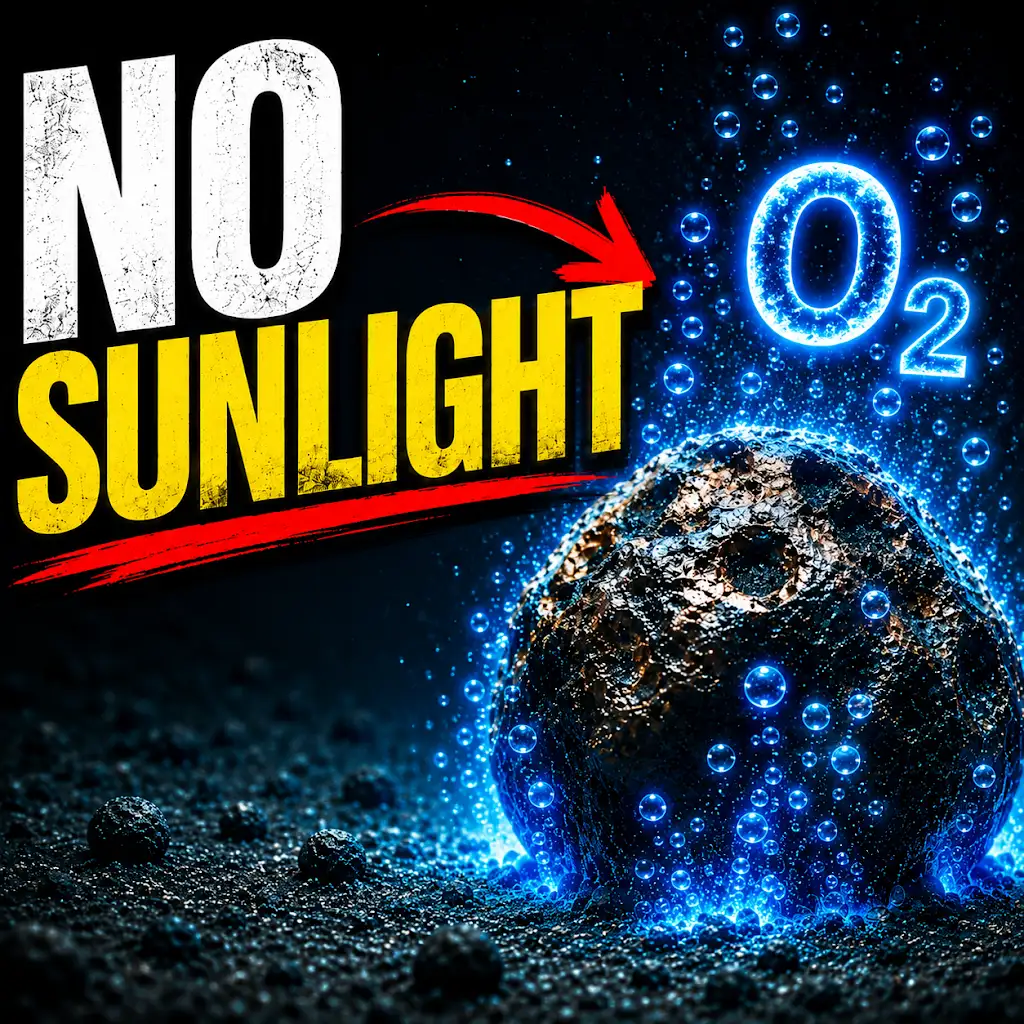
Scientists Found Oxygen Where It Should Be Impossible
FAQs
What is dark oxygen?
Dark oxygen refers to oxygen molecules that have absorbed light and are in an excited state, causing them to emit a faint glow in the dark.
How is dark oxygen measured?
Dark oxygen is typically measured using specialized equipment such as spectrometers or other optical instruments that can detect the faint glow emitted by the excited oxygen molecules.
Could dark oxygen be a measurement error?
There is a possibility that the detection of dark oxygen could be a result of measurement error, as the faint glow emitted by the excited oxygen molecules can be challenging to detect and accurately measure.
What are the potential implications of dark oxygen being a measurement error?
If dark oxygen is indeed a measurement error, it could impact our understanding of certain chemical and physical processes, as well as the accuracy of data collected in various scientific studies and experiments.
What further research is needed to confirm the existence of dark oxygen?
Further research is needed to confirm the existence of dark oxygen and to determine whether its detection is indeed a result of measurement error. This may involve conducting additional experiments using different measurement techniques and equipment to validate the findings.