A significant and perplexing scientific discovery has emerged from the crushing depths of the ocean, hinting at processes hitherto unknown or poorly understood. Researchers aboard the advanced submersible Triton, exploring a remote trench in the Pacific Ocean, have stumbled upon a substantial and localized anomaly in dissolved oxygen levels. This region, characterized by unusually high concentrations of oxygen, defies current scientific models of deep-sea oxygen distribution and has ignited a flurry of speculation and investigation among marine biologists and oceanographers.
The discovery was not the primary objective of the Triton‘s expedition. The team, led by Dr. Aris Thorne of the Oceanic Research Institute, was initially focused on mapping the geological features of the Mariana Trench’s lesser-explored western arm. Their sophisticated sensor arrays, designed to measure pressure, temperature, salinity, and dissolved gases, began registering peculiar readings approximately 8,000 meters below the surface.
Initial Data Streams: A Statistical Outlier
The first indication of something unusual came from the dissolved oxygen sensors. Typically, at these extreme depths, oxygen levels are expected to be relatively low and consistent, a consequence of the slow diffusion of oxygen from the surface and its consumption by deep-sea organisms. However, the Triton‘s instruments began to report values that were, in some areas, nearly double the expected average.
The Threshold of Surprise
“At first, we thought it was a calibration error,” admitted Dr. Thorne in a virtual press conference. “These numbers were so far outside the predicted range, it was almost unbelievable. We ran diagnostics on the sensors multiple times, checked the data logs, and even cross-referenced with historical data from similar expeditions. The anomaly persisted, unwavering.”
Mapping the Boundaries: Defining the “Oxygen Bubble”
As the Triton meticulously navigated the abyssal plains and subaquatic canyons, the extent of the oxygen anomaly became clearer. It wasn’t a uniform, widespread phenomenon but rather appeared to be concentrated within a specific, albeit sizable, geographic area. The researchers have informally dubbed this zone the “Oxygen Bubble.”
A Geographically Constrained Phenomenon
The anomaly was observed to extend over an area of roughly 50 square kilometers, a significant patch in the context of deep-sea exploration. Within this zone, dissolved oxygen concentrations consistently hovered between 15-18 mg/L, whereas adjacent areas, even at the same depth, registered values closer to 8-10 mg/L.
Depth and Pressure Considerations
The immense pressure at these depths (over 800 atmospheres) typically affects the solubility of gases. While higher pressure generally leads to higher gas solubility, the observed oxygen levels far surpassed what could be explained by pressure alone. The anomaly was also noted to be relatively stratified, with the highest concentrations observed at depths between 7,800 and 8,200 meters.
Recent studies have highlighted a concerning anomaly in deep ocean oxygen measurements, which could have significant implications for marine ecosystems and global climate patterns. For a more in-depth exploration of this topic, you can refer to the article on the subject at Freaky Science, where researchers discuss the potential causes and consequences of declining oxygen levels in the deep sea.
Potential Explanations: Unraveling the Mystery
The discovery of an oxygen-rich patch in the deep ocean has prompted a wide array of hypotheses from the scientific community, ranging from geological processes to novel biological activity. No single explanation currently suffices, and it is highly probable that a confluence of factors is at play.
Geological Hypotheses: The Earth’s Internal Processes
The deep ocean is intrinsically linked to the Earth’s geological engine. Phenomena such as volcanic activity, hydrothermal vents, and tectonic plate movements can significantly influence the chemical composition of the surrounding water.
Hydrothermal Vent Activity: A Leading Contender
Hydrothermal vents, often referred to as “black smokers” or “white smokers,” are openings in the seafloor that release superheated, mineral-rich water. While typically associated with the release of reduced gases like hydrogen sulfide, some vents can also emit oxygenated fluids, especially in specific geological settings.
The Oxygen Source Enigma
“While some hydrothermal fluids can contain dissolved oxygen, the sheer volume and the localized, relatively high concentration suggest something more complex than standard vent emissions,” explained Dr. Lena Hanson, a geochemist who has joined the investigation. “We need to determine the precise chemical signature of the vent fluids in this specific region and see if they correlate with the observed oxygen anomaly. It’s possible we’ve found a novel type of vent system or a unique chemical interaction occurring at these depths.”
Seafloor Subduction and Mineral Interactions
The western arm of the Mariana Trench is a region of intense subduction, where one tectonic plate slides beneath another. This geological activity can lead to the formation of deep-sea fissures and the interaction of seawater with minerals at high temperatures and pressures.
Oxidative Reactions in the Crust
It is theorized that oxygen dissolved in seawater could be reacting with certain minerals within the Earth’s crust or mantle that have been brought closer to the seafloor through tectonic processes. These reactions could potentially release oxygen into the surrounding water. However, the exact mineralogical compositions and the specific reactions that would lead to such a significant localized increase in dissolved oxygen remain a subject of intense theoretical modeling.
Biological Hypotheses: The Unseen Architects
The deep ocean, despite its extreme conditions, teems with life. The possibility that biological processes are responsible for the oxygen anomaly cannot be discounted, even if the mechanisms are currently speculative.
Unidentified Photosynthetic Organisms?
Photosynthesis, the process by which organisms use sunlight to convert carbon dioxide and water into energy and oxygen, is the primary source of oxygen on Earth. While sunlight does not penetrate to these abyssal depths, some extremophilic organisms have been known to utilize chemosynthesis, deriving energy from chemical reactions.
The Implausibility of Surface-Like Photosynthesis
“The idea of active photosynthesis at 8,000 meters is highly improbable due to the absence of light,” stated Dr. Kenji Tanaka, a deep-sea microbiologist. “However, we are exploring the possibility of chemosynthetic organisms that might utilize specific chemical compounds, possibly released from geological sources, in a way that indirectly leads to oxygen production or retention. This is a highly speculative avenue, but one that cannot be entirely dismissed.”
Novel Metabolic Pathways
The immense pressure and unique chemical environment of the deep ocean can drive the evolution of novel metabolic pathways in microorganisms. It is conceivable that a previously undiscovered species or community of microbes possesses a unique biological process that either produces oxygen or significantly reduces its consumption in a localized area.
The “Oxygen Sink” Hypothesis Reversal
Typically, deep-sea environments are considered “oxygen sinks,” where oxygen is consumed by respiration and decomposition. The discovery of an oxygen “source” or a significant reduction in oxygen consumption is a paradigm shift. Researchers are actively working to collect water and sediment samples from within and around the anomaly to analyze the microbial communities present and to search for genetic markers of unusual metabolic activities.
Implications and Future Research: A New Frontier

The discovery of this deep-ocean oxygen anomaly opens up a Pandora’s Box of scientific inquiry. Understanding its origin and implications could revolutionize our understanding of oceanographic processes, biogeochemical cycles, and potentially even the search for life beyond Earth.
Recent studies have highlighted a concerning anomaly in deep ocean oxygen measurements, which could have significant implications for marine ecosystems. For a deeper understanding of this issue, you can explore a related article that discusses the potential causes and consequences of declining oxygen levels in our oceans. This article provides valuable insights into how these changes might affect marine life and global climate patterns. To read more about this topic, visit this informative article.
Rethinking Oceanographic Models
Current models of oceanic oxygen distribution are based on established principles of diffusion, advection, and consumption. This anomaly challenges these models and necessitates a re-evaluation of the factors that influence oxygen levels in the deep sea.
The Global Oxygen Budget
The global ocean plays a crucial role in regulating Earth’s atmosphere by acting as a vast carbon sink and oxygen reservoir. Even localized anomalies, if they are widespread or represent a significant deviation from expected norms, could have implications for the broader oceanographic system.
Estimating the Impact
“If such anomalies are more common than we currently believe, it could significantly alter our calculations of oceanic oxygen production and consumption rates on a global scale,” Dr. Thorne cautioned. “We need to determine if this is an isolated incident or a symptom of a more pervasive, yet undetected, phenomenon.”
The Search for Extraterrestrial Life
The extreme environments of Earth’s deep oceans share some similarities with potential habitats on other celestial bodies, such as the subsurface oceans of icy moons like Europa or Enceladus. The discovery of life or novel geochemical processes in these challenging terrestrial environments can inform the search for extraterrestrial life.
Analog Environments for Astrobiology
“Environments like these deep-sea trenches are considered analogs for potential exoplanetary habitats,” explained Dr. Anya Sharma, an astrobiologist. “If we find that complex chemical or biological processes can sustain unusual oxygen levels in such an extreme environment on Earth, it expands the possibilities for life to exist in similar conditions elsewhere in the solar system. It suggests that our assumptions about what constitutes a ‘habitable’ environment might be too narrow.”
Advanced Sampling and Analysis: The Next Steps
The immediate priority for the research team is to return to the site of the anomaly with more specialized equipment for direct sampling and in-situ analysis.
Deploying Autonomous Underwater Vehicles (AUVs)
The Triton will be deploying a fleet of advanced AUVs equipped with enhanced sensor suites and sampling capabilities. These AUVs will be able to conduct more extensive mapping of the anomaly’s boundaries and collect a wider range of samples without the limitations of human-operated submersibles.
Detailed Chemical and Biological Profiling
The collected water and sediment samples will undergo rigorous analysis in specialized laboratories. This includes advanced mass spectrometry to identify chemical compounds, DNA sequencing to understand microbial diversity and potential metabolic pathways, and isotopic analysis to trace the origin of the oxygen.
Isotopic Signatures: A Fingerprint of Origin
The isotopic composition of the dissolved oxygen can provide critical clues about its origin. Different geological and biological processes tend to leave distinct isotopic fingerprints. By analyzing these fingerprints, scientists hope to distinguish between oxygen produced through geological reactions versus biological processes.
Conclusion: A Deep-Sea Enigma Unfolding

The discovery of this unusual deep-ocean oxygen anomaly represents a significant step forward in our understanding of the complex and often surprising processes that govern our planet’s oceans. While the exact cause remains a mystery, the potential explanations are as vast and intriguing as the ocean depths themselves. This finding underscores the vastness of our ignorance about the deep sea and the critical importance of continued exploration and research. As the scientific community mobilizes to unravel this enigma, the “Oxygen Bubble” in the Pacific promises to reshape our understanding of oceanography, geochemistry, and perhaps even our place in the universe. The deep ocean, it seems, still holds many profound secrets waiting to be revealed.
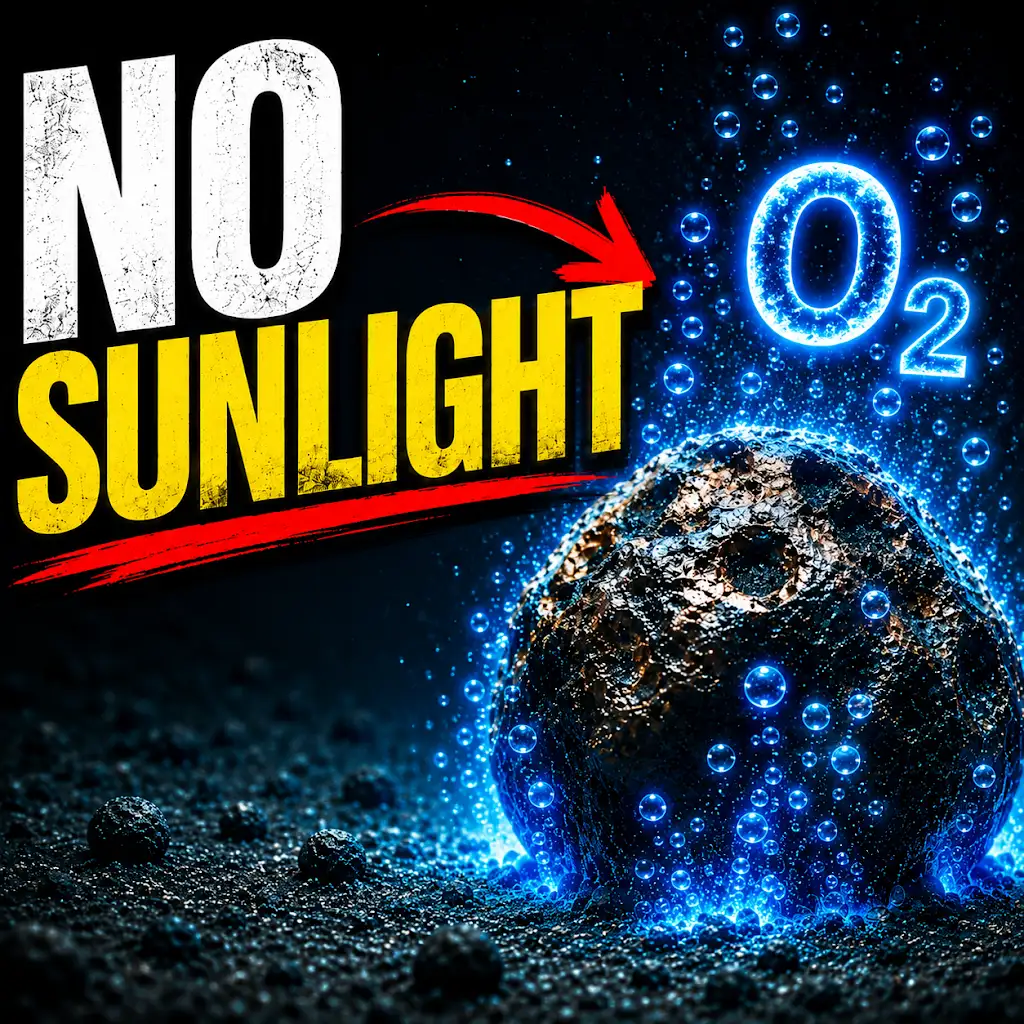
Scientists Found Oxygen Where It Should Be Impossible
FAQs
What is the deep ocean oxygen measurement anomaly?
The deep ocean oxygen measurement anomaly refers to a significant decrease in oxygen levels in the deep ocean, particularly below 1000 meters depth. This anomaly has been observed in various regions of the world’s oceans and is a cause for concern due to its potential impact on marine life and ecosystems.
What are the potential causes of the deep ocean oxygen measurement anomaly?
The deep ocean oxygen measurement anomaly may be attributed to a combination of natural and human-induced factors. Natural causes may include changes in ocean circulation patterns, while human-induced factors such as climate change and increased nutrient runoff from land can also contribute to the anomaly.
What are the potential consequences of the deep ocean oxygen measurement anomaly?
The decrease in oxygen levels in the deep ocean can have significant consequences for marine life and ecosystems. It can lead to habitat loss for deep-sea organisms, disrupt food webs, and potentially result in the expansion of oxygen-depleted “dead zones” in the ocean.
How is the deep ocean oxygen measurement anomaly being monitored and studied?
Scientists are using a variety of methods to monitor and study the deep ocean oxygen measurement anomaly, including oceanographic research cruises, autonomous underwater vehicles, and remote sensing technologies. These efforts aim to better understand the causes and potential impacts of the anomaly.
What are potential solutions to address the deep ocean oxygen measurement anomaly?
Addressing the deep ocean oxygen measurement anomaly will require a multi-faceted approach that includes reducing greenhouse gas emissions to mitigate climate change, improving nutrient management to reduce runoff into the ocean, and implementing conservation measures to protect vulnerable deep-sea ecosystems. Collaboration among scientists, policymakers, and stakeholders will be essential in addressing this complex issue.