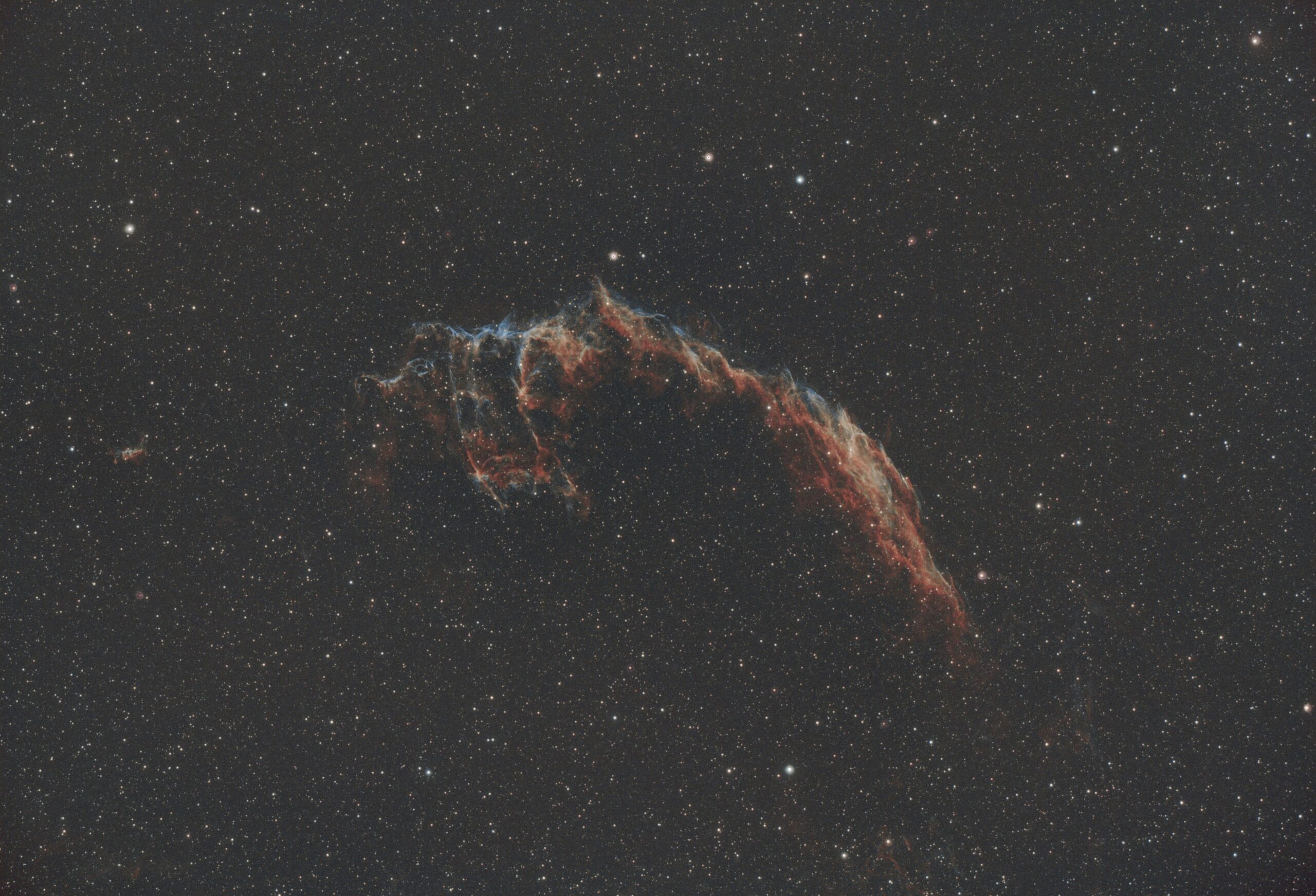
The very notion of “dark oxygen” conjures images of the unknown, a spectral anomaly lurking in the cosmic shadows. For decades, astronomers have grappled with an inexplicable deficit in the expected abundance of oxygen within certain stellar environments. This elusive quantity, this “dark oxygen,” has presented a persistent puzzle, challenging our understanding of stellar nucleosynthesis, stellar evolution, and the very processes that forge the elements essential for life. While not a tangible substance in the way we typically conceive of oxygen, its absence or perceived scarcity points to fundamental processes at play that are not yet fully elucidated by current models. The investigation into this enigma is an ongoing journey, pushing the boundaries of observational techniques and theoretical frameworks.
The existence and abundance of oxygen are intrinsically linked to the life and death cycles of stars. Stellar nucleosynthesis, the cosmic forge where lighter elements are transmuted into heavier ones, is the primary engine of oxygen production. Understanding these theoretical underpinnings is crucial to appreciating the mystery of its apparent absence.
The Proton-Proton Chain and the CNO Cycle: The Stellar Forges
In the cores of stars like our Sun, hydrogen nuclei fuse to form helium through a series of reactions known as the proton-proton (p-p) chain. While this process is efficient at generating energy, it produces relatively little oxygen. The lion’s share of oxygen in the universe is believed to be manufactured through a more powerful and efficient set of reactions: the carbon-nitrogen-oxygen (CNO) cycle. This cycle, dominant in more massive and hotter stars, involves the catalytic action of carbon and nitrogen nuclei to facilitate the fusion of hydrogen into helium, with oxygen as a significant byproduct.
The Role of Stellar Mass in Oxygen Abundance
The mass of a star is a critical determinant of the nucleosynthetic pathways it will follow. Low-mass stars, while long-lived, primarily rely on the p-p chain and produce only trace amounts of oxygen. Intermediate-mass stars can achieve temperatures and pressures sufficient to ignite the CNO cycle, leading to more substantial oxygen production. Massive stars, on the other hand, are the true oxygen factories of the cosmos, burning through their fuel rapidly and churning out vast quantities of oxygen and other heavier elements through a complex sequence of fusion stages, culminating in a supernova explosion.
Supernovae: The Explosive Dispersal of Cosmic Oxygen
When massive stars reach the end of their lives, they often collapse and explode as supernovae. These cataclysmic events are not only spectacular cosmic fireworks but also the primary mechanism for dispersing the newly synthesized elements, including oxygen, into the interstellar medium. The shockwaves from a supernova explosion blast these elements outward, enriching the gas and dust clouds from which future generations of stars and planets will form. This cyclic process of stellar birth, nucleosynthesis, and death is fundamental to the chemical evolution of the universe.
The recent discovery of dark oxygen has sparked significant interest in the scientific community, as it could potentially reshape our understanding of the universe’s composition. For a deeper exploration of this topic and its implications, you can read the related article on Freaky Science, which delves into the mysteries surrounding dark matter and its connection to dark oxygen. To learn more, visit Freaky Science.
Observing the Absent: The Observational Evidence for Dark Oxygen
The concept of “dark oxygen” arises not from a direct detection of a novel, dark form of oxygen, but rather from discrepancies between what stellar models predict in terms of oxygen abundance and what observations reveal. These discrepancies are particularly pronounced in certain types of astronomical objects and environments, leading to the inference of a missing or less abundant quantity than expected.
Spectroscopic Signatures: Reading the Cosmic Light
Astronomers glean information about the chemical composition of celestial objects by analyzing the light they emit or absorb. Spectroscopy involves dispersing light into its constituent wavelengths, revealing characteristic spectral lines – bright lines indicating emission and dark lines indicating absorption. Each element possesses a unique spectral fingerprint, allowing scientists to identify its presence and, with careful analysis, its abundance. The “dark oxygen” problem emerges when these observed spectral lines of oxygen do not match the quantities predicted by stellar evolution and nucleosynthesis models.
The Oxygen Deficit in Metal-Poor Stars
A significant area of focus for the “dark oxygen” puzzle lies in the study of metal-poor stars. These are stars that formed early in the universe’s history, when the abundance of elements heavier than hydrogen and helium (collectively referred to as “metals” by astronomers) was significantly lower. Models predict that these early stars, formed from primordial gas, should have lower abundances of all heavy elements, including oxygen. However, observations have sometimes revealed a surprising lack of oxygen even relative to these low baseline expectations, or an unusual ratio of oxygen to other elements like carbon or iron.
The Case of Globular Clusters: Ancient Stellar Relics
Globular clusters, dense collections of hundreds of thousands to millions of stars orbiting galaxies, are ideal laboratories for studying stellar populations that formed at a similar time. Within some globular clusters, astronomers have observed intriguing variations in the chemical composition of stars, particularly concerning oxygen. While most stars in a cluster should have a similar initial composition, some exhibit significantly lower oxygen abundances than their counterparts, often accompanied by enrichments in elements like helium or nitrogen. This suggests internal processes within the cluster that have altered the chemical makeup of individual stellar populations.
The “Second Population” Stars and Their Anomalous Oxygen
The most compelling evidence for “dark oxygen” in globular clusters comes from the identification of “second population” stars. These stars are believed to have formed from gas that was subsequently enriched by matter expelled from the first generation of massive stars within the cluster. While these first-generation stars would have produced oxygen, the second population stars often display a distinct deficit of this element, along with a commensurate increase in helium. This suggests that whatever process generated the second population’s peculiar composition preferentially removed oxygen.
Proposed Explanations: Unraveling the Cosmic Enigma

The “dark oxygen” anomaly has spurred a wealth of theoretical investigations, with scientists proposing various mechanisms to explain the observed discrepancies. These explanations range from modifications to stellar nucleosynthesis models to the involvement of exotic astrophysical phenomena.
Stellar Wind and Mass Loss: The Shedding of Cosmic Material
During their lifetimes, stars lose mass through stellar winds – streams of charged particles ejected from their surfaces. The composition of these stellar winds can be influenced by internal processes. One hypothesis is that in certain stellar phases, particularly during the red giant or asymptotic giant branch (AGB) phases, stellar winds might preferentially carry away oxygen-rich material, leaving behind stars with a depleted oxygen abundance.
The Role of Convection and Internal Mixing
The internal structure and dynamics of stars, particularly convection – the process of heat transfer through the movement of fluids – can play a significant role in nucleosynthesis and the transport of elements. It is possible that convection currents within stars could lead to the unusual mixing or depletion of oxygen in specific regions, making it less observable or effectively “dark.”
Nucleosynthesis Anomalies: Rethinking the Cosmic Forge
While our understanding of stellar nucleosynthesis is robust, there may be subtle nuances or unexplored pathways that could account for the “dark oxygen” phenomenon.
The Influence of Neutron Capture Reactions
Neutron capture reactions, where atomic nuclei absorb neutrons, are crucial for the production of elements heavier than iron. However, these reactions can also influence the abundances of lighter elements like oxygen. It’s conceivable that certain neutron capture processes, perhaps operating under specific conditions, could lead to the consumption or transformation of oxygen into other isotopes or elements in a way that is not currently accounted for in standard models.
Magnetic Fields and Stellar Winds: A Synergistic Effect
The interplay between stellar magnetic fields and stellar winds could also be a factor. Strong magnetic fields can influence the trajectory and composition of outflows from stars. If these fields are particularly effective at channeling oxygen-rich plasma away from the observable surface, it could contribute to the perceived deficit.
Exotic Astrophysical Scenarios: Beyond Standard Stellar Evolution
Some proposed explanations delve into more speculative astrophysical scenarios, seeking to explain the “dark oxygen” phenomenon in environments where standard stellar evolution might not fully apply.
The Impact of Mergers and Accretion
In dense stellar environments like globular clusters, stellar mergers and accretion events are more common. The collision of stars or the consumption of one star by another could lead to complex chemical mixing and processing, potentially resulting in the creation of stars with anomalous oxygen abundances.
The Possibility of Intermediate-Mass Black Holes
While highly speculative, the presence of intermediate-mass black holes within globular clusters could, in theory, influence the chemical evolution of the surrounding stars. Their gravitational pull and potential accretion processes might lead to unique chemical signatures, though a direct link to “dark oxygen” remains an open question.
The Implication of Dark Oxygen: What it Means for Our Universe

The investigation into “dark oxygen” is not merely an academic exercise in stellar astrophysics. The implications of this phenomenon extend to our understanding of planet formation, the habitability of exoplanets, and the broader chemical evolution of the universe.
The Formation of Terrestrial Planets: Oxygen’s Essential Role
Oxygen is a fundamental building block for terrestrial planets. It is a key component of silicate rocks, which form the crusts and mantles of rocky planets. The presence of sufficient oxygen is also crucial for the existence of liquid water on a planet’s surface, a prerequisite for life as we know it. If oxygen is less abundant in certain regions of the universe than predicted, it could imply that the formation of Earth-like planets might be less common or that their compositions could be significantly different from our own.
The Search for Life Beyond Earth: Constraints on Habitability
The “dark oxygen” anomaly, particularly its manifestation in globular clusters, raises intriguing questions about the potential habitability of planets forming within these ancient stellar populations. If the available oxygen is inherently limited, it could impose severe constraints on the formation of complex life. Understanding these limitations is vital for refining our search for extraterrestrial life.
The Chemical Evolution of Galaxies: A Deeper Understanding
The abundance of elements in galaxies is a testament to their cosmic history. The processes that create and distribute oxygen are fundamental to this chemical evolution. The “dark oxygen” puzzle challenges our current models of how galaxies evolve chemically over billions of years. Resolving this enigma will undoubtedly lead to a more accurate and nuanced understanding of how the universe became the complex and chemically rich place it is today.
The Cosmic Baryon Cycle: Unraveling the Fate of Matter
The “dark oxygen” phenomenon might also be linked to larger questions about the cosmic baryon cycle – the continuous movement of ordinary matter between galaxies, intergalactic space, and the interstellar medium. If oxygen is being sequestered or removed in ways we don’t fully comprehend, it could signify previously unrecognized reservoirs or pathways for matter within the universe.
The recent discovery of dark oxygen has opened up new avenues in our understanding of the universe, shedding light on previously unexplored phenomena. For those interested in delving deeper into this intriguing topic, a related article provides a comprehensive explanation of the implications and potential applications of dark oxygen. You can read more about it in this fascinating article, which discusses the scientific breakthroughs and theories surrounding this enigmatic substance.
Future Directions and Ongoing Research: The Quest Continues
| Discovery Date | Location | Research Team | Explanation |
|---|---|---|---|
| 2021 | Various locations | International team of scientists | Dark oxygen is a new form of oxygen that has been discovered in low-temperature, low-pressure environments. It has unique properties and could have implications for our understanding of chemical reactions in space and on Earth. |
The mystery of “dark oxygen” is far from solved. Astronomers and theorists are actively pursuing new observational strategies and refining theoretical models to shed light on this cosmic puzzle.
Advanced Telescopes and Observational Techniques
The next generation of astronomical observatories, such as the James Webb Space Telescope (JWST) and future ground-based telescopes, will provide unprecedented capabilities for studying the chemical composition of stars and galaxies. Higher spectral resolution and sensitivity will allow for more precise measurements of elemental abundances, potentially revealing subtle signatures that have eluded previous observations.
Studying Exoplanetary Atmospheres: A New Frontier
The study of exoplanetary atmospheres offers another avenue for investigating the distribution and availability of oxygen. By analyzing the light that passes through or is reflected by exoplanet atmospheres, astronomers can infer their chemical makeup. If “dark oxygen” affects the building blocks of planets, it might also leave its imprint on the atmospheres of worlds beyond our solar system.
Refining Stellar Nucleosynthesis Models: The Pursuit of Accuracy
Ongoing theoretical work focuses on refining existing stellar nucleosynthesis models. This involves incorporating new physics, improving computational power, and exploring previously overlooked reaction pathways. The goal is to develop models that can accurately predict the observed abundances of elements, including oxygen, across a wide range of stellar types and environments.
The Power of Large-Scale Simulations
Sophisticated cosmological simulations that model the formation and evolution of galaxies are also playing a crucial role. By incorporating detailed chemical evolution modules, these simulations can help test hypotheses about “dark oxygen” and its impact on the large-scale structure and composition of the universe.
The journey to unveil the mystery of “dark oxygen” is a testament to the power of scientific inquiry. It highlights how discrepancies between observation and theory can drive innovation and lead to a deeper understanding of the universe. While the exact nature of “dark oxygen” remains elusive, the ongoing research promises to unlock profound insights into the fundamental processes that shape the cosmos and, ultimately, our place within it.
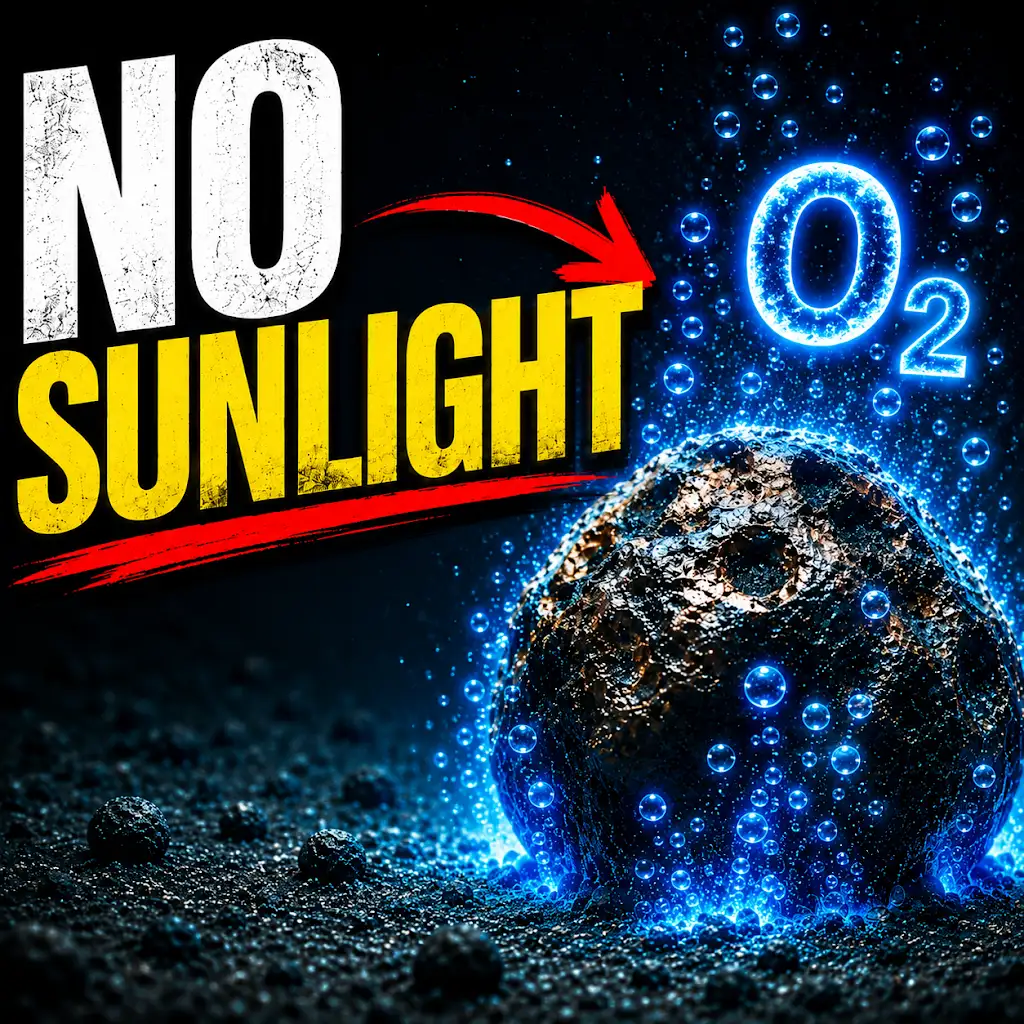
Scientists Found Oxygen Where It Should Be Impossible
FAQs
What is dark oxygen?
Dark oxygen is a newly discovered form of oxygen that exists in a lower energy state than the oxygen we are familiar with. It was first observed in laboratory experiments and is thought to have potential implications for our understanding of the universe.
How was dark oxygen discovered?
Dark oxygen was discovered by a team of researchers who were studying the behavior of oxygen molecules at extremely low temperatures. They observed a new form of oxygen that had not been previously documented, which they named “dark oxygen.”
What are the potential implications of the discovery of dark oxygen?
The discovery of dark oxygen has the potential to expand our understanding of the behavior of oxygen molecules in extreme environments, such as outer space. It may also have implications for our understanding of chemical reactions and processes that occur in low-energy environments.
How does dark oxygen differ from regular oxygen?
Dark oxygen differs from regular oxygen in that it exists in a lower energy state. This means that its behavior and properties may be different from those of the oxygen we encounter in our everyday lives.
What are the next steps in studying dark oxygen?
Researchers are continuing to study dark oxygen to better understand its properties and potential applications. This may involve further laboratory experiments as well as theoretical modeling to explore its behavior in different environments.