The whispers in the scientific community have grown into a persistent hum, a fascination with an anomaly that defies conventional understanding: the mystery of dark oxygen production. For decades, astrophysicists and chemists alike have grappled with observations that suggest the existence of oxygen in environments where its presence should be, by all known chemical and physical laws, impossible. This article delves into the intriguing world of dark oxygen, exploring the observational evidence, theoretical challenges, and the groundbreaking research striving to unveil its secrets.
The very notion of “dark oxygen” is an oxymoron. Oxygen, as we understand it, is an element that readily participates in chemical reactions, most notably combustion and respiration. It is a fundamental component of life as we know it and a crucial player in astrophysical processes like star formation and planetary atmospheres. Therefore, the idea that oxygen could exist in a “dark” or undetectable state poses a profound challenge to our established scientific frameworks.
Defining “Dark” in Astrophysics
In astrophysics, “dark” often refers to phenomena that do not emit or interact with electromagnetic radiation in ways we can easily detect. This includes dark matter, which interacts gravitationally but not electromagnetically, and dark energy, a mysterious force driving the accelerated expansion of the universe. However, the “darkness” associated with dark oxygen production is of a different nature. It refers to oxygen that is present but does not exhibit the characteristic spectral signatures we associate with oxygen in its common forms.
The Standard Oxygen Signatures
Normally, oxygen is detected through its spectral lines – specific wavelengths of light absorbed or emitted by oxygen atoms or molecules. These lines are as unique to oxygen as fingerprints are to humans. When astronomers observe a celestial object, they analyze the light that reaches us, looking for these telltale patterns. The absence of these expected patterns, despite other evidence suggesting the presence of oxygen, is what fuels the dark oxygen mystery.
Early Anomalies and Persistent Puzzles
The first hints of this anomaly emerged decades ago, in observations of certain nebulae and interstellar clouds. Scientists noticed discrepancies between the observed abundance of various elements and the predicted ratios based on stellar evolution models. In some cases, the expected amount of oxygen seemed to be missing, or rather, it was present but not visible in the usual ways. Conversely, other puzzling observations have hinted at the presence of oxygen where it shouldn’t be.
Dark oxygen production is a fascinating concept that explores how certain processes in the absence of light can lead to the generation of oxygen, particularly in unique environments like deep-sea ecosystems or during specific chemical reactions. For more insights into this intriguing topic, you can read a related article that delves deeper into the science behind oxygen production in various conditions. Check it out here: Freaky Science.
Observational Evidence: Glimmers in the Cosmic Void
The existence of dark oxygen is not a purely theoretical construct; it is born from persistent observational anomalies. These anomalies, while individually subtle, collectively paint a compelling picture of something unusual occurring in the cosmos.
The Missing Oxygen Problem in Interstellar Clouds
One of the most perplexing pieces of evidence comes from the study of interstellar molecular clouds – vast reservoirs of gas and dust where stars are born. These clouds are rich in various elements, including carbon, nitrogen, and oxygen. According to prevailing models of stellar nucleosynthesis and chemical evolution, the abundance of oxygen in these clouds should be relatively predictable. However, observations using radio telescopes, which are adept at detecting molecules in these cold, dense environments, have sometimes revealed a surprising deficit of oxygen-bearing molecules, such as carbon monoxide (CO), which is often used as a proxy for molecular hydrogen (H2) abundance.
The Carbon Monoxide Proxy: A Double-Edged Sword
Carbon monoxide is an excellent tracer of molecular gas because it is relatively stable and emits strongly at radio wavelengths, even at the low temperatures found in interstellar clouds. However, the assumption that CO abundance directly correlates with molecular hydrogen (and thus total oxygen) is not always perfect. In certain conditions, the balance between CO formation and destruction can be disrupted, leading to an underestimation of the total molecular gas. This is where the “dark” aspect comes into play – the oxygen might be present, but not bound into molecules that we can easily detect via CO.
Depletion onto Dust Grains: A Partial Explanation
One proposed explanation for the “missing” oxygen is its depletion onto the surfaces of dust grains. In the cold, dense interiors of molecular clouds, atoms and molecules can freeze onto the surfaces of tiny dust particles. This process can effectively remove gaseous oxygen from the observable interstellar medium. While this can explain a reduction in gaseous oxygen, it doesn’t fully account for the extent of the discrepancies observed in some regions, nor does it explain the creation of oxygen in unexpected places.
Anomalous Emission Lines: Oxygen in the Wrong Places
Conversely, there are instances where spectral lines associated with oxygen are detected in regions where their presence is theoretically improbable. This often occurs in environments that are too cold or too devoid of the necessary energy sources to excite oxygen atoms or molecules to emit those specific wavelengths.
The Role of Ionization and Excitation States
Oxygen exists in various ionization states (O, O+, O++, etc.) and molecular forms (O2, H2O, CO, etc.), each with its unique spectral signatures. The energy required to excite these species to emit light is crucial. For example, certain ultraviolet photons are needed to ionize oxygen or to excite its atomic lines. In the absence of such energetic radiation, or in regions where temperatures are too low, the expected emission lines should not be observed. The detection of these lines under such circumstances is a significant puzzle.
Extreme Environments: Galactic Halos and Dwarf Galaxies
These anomalous emissions have been particularly noted in the outer regions of galaxies, such as galactic halos, and in low-mass dwarf galaxies. These environments are often characterized by lower metallicity (fewer elements heavier than hydrogen and helium) and less intense star formation compared to the galactic disks. This makes the presence of significant amounts of oxygen, especially in excited states, even more perplexing.
The Challenge of Detecting Molecular Oxygen (O2)
While atomic oxygen has distinct spectral lines, the most common form of oxygen we breathe, molecular oxygen (O2), is notoriously difficult to detect directly in interstellar space. This is because its simplest electronic transitions do not occur at radio or optical wavelengths, making it invisible to most telescopes. Detection of O2 typically relies on weaker, higher-energy transitions that are harder to observe. This inherent difficulty in detecting O2 adds another layer to the dark oxygen mystery – is some of the “missing” oxygen simply in the form of O2, undetectable by our current methods?
The Role of UV Photodissociation
Molecular oxygen is also susceptible to photodissociation – being broken apart by ultraviolet (UV) radiation. In regions exposed to strong UV fields, such as those near young, massive stars, O2 molecules are quickly destroyed. This means that if O2 is being produced in such environments, it must be forming and being destroyed at a rapid rate, making its direct observation even more challenging.
Theoretical Hurdles: Reconciling Observations with Physics
The observational evidence for dark oxygen production presents a significant challenge to our current understanding of astrophysics and chemistry. Existing models, which are based on well-established principles, struggle to explain these anomalies.
Nucleosynthesis Beyond Standard Models
The primary source of oxygen in the universe is through stellar nucleosynthesis – the process by which stars forge heavier elements from lighter ones. Massive stars, in particular, produce oxygen during their later stages of life before exploding as supernovae. The abundance of oxygen in any given region of space is largely determined by the history of star formation and the explosive deaths of previous generations of stars.
The Neutron-Rich Freeze-Out Scenario
Some theoretical models propose scenarios where oxygen could be produced in more exotic ways, potentially involving neutron-rich environments. These are highly speculative and often invoked to explain extreme elemental abundances, but their applicability to the observed “dark oxygen” is still under investigation.
Alternative Pathways for Oxygen Formation
Beyond the standard alpha-process in massive stars, scientists are exploring less common or hypothetical pathways for oxygen formation. This could involve processes occurring in the early universe before the formation of the first stars, or in the extreme conditions found in the cores of neutron stars.
The Chemistry of Cold Environments: Beyond CO
As mentioned earlier, CO is often used as a proxy for molecular hydrogen. However, the chemistry in very cold and dense interstellar environments is complex. Under certain conditions, the ratio of CO to H2 can vary significantly. This variability can lead to misinterpretations of oxygen abundance if CO is the sole tracer.
Formation Pathways of CO and other Oxygen-Bearing Molecules
The formation of CO requires the presence of both carbon and oxygen atoms. The efficiency of this reaction depends on factors like gas temperature, density, and the presence of catalysts like dust grains. If the conditions are not conducive to efficient CO formation, or if oxygen is preferentially locked into other molecules, then the CO abundance might not accurately reflect the total oxygen content.
The Role of Desorption and Grain Surface Chemistry
The process by which molecules form on dust grains and then desorb back into the gas phase is also critical. If oxygen atoms are efficiently bound to dust grains and then desorb as molecules that are not easily detected (e.g., not CO), this could contribute to the “dark” oxygen.
Energetics and Excitation Mechanisms
The spectral lines we detect are a result of specific energy transitions within atoms and molecules. For oxygen to emit these characteristic lines, it needs to be in a particular excitation state, which requires energy input. The puzzle arises when we observe these emissions in regions lacking the expected energy sources.
The Need for Non-Radiative Excitation
One possibility is that oxygen is being excited through non-radiative processes. This could involve collisions with other particles, or energy transfer from other molecules. However, such mechanisms need to be sufficiently efficient to explain the observed emission levels, especially in sparse and cold environments.
The Debate on Alternative Excitation Pathways
Scientists are exploring a range of alternative excitation pathways, including those involving high-energy cosmic rays, shock waves, or even exotic forms of energy transfer not currently well-understood. The precise mechanisms are a major focus of ongoing research.
Investigating Dark Oxygen: Tools and Techniques
Unraveling the mystery of dark oxygen requires pushing the boundaries of observational astronomy and theoretical modeling. Scientists are employing a suite of sophisticated tools and innovative techniques to probe these enigmatic phenomena.
Advanced Telescopic Observations: Beyond the Visible Spectrum
The hunt for dark oxygen spans across the electromagnetic spectrum. While optical telescopes are crucial for observing atomic emission lines, radio and submillimeter telescopes are essential for detecting molecular species in cold interstellar clouds. X-ray and gamma-ray observatories can also provide clues about high-energy processes that might be involved.
Radio Astronomy: Probing Molecular Clouds
Radio telescopes, with their ability to detect the faint millimeter and submillimeter waves emitted by molecules, are indispensable for studying the composition of interstellar clouds. Projects like the Atacama Large Millimeter/submillimeter Array (ALMA) have revolutionized our ability to map molecular gas in unprecedented detail, revealing subtle variations in elemental abundances.
Infrared and Submillimeter Spectroscopy: Tracing Water and Other Molecules
Infrared and submillimeter spectroscopy are vital for detecting molecules like water (H2O), which is an oxygen-bearing molecule and can form in cold environments. The James Webb Space Telescope (JWST) is proving to be a game-changer in this regard, with its powerful infrared capabilities allowing for detailed studies of molecular composition in a wide range of cosmic objects.
X-ray and Gamma-ray Astronomy: Clues from High-Energy Events
While less direct, X-ray and gamma-ray observations can shed light on the high-energy environments where oxygen might be formed or excited in unusual ways. Studying the aftermath of supernovae or the radiation fields around active galactic nuclei can provide indirect evidence for processes relevant to dark oxygen.
Laboratory Astrophysics: Simulating Cosmic Conditions
To understand the complex chemical reactions and physical processes occurring in interstellar space, scientists rely on laboratory experiments that simulate these extreme conditions.
Low-Temperature Chemistry Experiments
Researchers create ultra-high vacuum chambers and cool them to temperatures found in interstellar clouds. They then introduce specific atoms and molecules to study how they interact and form new compounds on simulated dust grain surfaces. These experiments help to validate or refine our understanding of chemical pathways.
High-Energy Radiation Experiments
Laboratory experiments also involve bombarding samples with UV radiation or charged particles to mimic the energetic processes that occur in space. This helps in understanding how molecules are formed, destroyed, and excited.
Theoretical Modeling and Computational Simulations
Sophisticated computer models are crucial for interpreting observational data and testing theoretical hypotheses.
Astrochemical Models
These models simulate the complex network of chemical reactions that occur in interstellar clouds, taking into account factors like gas temperature, density, radiation fields, and the presence of dust grains. They are used to predict the abundance of various molecules and to compare these predictions with observations.
Hydrodynamic and Magnetohydrodynamic Simulations
These simulations model the large-scale dynamics of gas and dust in astrophysical environments, including the formation of stars and galaxies. They can help to understand the physical conditions under which dark oxygen production might occur.
Dark oxygen production is a fascinating concept that explores how certain processes can generate oxygen in environments devoid of light. This phenomenon is particularly relevant in the study of extremophiles, organisms that thrive in extreme conditions. For a deeper understanding of related scientific advancements, you might find the article on Freaky Science insightful, as it delves into various innovative research topics that highlight the complexities of life in unusual habitats.
Potential Explanations and Future Directions
| Dark Oxygen Production | Metrics |
|---|---|
| Definition | The production of oxygen by plants during the night through a process called dark respiration |
| Rate | Varies depending on the plant species and environmental conditions |
| Importance | Contributes to the overall oxygen levels in the atmosphere |
| Factors | Temperature, humidity, and availability of nutrients can affect dark oxygen production |
The mystery of dark oxygen production is far from solved, but several promising avenues of research are being pursued. Scientists are exploring both extensions to existing theories and entirely new paradigms.
Extended Molecular Cloud Chemistry
One of the most immediate areas of investigation involves refining our understanding of the complex chemistry occurring within molecular clouds.
Beyond CO as a Tracer
Future research will likely focus on developing more reliable tracers of molecular hydrogen and total oxygen in various cloud conditions, moving beyond the sole reliance on CO. This could involve searching for other molecular species or developing more sophisticated ways to interpret CO observations.
The Role of Ices and Grain Surface Reactions
A deeper understanding of the role of ices on dust grains and the intricate surface chemistry involved in the formation and desorption of oxygen-bearing molecules is crucial. This includes investigating the conditions under which species like O2 might form and survive in the gas phase.
Exotic Astrophysical Environments
The possibility that dark oxygen production is linked to highly unusual or extreme astrophysical environments is also a significant area of focus.
The Early Universe and Primordial Oxygen
Could there be mechanisms in the very early universe, before the formation of heavy elements by stars, that produced oxygen in a form that is difficult to detect? This is a highly speculative but intriguing possibility.
The Interiors of Compact Objects and Stellar Remnants
The extreme densities and pressures within neutron stars or black hole accretion disks could, in theory, lead to unique nuclear reactions that produce oxygen. However, observing such phenomena directly is extremely challenging.
The Search for a Unified Theory
Ultimately, scientists are seeking a unified theory that can explain all the observed anomalies related to dark oxygen. This may involve a combination of new chemical pathways, previously unconsidered excitation mechanisms, and a deeper understanding of the interplay between gas and dust in the cosmos.
The Significance of Dark Oxygen: Implications for Our Understanding of the Universe
The quest to unveil the mystery of dark oxygen production is not merely an academic pursuit. Its resolution could have profound implications for our understanding of fundamental astrophysical processes, the chemical evolution of the universe, and potentially, the conditions for life beyond Earth.
Rethinking Stellar Nucleosynthesis and Galactic Evolution
If dark oxygen production involves processes beyond standard stellar nucleosynthesis, it could necessitate a significant revision of our models of how elements are formed and distributed throughout galaxies. This could alter our understanding of galactic evolution and the cosmic abundance of elements.
Implications for Astrobiology and the Search for Life
Oxygen is a critical component for life as we know it. If oxygen can exist in “dark” or unexpected forms and locations, it could broaden the range of environments where life might potentially arise. Understanding these alternative oxygen sources could be crucial for identifying promising targets in the search for extraterrestrial life.
Pushing the Boundaries of Physics and Chemistry
The existence of dark oxygen challenges fundamental laws of physics and chemistry. Its explanation could lead to the discovery of new physical phenomena, novel chemical reactions, or a deeper understanding of the fundamental forces that govern the universe. It is in these moments of scientific mystery that the most exciting breakthroughs often lie.
The journey to understand dark oxygen production is ongoing. It is a testament to the power of scientific inquiry, where anomalies become catalysts for discovery, and the deepest mysteries of the cosmos beckon us to explore the unknown. As telescopes become more powerful and theoretical models more sophisticated, the veils surrounding this enigmatic element may finally be lifted, revealing a universe far more complex and wondrous than we ever imagined.
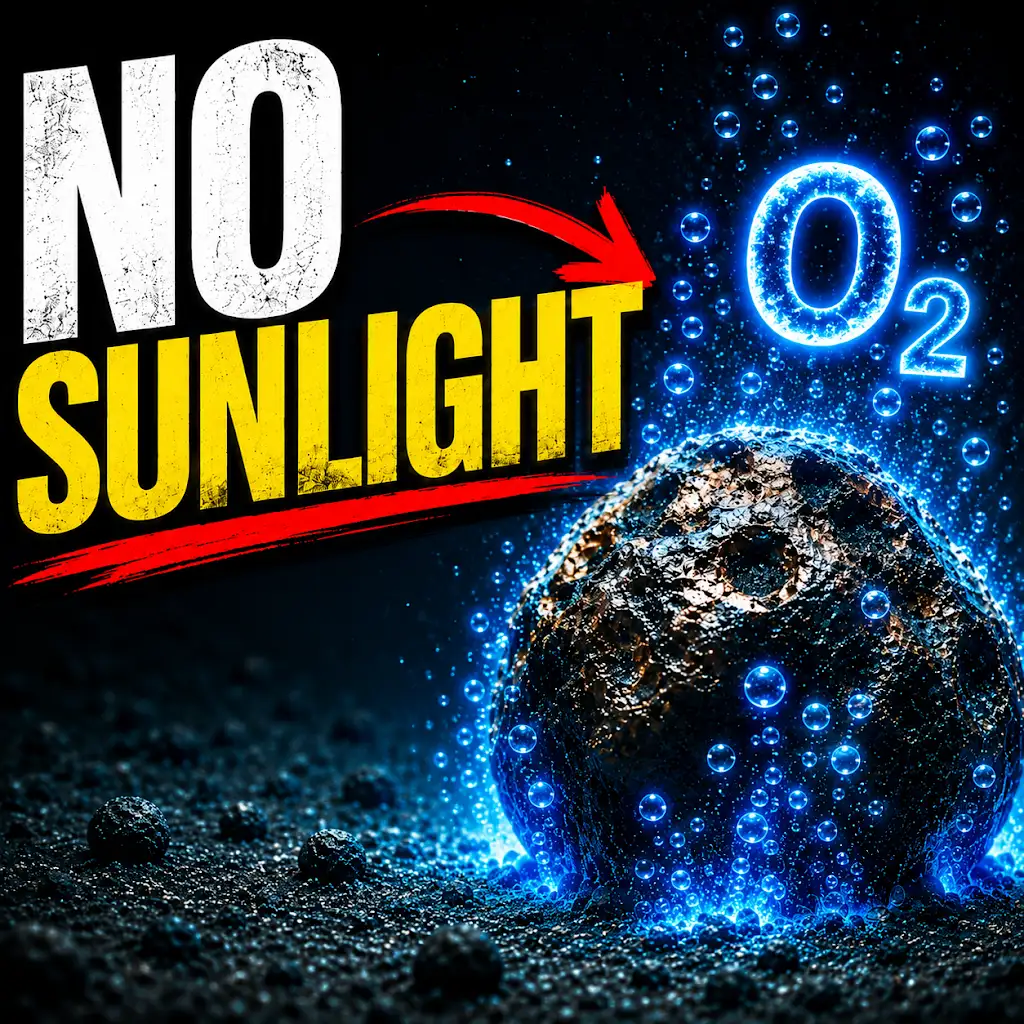
Scientists Found Oxygen Where It Should Be Impossible
FAQs
What is dark oxygen production?
Dark oxygen production refers to the process of oxygen production in the absence of light. This process occurs in the deep ocean where photosynthesis cannot take place.
How does dark oxygen production occur?
Dark oxygen production occurs through a process called chemosynthesis, where certain microorganisms use chemical energy from the oxidation of inorganic compounds to produce organic molecules and oxygen.
Where does dark oxygen production take place?
Dark oxygen production primarily takes place in the deep ocean, particularly in areas where there is no sunlight reaching the ocean floor. This includes hydrothermal vents and cold seeps.
What are the implications of dark oxygen production?
Dark oxygen production plays a crucial role in the deep ocean ecosystem by providing a source of energy and oxygen for organisms that cannot rely on photosynthesis. It also contributes to the overall oxygen balance in the ocean.
How does dark oxygen production differ from photosynthesis?
Dark oxygen production differs from photosynthesis in that it does not require sunlight and instead relies on the oxidation of inorganic compounds to produce organic molecules and oxygen. Photosynthesis, on the other hand, uses sunlight to convert carbon dioxide and water into organic compounds and oxygen.