
The persistent image of photosynthesis is intrinsically tied to the sun’s radiant energy. Plants, algae, and cyanobacteria are widely understood to harness sunlight to convert carbon dioxide and water into glucose and oxygen. This fundamental process underpins much of Earth’s life, providing the oxygen we breathe and the food we consume. However, the notion of oxygen production occurring in complete darkness challenges this deeply ingrained understanding. This article will explore the fascinating scientific inquiry into oxygen production in the absence of light, delving into the organisms and mechanisms that defy conventional photosynthetic paradigms.
The question of oxygen production without light immediately leads to a re-examination of the very definition of “photosynthesis.” While light-driven photophosphorylation is the dominant mechanism for energy generation in most photosynthetic organisms, alternative pathways exist that can liberate oxygen through different means. These pathways are not about creating energy from light but rather about utilizing existing chemical energy to drive oxygen-releasing reactions.
Chemosynthesis: A Dark Counterpart to Photosynthesis
Chemosynthesis, often contrasted with photosynthesis, is a process where organisms derive energy from chemical reactions rather than light. While chemosynthesis itself does not directly produce oxygen, understanding its principles is crucial for appreciating how life can thrive in the absence of light. Certain chemosynthetic bacteria utilize the oxidation of inorganic compounds, such as hydrogen sulfide or ammonia, to generate ATP. In some specific scenarios, these chemical energy transformations can be coupled with processes that result in the release of oxygen.
Sulfur Oxidation and Oxygen Liberation
Among the most studied examples of oxygen production in seemingly lightless environments are those involving sulfur-oxidizing bacteria. These microorganisms, found in diverse habitats from deep-sea hydrothermal vents to acidic mine drainage, play a significant role in nutrient cycling. While their primary energy source is the oxidation of reduced sulfur compounds, under specific conditions, these reactions can indirectly lead to oxygen evolution.
The Role of Sulfide Oxidation and Nitrate Reduction
One proposed mechanism involves the coupled oxidation of sulfide and the reduction of nitrate. In environments rich in sulfide (H₂S) and nitrate (NO₃⁻), certain bacteria can utilize the energy released from oxidizing sulfide to fuel the reduction of nitrate. In some of these complex biochemical cascades, oxygen can be generated as a byproduct. This is not photosynthesis in the classical sense, as no light energy is captured. Instead, it’s a dissimilatory process where the organism essentially “breathes” nitrate using sulfide as a fuel, and oxygen is a consequence of the redox balance.
Anaerobic Oxidation of Methane (AOM) and Potential Oxygen Byproducts
Another intriguing area is the Anaerobic Oxidation of Methane (AOM). This process, primarily carried out by consortia of bacteria and archaea, is crucial for controlling methane emissions from marine sediments. While predominantly anaerobic, some hypotheses suggest that specific enzymatic activities within these consortia, particularly those involved in electron transfer, might, under certain very specific and unusual conditions, involve intermediates that could lead to transient oxygen production. This remains an area of active research and is far from a widespread or primary oxygen-generating mechanism.
Recent research has revealed fascinating insights into the production of oxygen in complete darkness, challenging traditional notions about photosynthesis. This phenomenon, often attributed to certain microorganisms, demonstrates that oxygen can be generated through alternative biochemical processes even in the absence of light. For more detailed information on this topic, you can read the related article at Freaky Science.
Respiration: The Reverse of Photosynthesis?
While respiration is typically understood as the process of consuming oxygen to produce ATP, the fundamental chemical reactions of respiration can, in reverse, be harnessed to produce oxygen. This concept is particularly relevant when considering anaerobic respiration and the potential for oxygen liberation from oxygen-containing compounds.
Denitrification and the Oxygen Question
Denitrification is a microbial process that reduces nitrate to nitrogen gas. While primarily an anaerobic respiratory pathway, some of the intermediate steps and enzymes involved in denitrification share similarities with processes that can, under specific conditions, lead to oxygen evolution. This is not a net production of oxygen from nothing but rather a rearrangement of oxygen atoms within molecules.
Oxygen Release from Nitrate Reduction Intermediates
In some complex microbial communities, particularly those in anoxic environments with ample nitrate, the metabolic activities of denitrifiers can lead to the accumulation of oxygen-containing intermediates. While not a sustained process of oxygen generation, these transient bursts can be detected and are a testament to the intricate biochemical possibilities in microbial metabolism. The energy for these reactions is derived from organic matter or other reduced chemical compounds, not light.
Hydroxylation Reactions and Oxygen Release
Certain enzymatic reactions, particularly hydroxylation processes, involve the insertion of an oxygen atom into a substrate. While these are often catabolic reactions that consume organic molecules, the oxygenase enzymes responsible for these reactions typically utilize molecular oxygen. However, in some very specific and highly controlled laboratory settings, or under extremely rare natural conditions, it is conceivable that reverse reactions or alternative enzymatic mechanisms could lead to the liberation of oxygen from oxygenated substrates. This is a highly speculative area for natural, sustained oxygen production.
Organisms and Their Dark Oxygen-Generating Capabilities
The discovery of organisms capable of producing oxygen in the absence of light has been a gradual and often surprising journey. These are not the familiar green plants, but rather a diverse array of microorganisms that have evolved specialized metabolic strategies.
Extremophiles and Unconventional Metabolism
Extremophiles, organisms that thrive in extreme environments, are often at the forefront of discovering novel biochemical pathways. Their ability to survive in conditions devoid of light, such as deep-sea hydrothermal vents, subterranean caves, or highly acidic environments, necessitates metabolic flexibility.
Deep-Sea Hydrothermal Vent Microbes
The deep-sea hydrothermal vents, with their total absence of sunlight, have provided a fertile ground for identifying organisms with unusual metabolic capabilities. Many bacteria and archaea here are chemosynthetic, relying on the chemical energy from volcanic activity. Some of these organisms, as mentioned earlier, can be involved in sulfur cycling where, under specific conditions, oxygen can be a byproduct of their complex metabolic pathways involving nitrate reduction.
Cave-Dwelling Microorganisms
Caves, by definition, are lightless environments. Microorganisms found within these subterranean ecosystems often rely on chemosynthesis or heterotrophy. While oxygen production in caves is not a widespread phenomenon, some studies have indicated potential for transient oxygen generation from specific mineral-oxidizing bacteria or from the breakdown of organic matter in the presence of certain oxygen-containing compounds.
The Role of Specialized Enzymes
The key to oxygen production in darkness lies in specialized enzymes that can catalyze reactions leading to the release of oxygen. These enzymes are distinct from the light-dependent enzymes of photosynthesis.
Oxygenases and Oxygen Evolution
Oxygenases are a class of enzymes that incorporate one or two atoms of oxygen into a substrate. While the vast majority of oxygenases use molecular oxygen as a reactant, research into novel oxygenase activities has revealed instances where these enzymes, or related metalloenzymes, can, under specific conditions, facilitate the release of oxygen from substrates. This is a highly specialized area, and its relevance to sustained oxygen production in natural dark environments is still being elucidated.
Catalytic Cycles and Redox Reactions
The underlying principle often involves complex catalytic cycles and redox reactions. By precisely controlling the transfer of electrons and the oxidation states of molecules, certain enzymatic systems can orchestrate the rearrangement of oxygen atoms within molecules, leading to the liberation of diatomic oxygen (O₂).
Experimental Evidence and Ongoing Research
The scientific community’s understanding of oxygen production in complete darkness has been built upon a foundation of experimental investigation and continuous research. What was once a theoretical possibility is now supported by growing evidence.
Laboratory Culturing and Analysis
Researchers often isolate and culture microorganisms from environments suspected of harboring oxygen-producing organisms in the dark. Through careful laboratory experiments, they can then analyze the metabolic products and identify the specific biochemical pathways responsible for oxygen liberation. This involves meticulous control of experimental conditions, including nutrient availability, gas composition, and temperature.
Isotope Labeling Studies
Isotope labeling studies are a powerful tool in elucidating biochemical pathways. By using isotopes of oxygen (e.g., ¹⁸O) in the substrates, researchers can track the movement of oxygen atoms through metabolic processes and confirm whether the oxygen produced originates from the substrate or from other sources. This helps to definitively distinguish between different oxygen-generating mechanisms.
Spectroscopic and Electrochemical Methods
Advanced analytical techniques, such as spectroscopy and electrochemistry, are employed to study the electron transfer processes and intermediate species involved in these dark oxygen production pathways. These methods provide insights into the catalytic mechanisms of the enzymes and the energetic driving forces behind the reactions.
Implications for Astrobiology and the Search for Life
The existence of oxygen production in the absence of light has profound implications for astrobiology and the search for life beyond Earth. Many celestial bodies in our solar system and beyond are thought to possess environments that are entirely devoid of sunlight, such as subsurface oceans on icy moons.
Subsurface Oceans as Potential Habitats
The discovery of oxygen production mechanisms independent of sunlight significantly expands the potential habitats for life in the universe. Subsurface oceans, found on moons like Europa and Enceladus, are considered prime candidates for harboring extraterrestrial life. If life can evolve to produce oxygen in such dark environments, it would fundamentally alter our understanding of habitability.
Biosignatures in Anoxic Environments
The presence of oxygen, even in small quantities, can serve as a biosignature – an indicator of biological activity. Detecting oxygen in anoxic environments on other planets or moons could be a compelling piece of evidence for the existence of life. The study of dark oxygen production provides potential targets for biosignature detection strategies in such settings.
Recent studies have shown that certain organisms can produce oxygen even in complete darkness, challenging our traditional understanding of photosynthesis. This fascinating phenomenon highlights the adaptability of life and the various biochemical pathways that can be utilized for energy production. For more insights on this topic, you can read a related article that delves deeper into the mechanisms behind this process and its implications for our understanding of ecosystems. To explore this further, check out the article on Freaky Science.
Challenges and Future Directions
Despite the remarkable progress in understanding oxygen production in complete darkness, significant challenges and exciting avenues for future research remain.
Quantifying Production Rates and Significance
One of the primary challenges is accurately quantifying the rates of oxygen production in natural dark environments. While some mechanisms have been identified, their contribution to the overall oxygen budget of these ecosystems is often difficult to determine. Understanding the scale of these processes is crucial for assessing their ecological significance.
Factors Influencing Oxygen Yield
The yield of oxygen from these dark pathways is highly dependent on a multitude of factors, including the availability of specific substrates (e.g., reduced sulfur compounds, nitrates, organic matter), the presence and activity of the relevant microbial communities, and the prevailing environmental conditions (e.g., pH, temperature, redox potential). Further research is needed to elucidate these complex interactions.
Exploring Novel Microbial Communities
The vast majority of microbial life on Earth remains uncultured and uncharacterized. It is highly probable that many more organisms with novel oxygen-producing capabilities in the dark are yet to be discovered. Continued exploration of diverse and extreme environments will be key to uncovering these hidden metabolic potentials.
Genomics and Metagenomics
The application of advanced genomic and metagenomic techniques will play a crucial role in identifying the genes and enzymes responsible for dark oxygen production. By sequencing the DNA of microbial communities from these environments, researchers can infer the metabolic capabilities of the organisms present, even if they cannot be cultured in the lab.
Harnessing Dark Oxygen Production for Biotechnology
Beyond the fundamental scientific interest, the ability to produce oxygen in the absence of light holds potential for innovative biotechnological applications.
In-Situ Oxygen Generation for Controlled Environments
Imagine bioreactors or enclosed ecosystems that can generate their own oxygen supply without reliance on external lighting. This could have applications in closed-loop life support systems for space exploration, in aquaculture, or in specialized agricultural settings where light control is paramount.
Sustainable Oxygen Production Technologies
As the world grapples with sustainability challenges, novel methods for oxygen production are highly sought after. Understanding and potentially mimicking the natural processes of dark oxygen generation could lead to the development of more energy-efficient and environmentally friendly oxygen production technologies.
In conclusion, the concept of oxygen production in complete darkness, while initially counterintuitive, is a vibrant area of scientific inquiry. It highlights the remarkable adaptability of life and the intricate biochemical strategies that microorganisms have evolved. From chemosynthetic pathways in deep-sea vents to the potential for reverse redox reactions, the study of dark oxygen production not only expands our understanding of Earth’s biosphere but also offers tantalizing possibilities for the search for extraterrestrial life and the development of future biotechnologies. The sun may be the most obvious source of energy for oxygen production, but life, in its astonishing diversity, has found ways to breathe, and even exhale, in the deepest darkness.
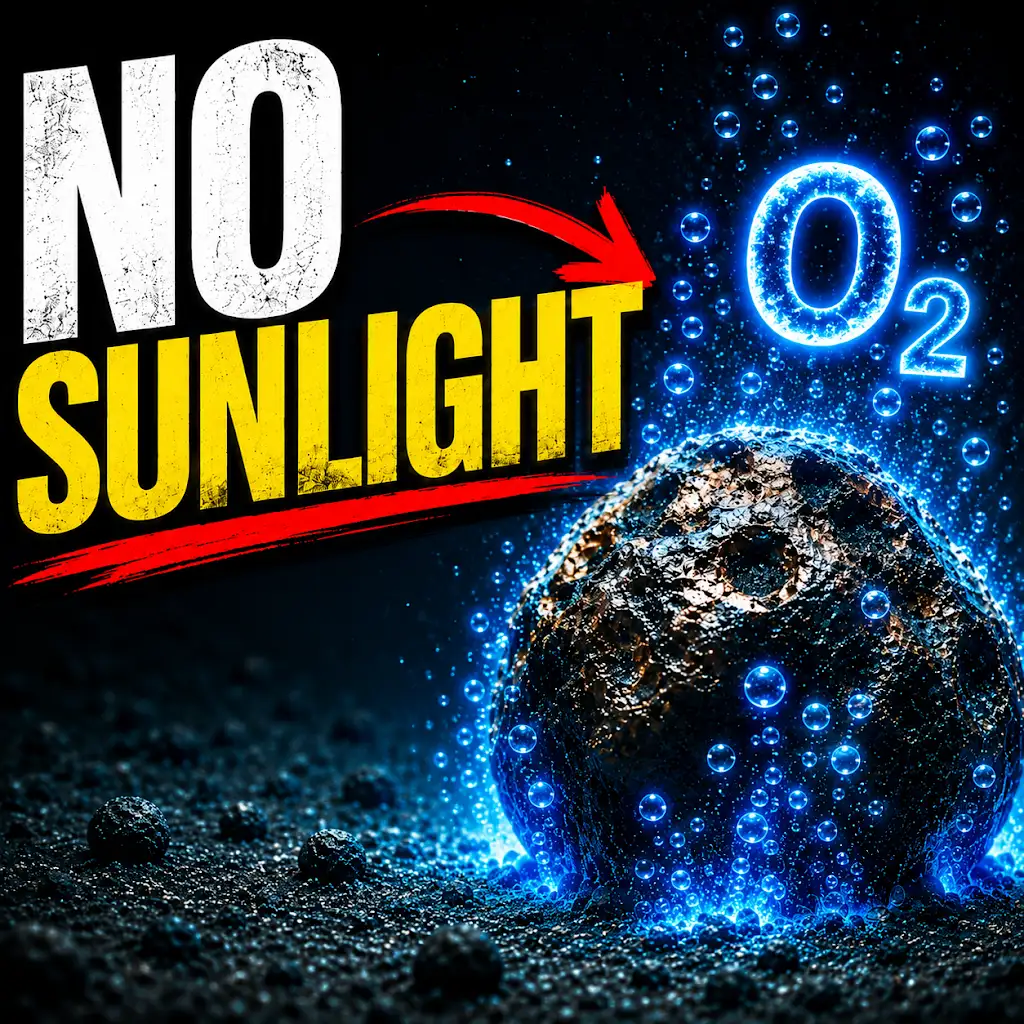
Scientists Found Oxygen Where It Should Be Impossible
FAQs
1. Can oxygen be produced in complete darkness?
Yes, oxygen can be produced in complete darkness through a process called photosynthesis, where certain organisms such as plants, algae, and some bacteria use energy from sunlight to convert carbon dioxide and water into oxygen and glucose.
2. How does photosynthesis occur in complete darkness?
In complete darkness, some organisms can still undergo a process called anoxygenic photosynthesis, where they use alternative sources of energy such as inorganic compounds or other forms of light (e.g., infrared or ultraviolet) to produce oxygen.
3. What are some examples of organisms that can produce oxygen in complete darkness?
Examples of organisms that can produce oxygen in complete darkness include certain types of bacteria, such as purple sulfur bacteria and green sulfur bacteria, which can perform anoxygenic photosynthesis using alternative energy sources.
4. Is the amount of oxygen produced in complete darkness the same as in the presence of light?
The amount of oxygen produced in complete darkness through anoxygenic photosynthesis is generally lower than the amount produced in the presence of light during regular photosynthesis, as light is the primary source of energy for most photosynthetic organisms.
5. What are the implications of oxygen production in complete darkness?
Understanding the mechanisms of oxygen production in complete darkness has implications for various fields, including astrobiology, environmental science, and biotechnology, as it sheds light on the adaptability and survival strategies of different organisms in diverse environments.