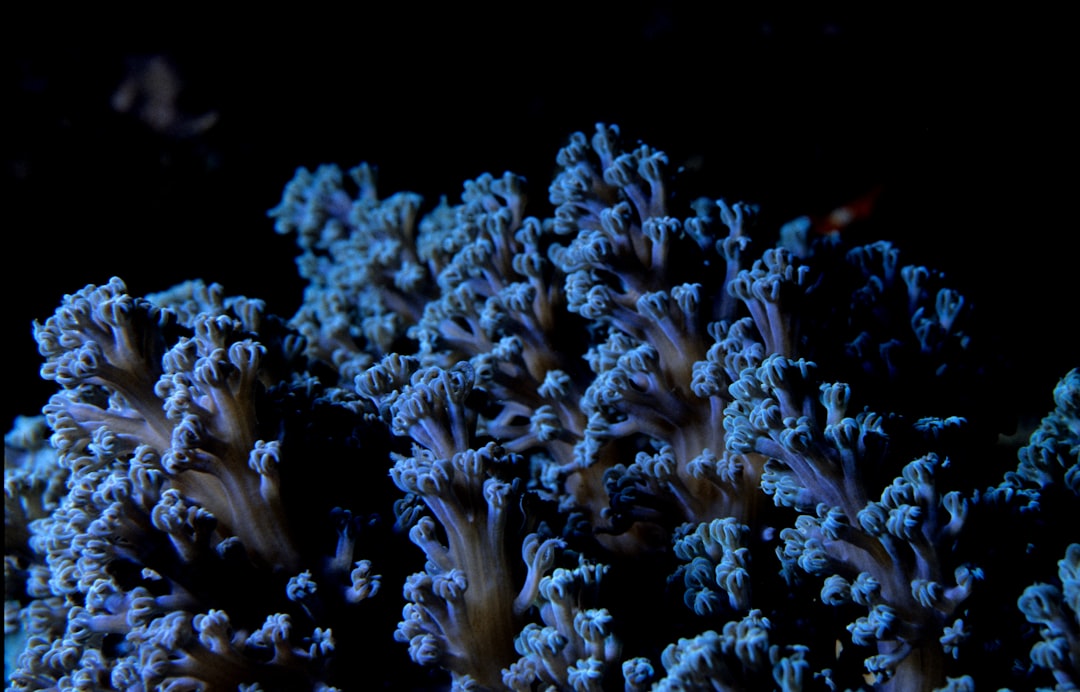
The abyss, a realm of perpetual darkness and crushing pressure, holds within its inky embrace a universe of life that has evolved in ways both bizarre and breathtaking. The journey of deep-sea organisms is a testament to nature’s extraordinary adaptability, a slow, silent unfolding of strategies to survive and thrive in one of Earth’s most extreme environments. This fascinating evolution is not a recent phenomenon but a story etched over millions of years, shaped by the unique pressures and opportunities presented by the ocean’s deepest trenches and vast abyssal plains.
Life on the surface world is intrinsically linked to the sun’s nourishing rays. Photosynthesis, the foundation of most terrestrial and shallow-water ecosystems, is rendered impossible in the deep sea. This fundamental absence of light has been a primary driver of evolutionary innovation, forcing life to explore alternative energy sources and sensory mechanisms.
Bioluminescence: The Inner Light
Perhaps the most striking adaptation to the perpetual darkness is the widespread phenomenon of bioluminescence, the ability to produce and emit light. This is not a mere decorative feature; it is a sophisticated language and a vital tool for survival.
Communication and Mating
For many deep-sea creatures, bioluminescence serves as a beacon in the blackness, facilitating communication and the crucial act of reproduction. Different species have evolved unique flashing patterns, colors, and intensities to attract mates. Anglerfish, for instance, famously use a bioluminescent lure dangling in front of their mouths to attract unsuspecting prey, but also, in some species, their glowing appendages play a role in mate attraction.
Predation and Defense
Bioluminescence also plays a critical role in the intricate dance of predator and prey. Some organisms employ luminous displays to startle or disorient predators, effectively disappearing into a sudden burst of light. Others use their light to camouflage themselves against a background of faint bioluminescence from other organisms, a phenomenon known as counter-illumination. The Vampire Squid, Vampyroteuthis infernalis, can eject a cloud of bioluminescent mucus, a dazzling distraction that allows it to escape danger.
Illumination for Hunting
Conversely, some predators have evolved their own spotlights. The Dragonfish, belonging to the family Stomiidae, possesses photophores that can emit red light. This is a remarkable adaptation, as most deep-sea creatures cannot perceive red light, allowing the dragonfish to illuminate its prey without being detected itself.
Sensory Adaptations Beyond Sight
With sight often rendered ineffective, other senses have been honed to extraordinary levels. The deep sea is a world of subtle vibrations, chemical gradients, and pressure changes, and life has evolved to exploit these cues.
Enhanced Hearing and Mechanoreception
The lateral line system, a sensory organ found in fish that detects water movement and vibrations, is often highly developed in deep-sea species. This allows them to perceive the presence and movement of prey, predators, and even the subtle currents of the deep ocean. Some fish possess incredibly sensitive otoliths, the internal ear bones responsible for hearing, enabling them to detect the faintest sounds.
Olfaction and Chemoreception
The sense of smell, or olfaction, is another crucial tool in the deep-sea survival kit. Many creatures rely on detecting chemical signals released by prey or potential mates. The vastness of the ocean means that these chemical trails can travel long distances, guiding organisms to food sources or partners in the dark.
Electrosensitivity
Certain deep-sea fish have evolved electroreception, the ability to detect weak electrical fields generated by the muscle contractions of other living organisms. This allows them to locate hidden prey or navigate in their environment, even when other senses are compromised.
Recent studies in deep sea evolution have shed light on the remarkable adaptations of organisms living in extreme environments. For a deeper understanding of these fascinating evolutionary processes, you can explore a related article that discusses the unique features of deep-sea creatures and their survival strategies. To read more, visit this article.
The Crushing Embrace: Surviving Immense Pressure
The sheer weight of miles of water overhead exerts a pressure that would instantly crush any organism not specifically adapted to it. The evolution of deep-sea life has been a remarkable feat of biochemical and anatomical engineering to withstand these immense forces.
Cellular Resilience
At the cellular level, deep-sea organisms have developed mechanisms to prevent their cellular structures from collapsing under pressure. Specialized proteins and enzymes are often more stable under high pressure, and their cell membranes may have a different composition to maintain fluidity.
Body Structure and Composition
The physical forms of deep-sea creatures often reflect their pressurized environment. Many have soft, gelatinous bodies with low muscle mass and minimal skeletal structures. This allows them to be more compressible and less prone to crushing.
Reduced Gas Spaces
Air-filled organs like swim bladders, common in shallow-water fish, are often absent or significantly reduced in deep-sea species. Air is highly compressible, and its presence would make an organism vulnerable to the extreme pressure. Instead, many deep-sea fish rely on fat and oil deposits for buoyancy.
Flexible Skeletons
Where skeletal structures exist, they are often cartilaginous or poorly ossified, offering flexibility rather than rigidity. This allows the skeleton to deform and absorb pressure without fracturing.
Physiological Adaptations
Beyond structural adaptations, deep-sea life has also evolved unique physiological strategies to cope with high pressure.
Pressure-Resistant Enzymes and Proteins
The biochemical machinery of deep-sea organisms is uniquely adapted. Enzymes and other essential proteins often have structural modifications that prevent them from denaturing or losing their function under high pressure. This allows metabolic processes to continue efficiently even in extreme conditions.
Piezolytes: The Pressure Guardians
A fascinating class of molecules known as piezolytes are crucial for deep-sea life. These are small organic molecules that accumulate within cells to counteract the destabilizing effects of high pressure on proteins. Trimethylamine N-oxide (TMAO) is a common example of a piezolyte. They act like molecular stabilizers, ensuring that the essential functions of the cell can proceed unimpeded.
The Scarcity of Food: Strategies for a Sparse Diet
The deep sea is a desert in terms of primary productivity. Sunlight does not penetrate to fuel photosynthesis, meaning the ecosystem largely relies on organic matter that drifts down from the surface – a phenomenon known as “marine snow.” This scarcity has driven the evolution of highly efficient feeding strategies and remarkable patience.
Opportunistic Feeding and Ambush Predation
Many deep-sea predators are not active hunters. Instead, they have evolved to be patient ambush predators, conserving energy until an opportunity arises. Their specialized physical characteristics are often geared towards maximizing the chances of a successful strike when prey is encountered.
Large Mouths and Expandable Stomachs
To capitalize on infrequent meals, many deep-sea predators possess disproportionately large mouths and highly expandable stomachs. This allows them to consume prey that may be larger than themselves, ensuring that no opportunity for sustenance is wasted. The Gulper Eel, for example, has a mouth that can open to an astonishing size.
Specialized Hunting Techniques
As mentioned earlier, bioluminescent lures are a prime example of specialized hunting. Other creatures employ unique methods like using sticky mucus to trap small prey or having long, sensitive appendages to feel for movement in the darkness.
Energy Conservation Strategies
In an environment where food is scarce, energy conservation is paramount. Deep-sea organisms have evolved to move slowly, reduce metabolic rates, and exploit any available energy source with maximum efficiency.
Low Metabolic Rates
Many deep-sea animals have significantly lower metabolic rates than their shallow-water counterparts. This means they require less food and oxygen to survive, allowing them to subsist on less frequent meals.
Dormancy and Periods of Low Activity
Some species may enter periods of dormancy or greatly reduced activity when food is particularly scarce, waiting for more favorable conditions to arise.
Detritivory and Scavenging
A significant portion of the deep-sea ecosystem relies on detritivory – the consumption of dead organic matter. Organisms that feed on marine snow and the carcasses of larger animals play a crucial role in recycling nutrients.
Specialized Gut Microbes
Many detritivores have specialized gut microbiomes that help them to break down complex organic compounds in the falling detritus.
Scavenging on Carcasses
The arrival of a large carcass from the surface can create a temporary feast for deep-sea scavengers. Specialized organisms, such as amphipods and hagfish, are adept at locating and consuming these ephemeral food sources.
The Unique Habitats: Adapting to Diverse Deep-Sea Environments

The deep sea is not a monolithic entity. It encompasses a variety of distinct habitats, each with its own set of challenges and opportunities that have shaped the evolution of life within them.
Hydrothermal Vents: Oases of Life
Hydrothermal vents, often found along mid-ocean ridges, are fissures in the Earth’s crust that spew superheated, mineral-rich water into the ocean. These environments, once thought to be devoid of life, are now known to be teeming with unique ecosystems.
Chemosynthesis: Life Without Sunlight
The energy source at hydrothermal vents is not sunlight but chemical energy derived from the vent fluids. Specialized bacteria and archaea perform chemosynthesis, converting inorganic compounds like hydrogen sulfide into organic matter, forming the base of the food web.
Symbiotic Relationships
Many vent organisms have evolved obligate symbiotic relationships with chemosynthetic microbes. Tube worms, for instance, house these bacteria within specialized organs, providing them with nutrients and a safe environment in exchange for sustenance.
Specialized Organisms
Vent communities are characterized by unique species, such as giant tube worms (Riftia pachyptila), vent mussels, and specialized crabs and shrimp, all of which are exquisitely adapted to the toxic and high-temperature environment.
Cold Seeps: Underwater Chemical Gardens
Similar to hydrothermal vents, cold seeps are areas where hydrocarbons, such as methane and hydrogen sulfide, seep out of the ocean floor. While less extreme in temperature than vents, they also support chemosynthetic communities.
Methane-Based Ecosystems
The primary producers at cold seeps are often methane-oxidizing bacteria. These form the basis of food webs that include mussels, clams, and various invertebrates.
Slow-Growing and Long-Lived Organisms
The relatively stable, yet nutrient-limited, environment of cold seeps often favors the evolution of slow-growing and long-lived organisms.
The Abyssal Plains: Vast Deserts of Sediment
The abyssal plains, covering vast expanses of the deep ocean floor, are characterized by fine sediment, low temperatures, and high pressure. Life here is sparser but still remarkable.
Deposit Feeders and Burrowers
Many organisms on the abyssal plains are deposit feeders, sifting through the sediment for organic matter. Others are burrowers, creating intricate tunnel systems within the seafloor.
Slow Reproduction and Growth Rates
The challenges of this environment often lead to slow reproduction and growth rates among abyssal plain inhabitants.
The Mesopelagic and Bathyal Zones: Twilight and Beyond
The mesopelagic (twilight zone) and bathyal zones, situated above the abyssal plains, experience some ambient light and are characterized by a greater diversity of life than the truly deep abyssal zones.
Vertical Migration
Many organisms in the mesopelagic zone undertake daily vertical migrations, ascending to shallower waters at night to feed and descending to deeper waters during the day to avoid predators. This migration is a remarkable feat of energy management.
Adaptations for a Dimly Lit World
Creatures in these zones often possess large eyes to capture as much light as possible, alongside bioluminescent capabilities for communication and hunting.
Recent studies in deep sea evolution have unveiled fascinating insights into how life adapts to extreme environments. For those interested in exploring this topic further, a related article discusses the unique adaptations of deep-sea organisms and their evolutionary significance. You can read more about these incredible adaptations in the article found here. Understanding these evolutionary processes not only sheds light on the resilience of life but also raises questions about the potential for life beyond our planet.
The Future of Deep-Sea Evolution: Uncharted Territory
| Metrics | Data |
|---|---|
| Depth of deep sea | Below 200 meters |
| Evolutionary adaptations | Bioluminescence, high pressure tolerance, slow metabolism |
| Age of deep sea organisms | Some species can live for hundreds of years |
| Biodiversity | Estimated to be vast, with many undiscovered species |
The study of deep-sea evolution is a continuous process. As our technology advances, we are constantly uncovering new species and novel adaptations that challenge our understanding of life’s limits. The deep sea remains one of Earth’s last frontiers, a reservoir of biodiversity and evolutionary innovation yet to be fully explored.
The Impact of Climate Change and Human Activity
While the deep sea has evolved to withstand extreme natural conditions, it is increasingly facing new threats from human activities. Climate change, with its potential to alter ocean temperatures and chemistry, along with the growing threats of deep-sea mining and pollution, could profoundly impact the evolutionary trajectory of these fragile ecosystems. Understanding these evolutionary processes is crucial for predicting and mitigating the consequences of these anthropogenic pressures.
Unanswered Questions and Future Discoveries
The vastness of the deep sea means that countless evolutionary marvels undoubtedly remain hidden. The discovery of new species, the unraveling of complex genetic adaptations, and the deeper understanding of symbiotic relationships promise to continue illuminating the fascinating evolution of deep-sea life for generations to come. The journey into the abyss is far from over, and each dive brings us closer to understanding the resilience and ingenuity of life in its most extreme forms.

The Deeper You Go, the Less Life Looks Like Life
FAQs
What is deep sea evolution?
Deep sea evolution refers to the process of how organisms have adapted and evolved to survive in the extreme conditions of the deep ocean, including high pressure, low temperatures, and limited food sources.
What are some examples of deep sea evolution?
Examples of deep sea evolution include bioluminescence in deep sea creatures, such as anglerfish and jellyfish, as well as the development of unique body shapes and sensory adaptations to navigate the dark, cold, and high-pressure environment of the deep ocean.
How has deep sea evolution contributed to biodiversity?
Deep sea evolution has contributed to biodiversity by creating a wide variety of unique and specialized species that are adapted to specific niches within the deep ocean ecosystem. This has led to a rich and diverse array of life forms in the deep sea.
What are some challenges for organisms in the deep sea environment?
Organisms in the deep sea face challenges such as extreme pressure, lack of sunlight for photosynthesis, and limited food sources. Additionally, the deep sea environment is characterized by low temperatures and a lack of oxygen, which can pose further challenges for survival and reproduction.
How does deep sea evolution impact scientific research and conservation efforts?
Studying deep sea evolution provides valuable insights into the mechanisms of evolution and adaptation in extreme environments. This knowledge can inform conservation efforts by helping to understand the unique needs of deep sea organisms and the potential impacts of human activities on deep sea ecosystems.