The abyssal plains, the crushing depths, the perpetual darkness – these are the realms of the deep-sea fish, a world so alien and extraordinary that it often feels like a figment of a fevered imagination. Here, under pressures that would instantly pulverize terrestrial life, and in environments devoid of sunlight, an astonishing array of creatures has evolved. Their appearances are not merely unusual; they are profoundly bizarre, shaped by evolutionary pressures so extreme they defy conventional understanding. From bioluminescent displays that paint the void to mouths that swallow prey many times their size, these inhabitants of the deep offer a captivating glimpse into the adaptability and sheer ingenuity of life.
The deep sea is not a single, monolithic habitat but a series of distinct zones, each with its own unique challenges and inhabitants. Understanding the fundamental conditions of these zones is crucial to appreciating the bizarre adaptations of the fish that call them home.
The Mesopelagic Zone: A Twilight of Illusions
Often referred to as the “twilight zone,” the mesopelagic (roughly 200 to 1,000 meters) receives just enough sunlight to create a perpetual dusk. This is a realm of transition, where some familiar marine forms begin to give way to the truly alien.
Light as a Weapon and a Cloak
In the mesopelagic, sunlight, though dim, is still a significant factor. Many fish here have evolved adaptations to exploit or avoid it.
Counterillumination: The Art of Invisibility
Perhaps one of the most fascinating adaptations in this zone is counterillumination. Many mesopelagic fish possess photophores – light-producing organs – on their undersides. These photophores emit a soft, blue light that matches the faint sunlight filtering from above. To predators looking up from below, the fish’s silhouette is thus blended against the dim sky, rendering them virtually invisible. This is a sophisticated form of camouflage, a silent ballet of light and shadow in the dimming depths.
Large Eyes: Gathering Every Photon
Conversely, some mesopelagic creatures have developed enormous eyes, disproportionately large for their body size. These are designed to capture every available photon of light, allowing them to detect the faintest outlines of prey or predators in the dim conditions. The anglerfish, for instance, often boasts eyes that seem to dominate its face, a testament to the importance of sight in this low-light environment.
The Bathyal Zone: Plunging into Perpetual Night
Below the mesopelagic lies the bathyal zone, extending from around 1,000 to 4,000 meters. Here, sunlight is completely absent. The world is one of absolute darkness, punctuated only by the bioluminescence of its inhabitants. The pressure increases dramatically, and temperatures plummet to near freezing.
The Absolute Dark: Evolution’s Embrace of Darkness
The absence of sunlight has led to radical evolutionary divergences. Many bathyal fish have lost or significantly reduced their eyesight, relying on other senses to navigate their world.
Vestigial Eyes and the Rise of Other Senses
For some species, eyes have become mere vestiges, tiny, non-functional dots. Instead, they have developed enhanced lateral lines, sensitive organs that detect vibrations and pressure changes in the water, allowing them to “feel” their surroundings. Others have evolved chemosensory organs that can detect the faintest traces of dissolved chemicals, helping them locate food or mates.
Bioluminescence as a Language and a Lure
Bioluminescence becomes the dominant form of communication and interaction in the bathyal zone. It is used for a myriad of purposes, from attracting mates to warding off predators and, most famously, for luring prey.
The Anglerfish’s Deadly Lure: A Beacon in the Black
The anglerfish is perhaps the most iconic example of bioluminescent adaptation. Female anglerfish possess a fleshy appendage, the esca, which extends from their head and is tipped with a bioluminescent organ. This glowing lure dangles in the darkness, mimicking small prey and attracting unsuspecting victims within striking distance of the anglerfish’s formidable jaws. The light itself is produced by symbiotic bacteria living within the esca, a remarkable partnership that benefits both the fish and its microbial passengers.
Lanternfish and the Spark of Community
Lanternfish, while found in shallower waters as well, are common in the bathyal zone and are named for their prominent rows of photophores along their bodies. These lights are thought to be used for species recognition, courtship displays, and perhaps even to communicate within schools, creating fleeting constellations in the blackness.
The Abyssal and Hadal Zones: The Deepest Extremes
The abyssal zone (4,000 to 6,000 meters) and the hadal zone (below 6,000 meters, found in trenches) represent the most extreme environments on Earth. The pressure here is immense, the temperature is near freezing, and food is incredibly scarce. The fish that survive in these crushing depths have undergone adaptations that are truly mind-boggling.
Life Under Immense Pressure: A Delicate Balance
The sheer weight of the water column exerts pressures that would instantly crush any terrestrial organism. Deep-sea fish have evolved cellular structures and biochemical processes that allow them to withstand these forces.
The Gelatinous Body: A Buoyant Solution
Many abyssal and hadal fish have a gelatinous or jelly-like consistency to their bodies. This reduces their density, making them more buoyant and requiring less energy to maintain their position in the water column. Their flesh is often very watery, with reduced muscle and bone mass, as these dense tissues would be a liability under such extreme pressure.
Trimethylamine N-oxide (TMAO): A Molecular Shield
A key adaptation for deep-sea fish is the presence of high concentrations of trimethylamine N-oxide (TMAO) in their cells. TMAO acts as a molecular chaperone, stabilizing proteins and preventing them from denaturing under high pressure. Without TMAO, the cellular machinery of deep-sea fish would simply cease to function.
Deep sea fish exhibit some of the most bizarre and fascinating adaptations found in nature, often leading to questions about why they look so strange. A related article that delves into the unique characteristics of these creatures and their adaptations to extreme environments can be found at Freaky Science. This article explores the evolutionary pressures that have shaped the appearance and behavior of deep sea fish, providing insights into their survival strategies in the dark depths of the ocean.
The Jaw-Dropping Jaws: Masters of Prey Capture
The scarcity of food in the deep sea has driven the evolution of truly remarkable feeding strategies, often characterized by disproportionately large mouths and the ability to consume prey far larger than themselves.
The Gulper Eel: A Swallowing Spectacle
The gulper eel, or pelican eel, is a prime example of extreme jaw adaptation. This slender, eel-like fish possesses an enormous mouth that can open to an astonishing degree, resembling a pelican’s pouch. The jaw is hinged in such a way that it can expand to engulf prey that is significantly larger than its own head. The stomach is also highly distensible, allowing it to hold these large meals, which it may not encounter again for a considerable time. The gulper eel is a testament to the “feast or famine” nature of deep-sea life, where opportunities must be seized with extreme prejudice.
The Viperfish: Rows of Fearsome Fangs
The viperfish, with its name evoking images of its reptilian namesake, is another marvel of predatory adaptation. Its jaws are lined with long, needle-sharp, and often hinged teeth. These teeth are so long that they can extend beyond the fish’s own skull, curving inward to prevent prey from escaping once captured. The viperfish often swallows its prey whole, and the specialized structure of its jaws and teeth ensures a secure grip on any unfortunate creature that ventures too close to its bioluminescent lures or hunting grounds.
The Fangtooth: A Prehistoric Predatory Presence
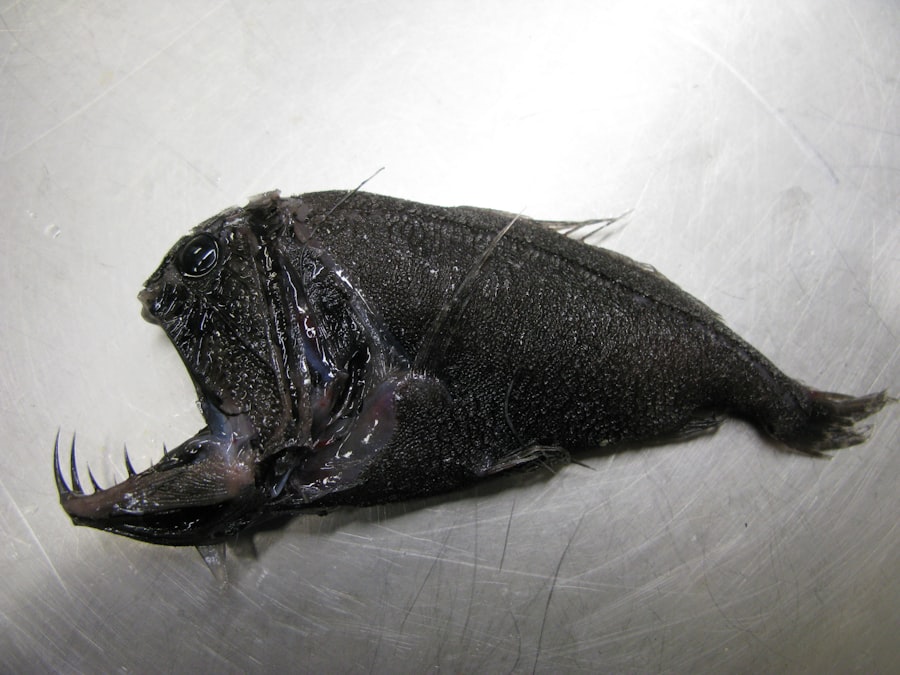
The fangtooth is aptly named. It boasts the largest teeth relative to body size of any fish in the ocean. These saber-like fangs are so enormous that they cannot be fully retracted into their sockets and must be housed in specialized sheaths along the roof of the mouth. Despite their terrifying appearance, these teeth are crucial for the fangtooth’s survival, enabling it to secure and subdue the often fast-moving prey it encounters in the dark, nutrient-poor depths.
Bioluminescent Wonders: The Living Lights of the Deep
Bioluminescence is not just a curiosity of deep-sea fish; it is a fundamental aspect of their existence, a complex language and a vital tool for survival. The diversity of its applications is as astounding as the creatures themselves.
The Anglerfish’s Deceptive Dance
As mentioned earlier, the anglerfish’s esca is a classic example of bioluminescent predation. The pulsating light attracts smaller fish, crustaceans, and other invertebrates, drawing them directly into the anglerfish’s gaping maw. The patterns and intensity of the light can vary, potentially mimicking different types of prey to further entice its victims.
The Dragonfish’s Red Light Advantage
Some deep-sea dragonfish possess a unique ability: they can produce red light, a color that is largely invisible to most other deep-sea creatures. This allows them to illuminate their surroundings and hunt prey without being detected themselves. Imagine a predator using a spotlight that only it can see – a truly chilling advantage in the perpetual darkness.
The Cookiecutter Shark’s Luring Apparatus
The cookiecutter shark, a smaller, cartilaginous fish, employs a fascinating bioluminescent strategy. It has a series of photophores on its belly that create a glowing lure. When larger predators, like tuna or whales, investigate this “small prey,” the cookiecutter shark can then detach from its hiding spot and take a bite out of the larger animal, leaving a distinctive circular “cookie-cutter” wound. This is a more opportunistic and parasitic use of bioluminescence, showcasing the diverse ways in which these living lights can be employed.
The Vampire Squid’s Defensive Ink
While not technically a fish, the vampire squid is often discussed alongside deep-sea ichthyofauna due to its extraordinary adaptations. When threatened, it can eject a cloud of bioluminescent mucus from its arm tips. This dazzling display can startle and disorient predators, allowing the squid to escape into the darkness. The light lingers for a short period, acting as a temporary diversion while the squid retreats.
Bodies Built for Pressure: Architectural Marvels of the Abyss
The physical structures of deep-sea fish are intimately tied to the immense pressures of their environment. They are not merely adapted to it; they are sculpted by it, resulting in forms that often appear fragile yet are remarkably robust.
The Fragile Appearance of Strength
Many deep-sea fish appear almost ethereal, with translucent skin, minimal musculature, and delicate fins. This seemingly fragile appearance is a direct consequence of the need to minimize density and maximize buoyancy under extreme pressure. Dense tissues and rigid skeletons would be crushed.
Watery Flesh and Reduced Skeletal Systems
The flesh of many deep-sea fish is largely composed of water. This high water content makes them less dense and more susceptible to compression. Their bones are often reduced in size and ossification, replaced by cartilaginous structures that are more flexible and less prone to fracture.
The Importance of Buoyancy Control
Maintaining neutral buoyancy is paramount in the deep sea. Instead of swim bladders, which can collapse under extreme pressure, many deep-sea fish rely on their low-density bodies and the properties of water itself to remain suspended. Some species have evolved specialized lipid deposits that further aid in buoyancy.
The Alien Aesthetics: Beyond Human Comprehension
The shapes and forms of deep-sea fish often defy our terrestrial understanding of what a fish should look like. Their “bizarreness” is a reflection of their successful adaptation to a world vastly different from our own.
Elongated and Streamlined Forms
Many deep-sea fish, particularly those that inhabit open waters, possess elongated and streamlined bodies. This is likely an adaptation for efficient movement through the water, conserving energy in an environment where every calorie counts.
Unusual Protrusions and Appendages
The presence of unusual protrusions, barbels, and fins is common. These often serve sensory functions, helping the fish to detect vibrations, chemical cues, or the presence of prey in the darkness. The often bulbous heads, large mouths, and dangling appendages are all part of a toolkit honed by millions of years of evolution.
The Blobfish: A Controversial Icon
The blobfish, often cited as one of the ugliest animals in the world, is a prime example of an extreme deep-sea adaptation. When brought to the surface, its gelatinous body collapses, giving it a sad, saggy appearance. However, in its natural habitat at depths of 600-1,200 meters, the pressure supports its body, and it likely floats just above the seabed, consuming whatever edible matter drifts by. Its “bizarre” appearance is a direct result of its adaptation to immense pressure.
Deep sea fish exhibit some of the most bizarre and fascinating adaptations in the animal kingdom, which can be attributed to the extreme conditions of their environment. Many of these creatures have evolved unique features such as bioluminescence, elongated bodies, and oversized mouths to help them survive in the dark, high-pressure depths of the ocean. For a deeper understanding of these adaptations and the reasons behind their unusual appearances, you can explore this insightful article on Freaky Science, which delves into the intriguing world of deep sea life.
The Bizarre World of Deep-Sea Fish: A Constant Source of Wonder
| Reasons | Explanations |
|---|---|
| Adaptation to low light | Deep sea fish have evolved to have large eyes and bioluminescent features to help them see and attract prey in the dark depths of the ocean. |
| Pressure adaptation | They have unique body shapes and structures to withstand the extreme pressure of the deep sea environment. |
| Food scarcity | Their unusual appearance may help them to catch prey in an environment where food is scarce. |
| Camouflage | Some deep sea fish have bizarre appearances to blend in with their surroundings and avoid predators. |
The deep sea remains one of the last frontiers of exploration on our planet. The creatures that inhabit its crushing depths and perpetual darkness are a testament to the extraordinary power of natural selection and the boundless creativity of life. Their unusual appearances are not mere eccentricities but highly specialized adaptations to an environment that would be utterly inhospitable to most known forms of life.
From the bioluminescent lures of the anglerfish to the colossal jaws of the viperfish, and from the gelatinous bodies built to withstand immense pressure to the rudimentary eyes that gather the faintest glimmers of light, each deep-sea fish tells a story of survival and innovation. They challenge our perceptions of beauty and normality, forcing us to reconsider the very definition of life itself. As technology allows us to probe deeper into these alien realms, we can only anticipate more astonishing discoveries, further revealing the bizarre, the beautiful, and the utterly captivating world of the deep-sea fish. Their existence is a constant reminder of the vast, unexplored wonders that lie hidden beneath the waves, waiting to be understood.

The Deeper You Go, the Less Life Looks Like Life
FAQs
1. Why do deep sea fish look so weird?
Deep sea fish have evolved to survive in extreme environments with limited food and intense pressure, leading to unique and often bizarre physical characteristics.
2. What are some common features of deep sea fish that contribute to their unusual appearance?
Deep sea fish often have large mouths, sharp teeth, bioluminescent organs, and elongated bodies to help them catch prey and navigate in the dark depths of the ocean.
3. How does the lack of light in the deep sea affect the appearance of these fish?
The lack of light in the deep sea has led to the evolution of bioluminescent organs and unique coloration in deep sea fish, allowing them to communicate, attract prey, and camouflage themselves in their dark environment.
4. What role does extreme pressure play in shaping the appearance of deep sea fish?
The intense pressure in the deep sea has influenced the skeletal structure and body shape of deep sea fish, often resulting in elongated bodies, reduced eyes, and flexible jaws to withstand the harsh conditions.
5. How do the unique adaptations of deep sea fish help them survive in their environment?
The unusual appearance of deep sea fish, such as their bioluminescent organs, large mouths, and elongated bodies, helps them to effectively hunt for prey, avoid predators, and thrive in the extreme conditions of the deep sea.