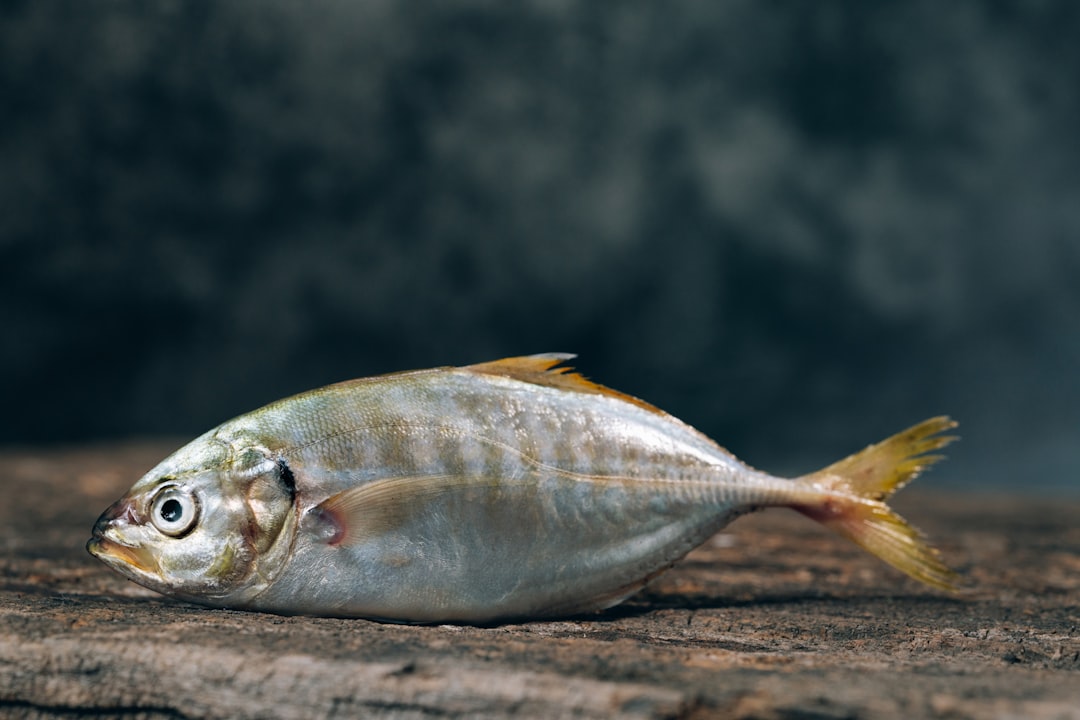
The underwater realm, a world of immense pressure and constant motion, seems like an unlikely place for life to thrive. Yet, it teems with an astonishing diversity of creatures, none more prevalent than fish. The very idea of a fish existing under crushing depths might conjure images of their forms contorting and collapsing. However, the reality is far from this dramatic depiction. Fish, through a remarkable array of physiological and anatomical adaptations, are exquisitely equipped to withstand the formidable forces of the aquatic environment. Their survival is not a matter of luck, but a testament to millions of years of evolutionary fine-tuning.
To truly appreciate how fish navigate their aqueous homes without being pulverized, one must first understand the nature of hydrostatic pressure. This is the force exerted by a fluid at rest due to the weight of the column of fluid above it. In simpler terms, the deeper one goes into the ocean, the more water there is above, and thus, the greater the pressure.
The Deepening Squeeze: Pressure Increases with Depth
The relationship between depth and pressure is linear and predictable. For every 10 meters of depth in seawater, the pressure increases by approximately one atmosphere (atm). At sea level, we experience one atmosphere of pressure from the air above us. So, at 10 meters underwater, a fish is experiencing roughly 2 atm of pressure – the pressure of the water column plus the atmospheric pressure at the surface. Descend to 100 meters, and the pressure is around 11 atm. At the extreme depths of the Mariana Trench, exceeding 10,000 meters, the pressure can be over 1,000 atm, a force equivalent to placing dozens of elephants on a postage stamp. This immense pressure compresses everything within its grasp.
The Uniformity of Pressure: A Crucial Advantage
While the magnitude of hydrostatic pressure is significant, its inherent uniformity is a key factor in why fish don’t get crushed. Unlike the directional forces we often experience, hydrostatic pressure acts equally in all directions. Imagine a balloon submerged in water; it will be compressed uniformly from all sides. This is precisely how the water pressure acts on a fish. There isn’t a single point of immense force from above that would cause a catastrophic collapse. The pressure is distributed evenly across the fish’s entire body, from its head to its tail, and from its dorsal to its ventral side. This uniform application of force means that while the fish’s volume might be slightly reduced, its structural integrity is maintained.
Dissolved Gases and Buoyancy: The Role of Internal Equilibrium
The pressure exerted by the water is also a factor in the gases dissolved within the water and, consequently, within the fish’s body. As pressure increases, so does the solubility of gases in liquids. This means that more gases, such as oxygen and nitrogen, can be dissolved in the water at deeper levels. Fish have evolved mechanisms to manage these dissolved gases within their own tissues and blood. Furthermore, the concept of buoyancy plays a significant role. While pressure compresses, buoyancy counteracts this effect by providing an upward force. Fish, through their swim bladders or other adaptations, can adjust their buoyancy to be neutrally buoyant, effectively matching their density to that of the surrounding water. This balance is crucial; if a fish were denser than the water, it would sink, but its structure would still be subjected to the full hydrostatic pressure.
Fish are fascinating creatures that have adapted remarkably to their underwater environment, allowing them to thrive at various depths without being crushed by the immense pressure of water. This phenomenon can be attributed to their unique physiological structures, such as flexible bodies and specialized swim bladders that help regulate buoyancy. For a deeper understanding of the science behind why fish do not get crushed underwater, you can explore a related article on this topic at Freaky Science.
The Fish’s Interior: A Reservoir of Resilience
The internal structure and composition of a fish are as important as the external forces they face. Their bodies are not hollow, gas-filled sacs that would readily succumb to pressure. Instead, they are composed of dense, water-rich tissues and specialized organs that are remarkably adapted to equalize internal and external pressures.
Water-Rich Tissues: Incompressibility of a Different Kind
One of the most significant reasons fish can withstand deep-sea pressures is the high water content of their tissues. Water, in its liquid form, is notoriously incompressible. This means that it resists changes in volume when subjected to pressure. A fish’s body is largely composed of water, muscles, and other dense tissues. Unlike air-filled spaces, these water-rich tissues can absorb and distribute the external pressure without significant compression. Imagine squeezing a water balloon versus squeezing an empty plastic bag – the water balloon will resist deformation much more effectively.
The Swim Bladder: A Dynamic Pressure Regulator
Perhaps the most well-known adaptation in many fish for dealing with pressure is the swim bladder. This internal gas-filled organ allows fish to control their buoyancy, enabling them to ascend, descend, and maintain a specific depth with minimal effort. However, the swim bladder is not simply a balloon that expands and contracts. In deep-sea fish, this organ is incredibly specialized and often plays a critical role in pressure equalization.
Gas Secretion and Reabsorption: The Balance Act
To maintain neutral buoyancy at different depths, fish with swim bladders must be able to adjust the volume of gas within them. This is achieved through a complex physiological process involving gas glands that secrete gases into the bladder and a network of blood vessels that reabsorb gases. As a fish descends, the increasing external pressure would normally compress the gas in the swim bladder, causing it to become less buoyant. However, the fish can counteract this by secreting more gas into the bladder, maintaining its volume and thus its buoyancy. Conversely, as it ascends, it can reabsorb gas to prevent the bladder from expanding too much and making it too buoyant. This dynamic regulation is essential for survival.
The Ovale: Preventing Gas Loss at Depth
In some deep-sea species, the swim bladder is equipped with a structure called the ovale. This specialized valve can effectively seal off the swim bladder from the pneumatic duct that connects it to the esophagus. This prevents the rapid loss of gas from the swim bladder as the fish ascends, which could otherwise lead to a dangerous rapid expansion and potential damage. The ovale allows for a more controlled release or retention of gas, further contributing to pressure management.
Absence of Large Air Cavities: Avoiding Catastrophic Collapse
While some fish have swim bladders, many deep-sea fish lack them entirely, or have significantly reduced or modified versions. This is because large, air-filled cavities are highly susceptible to compression under pressure. A fish with a large, air-filled stomach or lungs would be at extreme risk of collapsing if it descended too rapidly. The absence of such compressible spaces in deep-sea fish is a direct adaptation to avoid this fate. Their bodies are designed to be as dense and water-filled as possible, minimizing any potential for catastrophic implosion.
The Unseen Heroes: Cellular and Molecular Adaptations
Beyond the macroscopic structures, the cellular and molecular machinery within a fish’s body is also intricately designed to function under immense pressure. These microscopic adaptations are crucial for maintaining cellular integrity and enzymatic activity in an environment that would be hostile to many terrestrial organisms.
Piezolytes: Stabilizing Proteins Under Pressure
One of the most fascinating molecular adaptations is the production of compounds known as piezolytes. These are small organic molecules, such as trimethylamine N-oxide (TMAO), which are found in high concentrations in the tissues of deep-sea organisms. TMAO acts as a compatible solute, meaning it can accumulate to high levels within cells without disrupting essential cellular processes. Its primary role is to counteract the destabilizing effects of hydrostatic pressure on proteins and other macromolecules. Pressure can alter the three-dimensional structure of proteins, leading to loss of function. TMAO helps to stabilize these structures, ensuring that enzymes can continue to catalyze reactions and that cellular machinery operates effectively.
Cell Membrane Fluidity: Maintaining Essential Functions
The cell membrane, the outer boundary of a cell, is composed of a lipid bilayer. Under high pressure, the fluidity of this membrane can be altered, which can impede the function of membrane-bound proteins involved in transport and signaling. Deep-sea fish have evolved mechanisms to maintain optimal membrane fluidity under pressure. This often involves altering the composition of the lipids within the membrane, such as increasing the proportion of unsaturated fatty acids. These molecules have kinks in their hydrocarbon chains, which prevent them from packing together as tightly, thus maintaining membrane fluidity even under increased pressure.
Enzyme Activity: Functioning Against the Squeeze
Enzymes are the workhorses of cellular metabolism, catalyzing a vast array of biochemical reactions. Hydrostatic pressure can significantly affect the activity of enzymes by altering their active sites and the interactions between their various subunits. In response, deep-sea fish have evolved enzymes that are either intrinsically more resistant to pressure or are stabilized by the presence of piezolytes like TMAO. These pressure-adapted enzymes can function efficiently at depths where their shallow-water counterparts would be rendered inactive.
The Power of Adaptation: Evolutionary Pathways to Survival
The remarkable abilities of fish to thrive under immense hydrostatic pressure are not inherent but are the result of a long and continuous evolutionary journey. Natural selection has favored individuals with traits that provided even a slight advantage in surviving and reproducing in high-pressure environments.
Gradual Colonization of Deeper Waters
The colonization of deeper ocean zones by fish was likely a gradual process. As shallow-water environments became more competitive or faced new challenges, some fish populations may have ventured into slightly deeper waters. Those individuals with slightly more robust or adaptable physiology would have had a greater chance of survival. Over countless generations, these advantageous traits would have become more pronounced and widespread within the population.
Diversification of Species
This gradual adaptation led to the diversification of fish species, with specific lineages evolving specialized adaptations for different pressure regimes. For instance, fish living in the mesopelagic zone (200-1,000 meters) have different adaptations than those inhabiting the abyssal zone (4,000-6,000 meters) or the hadal zone (below 6,000 meters). This specialization has resulted in an incredible array of fish forms, each exquisitely suited to its particular depth and pressure environment.
The Role of Genetics and Mutation
Underlying these adaptations are genetic changes. Random mutations in the DNA of fish provided the raw material for evolution. If a mutation resulted in a trait that improved a fish’s ability to withstand pressure, that trait would be passed on to its offspring. Over vast stretches of time, the accumulation of these beneficial mutations has sculpted the remarkable resilience of fish in the deep sea.
Fish are fascinating creatures, particularly when it comes to their ability to thrive in the immense pressures of underwater environments. Unlike humans, who would be crushed by the weight of water at great depths, fish have evolved unique adaptations that allow them to withstand these conditions. Their bodies are filled with a special fluid that helps equalize pressure, preventing any damage to their internal structures. For more insights into the science behind this phenomenon, you can read a related article that delves deeper into the adaptations of aquatic life by visiting this link.
Beyond Compression: Other Hydrodynamic Challenges
| Reasons | Explanation |
|---|---|
| Buoyancy | Fish have swim bladders that help them control their buoyancy and stay afloat in water. |
| Streamlined body shape | Fish have a streamlined body shape that allows water to flow smoothly around them, reducing the force of water pressure. |
| Equal pressure | Water pressure is exerted equally on all parts of a fish’s body, preventing them from being crushed. |
| Adapted skeletal structure | Fish have a flexible and strong skeletal structure that can withstand the pressure of water at different depths. |
While hydrostatic pressure is a primary concern, fish must also contend with other hydrodynamic forces in their aquatic environment. Their sleek, streamlined bodies are not just for aesthetics; they are crucial for efficient movement and survival.
Streamlined Bodies: Reducing Drag and Increasing Efficiency
The torpedo-like shape of many fish is a classic example of adaptation to reduce drag. As a fish propels itself through water, it encounters resistance from the fluid. A streamlined body minimizes this resistance, allowing the fish to move with greater speed and efficiency. This is particularly important in environments where predators may be lurking or prey needs to be pursued. The tapering shape from head to tail helps the water flow smoothly around the body, reducing turbulence.
Fins and Tail: Propulsion and Maneuverability
The fins and tail of a fish are its primary tools for locomotion and maneuverability. The caudal fin (tail fin) provides the main propulsive force, oscillating side to side to push the fish forward. The pectoral and pelvic fins, located on the sides and underside, act like airplane wings, providing lift, stability, and allowing for steering and braking. Dorsal and anal fins, along the back and underside, further contribute to stability and help prevent the fish from rolling. The precise arrangement and size of these fins are tailored to the specific habitat and swimming style of the fish.
Skin and Scales: Protection and Hydrodynamics
The skin and scales of fish also play a vital role in their survival. The scales, often overlapping, provide a protective armor against abrasions, parasites, and even the occasional predatory bite. Furthermore, the mucus layer that covers the scales reduces friction, contributing to the streamlined movement through water. In some species, the scales themselves are modified into spines or other defensive structures, further enhancing their survival capabilities.
In conclusion, the question of “Why Fish Don’t Get Crushed Underwater” is answered by a symphony of evolutionary adaptations. From the uniform application of hydrostatic pressure and the water-rich nature of their tissues to the dynamic regulation of their swim bladders and the sophisticated molecular mechanisms within their cells, fish are master engineers of survival in the deep. Their bodies are not merely passive recipients of immense forces but are active participants in a constant, finely tuned interplay with their environment. The silent depths, far from being a crushing void, are a testament to the enduring power of adaptation and the remarkable ingenuity of life.

The Deeper You Go, the Less Life Looks Like Life
FAQs
1. Why don’t fish get crushed underwater?
Fish have a specialized anatomy that allows them to withstand the pressure of being underwater. Their bodies are made up of mostly water, which is not compressible, and their skeletal structure is designed to distribute the pressure evenly.
2. How do fish regulate their internal pressure underwater?
Fish have a swim bladder, an internal gas-filled organ, that helps them regulate their buoyancy and maintain their internal pressure. This allows them to adjust their position in the water column without being crushed by the surrounding pressure.
3. What is the role of scales in protecting fish from being crushed underwater?
The scales on a fish’s body provide a protective layer that helps distribute the pressure evenly and prevent the fish from being crushed. The scales also help reduce drag as the fish moves through the water.
4. Can fish experience pressure-related health issues underwater?
While fish are adapted to withstand the pressure of being underwater, rapid changes in pressure can still have negative effects on their health. For example, sudden changes in pressure can cause barotrauma, which can lead to internal injuries or even death in fish.
5. Are there any fish that can withstand extreme underwater pressure?
Some deep-sea fish, such as the snailfish and the grenadier, have adapted to survive in the extreme pressures of the deep ocean. These fish have specialized adaptations, such as flexible bodies and reduced skeletal structures, that allow them to thrive in the deep-sea environment.