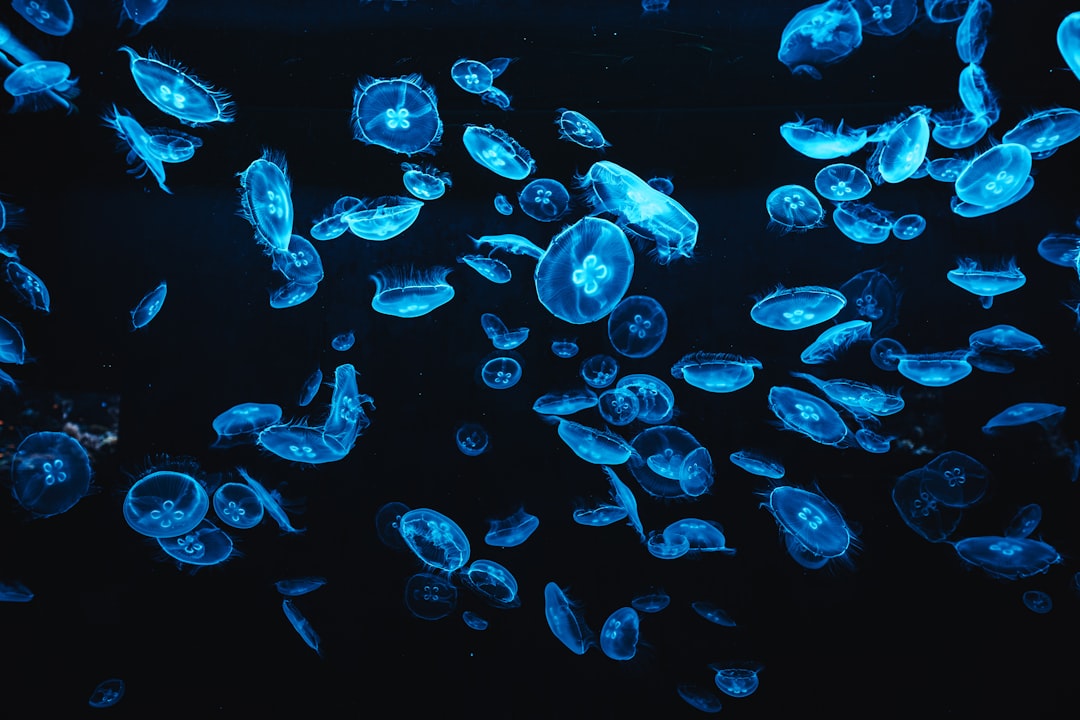
The abyssal realm, a realm of perpetual twilight and crushing pressure, harbors some of Earth’s most peculiar and fascinating creatures. Among these deep-sea denizens, the anglerfish stands out, not only for its fearsome appearance but for its astonishing ability to generate its own light. This bioluminescence, a hallmark of the deep, serves a multitude of purposes for the anglerfish, from luring prey to communicating with potential mates. Unraveling the secrets of anglerfish bioluminescence unveils a breathtaking display of evolutionary ingenuity and biochemical mastery.
Anglerfish, belonging to the order Lophiiformes, are a diverse group of ray-finned fish found in oceans worldwide. They are characterized by their distinctive morphology, often featuring a flattened body, a cavernous mouth armed with formidable, needle-like teeth, and a highly modified dorsal fin spine that protrudes forward, resembling a fishing rod. This lure, or esca, is the key to their bioluminescent prowess. The name “anglerfish” itself directly references this unique adaptation, evoking the image of a fisherman patiently waiting for their catch.
Diverse Habitats, Unified Strategy
Anglerfish inhabit a wide spectrum of marine environments, from the sunlit shallows to the lightless depths of the hadal zone. However, it is in the bathyal and abyssal zones, where sunlight ceases to penetrate, that their bioluminescent capabilities become most pronounced and essential for survival. These environments are characterized by extreme conditions: immense pressure, near-freezing temperatures, and a scarcity of food. In such a challenging milieu, any advantage, however small, can mean the difference between life and death. The anglerfish’s bioluminescent lure is precisely such an advantage, a beacon of hope and a harbinger of doom in the perpetual darkness.
The Anatomy of a Lure
The anglerfish’s lure is a complex and highly specialized organ. The illicium, the modified dorsal spine, is a flexible bone that can be extended and retracted. At its tip rests the esca, a fleshy appendage that houses the light-producing machinery. The shape, size, and even the color of the esca can vary significantly between species, suggesting a degree of specialization for attracting different prey. Some escae are simple bulbs, while others are elaborate, branching structures, adorned with filaments or tentacles that mimic small invertebrates. This morphological diversity hints at the intricate evolutionary pathways that have shaped these hunting tools.
The Dark Side of Attraction: A Predator’s Gambit
For many anglerfish, particularly the females of the deepest-dwelling species, the bioluminescent esca serves as a sophisticated trap. They remain largely sedentary, conserving energy in the food-scarce deep sea, and deploy their glowing lures to attract unsuspecting prey. Small fish, crustaceans, and even other invertebrates, drawn by the tantalizing light, venture too close, only to be snatched by the anglerfish’s lightning-fast jaws. This passive hunting strategy is remarkably effective in an environment where active pursuit of prey would be energetically prohibitive. The lure, therefore, is not merely a light source; it is a carefully crafted deception, a testament to the anglerfish’s predatory prowess.
Anglerfish bioluminescence is a fascinating adaptation that allows these deep-sea creatures to attract prey in the dark depths of the ocean. For those interested in learning more about the intriguing mechanisms behind bioluminescence in various marine species, a related article can be found at Freaky Science, which explores the science behind this natural phenomenon and its role in the survival of different organisms.
The Biochemistry of Light: A Symphony of Molecules
The light emitted by anglerfish is not the result of simple reflection or fluorescence; it is a product of intricate biochemical reactions. This bioluminescence is a living light, produced by specialized cells called photocytes. The process generally involves the oxidation of a light-emitting molecule, luciferin, catalyzed by an enzyme, luciferase. However, the specifics of this reaction can vary between different bioluminescent organisms. In anglerfish, the photocytes can be located directly within the esca or, more commonly, in a symbiotic relationship with bioluminescent bacteria.
Symbiotic Illumination: The Bacterial Partnership
Many anglerfish species house bioluminescent bacteria within specialized sacs or crypts within their esca. These bacteria, often from genera such as Vibrio or Photobacterium, possess the genetic machinery for producing light. The anglerfish provides the bacteria with a safe, nutrient-rich environment and the necessary molecules for their metabolism. In return, the bacteria produce light, which the anglerfish then utilizes for its own survival. This symbiotic relationship is a prime example of mutualism, where both organisms benefit. The anglerfish gains a powerful hunting tool, and the bacteria gain a stable habitat and resources.
The Exchange of Resources: A Delicate Balance
The precise mechanisms of nutrient exchange between the anglerfish and its symbiotic bacteria are still areas of active research. It is believed that the anglerfish provides the bacteria with oxygen, nutrients like sugars and amino acids, and perhaps even signaling molecules that regulate bacterial growth and luminescence. In turn, the bacteria, through their metabolic processes, generate the energy and the necessary substrates for light production. The anglerfish likely has evolved mechanisms to control the blood flow to the esca, thereby regulating the oxygen supply to the bacteria and thus controlling the intensity of the light.
Controlling the Glow: A Sophisticated System
The anglerfish doesn’t just passively display its light; it possesses remarkable control over its intensity and duration. This control is crucial for its hunting strategy. By retracting or extending the esca, or by constricting blood vessels supplying the bacterial population, the anglerfish can dim or extinguish its light, or flash it intermittently. This ability to modulate luminescence allows them to mimic the movements of small prey or to avoid attracting unwanted attention from larger predators. Some species can even change the color of their light, though this is less common and often dependent on the specific species of symbiotic bacteria.
Intrinsic Bioluminescence: A Rarer Phenomenon
While symbiosis with bacteria is prevalent, some anglerfish species exhibit intrinsic bioluminescence, meaning they produce light through their own biochemical processes, independent of external microorganisms. In these cases, the anglerfish likely possesses its own luciferin and luciferase systems. The evolutionary pathway leading to intrinsic bioluminescence in anglerfish is less understood and may have arisen independently in certain lineages. However, the fundamental principle remains the same: a chemical reaction that releases energy in the form of light.
The Molecular Machinery: Luciferin and Luciferase
The specific chemical structures of luciferin and luciferase vary widely across bioluminescent organisms. In anglerfish with intrinsic bioluminescence, it is probable that they utilize a unique set of these molecules, adapted for their specific physiological needs and deep-sea environment. Research into these intrinsic systems is ongoing, aiming to elucidate the precise chemical pathways and the evolutionary origins of this self-sufficient light production.
The Functions of Light: More Than Just a Lure

The bioluminescent lure is undoubtedly the most iconic adaptation of the anglerfish, but light plays a more multifaceted role in their lives, extending beyond simple prey attraction. Communication, predator avoidance, and even camouflage are all potential functions of anglerfish bioluminescence, depending on the species and its specific ecological niche.
The Ultimate Bait: Attracting Prey
As discussed, the primary and most well-known function of anglerfish bioluminescence is to act as a lure for prey. The esca, with its rhythmic pulsing, shimmering, or steady glow, mimics the appearance of small, edible organisms, drawing unsuspecting fish and invertebrates within striking distance. This passive hunting strategy is highly energy-efficient, a crucial advantage in the food-limited deep sea. The diversity in esca morphology and luminescence patterns suggests that different anglerfish species have evolved specialized lures to attract specific prey items, demonstrating a remarkable degree of ecological specialization.
Mimicking Smaller Life: A Deceptive Display
The anglerfish’s lure often imitates the bioluminescent signals of smaller prey organisms, such as planktonic crustaceans or larval fish. By mimicking these familiar light patterns, the anglerfish effectively tricks its victims into approaching. This sophisticated form of deception highlights the evolutionary arms race that exists within the deep sea, where predators and prey constantly adapt to gain an advantage. The anglerfish’s ability to precisely mimic the movements and light emissions of its intended meals is a testament to its evolutionary mastery.
The Lure as a Signal: Different Prey, Different Lights
It is hypothesized that different anglerfish species may employ distinct bioluminescent patterns to attract different types of prey. A slow, steady glow might attract curious, slower-moving creatures, while a flickering, erratic light could mimic the panicked movements of a wounded fish, appealing to more opportunistic predators. The exact “language” of anglerfish luminescence and its potential for species-specific prey attraction is a fascinating area of ongoing research.
Finding a Mate: The Luminescent Courtship
In the vast, dark expanse of the deep sea, locating a mate can be a daunting challenge. Bioluminescence plays a crucial role in this endeavor, particularly for the extremely sexually dimorphic anglerfish. In many species, the males are significantly smaller than the females and are often parasitic, attaching themselves to the female and deriving nourishment from her bloodstream. The bioluminescent lure of the female can serve as a beacon, helping the free-swimming males to locate them in the darkness.
The Beacon for Males: A Romantic Glow
The female anglerfish’s esca, in some species, may emit a specific light pattern or color that is recognizable to males of the same species. This luminescent signal acts as a broadcast, announcing her presence and readiness to mate. The male, equipped with sensitive olfactory organs to detect pheromones and potentially visually oriented eyes, then navigates towards this glowing beacon. This ensures reproductive success in an environment where visual cues are limited.
Chemical Signals and Luminescent Cues: A Combined Approach
While luminescence is likely a primary signal for mate attraction, it is often coupled with chemical signals, such as pheromones. The male anglerfish may follow a trail of pheromones, with the bioluminescent lure acting as the final confirmation of the female’s location and species. This multi-modal communication system increases the efficiency and accuracy of mate finding, minimizing wasted energy and ensuring successful reproduction.
Camouflage and Counter-Illumination: Hiding in Plain Sight
While the lure is used for attraction, some anglerfish species also utilize bioluminescence for camouflage. In the mesopelagic zone, where some light still penetrates from the surface, prey can see the silhouettes of predators against the dim ambient light. To counter this, some anglerfish species possess photophores on their ventral surfaces that emit light matching the intensity and color of the downwelling light. This counter-illumination effectively hides their silhouette from predators below.
Blending with the Blue: The Art of Counter-Illumination
Counter-illumination is a sophisticated camouflage strategy employed by many marine organisms living in the twilight zone. By producing light from their undersides, anglerfish can effectively blend in with the faint light filtering down from the surface, making them invisible to predators lurking below. The precise regulation of this ventral luminescence, matching the ever-changing ambient light conditions, is a remarkable feat of biological adaptation.
The Shadowless Hunter: Invisible from Below
The success of counter-illumination lies in its ability to eliminate the telltale shadow that would otherwise betray the anglerfish’s presence. This allows them to ambush prey from below with greater stealth and reduces their own vulnerability to predation. The evolution of such a precise and adaptive camouflage mechanism underscores the intense selective pressures present in the deep-sea environment.
Illuminating the Path: Navigational Aids?
While not as extensively documented as other functions, it is plausible that in certain circumstances, anglerfish might use their bioluminescence for navigational purposes. The glow of their esca could potentially help them to orient themselves in their immediate surroundings, especially in the complex three-dimensional landscape of the deep-sea floor or in areas with limited visibility. However, this remains a more speculative function compared to prey attraction or mate signaling.
The Evolution of Bioluminescence: A Deep-Sea Saga

The evolution of bioluminescence in anglerfish is a captivating story of adaptation and co-evolution. The ability to produce light has arisen multiple times independently within the animal kingdom, and the anglerfish provide a compelling case study of how this trait can be refined and utilized for survival in extreme environments.
Origins of the Light: From Genes to Glands
The genetic basis for bioluminescence lies in the genes responsible for producing luciferin and luciferase. In symbiotic anglerfish, these genes reside within the bacterial partners. The anglerfish has evolved the mechanisms to house, cultivate, and regulate these light-producing bacteria. In species with intrinsic bioluminescence, the anglerfish has evolved its own genetic pathways for light production. The precise evolutionary steps leading to these different mechanisms are a subject of ongoing scientific inquiry.
The Ancient Spark: Early Evolution of Light Production
The ability to produce light likely emerged early in the history of life, with some of the earliest bioluminescent organisms being single-celled microbes. Over eons, this ability was incorporated into more complex multicellular organisms through various evolutionary pathways, including gene transfer and co-evolutionary partnerships. Anglerfish represent a later stage in this evolutionary journey, showcasing highly specialized and sophisticated applications of bioluminescence.
The Arms Race of Light and Vision
The evolution of bioluminescence in the deep sea is intrinsically linked to the evolution of vision. As predators evolved light-producing lures, prey species evolved enhanced visual systems to detect and avoid them. Conversely, as prey developed better ways to detect light, predators evolved more sophisticated lures and camouflage techniques. This ongoing evolutionary arms race has driven the diversification and refinement of both bioluminescent signals and visual perception in the deep-sea ecosystem.
Co-evolutionary Dance: Bacteria and Anglerfish
The symbiotic relationship between anglerfish and bioluminescent bacteria is a striking example of co-evolution. Over millions of years, these two distinct life forms have become intricately intertwined, each shaping the evolutionary trajectory of the other. The anglerfish has evolved specialized organs and physiological mechanisms to host and control the bacteria, while the bacteria have adapted to thrive within this unique environment and provide the essential light.
Adaptation for Partnership: The Anglerfish’s Contribution
The anglerfish has evolved remarkable adaptations to facilitate its partnership with bioluminescent bacteria. These include specialized light organs, such as the esca, which provide a protected environment for the bacteria. Furthermore, the anglerfish likely possesses mechanisms to regulate the supply of oxygen and nutrients to the bacteria, thereby controlling the intensity and duration of the luminescence. The development of these specialized structures and physiological controls is a testament to the power of co-evolution.
The Bacterial Blueprint: Genes for Glow
The bioluminescent bacteria themselves have undergone significant evolutionary changes to optimize their light-producing capabilities within their anglerfish hosts. Their genomes have likely been shaped by selective pressures that favor efficient luminescence and the ability to thrive in the specific conditions provided by the anglerfish. Understanding the genetic makeup of these symbiotic bacteria provides insights into the fundamental mechanisms of bioluminescence.
Diversification of Forms: Adapting to Niches
The remarkable diversity in anglerfish species, each with its unique morphology and bioluminescent adaptations, is a testament to their evolutionary success. As anglerfish colonized different deep-sea habitats, they faced varying ecological pressures, leading to the specialization of their bioluminescent lures and other light-related traits. This diversification allows them to exploit a wide range of food sources and inhabit diverse ecological niches within the deep sea.
From Simple Glow to Complex Patterns
The evolutionary trajectory of anglerfish bioluminescence has likely seen a progression from simpler, more basic forms of light production to the complex and specialized structures seen today. Early forms might have involved less controlled luminescence or more generalized lures. Over time, natural selection has favored individuals with more effective lures and more nuanced control over their light, leading to the extraordinary adaptations observed in modern anglerfish.
The Unseen World of Deep-Sea Communication
The secrets of anglerfish bioluminescence continue to be unveiled, hinting at a complex and dynamic world of communication and interaction in the deep sea. As technology advances, scientists are gaining unprecedented insights into the lives of these enigmatic creatures, revealing the full extent of their remarkable adaptations and their crucial role in the ocean’s most mysterious ecosystems.
The fascinating world of anglerfish bioluminescence has captivated scientists and enthusiasts alike, shedding light on the unique adaptations these deep-sea creatures possess. Their ability to produce light not only aids in attracting prey but also serves as a means of communication and camouflage in the dark depths of the ocean. For those interested in exploring more about the intriguing mechanisms behind this phenomenon, a related article can be found at Freaky Science, which delves deeper into the science of bioluminescence across various species.
Unanswered Questions and Future Research
| Species | Bioluminescence Color | Depth Range (m) |
|---|---|---|
| Melanocetus johnsonii | Blue-green | 200-2000 |
| Linophryne arborifera | Red | 500-2500 |
| Oneirodes eschrichtii | Yellow | 300-1500 |
Despite significant advances in our understanding of anglerfish bioluminescence, many mysteries remain. Ongoing research aims to unravel the finer details of their biochemistry, the intricacies of their symbiotic relationships, and the full spectrum of their luminescent behaviors. Future investigations promise to shed further light on these captivating creatures of the deep.
The Language of Light: Decoding Luminescent Signals
Scientists are actively working to decipher the specific “language” of anglerfish bioluminescence. This involves identifying the distinct light patterns, colors, and frequencies emitted by different species and correlating these signals with specific behaviors, such as prey attraction, mate signaling, or predator deterrence. Understanding this luminescent lexicon could revolutionize our understanding of deep-sea ecology.
Beyond the Lure: Other Luminescent Displays
While the esca is the most prominent light organ, research suggests that some anglerfish may possess other bioluminescent capabilities. Exploring the presence and function of photophores on other parts of their bodies, such as the fins or belly, could reveal additional roles for bioluminescence in their lives, such as communication or camouflage.
Individual Recognition and Social Interactions
Could anglerfish use their bioluminescence for individual recognition or more complex social interactions? While many deep-sea anglerfish are thought to be solitary, the possibility of subtle luminescent cues for signaling during brief encounters or for territorial displays cannot be ruled out. Future research may uncover a more nuanced social life than currently understood.
The Genetic Underpinnings: Unraveling the Code
Delving deeper into the genetic makeup of both the anglerfish and their symbiotic bacteria is crucial for understanding the evolution and mechanisms of bioluminescence. Identifying the specific genes involved in luciferin and luciferase production, as well as genes responsible for the development and function of light organs, will provide invaluable insights into this fascinating biological phenomenon.
The Evolutionary Pathway of Luciferases
Comparing the genetic sequences of luciferases from different anglerfish species and their bacterial partners can help scientists reconstruct the evolutionary pathways that led to the diversification of these enzymes. This can reveal how these enzymes have adapted to function in different chemical environments and at varying pressures and temperatures.
The Role of the Anglerfish Genome
Understanding the anglerfish genome will also be essential. Identifying genes that regulate the development of light organs, control blood flow to the esca, or influence the exchange of nutrients with symbiotic bacteria will provide a comprehensive picture of the anglerfish’s biological control over its luminescence.
Conservation and Human Impact: Protecting the Light
As our understanding of anglerfish bioluminescence grows, so does the awareness of their vulnerability to human impacts, such as deep-sea fishing and pollution. Research into the population dynamics and habitat requirements of these species is crucial for developing effective conservation strategies.
Threats to the Deep: Fishing and Pollution
The deep sea is not immune to the impacts of human activities. Deep-sea trawling can damage habitats and disrupt the delicate ecosystems upon which anglerfish depend. Pollution, including plastic debris and chemical contaminants, can also have detrimental effects on marine life. Understanding these threats is essential for protecting anglerfish populations.
The Future of Deep-Sea Research: Technology and Discovery
Advancements in deep-sea exploration technology, including remotely operated vehicles (ROVs) and autonomous underwater vehicles (AUVs), are revolutionizing our ability to study these remote environments. These tools allow scientists to observe anglerfish in their natural habitats, collect samples, and conduct experiments that were previously impossible, paving the way for groundbreaking discoveries about anglerfish bioluminescence and the deep-sea ecosystem as a whole. The secrets of anglerfish bioluminescence are slowly but surely coming to light, illuminating the wonders of our planet’s most unexplored frontier.

The Deeper You Go, the Less Life Looks Like Life
FAQs
What is bioluminescence in anglerfish?
Bioluminescence in anglerfish is the ability of certain species to produce light through a chemical reaction. This light is produced by specialized cells called photophores, which are located on the anglerfish’s esca, or “fishing lure.”
How do anglerfish use bioluminescence?
Anglerfish use bioluminescence as a form of camouflage and to attract prey. The glowing esca acts as a lure to attract smaller fish and other prey towards the anglerfish, which then uses its sharp teeth to capture and consume the unsuspecting prey.
What causes the bioluminescence in anglerfish?
The bioluminescence in anglerfish is caused by a chemical reaction between a molecule called luciferin and an enzyme called luciferase. When these two substances combine with oxygen, they produce light. This process is similar to the bioluminescence seen in fireflies.
Are all anglerfish bioluminescent?
Not all anglerfish species are bioluminescent. Bioluminescence is most commonly found in the suborder Ceratioidei, which includes deep-sea anglerfish. However, not all species within this suborder exhibit bioluminescence, and it is not present in all anglerfish.
What is the purpose of bioluminescence in anglerfish?
The primary purpose of bioluminescence in anglerfish is to attract prey. The glowing esca acts as a lure to draw in smaller fish and other organisms, allowing the anglerfish to easily capture and consume its prey. Additionally, bioluminescence may also serve as a form of communication between anglerfish individuals.