
The abyss, a realm of crushing pressure and perpetual twilight, harbors creatures that have mastered the art of disappearing. In this alien world, where visibility is a luxury and survival a constant negotiation, camouflage is not merely a tactic; it is a way of life. These masters of disguise, from the microscopic to the monumental, employ a breathtaking array of adaptations to blend seamlessly into their surroundings, evading predators and ambushing unsuspecting prey. Their strategies are as diverse as the ocean itself, a testament to the relentless power of natural selection in shaping the most ingenious of defenses.
The deep sea is characterized by its lack of light, a factor that profoundly influences the evolution of camouflage. Unlike the vibrant and varied colors found in sunlit reefs, deep-sea camouflage often revolves around manipulating light and shadow in more subtle, yet equally effective, ways. The absence of sunlight means that many creatures rely on bioluminescence, either to mimic their surroundings or to create their own form of concealment.
Counterillumination: Lighting Up the Darkness
Perhaps the most sophisticated form of camouflage in the deep sea is counterillumination. Many mesopelagic (twilight zone) and bathypelagic (midnight zone) animals possess photophores, light-producing organs, on their ventral (underside) surfaces. The intensity and color of the light emitted by these photophores are precisely matched to the faint light filtering down from the surface.
The Science of Matching Light
This delicate balance is crucial. If a predator looks up from below, the silhouette of a counterilluminated creature against the slightly brighter water above will be rendered invisible. Without counterillumination, the creature would appear as a dark shape, an easy target. The brainpower and biological machinery required to regulate the output of these photophores in response to ambient light conditions are truly remarkable. Some species can even adjust their luminescence in response to changes in the moon or the presence of clouds, demonstrating an extraordinary level of environmental awareness.
Bioluminescent Mimicry: A False Trail
Beyond simple counterillumination, some species use bioluminescence to mimic other organisms or even to create distracting displays. The anglerfish, for instance, dangles a bioluminescent lure in front of its gaping maw, attracting curious prey in the darkness. This is a form of active camouflage, using light to draw victims in rather than to disappear. Other creatures might flash bioluminescent patterns to startle or confuse predators, buying precious seconds to escape.
Transparent Terrors: The Invisible Hunters
In the vast, featureless expanse of the deep ocean, transparency offers another potent form of camouflage. Many gelatinous creatures, such as jellyfish and some species of squid, are almost entirely transparent, rendering them nearly invisible against the water column. This allows them to drift passively, or to move with minimal disturbance, unobserved by both predators and prey.
The Physics of Invisibility
The transparency of these animals is a marvel of biological engineering. Their tissues are largely devoid of pigments and contain minimal light-scattering structures. Water itself is transparent, and by matching the refractive index of their bodies to that of the surrounding seawater, these creatures effectively disappear. The challenge for them, however, is maintaining their structural integrity without the support of bones or hard exoskeletons. Their gelatinous composition is key to this delicate balance.
Limitations of Transparency
While transparency is an excellent camouflage strategy, it is not without its limitations. It is most effective in open water where there are no visual cues to break up the silhouette. In areas with more complex backgrounds, such as near the seafloor or in areas with suspended particles, transparency can be less effective. Furthermore, many transparent creatures still possess visible organs, such as digestive tracts or reproductive structures, which can betray their presence.
Deep sea camouflage is a fascinating topic that explores how various marine creatures adapt to their dark and often hostile environments. For those interested in learning more about the incredible strategies employed by these organisms, a related article can be found at Freaky Science, which delves into the science behind camouflage and its implications for survival in the depths of the ocean.
Color and Pattern: Beyond the Absence of Light
While the deep sea is often perceived as a monochromatic world of blues and blacks, color and pattern still play significant roles in deep-sea camouflage, albeit in more specialized ways.
The Absence of Color: Absorbing All Light
Many deep-sea creatures, particularly those living in the aphotic zone where no sunlight penetrates, are a deep black or dark red. These colors are not chosen for aesthetic reasons, but for their remarkable ability to absorb light. In the dim light of the deep sea, any reflected light can be a death sentence. By absorbing almost all wavelengths of light, these creatures become virtually invisible against the dark backdrop.
The Efficiency of Black
Black pigmentation, often due to melanin, is incredibly effective at absorbing light. This is similar to how black clothing absorbs heat in sunlight. In the deep sea, this translates to a profound level of concealment. Scientists have observed that even when illuminated by submersibles’ powerful lights, these black creatures are incredibly difficult to spot.
Red as the New Black
Interestingly, many deep-sea animals are also dark red. While red appears as a dark, muted color in sunlight, in the deep ocean, where only blue and green wavelengths of light penetrate, red light is completely absent. Therefore, a dark red creature appears black in this environment, achieving the same camouflage effect as truly black animals. This is a clever evolutionary solution, as red pigments may be less energetically expensive to produce than black pigments.
Disruptive Coloration: Breaking Up the Silhouette
Even in the deep sea, where bold patterns might seem counterintuitive, disruptive coloration can be a highly effective strategy. This involves breaking up the body’s outline with irregular patterns of contrasting colors or textures, making it harder for a predator to recognize the overall shape of the animal.
Mimicking the Unseen
Some deep-sea invertebrates, like certain species of octopus, can rapidly change their skin color and texture to match their surroundings. While this is more pronounced in shallow-water octopuses, deep-sea species have also been observed to exhibit some degree of color change. They can mimic the texture of rocks, sand, or even the undulating patterns of light and shadow on the seafloor.
The Role of Texture
Beyond color, texture plays a crucial role in deep-sea camouflage. Some creatures have evolved to have textured skin or appendages that mimic the appearance of their surroundings. For example, a fish that lives amongst coral might have skin that resembles the branching structure of the coral, making it indistinguishable from its habitat. This is a form of textural camouflage that is independent of light.
Masters of Mimicry: Deception as a Survival Tactic
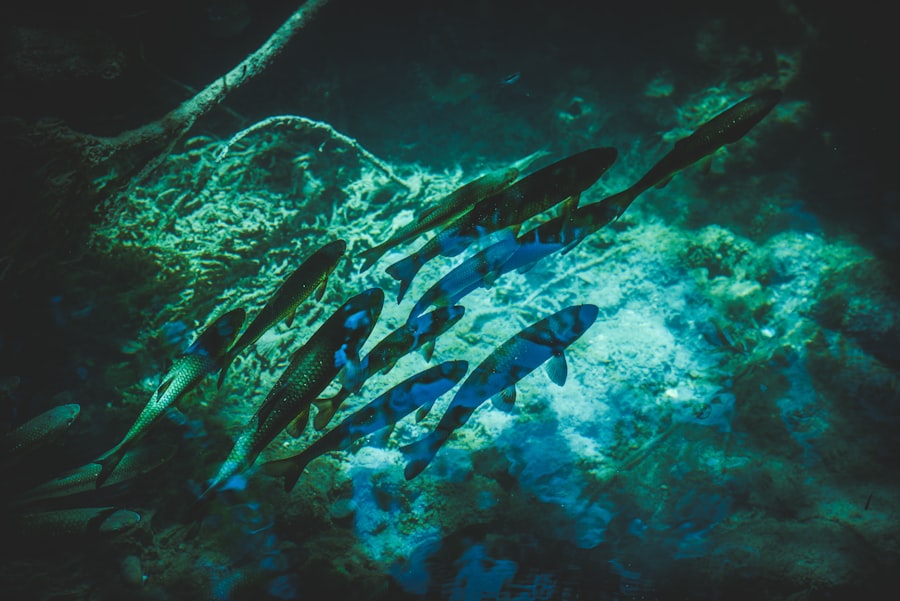
Mimicry, the act of resembling another organism, is a widespread strategy in the natural world, and the deep sea is no exception. Deep-sea creatures employ mimicry to avoid being eaten or to lure unsuspecting prey.
Batesian and Müllerian Mimicry in the Abyss
While classic examples of Batesian (harmless mimicking harmful) and Müllerian (harmful mimicking harmful) mimicry are less common in the lightless depths, the underlying principles are still at play. Instead of bright warning colors, deep-sea mimicry often relies on mimicking less desirable prey or creating false trails.
The Deceptive Lure
As mentioned with the anglerfish, the bioluminescent lure is a prime example of deceptive mimicry. However, other creatures may mimic the bioluminescent patterns of harmless organisms to attract small prey, or they may mimic the movements of larger, more dangerous animals to deter predators.
Mimicking the Environment
Beyond mimicking other animals, some deep-sea creatures mimic inanimate objects. For instance, the decorator crab famously adorns itself with materials from its environment, such as sponges, algae, and hydroids, to blend in. This is an active form of mimicry, where the creature meticulously selects and attaches objects to its exoskeleton.
Intraspecific Mimicry: A Deceptive Family Affair
In some deep-sea species, mimicry occurs within the same species. This can involve juvenile forms mimicking adult forms of other species to avoid predation, or even individuals mimicking different sexes to exploit mating opportunities. These intricate social dynamics highlight the complex evolutionary pressures at play.
Structural Adaptations: Beyond Pigment and Light
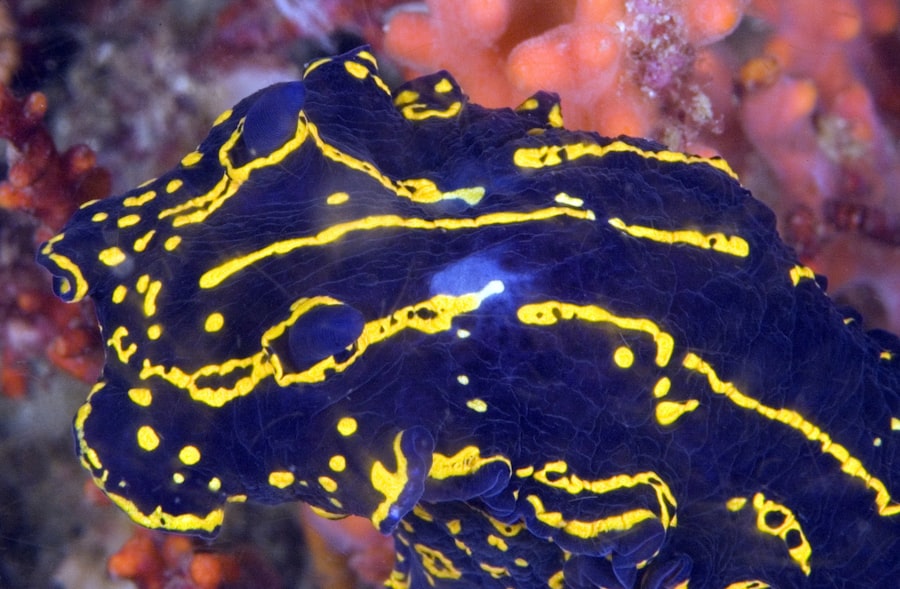
While pigment and light manipulation are vital, the very structure of a deep-sea creature can also be a form of camouflage, offering physical concealment and enhanced survival.
Body Shape and Form: Blending In
The streamlined bodies of many deep-sea fish are not solely for efficient movement but also serve to minimize their profile, making them harder to detect. Conversely, some creatures adopt unusual shapes that mimic the surrounding topography, allowing them to hide in plain sight.
The Flatfish of the Abyss
Similar to their shallow-water counterparts, some deep-sea fish have evolved flattened bodies, allowing them to lie on the seafloor and blend in with the substrate. Their coloration and patterns often match the sand, mud, or rocky outcrops they inhabit.
Spiky or Irregular Forms
Other creatures possess spiky or irregular body shapes that break up their outline and make them appear less like prey. Think of a pufferfish, which can inflate itself, or creatures with numerous spines. In the deep sea, these features can serve a similar purpose of making the animal less appealing and harder to grip.
Appendages and Fins: Camouflage Through Extension
The fins and appendages of deep-sea animals are not just for locomotion; they can also be used for camouflage. Elongated, fin-like structures can mimic seaweed or other vegetation, while specialized appendages can be used to create visual distractions or to break up the animal’s silhouette.
Mimicking Seaweed
Some fish have developed fin rays that are elongated and filamentous, resembling strands of seaweed. These extensions can sway gently in the currents, making the fish appear as part of the plant life.
Feather-like Structures
Certain crustaceans and other invertebrates have evolved elaborate, feather-like appendages that help them blend in with the delicate structures of deep-sea corals or sponges. These structures can also help them to filter feed, further integrating them into their environment.
Deep sea camouflage is a fascinating adaptation that allows marine creatures to blend seamlessly into their surroundings, evading predators and enhancing their hunting strategies. For those interested in exploring this topic further, a related article discusses the various techniques used by deep-sea organisms to achieve such remarkable concealment. You can read more about these incredible adaptations in the article found here. Understanding these mechanisms not only sheds light on the complexities of marine life but also inspires innovations in technology and design.
The Future of Deep-Sea Camouflage Research: Unlocking the Secrets of the Abyss
| Camouflage Technique | Example |
|---|---|
| Counter-shading | Dark on top, light on bottom to blend with water column |
| Transparency | Body parts are transparent to match surrounding light |
| Bioluminescence | Producing light to match ambient light in deep sea |
| Disruptive coloration | Patterns and colors break up body outline |
The study of deep-sea camouflage is an ongoing scientific endeavor, with new discoveries constantly pushing the boundaries of our understanding. Researchers are using advanced technologies to observe and analyze these remarkable adaptations.
Advanced Imaging and Remote Sensing
Submersibles equipped with high-resolution cameras, sonar, and specialized lighting systems are providing unprecedented views of deep-sea organisms and their behaviors. These technologies allow scientists to study camouflage in its natural habitat without disturbing the creatures.
Bioluminescent Analysis
Sophisticated spectrometers are used to analyze the wavelengths and intensity of bioluminescence, helping researchers to understand the precise mechanisms of counterillumination and mimicry. This allows for a deeper understanding of how these animals perceive and interact with light in their environment.
Genetic and Molecular Studies
Scientists are also delving into the genetic and molecular basis of camouflage. By studying the genes responsible for pigment production, photophore development, and light regulation, they aim to unravel the evolutionary pathways that have led to these extraordinary adaptations.
Bio-inspired Design and Innovation
The principles of deep-sea camouflage are increasingly inspiring innovation in fields such as materials science, robotics, and defense. Understanding how these creatures disappear can lead to the development of new stealth technologies and adaptive materials.
Stealth Coatings
The light-absorbing properties of deep-sea creatures are being studied to develop advanced stealth coatings for military applications, making vehicles and equipment less detectable by radar and visual sensors.
Adaptive Camouflage Systems
Inspired by the ability of some deep-sea animals to change color and texture, researchers are developing adaptive camouflage systems that can dynamically alter their appearance to match their surroundings, with potential applications in everything from clothing to building facades. The secrets held within the deep sea’s masters of disguise offer a profound glimpse into the boundless ingenuity of evolution and hold the key to unlocking future technological advancements.

The Deeper You Go, the Less Life Looks Like Life
FAQs
What is deep sea camouflage?
Deep sea camouflage refers to the ability of marine organisms to blend in with their surroundings in the deep ocean, making them less visible to predators and prey. This adaptation allows them to avoid detection and survive in their environment.
How do deep sea creatures use camouflage?
Deep sea creatures use various methods of camouflage, including coloration, bioluminescence, transparency, and mimicry. Some species can change their color or pattern to match their surroundings, while others use bioluminescence to match the faint light in the deep ocean.
What are some examples of deep sea camouflage in marine life?
Examples of deep sea camouflage in marine life include the mimic octopus, which can imitate the appearance and behavior of other marine species, and the hatchetfish, which has a silvery, reflective body that helps it blend in with the light from above.
Why is deep sea camouflage important?
Deep sea camouflage is important for the survival of marine organisms in the deep ocean, where visibility is limited and predators are abundant. Camouflage helps these creatures avoid being eaten and also allows them to sneak up on their own prey.
How do scientists study deep sea camouflage?
Scientists study deep sea camouflage using a variety of methods, including underwater cameras, remotely operated vehicles (ROVs), and laboratory experiments. They also analyze the physical and chemical properties of deep sea organisms to understand how they achieve camouflage in their environment.