The vast expanse of the ocean, a realm teeming with life and mystery, has long captivated the human imagination. Beneath the shimmering surface lies an alien world, a place where evolution has sculpted creatures so bizarre and wondrous that they seem to have sprung from the pages of a science fiction novel. These are the Twilight Zone Ocean Creatures, inhabitants of the mesopelagic zone, a region of perpetual twilight that exists between the sunlit surface waters and the crushing depths of the abyss. This is a world of dimly perceived forms, bioluminescent displays, and adaptations so profound they blur the lines between reality and the fantastical.
The mesopelagic zone, often referred to as the “twilight zone,” lies roughly between 200 and 1,000 meters (650 to 3,280 feet) below the ocean’s surface. Sunlight penetrates this layer, but it is diffused and weak, casting an eerie, perpetual twilight. This lack of direct sunlight has profound implications for the life that thrives here. Photosynthesis, the foundation of most surface ecosystems, is impossible. Instead, life in the mesopelagic relies on a complex food web that begins with organic matter sinking from the sunlit epipelagic zone above, a phenomenon known as marine snow.
The Challenges of the Twilight Zone
Life in the mesopelagic zone is characterized by a suite of significant challenges. The ever-present dim light, the increasing pressure with depth, and the scarcity of food all necessitate extraordinary adaptations for survival. Creatures that call this zone home have evolved a remarkable array of strategies to overcome these obstacles, making them some of the most fascinating and unique organisms on Earth.
Navigating the Dim Light
One of the primary challenges is navigating and finding prey or mates in a world where visibility is severely limited. Many mesopelagic creatures have developed specialized sensory organs to cope with this. Large, sensitive eyes are common, often positioned to capture every faint photon of light. Some possess tubular eyes that can swivel upwards, maximizing their ability to detect silhouettes against the faint downwelling light or the bioluminescence of other organisms.
Coping with Immense Pressure
As depth increases, so does hydrostatic pressure. Organisms in the mesopelagic have evolved bodies that can withstand these immense forces. Their tissues are often less dense and more gelatinous, allowing them to be compressed without damage. The absence of air-filled cavities, such as swim bladders in many fish, is also a crucial adaptation.
The Scarcity of Food
The mesopelagic is not a bountiful feeding ground. Food sources are limited and often consist of sinking organic matter or smaller, less energy-rich organisms. This scarcity has led to the evolution of efficient feeding strategies and the ability to survive long periods between meals.
In exploring the mysterious depths of the ocean, one cannot help but draw parallels to the eerie and thought-provoking themes found in “The Twilight Zone.” For those intrigued by the strange and often surreal creatures that inhabit our oceans, a related article can be found at Freaky Science, which delves into the bizarre and otherworldly aspects of marine life. This article highlights the uncanny adaptations and behaviors of ocean creatures that seem to belong in a science fiction narrative, much like the stories that captivated audiences in the iconic television series.
Bioluminescence: The Living Lights of the Deep
Perhaps the most striking characteristic of the mesopelagic is the widespread use of bioluminescence, the production of light by living organisms. In the perpetual twilight, light becomes a vital tool for communication, predation, and defense. The sheer diversity of bioluminescent displays is staggering, painting the dark waters with a kaleidoscope of blue, green, and sometimes even red light.
Functions of Bioluminescence
Bioluminescence in the mesopelagic serves a multitude of purposes, each contributing to the survival and success of these creatures.
Communication and Attraction
Many species use bioluminescence to attract mates or communicate with others of their kind. Flashing patterns, color changes, and the intensity of light can all convey specific messages in the darkness. For instance, anglerfish use a bioluminescent lure to attract unsuspecting prey.
Predation and Luring Prey
The ability to produce light can be a powerful hunting tool. Some predators use their bioluminescence to startle or disorient prey, making them easier to catch. Others, like the aforementioned anglerfish, employ a glowing appendage to entice smaller organisms into striking distance.
Defense and Evasion
Bioluminescence can also be a formidable defense mechanism. Some creatures release a cloud of luminous particles to startle or distract predators, allowing them to escape. Others possess photophores, light-producing organs, on their undersides that can camouflage them against the faint light from above, a strategy known as counter-illumination. This makes them less visible to predators hunting from below.
Examples of Bioluminescent Wonders
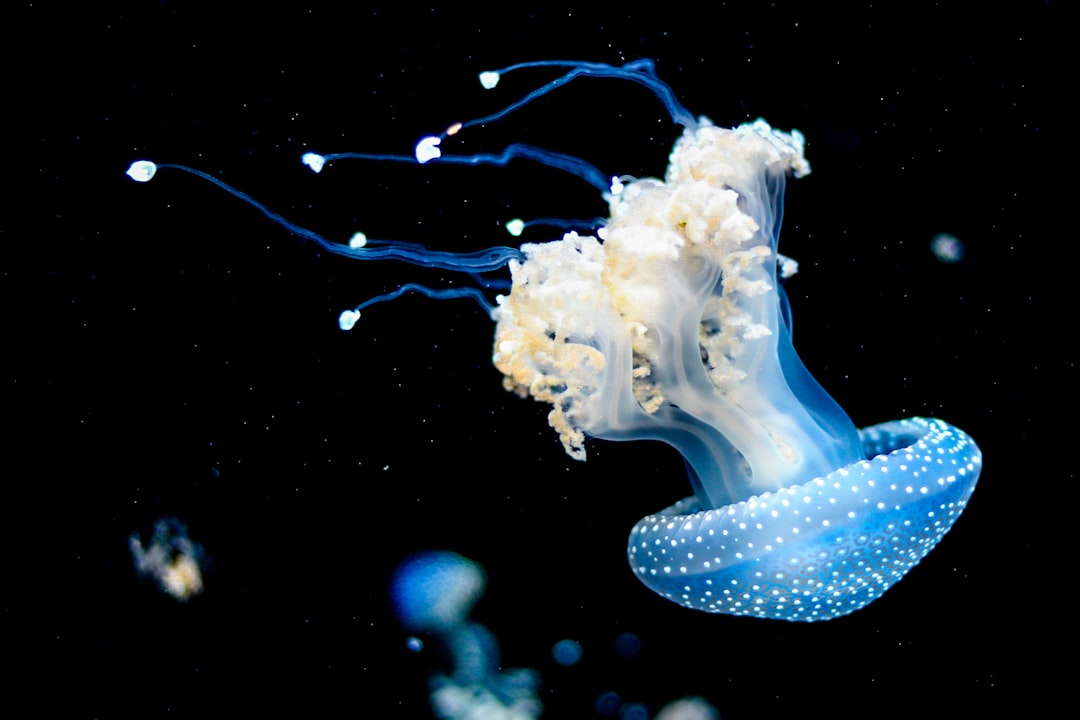
The mesopelagic is home to countless bioluminescent marvels. Lanternfish, with their rows of photophores, are a prime example, illuminating the depths with their steady glow. The Viperfish, with its enormous fangs and bioluminescent organs along its body, is another iconic inhabitant. Even jellyfish and squid have evolved spectacular bioluminescent capabilities, creating dazzling light shows in the dark.
Masters of Camouflage: Blending into the Gloom
Beyond bioluminescence, mesopelagic creatures have developed an impressive array of camouflage techniques to survive in an environment where visibility is a double-edged sword. The ability to blend seamlessly with the dim surroundings is crucial for both predators and prey.
Transparency and Coloration
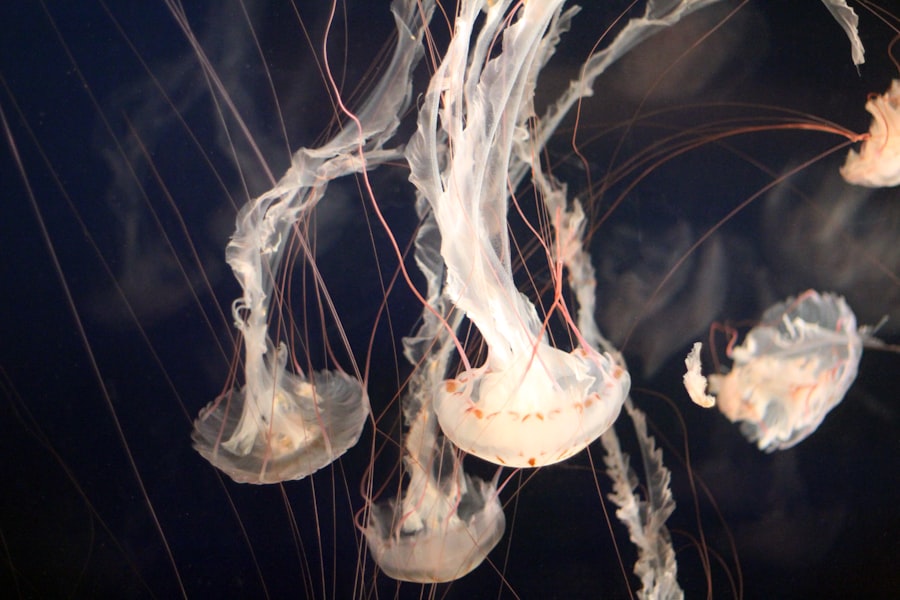
Many mesopelagic organisms are nearly transparent, making them difficult to spot against the murky backdrop. This transparency is achieved through specialized tissues and the absence of pigments. Others have adapted silvery or dark coloration to absorb any available light, further enhancing their ability to disappear into the gloom.
The “Silver Lining” of Survival
The silvery scales of many mesopelagic fish are not just for aesthetics. This metallic sheen acts as a perfect reflector, mirroring the faint light from above and effectively rendering the fish invisible to predators lurking below. This form of counter-illumination, by reflecting ambient light, provides a subtle but crucial form of camouflage.
Deep Red and Black: The Colors of Stealth
Conversely, some creatures have evolved deep red or black coloration. Red light is absorbed quickly by water, making red-colored animals virtually invisible in the mesopelagic. Black coloration, on the other hand, absorbs all light, making them appear as shadowy voids against the dimly lit background.
Behavioral Camouflage
Camouflage is not solely about physical attributes; behavior also plays a vital role. Many mesopelagic animals exhibit minimal movement, remaining still for extended periods to avoid detection. Others have developed specific swimming patterns that make them appear less like a distinct organism and more like a drifting piece of debris.
Unique Adaptations for Survival: The Weird and Wonderful
The evolutionary pressures of the mesopelagic zone have resulted in some of the most peculiar and fascinating adaptations found anywhere on Earth. These creatures have truly pushed the boundaries of biological possibility.
Gigantism and Miniaturization
The mesopelagic exhibits a curious phenomenon known as the “deep-sea gigantism” and “miniaturization.” While some species, like the Giant Squid, achieve immense sizes, others remain remarkably small. The reasons for these contrasting evolutionary paths are still being explored, but it is likely related to resource availability, predation pressure, and reproductive strategies.
The Enigma of the Giant Squid
While often associated with the abyss, the Giant Squid (Architeuthis dux) is believed to inhabit the mesopelagic and upper bathyal zones. Its colossal size, estimated to be up to 13 meters (43 feet) for males and 18 meters (59 feet) for females, is thought to be an adaptation for efficient predation on larger prey in the deep, with its enormous eyes adapted to detect the faint bioluminescence of its meals.
Tiny Wonders of the Twilight
On the other end of the spectrum, many mesopelagic creatures are incredibly small, sometimes only a few millimeters in length. These miniaturized organisms may have evolved this way to reduce their metabolic needs, making them less reliant on the scarce food resources. Their small size can also offer an advantage in evading larger predators.
Specialized Feeding Mechanisms
With food being a precious commodity, mesopelagic inhabitants have developed an array of specialized feeding mechanisms.
The Fearsome Fangtooth
The Fangtooth (Anoplogaster cornuta) is a prime example of a predator with extreme adaptations. Its disproportionately large, needle-like teeth, which are too large to fit entirely within its mouth, are a testament to its predatory lifestyle. These teeth are designed to impale and secure any prey it encounters in the darkness.
The Gulper Eel’s Expansive Jaw
The Gulper Eel, also known as the Pelican Eel, possesses a jaw that can unhinge and expand dramatically, allowing it to swallow prey much larger than its own head. This remarkable adaptation is essential for capitalizing on infrequent feeding opportunities in the mesopelagic.
The Vertical Migration: A Daily Journey
One of the most significant ecological phenomena in the mesopelagic is the daily vertical migration. Millions of mesopelagic organisms ascend towards the surface waters at night to feed on plankton and smaller organisms, and then descend back into the twilight zone during the day to avoid predation.
The Twilight Zone’s Hidden Buffet
This nightly ascent transforms the mesopelagic into a dynamic ecosystem. The creatures that participate in this migration form a massive, invisible buffet that fuels life in the surface waters. Their movements also play a crucial role in nutrient cycling within the ocean.
Avoiding Predators in the Daylight
The descent back into the mesopelagic is primarily a survival tactic. By retreating to the dim, high-pressure environment during daylight hours, these organisms avoid the visual predators of the sunlit epipelagic zone.
In the mysterious depths of the ocean, the Twilight Zone is home to a variety of fascinating creatures that often defy our understanding of biology and adaptation. If you’re intrigued by the bizarre and extraordinary life forms that inhabit this shadowy realm, you might find the article on freaky science particularly enlightening. It explores the unique adaptations of these ocean dwellers and their survival strategies in such an extreme environment. For more information, check out the article on ocean creatures that thrive in the Twilight Zone.
The Unseen Majority: A Crucial Role in the Ocean’s Health
| Species | Depth Range (m) | Size (cm) | Feeding Habits |
|---|---|---|---|
| Giant Squid | 300-1000 | Up to 13 | Carnivorous |
| Viperfish | 500-4000 | Up to 30 | Carnivorous |
| Goblin Shark | 200-1200 | Up to 300 | Carnivorous |
| Fangtooth Fish | 200-5000 | Up to 16 | Carnivorous |
Despite their often-bizarre appearances and the mystery that surrounds them, mesopelagic creatures constitute the largest biomass of any vertebrate group on Earth. Their sheer numbers and their role in the ocean’s food web are critical to the health and functioning of the entire marine ecosystem.
The Mesopelagic as a Carbon Sink
The daily vertical migration of mesopelagic organisms plays a vital role in the biological pump, a process that transfers carbon from the atmosphere to the deep ocean. As these creatures consume organic matter and then excrete waste, they effectively transport carbon downwards, helping to regulate Earth’s climate.
The Twilight Zone’s Contribution to Climate Regulation
The vast quantities of carbon sequestered by the mesopelagic ecosystem are a testament to its importance in mitigating climate change. Understanding and protecting this often-overlooked zone is therefore crucial for global environmental health.
A Frontier of Scientific Discovery
The mesopelagic zone remains one of the last great frontiers of scientific exploration. Our knowledge of these creatures and their behaviors is constantly expanding, thanks to advancements in submersible technology and deep-sea imaging. Each expedition reveals new species and unveils further insights into the intricate workings of this alien world.
The Challenges of Exploration
Studying the mesopelagic is inherently challenging. The immense pressure, the extreme darkness, and the vastness of the ocean make direct observation difficult and expensive. However, the rewards of such exploration are immense, offering a glimpse into the wonders of evolution and the resilience of life.
Protecting the Twilight Zone
As human activities increasingly impact the ocean, it is vital that we recognize the importance of the mesopelagic zone. Overfishing, pollution, and climate change pose threats to these fragile ecosystems. Conservation efforts must extend to these deep-sea realms to ensure the continued health of our planet’s oceans. The mysterious wonders of the Twilight Zone are not just biological curiosities; they are essential components of a healthy and functioning global ecosystem, a testament to life’s ability to thrive in the most extreme and alien environments imaginable.

The Deeper You Go, the Less Life Looks Like Life
FAQs
What are twilight zone ocean creatures?
Twilight zone ocean creatures are marine organisms that inhabit the mesopelagic zone, also known as the twilight zone, which is located between 200 and 1000 meters below the ocean’s surface. These creatures have adapted to low light conditions and extreme pressures found at these depths.
What types of creatures can be found in the twilight zone?
A wide variety of creatures can be found in the twilight zone, including lanternfish, hatchetfish, vampire squid, gulper eels, and deep-sea jellyfish. These organisms have unique adaptations such as bioluminescence, transparent bodies, and specialized feeding mechanisms to survive in this environment.
How do twilight zone creatures survive in such extreme conditions?
Twilight zone creatures have evolved a range of adaptations to survive in the extreme conditions of the mesopelagic zone. These adaptations include bioluminescence for communication and camouflage, specialized eyes for low light vision, and the ability to store and use energy efficiently in a food-limited environment.
Why are twilight zone creatures important to the marine ecosystem?
Twilight zone creatures play a crucial role in the marine ecosystem by serving as a food source for larger predators, including commercially important fish species. Additionally, they contribute to the carbon cycle by sequestering carbon through the consumption of organic matter and the production of sinking fecal pellets.
What are the challenges in studying and conserving twilight zone creatures?
Studying and conserving twilight zone creatures present several challenges due to the inaccessibility of their habitat, the high cost of deep-sea exploration, and the potential impacts of human activities such as deep-sea mining and climate change. Efforts to protect these creatures and their habitat require international collaboration and the development of sustainable management practices.