
The vast majority of life on Earth thrives within the ocean’s sunlit surface waters. While the deep sea remains an enigma, largely unexplored and brimming with potential discoveries, the reality is that the majority of fish species are fundamentally bound to shallower realms. The question then arises: what prevents fish from descending indefinitely into the crushing depths of the ocean? The answer lies in a complex interplay of physical, chemical, and biological limitations that create an invisible ceiling, dictating the upper echelons of aquatic existence for most fish.
The most immediate and formidable barrier to deep-sea habitation for most fish is the immense hydrostatic pressure. As one descends into the ocean, the weight of the water column above increases dramatically. For every 10 meters of descent, the pressure increases by approximately one atmosphere (atm), the equivalent of the atmospheric pressure at sea level. At the surface, fish experience a single atmosphere of pressure. By 100 meters, this has increased to 11 atmospheres, and by 1,000 meters, it’s a staggering 101 atmospheres. At the deepest parts of the ocean, like the Mariana Trench, the pressure can exceed 1,000 atmospheres – equivalent to the weight of several large elephants pressing down on every square inch of a fish’s body.
The Biological Consequences of Extreme Pressure
Fish, like all living organisms, are composed of cells, which are essentially tiny sacs filled with water and dissolved molecules. These cells are designed to function under specific pressure conditions. When a fish designed for shallower waters is subjected to immense pressure, its internal pressure is significantly lower than the external pressure. This differential can lead to a host of catastrophic physiological events.
Cellular Integrity and Collapse
The cell membranes, which regulate the passage of substances into and out of the cell, are particularly vulnerable. High external pressure can force these membranes inward, distorting their structure and disrupting their ability to function. Proteins within the cell, essential for virtually all biological processes, can also be denatured – their three-dimensional structure altered – rendering them inactive. This can lead to a complete breakdown of cellular functions, ultimately resulting in cell death.
Gas Bladders and Buoyancy Control
Many fish possess a gas bladder, also known as a swim bladder, which they use to control their buoyancy. This organ is filled with gas, allowing the fish to adjust its density and maintain its position in the water column without expending much energy. However, gas bladders are incredibly sensitive to pressure changes. As a fish descends, the gas within the bladder is compressed. Without specialized adaptations, this compression can cause the bladder to collapse, leading to a loss of buoyancy control and potentially forcing the fish back towards the surface.
Biochemical Reactions Under Pressure
Enzymes, the biological catalysts that drive biochemical reactions, are finely tuned to operate optimally within a specific range of pressure. As pressure increases, the rate and efficiency of these enzymatic reactions can be significantly impaired. This can disrupt critical metabolic pathways, affecting everything from energy production to the synthesis of essential molecules. While some deep-sea organisms have evolved specialized enzymes that function under high pressure, most shallow-water fish lack these adaptations.
The Myth of the “Crushed Fish”
It’s a common misconception that fish are “crushed” by the pressure in the deep sea. In reality, fish living at great depths have evolved remarkable adaptations to cope with these extreme conditions. Their bodies are often gelatinous and lack the rigid skeletal structures that would be easily deformed. Furthermore, their cells and biomolecules are adapted to function under high pressure. The problem arises when a shallow-water fish is brought to the surface. The rapid decrease in pressure causes the gases dissolved in its tissues to expand, and any gas in its swim bladder to inflate uncontrollably, leading to severe internal damage and often death. This is why it’s impossible to simply catch a deep-sea fish and release it into shallow waters, and vice versa.
Fish cannot live deeper than certain depths due to the extreme pressure and lack of light in the deep ocean, which affects their physiology and behavior. For a more in-depth understanding of the challenges faced by marine life in deep-sea environments, you can read this related article on the topic. It provides insights into the adaptations required for survival in such harsh conditions. For more information, visit this article.
The Silent Scarcity of Oxygen
Beyond the crushing pressure, the deep sea presents another significant challenge: the scarcity of dissolved oxygen. While the ocean surface is in constant contact with the atmosphere, facilitating oxygen exchange, deeper waters are more isolated. Oxygen levels gradually decrease with depth due to a combination of factors.
Biological Oxygen Depletion
Marine organisms, including fish, bacteria, and other invertebrates, consume oxygen through respiration. In the deep sea, where biological activity is still present, this consumption can lead to localized areas of low oxygen concentration.
Stratification and Limited Mixing
The ocean is not a homogenous body of water. Layers of water with different temperatures, salinities, and densities form, creating stratification. This stratification can impede the mixing of oxygen-rich surface waters with deeper waters. While currents can play a role in oxygen distribution, the efficiency of this mixing decreases with depth.
The Impact on Fish Respiration
Fish extract dissolved oxygen from the water using their gills. The efficiency of this process is directly related to the concentration of oxygen in the water. In oxygen-poor environments, fish struggle to obtain enough oxygen to sustain their metabolic needs. This can lead to suffocation, reduced activity levels, and ultimately, death.
Adaptations for Low Oxygen Environments
Some fish species have evolved remarkable adaptations to survive in oxygen-limited environments. These can include:
- Increased gill surface area: Larger or more convoluted gills can extract oxygen more efficiently from the surrounding water.
- More efficient hemoglobin: Hemoglobin, the protein in red blood cells that carries oxygen, can be adapted to bind oxygen more tightly at lower concentrations.
- Reduced metabolic rate: Slowing down their metabolism allows fish to conserve oxygen and reduce their overall demand.
- Anaerobic respiration (in extreme cases): While not sustainable for long periods, some fish can temporarily switch to anaerobic respiration, a process that produces energy without oxygen, though it generates toxic byproducts.
However, these adaptations are not universal, and the majority of fish are not equipped to handle the severely depleted oxygen levels found in the abyssal plains and trenches.
The Challenge of Temperature Extremes

Temperature is another crucial factor that limits the distribution of fish. While the deep sea is often depicted as uniformly cold, the reality is more nuanced. However, even the relatively stable, cold temperatures of the deep sea can be too extreme for many fish species.
The Cold of the Abyss
The vast majority of the deep ocean is characterized by consistently cold temperatures, typically ranging from 0°C to 4°C (32°F to 39°F). These frigid conditions can significantly slow down metabolic processes.
Thermal Tolerance Limits
Every fish species has a specific range of temperatures within which it can survive and function. This thermal tolerance is dictated by the optimal functioning temperatures of its enzymes and cellular processes. For fish adapted to warmer surface waters, the extreme cold of the deep sea can be lethal. Their biochemical reactions will slow to a crawl, hindering their ability to swim, feed, and reproduce.
The Paradox of the Deep
Interestingly, some deep-sea environments, particularly hydrothermal vents, can experience localized pockets of extreme heat. While these environments support unique ecosystems, the rapid temperature fluctuations and extreme heat are also a barrier for most fish, which are adapted to the stable, cold conditions of the surrounding deep sea.
Eurythermal vs. Stenothermal Fish
Fish can be broadly categorized as eurythermal (tolerating a wide range of temperatures) or stenothermal (tolerating only a narrow range of temperatures). Most fish found in the temperate and tropical surface waters are relatively stenothermal, meaning they are adapted to the specific temperature regimes of their habitat. Conversely, some deep-sea fish are remarkably eurythermal, able to withstand significant temperature shifts, but their “tolerance” is still within a certain range.
Metabolic Rate and Temperature
The relationship between temperature and metabolic rate is well-established. Colder temperatures generally lead to lower metabolic rates. For fish in the deep sea, this means that even if they could survive the pressure and oxygen levels, their low metabolic rate would limit their ability to actively hunt, escape predators, and reproduce at a pace comparable to their shallow-water counterparts.
The Endless Night: The Absence of Light
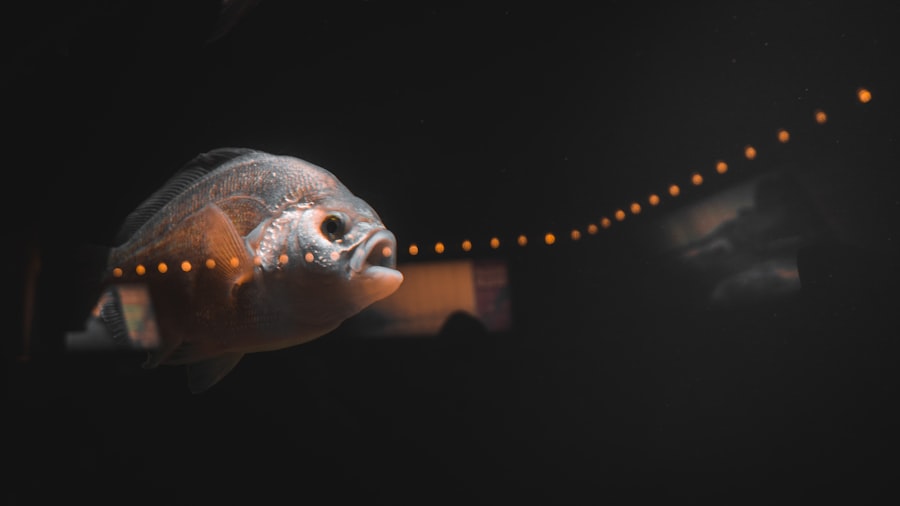
The absence of sunlight is perhaps the most visually striking difference between the surface ocean and the deep sea, and it presents a profound challenge for fish that rely on light for survival. Sunlight penetrates the ocean to varying depths, with visible light disappearing beyond a few hundred meters.
The Importance of Light for Vision
For many fish species, vision is their primary sense for navigation, foraging, and predator avoidance. Their eyes are adapted to detect specific wavelengths of light and to function optimally in their native light conditions.
The Limitations of Deep-Sea Vision
In the perpetual darkness of the deep sea, traditional vision becomes largely useless. The eyes of deep-sea fish are often:
- Reduced or absent: Some species have evolved to lose their eyesight entirely, relying on other senses.
- Enlarged and sensitive: Other species have developed enormous eyes to capture any faint glimmers of light from bioluminescent organisms or the rare shaft of moonlight that might penetrate. However, even these large eyes are not equipped to process the light levels found in shallower waters.
- Specialized for bioluminescence: Many deep-sea creatures produce their own light (bioluminescence). Some fish have evolved specialized eyes that are sensitive to these specific wavelengths, allowing them to see the bioluminescent signals of prey, predators, or potential mates.
The Role of Other Senses
In the absence of reliable vision, fish in the deep sea have evolved a sophisticated array of alternative sensory mechanisms:
- Chemosensation: An acute sense of smell and taste allows them to detect dissolved chemicals in the water, helping them find food or avoid danger.
- Mechanosensation: Lateral lines and other sensory organs detect vibrations and pressure changes in the water, alerting them to the presence of other organisms.
- Echolocation: Some species use sound to navigate and locate prey.
However, these alternative senses, while effective in the deep sea, are not always sufficient to compensate for the complete lack of light for fish accustomed to visually rich environments.
Fish are fascinating creatures, but their ability to thrive is limited by the depth of the ocean they inhabit. As pressure increases with depth, many species struggle to survive due to their physiological adaptations. For a deeper understanding of the challenges fish face in deeper waters, you can explore this insightful article on the subject. It discusses various factors that contribute to the limitations of fish living at extreme depths. To read more about this intriguing topic, visit this article.
The Scarcity of Food and the Energetic Cost of Survival
| Reason | Explanation |
|---|---|
| Pressure | At deeper depths, the pressure of the water increases, which can cause damage to the fish’s internal organs. |
| Oxygen levels | Deeper waters may have lower oxygen levels, making it difficult for fish to breathe and survive. |
| Temperature | Deeper waters are often colder, and some fish species are not adapted to survive in such low temperatures. |
| Food availability | Some fish species rely on food sources that are not present at deeper depths, making it challenging for them to find nourishment. |
The deep sea, while vast, is not a uniformly abundant food source for most fish. The primary producers – phytoplankton – thrive in the sunlit surface waters and form the base of most marine food webs. In the deep sea, the availability of food is significantly reduced.
The “Marine Snow” Phenomenon
Much of the food that reaches the deep sea consists of “marine snow,” which is the continuous shower of organic detritus, dead organisms, and fecal matter from the upper layers. While this provides a food source, it is often scarce, dispersed, and of lower nutritional quality than the plankton-rich waters of the surface.
The Energetic Bottleneck
The process of surviving in the deep sea is energetically demanding. Fish must contend with:
- Finding scarce food: Actively hunting for prey in the vast darkness requires significant energy expenditure.
- Maintaining body temperature (in cold waters): Even cold-blooded animals expend energy to maintain essential bodily functions, and prolonged exposure to frigid temperatures can increase this demand.
- Navigating extreme pressure: While adaptations exist, the physiological processes required to maintain cellular integrity under pressure are still metabolically costly.
Adaptations for Food Scarcity
Fish living in the deep sea have developed a range of adaptations to cope with food scarcity:
- Slow metabolism: As mentioned earlier, a slow metabolic rate conserves energy, allowing fish to survive for extended periods between meals.
- Opportunistic feeding: Deep-sea fish are often opportunistic feeders, consuming whatever they can find, including carrion and even other deep-sea fish.
- Large mouths and expandable stomachs: Some species have evolved large mouths and expandable stomachs to consume prey that may be larger than themselves, maximizing the benefit of a rare meal.
- Energy-efficient locomotion: Many deep-sea fish are relatively slow-moving, conserving energy by minimizing unnecessary activity.
However, for fish from shallower, food-rich environments, the deep sea represents an insurmountable energetic challenge. They are simply not built to endure the prolonged periods of starvation and the high energetic costs of survival in such an environment.
Conclusion: A Mosaic of Adaptations, Not Universal Suitability
The reasons why most fish cannot live deeper are not singular, but rather a complex tapestry of interconnected environmental challenges. The immense pressure, the dwindling oxygen, the frigid temperatures, the perpetual darkness, and the scarcity of food all converge to create a hostile environment for life as we know it in the surface oceans.
While the deep sea is home to a fascinating array of highly specialized creatures that have evolved remarkable adaptations to thrive in these extreme conditions, these adaptations are the product of millions of years of evolutionary pressure. The fish that populate our familiar coastal waters and coral reefs, with their bright colors, keen eyesight, and active lifestyles, are fundamentally unsuited to the alien world of the abyss. Their physiology, their biochemistry, and their very existence are inextricably linked to the conditions of the shallower, sunlit realms. The limit of fish in the deep sea is not an arbitrary boundary, but a testament to the incredible diversity of life and the exquisite adaptations that allow organisms to conquer seemingly insurmountable environmental hurdles, each in their own unique way. The ocean’s depths remain a frontier, but for the vast majority of its finned inhabitants, that frontier is one they are destined never to cross.

The Deeper You Go, the Less Life Looks Like Life
FAQs
1. Why can’t fish live deeper in the ocean?
Fish have adapted to live at specific depths in the ocean where the temperature, pressure, and oxygen levels are suitable for their survival. Deeper depths often have higher pressure and lower oxygen levels, making it difficult for fish to survive.
2. What happens to fish at deeper depths in the ocean?
At deeper depths, fish may experience physiological stress due to the extreme pressure and low oxygen levels. This can lead to organ damage, impaired functioning, and ultimately death for many fish species.
3. How do fish adapt to living at specific depths in the ocean?
Fish have evolved to have specific adaptations that allow them to thrive at certain depths in the ocean. These adaptations may include specialized gills for oxygen extraction, buoyancy control mechanisms, and tolerance to varying temperatures and pressures.
4. Are there any fish species that can live at extreme depths in the ocean?
There are indeed fish species that have adapted to live at extreme depths in the ocean, such as the anglerfish and the gulper eel. These deep-sea fish have unique physiological and behavioral adaptations that allow them to survive in the harsh conditions of the deep ocean.
5. How does human activity impact the ability of fish to live at deeper depths in the ocean?
Human activities such as deep-sea trawling, ocean mining, and pollution can disrupt the delicate balance of deep-sea ecosystems, impacting the ability of fish to survive at deeper depths. This can lead to habitat destruction and loss of biodiversity in the deep ocean.