The hum of a server rack, the whir of a laptop fan, the warmth radiating from a gaming desktop – these are all familiar signs of the computational engine at work. This heat, a constant companion to our digital lives, is often mistakenly attributed to a fundamental physical limit known as Landauer’s principle. While Landauer’s principle does describe an irreducible minimum energy dissipation associated with information erasure, the heat we experience in our everyday computing devices is overwhelmingly a product of entirely different, and far more significant, physical processes. Understanding this distinction is crucial for anyone seeking to grasp the realities of energy consumption and thermal management in modern electronics.
The operation of any electronic device, from the simplest calculator to the most powerful supercomputer, is intrinsically linked to the generation of heat. This thermal output is not merely an inconvenience; it is a fundamental consequence of the physics governing the flow of electricity and the switching of transistors. When an electrical current flows through a conductor, it encounters resistance. This resistance, however small, converts a portion of the electrical energy into thermal energy, a phenomenon described by Joule heating. Imagine a constricted pipe carrying water; some of the energy is lost as friction, manifesting as heat. Similarly, electrons flowing through the microscopic wires and components of a computer collide with atoms in the material lattice, their kinetic energy being transferred and ultimately dissipated as heat.
Furthermore, the very act of computation – the flipping of billions of transistors between their on and off states – also contributes significantly to heat generation. While transistors are designed to be highly efficient, they are not perfect. Even the minuscule amounts of current that “leak” when a transistor is supposed to be off, or the energy required to charge and discharge the capacitance associated with transistor gates, accumulate and contribute to the overall thermal load. This is particularly pronounced in integrated circuits (ICs) where millions or even billions of transistors are packed into a tiny area. The density of these components means that even small inefficiencies, when multiplied by such a vast number, can lead to substantial heat dissipation. The relentless drive for smaller, faster, and more powerful processors directly translates to an increased density of transistors and more dynamic switching, thereby amplifying the heat generated. This continuous pursuit of performance has pushed the boundaries of thermal management, making it a central challenge in modern computer engineering.
The Role of Resistance and Electrical Current
At its core, the generation of heat in electronic circuits can be understood through Ohm’s Law and Joule’s Law. Ohm’s Law states that the voltage (V) across a conductor is directly proportional to the current (I) flowing through it and the resistance (R) of the conductor: V = IR. Joule’s Law, also known as the first law of thermodynamics for electrical circuits, quantifies the heat produced by an electrical current flowing through a resistance. It states that the power dissipated as heat (P) is equal to the square of the current multiplied by the resistance (P = I²R), or equivalently, the square of the voltage divided by the resistance (P = V²/R), or the product of voltage and current (P = VI).
In the context of a computer, every wire, every resistor, every transistor’s internal structure, and even the semiconductor material itself possesses some degree of electrical resistance. As electrons traverse these resistive elements, they collide with the atoms of the material. These collisions transfer kinetic energy from the electrons to the lattice vibrations of the atoms, increasing the internal energy of the material. This increased internal energy manifests as an increase in temperature – heat. The more current that flows and the higher the resistance, the greater the rate of heat generation. In high-performance processors, millions of amperes per square centimeter can flow through microscopic channels, and while the resistance of these channels is extremely low, the sheer scale of the current leads to significant heat dissipation.
Transistor Switching and Leakage Currents
Beyond simple resistive heating, the dynamic operation of transistors themselves is a significant source of thermal energy. Transistors act as electronic switches, controlling the flow of current based on an input signal. The process of switching a transistor from an “off” state to an “on” state, and vice-versa, involves charging and discharging the gate capacitance. This charging and discharging process requires energy, and any inefficiencies in this energy transfer will result in heat. While modern transistors are incredibly efficient, with leakage currents and switching energies in the zeptojoule range (10⁻²¹ joules), the sheer number of transistors in a modern CPU or GPU and the billions of switching operations they perform every second accumulate to a substantial thermal output.
Moreover, even when a transistor is intended to be “off,” a small but non-zero current, known as leakage current, can still flow. This leakage is a consequence of quantum mechanical tunneling and imperfect insulation between semiconductor layers. While individually minuscule, the combined leakage from billions of transistors in a processor can contribute a noticeable amount of heat, even when the processor is theoretically idle. As transistor sizes continue to shrink, the problem of leakage becomes more pronounced, posing a significant challenge for power efficiency and thermal management. Engineers are constantly working on new transistor designs and materials to minimize these leakage currents.
In exploring the nuances of thermodynamics in computing, it’s essential to differentiate between various types of heat generation, particularly in the context of Landauer’s principle. A related article that delves into why computer heat is not classified as Landauer heat can be found at Freaky Science. This article provides insights into the mechanisms of heat generation in computers and how they differ fundamentally from the theoretical heat associated with information processing as described by Landauer. Understanding these distinctions is crucial for advancing energy-efficient computing technologies.
The Misconception: Landauer’s Principle Explained
It is common to hear references to “Landauer heat” when discussing the theoretical limits of computation and energy dissipation. While this principle is fundamental to the physics of information, it describes a different phenomenon than the practical heat generated by our computers. In 1961, Rolf Landauer proposed that the erasure of information is an irreversible process and therefore must be accompanied by a minimum amount of heat dissipation. Specifically, Landauer’s principle states that the erasure of one bit of information (e.g., resetting a memory cell from a known state to a uniform, undetermined state) requires a minimum energy dissipation of kT ln(2), where k is the Boltzmann constant and T is the absolute temperature.
At room temperature (around 300 Kelvin), this minimum energy dissipation is approximately 3 x 10⁻²¹ joules per bit erased. This value is incredibly small. To put it into perspective, a modern high-performance CPU operating at a few gigahertz might perform billions of operations per second. Even if every single operation involved the erasure of multiple bits, the total energy dissipation due to Landauer’s principle would be orders of magnitude less than the heat we actually measure from these devices. The heat generated by resistive losses and transistor switching is vastly dominant.
Information Erasure: A Theoretical Limit
The core idea behind Landauer’s principle is that for a process to be thermodynamically reversible, it must be possible to perfectly reverse it without any net change to the surroundings. However, the erasure of information, such as writing over data or resetting a memory bit, inherently involves losing information about the previous state. Imagine a memory cell that stores either a ‘0’ or a ‘1’. To erase it, you might reset it to a default state, say ‘0’. Once this operation is performed, you can no longer determine from the memory cell alone whether it originally contained a ‘0’ or a ‘1’. This loss of information is thermodynamically irreversible.
To maintain the overall conservation of energy and information in the universe, this irreversible process must be compensated by an increase in entropy elsewhere, which manifests as heat dissipation into the environment. The quantity kT ln(2) represents the minimum amount of energy that must be converted into heat to account for this information loss in a thermodynamically consistent way. This principle establishes a fundamental lower bound on the energy cost of computation, but it is a theoretical minimum that is far from being approached by current technology.
The Scale Discrepancy: kT ln(2) vs. Real-World Heat
The critical difference between Landauer’s principle and the heat we experience in our computers lies in the scale of the energy dissipation. As mentioned, at room temperature, erasing a single bit of information dissipates approximately 3 x 10⁻²¹ joules. Now consider a typical high-end processor that might consume tens or even hundreds of watts of power. If one watt is equal to one joule per second, then a processor consuming 100 watts is dissipating 100 joules of energy every second.
If we were to hypothesize that this entire energy dissipation was solely due to Landauer’s principle, we could calculate the number of bits being erased per second. This would be 100 joules/second divided by (3 x 10⁻²¹ joules/bit) which equals approximately 3.3 x 10²² bits erased per second. This is an astronomically high number of bits, far exceeding the computational capacity of even the most advanced supercomputers. The actual number of fundamental operations and information transformations within a CPU is in the range of billions or trillions per second, not sextillions. This massive discrepancy clearly illustrates that the dominant source of heat in our computers is not the fundamental limit of information erasure.
Dominant Sources of Heat in Modern Computing
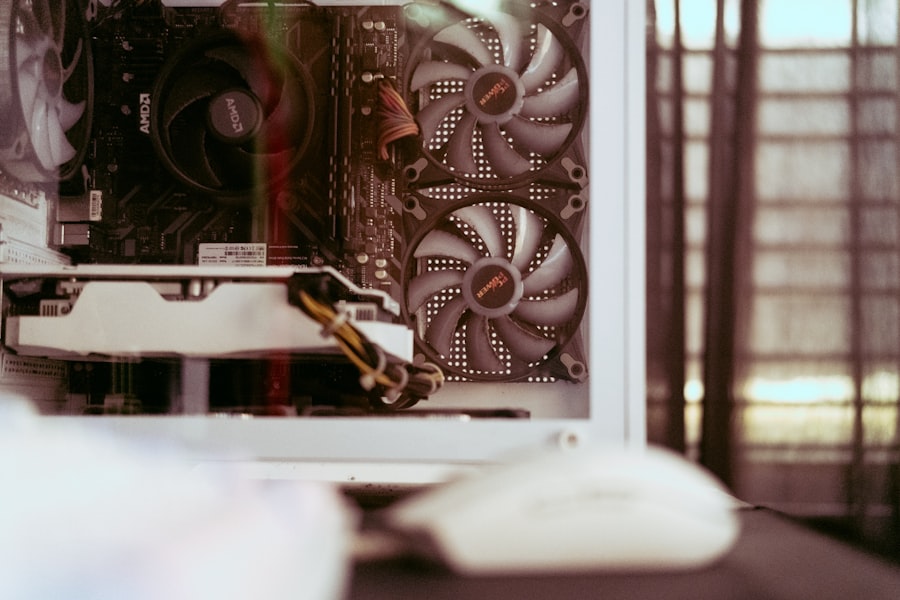
The heat we feel radiating from our computers is predominantly generated by the collective effects of electrical resistance and the inefficiencies of transistor operation, far outweighing the theoretical minimum dictated by Landauer’s principle. These practical, everyday phenomena are the true culprits behind the thermal challenges in computing.
Joule Heating in Interconnects and Components
Within a computer, electricity flows through a complex network of wires and components. Even though these conductors are designed to have very low resistance, they are not perfect. The microscopic wires that connect transistors, the resistors that limit current in certain circuits, and even the semiconductor material itself all possess resistance. As electrical current traverses these resistive elements, a portion of the electrical energy is converted into heat through the Joule effect.
In highly integrated circuits, the sheer density of these interconnects and components means that even small amounts of resistance, when multiplied across millions of pathways carrying substantial currents, can lead to significant heat generation. Furthermore, as circuits become denser and clock speeds increase, the currents flowing through these microscopic wires also tend to increase, exacerbating the Joule heating problem. This is a constant battle for engineers, as they strive to reduce resistance through improved materials and designs while simultaneously packing more circuitry into smaller spaces.
Power Dissipation in Transistor Switching and Leakage
The fundamental building blocks of modern computers are transistors, which act as electronic switches. The act of switching these transistors between their on and off states is not perfectly efficient. Energy is required to charge and discharge the capacitance associated with the transistor’s gate, and this energy is dissipated as heat. While modern transistors are incredibly power-efficient, with switching energies measured in femtojoules or even attojoules, the sheer number of transistors in a modern processor (billions) and the billions of switching operations they perform every second result in a substantial amount of heat being generated.
In addition to active switching, transistors also experience leakage currents. These are small amounts of current that flow even when the transistor is supposed to be in the “off” state. This leakage is a consequence of quantum mechanical effects and imperfections in the semiconductor fabrication process. As transistors shrink to nanometer scales, leakage currents become more significant, contributing to static power consumption and heat generation, even when the processor is not actively performing complex computations. Managing these leakage currents is a major focus of research in low-power computing.
Dynamic vs. Static Power Consumption
The heat generated by a computer can be broadly categorized into dynamic and static power consumption. Dynamic power is the heat generated when the transistors are actively switching states and performing computations. This is directly related to the clock speed of the processor and the complexity of the operations being performed. Higher clock speeds and more complex calculations mean more frequent switching, thus more dynamic power dissipation.
Static power, on the other hand, is the power consumed and heat generated even when the processor is not actively switching states, primarily due to leakage currents. This component of power consumption becomes increasingly significant as transistors become smaller and more densely packed. For modern processors, managing both dynamic and static power dissipation is crucial for maintaining performance and thermal stability.
Implications for Thermal Management and Efficiency

The understanding that computational heat is primarily a consequence of resistive losses and transistor inefficiencies, rather than the fundamental limit of Landauer’s principle, has profound implications for how we design, cool, and optimize our electronic devices.
The Need for Effective Cooling Solutions
The significant heat generated by modern processors necessitates robust thermal management solutions. Without effective cooling, processors can overheat, leading to performance throttling, reduced lifespan, and even permanent damage. This has driven the development of sophisticated cooling technologies, ranging from passive heatsinks and fans in consumer devices to elaborate liquid cooling systems and even cryogenic cooling in high-performance computing environments.
The goal of these cooling systems is to efficiently transfer the heat away from the sensitive silicon components and dissipate it into the surrounding environment. This involves careful consideration of heat sink materials, airflow dynamics, and the choice of cooling medium. The efficiency of these cooling solutions directly impacts the sustained performance of the device, allowing processors to operate at their peak speeds for longer durations without thermal limitations.
The Pursuit of Energy Efficiency
Recognizing that much of the heat generated is a consequence of inefficiencies in electrical flow and transistor operation underscores the ongoing pursuit of energy efficiency in computing. Engineers are constantly striving to reduce the power consumption of processors and other electronic components. This involves exploring new materials, novel transistor designs, and more intelligent power management techniques.
Reducing power consumption not only leads to less heat generation but also translates to lower electricity bills, reduced environmental impact, and longer battery life in portable devices. The drive for greater energy efficiency is a multifaceted challenge that addresses both the fundamental physics of computation and the practical engineering constraints of semiconductor manufacturing.
Future Directions in Computing and Heat
The ongoing miniaturization of transistors and the increasing complexity of computational tasks suggest that heat generation will remain a critical challenge for the foreseeable future. Research into new materials with better electrical conductivity and lower leakage properties, as well as innovative architectural designs that minimize unnecessary switching and leakage, are key areas of focus.
Furthermore, the development of more efficient cooling technologies will continue to be essential. This includes advancements in thermoelectric cooling, microfluidic cooling, and even exploring entirely new paradigms of computation that are inherently less heat-generating. The interplay between computational performance, energy efficiency, and thermal management will continue to shape the evolution of computing technology.
In exploring the nuances of thermodynamics in computing, it is essential to understand why the heat generated by computers does not align with Landauer’s principle. This principle posits that the erasure of information is fundamentally linked to a minimal amount of heat generation, but the heat produced by modern computing systems often arises from various inefficiencies and energy losses that do not directly correlate with information processing. For a deeper dive into this topic, you can refer to a related article that discusses the complexities of heat in computing and its implications on energy consumption at Freaky Science.
Beyond Landauer: Practical Heat in Action
| Reason | Explanation |
|---|---|
| Energy source | Computer heat is generated from electrical energy, while Landauer heat is related to information processing and erasure. |
| Physical process | Computer heat is produced by resistive losses in electronic components, while Landauer heat is associated with irreversible logical operations. |
| Thermodynamic principles | Computer heat follows the laws of thermodynamics related to energy conversion, while Landauer heat is based on the principles of information theory and entropy. |
The practical heat generated by computers is a tangible, observable phenomenon that impacts performance, lifespan, and energy consumption. It is a direct result of the physical limitations and inefficiencies inherent in the materials and processes used to build our electronic devices.
The Feel of Heat: A Direct Manifestation
The warmth that emanates from your laptop after an intensive gaming session or the heat generated by a busy server rack are direct manifestations of the energy being converted into thermal energy within these devices. This heat is not a subtle theoretical limit; it is a palpable byproduct of the electrical currents flowing and the transistors rapidly switching.
This thermal output represents wasted energy. Ideally, all the electrical energy supplied to a computer would be used solely for performing computations and driving outputs. However, in reality, a significant portion is lost as heat due to the aforementioned resistive and switching inefficiencies. This wasted energy contributes to increased electricity bills and a larger carbon footprint.
Performance Throttling and Component Lifespan
When a computer’s components, particularly the CPU and GPU, generate more heat than its cooling system can effectively dissipate, the system’s performance is often intentionally reduced. This phenomenon, known as thermal throttling, is a protective mechanism to prevent damage. The processor’s clock speed is lowered, leading to a noticeable slowdown in performance. While this prevents catastrophic failure, it means that users are not getting the full performance they paid for, especially during demanding tasks.
Furthermore, prolonged exposure to high temperatures can degrade the performance and shorten the lifespan of electronic components. Capacitors can dry out, solder joints can weaken, and semiconductor materials themselves can become more prone to failure under sustained thermal stress. Effective thermal management is therefore crucial not only for performance but also for the longevity of the device.
The Economic and Environmental Cost of Heat
The heat generated by computing has both economic and environmental implications. Economically, the energy wasted as heat translates directly into higher electricity costs for individuals and organizations. In large data centers, where thousands of servers operate continuously, the energy consumed for cooling alone can be a significant portion of the overall operating budget.
Environmentally, the generation of heat is a byproduct of energy consumption, and much of that energy is still derived from fossil fuels. This contributes to greenhouse gas emissions and the associated environmental challenges. Therefore, improving the energy efficiency of computing, and thus reducing heat generation, is a critical step towards a more sustainable technological future. The quest for more efficient computing is not just about speed; it is also about responsible resource utilization.
Conclusion: Focusing on the Practical Heat
While Landauer’s principle offers a fascinating glimpse into the fundamental thermodynamic limits of information processing, it is crucial to distinguish it from the practical heat generated by today’s computers. The warmth we feel, the need for cooling systems, and the challenges of energy efficiency are all dominated by the realities of resistive heating and transistor switching inefficiencies.
Understanding these dominant factors allows engineers to focus their efforts on tangible solutions. By improving materials, optimizing circuit designs, and developing more effective cooling technologies, we can continue to push the boundaries of computational performance while mitigating the detrimental effects of excessive heat. The pursuit of more efficient and sustainable computing hinges on a clear comprehension of where the energy is actually being dissipated – not in the theoretical minimum of information erasure, but in the very fabric of how our electronic devices operate. The heat we experience is a signal, not of information’s fundamental cost, but of the practical engineering challenges we face in harnessing the power of computation.

Why the Universe Makes You Pay to Forget
FAQs
What is Landauer heat and how does it relate to computer heat?
Landauer heat is a concept in physics that refers to the minimum amount of heat required to erase one bit of information in a computer. Computer heat, on the other hand, is the heat generated by the operation of a computer’s components. While both involve heat and information processing, they are distinct concepts.
What factors contribute to computer heat?
Several factors contribute to computer heat, including the electrical resistance in the components, the switching of transistors, and the friction and resistance in moving parts such as fans and hard drives. These factors collectively lead to the generation of heat during the operation of a computer.
How does Landauer’s principle differ from the heat generated by a computer?
Landauer’s principle is a theoretical concept that sets a lower limit on the amount of heat dissipated during computation, based on the erasure of information. In contrast, the heat generated by a computer is a result of the physical processes and electrical resistance within the components, as well as the energy required to perform computational tasks.
Can computer heat be reduced or managed effectively?
Yes, computer heat can be reduced and managed effectively through various methods such as improving the design and efficiency of components, optimizing airflow and cooling systems, and implementing power management techniques. These measures can help mitigate the impact of heat on a computer’s performance and longevity.
What are the implications of understanding the differences between Landauer heat and computer heat?
Understanding the differences between Landauer heat and computer heat can help in the development of more efficient and sustainable computing technologies. By optimizing the energy usage and heat dissipation in computer systems, it is possible to improve performance, reduce energy consumption, and minimize the environmental impact of computing operations.