
The intricate world of computing, a realm built on the fundamental principles of physics and engineering, is perpetually pushing the boundaries of what’s possible. From the pocket-sized devices that connect us globally to the supercomputers that model climate change and decode the universe, our reliance on computational power is undeniable. Yet, like any physical system, computers are not immune to the inexorable laws of nature. Among the most significant constraints lies the ultimate energy limit of computers, a theoretical boundary that dictates how efficiently and powerfully these machines can operate. Unveiling this boundary is not merely an academic pursuit; it holds profound implications for the future of technology, dictating the very pace of innovation and the sustainability of our digital infrastructure.
At its core, computation is the manipulation of information. This manipulation, however, is not a disembodied process. Every operation, every bit flip, requires energy. This is where the fundamental laws of thermodynamics come into play, acting as the bedrock upon which the ultimate energy limit of computers is built.
Entropy and Irreversibility
The second law of thermodynamics, a cornerstone of physics, states that in any closed system, the total entropy (a measure of disorder or randomness) can only increase or remain constant; it can never decrease. In the context of computation, this law manifests as the energy cost associated with irreversible operations. When a computer performs an operation that cannot be undone without expending further energy, it generates heat.
Landauer’s Principle: The Minimum Energy Cost
The most famous articulation of this thermodynamic constraint in computing is Landauer’s principle, formulated by Rolf Landauer in 1961. This principle states that there is a fundamental minimum energy that must be dissipated as heat whenever a bit of information is erased. This minimum energy, known as the Landauer limit, is approximately $kT \ln(2)$ joules, where $k$ is the Boltzmann constant and $T$ is the absolute temperature. While this value is incredibly small at room temperature (on the order of $10^{-21}$ joules), it represents an irreducible thermodynamic cost.
The Significance of Bit Erasure
Bit erasure is a crucial concept. In many computational processes, information is not simply moved or transformed; it is also discarded. For instance, when performing a logical AND operation between two bits, if the result is 0, one cannot definitively determine the original values of the two input bits. To recover this information would require further computation, and thus more energy. Landauer’s principle highlights that the act of forgetting or discarding information inherently involves an energy cost.
Theoretical vs. Practical Limits
It’s vital to distinguish between theoretical and practical limits. Landauer’s principle describes the absolute minimum energy required for a logically irreversible operation. In reality, current computing technologies are far from this limit. The energy dissipated by transistors in modern processors is orders of magnitude higher than the Landauer limit, primarily due to factors like leakage currents, resistance, and the inefficiencies of the switching mechanisms.
The Speed of Light and Signal Propagation
Beyond thermodynamic constraints, the physical nature of computation is also bound by the speed of light. Information travels through wires and within chips at a finite speed, limited by the electromagnetic properties of the materials.
Latency and Interconnects
The speed at which signals can propagate between different components of a computer, such as the CPU, memory, and storage, is a critical factor in overall performance. This latency, the time it takes for a signal to travel from point A to point B, directly impacts how quickly calculations can be performed. As systems become more complex and components are physically separated, signal propagation delays become more significant.
The Challenge of Miniaturization
While miniaturization of transistors has allowed for increased processing power by packing more components into a smaller space, it also introduces new challenges related to signal integrity and power delivery. Shorter wires mean faster signal transmission, but managing power distribution to billions of closely packed transistors becomes increasingly difficult and energy-intensive.
Quantum Entanglement and Communication
The exploration of quantum computing introduces fascinating possibilities regarding information transfer, leveraging phenomena like quantum entanglement. However, even in the quantum realm, the ultimate speed of information exchange remains limited by the speed of light.
The exploration of the ultimate energy limit of computers is a fascinating topic that intersects with advancements in quantum computing and thermodynamics. For those interested in delving deeper into this subject, a related article can be found at Freaky Science, which discusses the implications of energy efficiency in computational systems and the future of technology in relation to energy consumption. This resource provides valuable insights into how we can push the boundaries of computing while considering the fundamental limits imposed by physics.
The Practical Realities: From Ideal to Imperfect
While thermodynamic laws and the speed of light establish theoretical ceilings, the practical energy limits of computers are shaped by a myriad of engineering challenges and technological choices.
Transistor Efficiency and Leakage Currents
Transistors, the fundamental building blocks of modern electronics, are responsible for switching electrical signals and performing logical operations. Their efficiency, or lack thereof, is a major determinant of energy consumption.
The Scaling Problem: Moore’s Law and Its Limits
Moore’s Law, the observation that the number of transistors on a microchip doubles approximately every two years, has driven unprecedented progress in computing. However, as transistors shrink to atomic scales, quantum mechanical effects become more pronounced, leading to increased leakage currents. Leakage occurs when current flows through a transistor even when it is supposed to be “off,” wasting energy and generating heat.
Dennard Scaling and Its Breakdown
Dennard scaling, which predicted that as transistors shrink, their power density remains constant, has largely broken down. This means that as transistors get smaller and more numerous, their power consumption per transistor increases, leading to significant overall power demands.
Future Transistor Designs
Researchers are exploring novel transistor designs, such as FinFETs and gate-all-around (GAA) transistors, to mitigate leakage and improve efficiency. However, these solutions often come with increased manufacturing complexity and cost.
Power Delivery and Management
Supplying and managing the electrical power required for billions of transistors operating at high frequencies is a monumental engineering feat. Inefficiencies in power delivery systems can lead to significant energy waste.
Voltage Scaling and its Limits
Reducing the operating voltage of transistors is a primary method for lowering power consumption, as power is proportional to the square of the voltage ($P \propto V^2$). However, as voltages are reduced, transistors become more susceptible to noise and errors, limiting how low they can go.
On-Chip Power Distribution Networks
The intricate networks of wires and regulators that distribute power across a chip are themselves sources of resistance and energy loss. Designing these networks to be both efficient and reliable is a complex challenge.
Dynamic Voltage and Frequency Scaling (DVFS)
Techniques like Dynamic Voltage and Frequency Scaling (DVFS) allow processors to adjust their voltage and clock speed based on the workload. This helps to conserve energy when the processor is idle or under light load, but it adds overhead and complexity to the system.
Heat Dissipation and Thermal Management
The energy consumed by a computer is largely converted into heat. If this heat cannot be effectively dissipated, it can lead to performance degradation, component failure, and even catastrophic system failure.
The Thermal Wall
As computational density increases, the amount of heat generated in a small area also rises, leading to what is often referred to as the “thermal wall.” This limit dictates how much processing power can be packed into a given volume before cooling becomes an insurmountable challenge.
Cooling Technologies
From passive heatsinks and fans to liquid cooling and thermoelectric coolers, various technologies are employed to manage heat. However, these cooling solutions themselves consume energy and add to the overall system footprint and cost.
The Search for Novel Cooling Solutions
The ongoing quest for more efficient cooling solutions includes exploring advanced materials with high thermal conductivity and innovative architectural designs that facilitate heat removal.
The Future Frontier: Beyond Silicon and Classical Computing
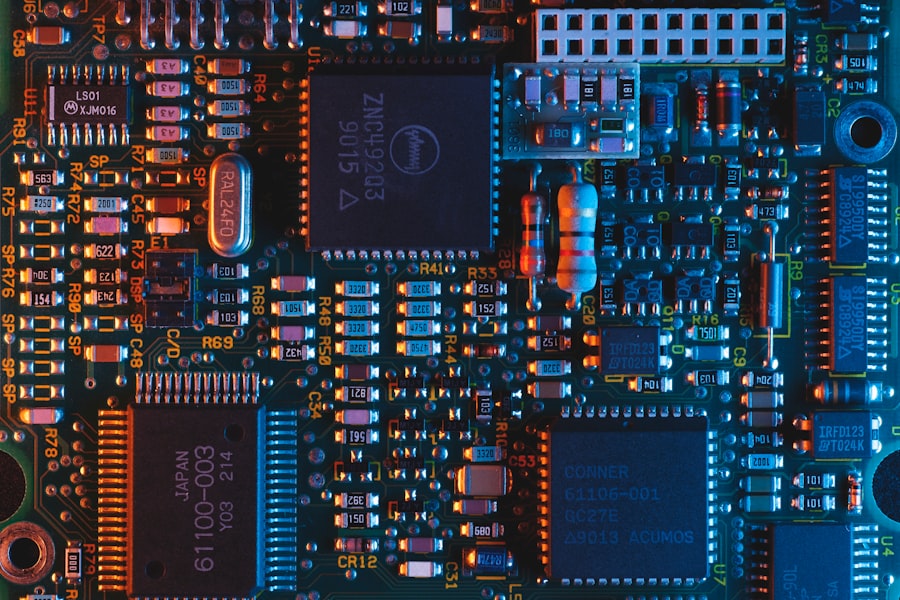
The pursuit of greater computational power and energy efficiency is driving research into entirely new paradigms of computing, moving beyond the limitations of current silicon-based technologies.
Neuromorphic Computing: Mimicking the Brain
Neuromorphic computing aims to build hardware that mimics the structure and function of the human brain. This approach promises significant energy savings by leveraging the brain’s highly parallel and energy-efficient architecture.
Spiking Neural Networks
Unlike traditional computers that operate on binary logic, neuromorphic chips often utilize spiking neural networks, where information is transmitted through pulses or “spikes” of electrical activity, similar to neurons in the brain. This event-driven processing can be far more energy-efficient for certain tasks.
Analog vs. Digital Implementations
Neuromorphic architectures can be implemented in both analog and digital forms. Analog implementations offer the potential for extreme energy efficiency but can be prone to noise and variability. Digital implementations offer greater precision but may sacrifice some of the energy advantages.
Applications in AI and Robotics
Neuromorphic computing holds immense promise for artificial intelligence, machine learning, and robotics, where tasks like pattern recognition, sensor processing, and decision-making are performed with remarkable energy efficiency by biological systems.
Quantum Computing: Harnessing Quantum Phenomena
Quantum computing, still in its nascent stages, offers a fundamentally different approach to computation by exploiting quantum mechanical phenomena like superposition and entanglement. While not a direct replacement for classical computing for all tasks, it opens up new avenues for solving problems currently intractable for even the most powerful supercomputers.
Qubits and Superposition
Unlike classical bits that represent either 0 or 1, quantum bits (qubits) can exist in a superposition of both states simultaneously. This allows quantum computers to explore a vast number of possibilities concurrently.
Entanglement and Parallelism
Entanglement, another key quantum phenomenon, links qubits together in such a way that their states are correlated, even when separated. This enables a form of parallel processing that can dramatically accelerate certain computations.
Energy Considerations in Quantum Systems
The energy requirements for maintaining the delicate quantum states of qubits are significant, often necessitating extremely low temperatures and sophisticated control systems. However, for specific algorithms, the potential speedup offered by quantum computers could translate to an overall energy saving for solving certain complex problems.
The Economic and Environmental Imperative
The energy limits of computers have profound economic and environmental implications, shaping the future of technology development and our relationship with the planet.
The Growing Energy Footprint of Data Centers
The exponential growth of data, fueled by the internet, cloud computing, and artificial intelligence, is driving a massive increase in the energy consumption of data centers. These facilities are becoming increasingly power-hungry, raising concerns about their environmental impact.
Power Consumption and Carbon Emissions
The electricity required to power data centers contributes significantly to global carbon emissions. As these facilities continue to expand, finding ways to improve their energy efficiency is crucial for mitigating climate change.
Cooling and its Energy Cost
A substantial portion of the energy consumed by data centers is dedicated to cooling the servers and other equipment. Innovative cooling solutions are essential for reducing this energy burden.
The Quest for Sustainable Computing
The pursuit of energy efficiency in computing is inextricably linked to the development of sustainable technologies. This involves not only reducing the energy consumption of individual devices but also designing more energy-conscious computing architectures and practices.
Green Computing Initiatives
Numerous initiatives are focused on promoting “green computing,” which aims to minimize the environmental impact of computing throughout its lifecycle, from design and manufacturing to operation and disposal.
Energy-Efficient Hardware and Software
This includes developing more energy-efficient processors, memory, and other hardware components, as well as optimizing software algorithms and operating systems to reduce computational overhead and energy waste.
Circular Economy for Electronics
Addressing the environmental impact also involves promoting a circular economy for electronics, encouraging reuse, repair, and recycling of electronic devices to reduce waste and conserve resources.
Recent advancements in the field of computing have sparked discussions about the ultimate energy limit of computers, a topic that is crucial for the future of technology. A related article explores the implications of these energy constraints on computational efficiency and performance. For more insights, you can read the full article here, which delves into the challenges and potential solutions that researchers are investigating to push the boundaries of energy-efficient computing.
Conclusion: Navigating the Energy Frontier
| Aspect | Details |
|---|---|
| Ultimate Energy Limit of Computers | As computers become more powerful, they require more energy to operate. The ultimate energy limit of computers refers to the theoretical maximum amount of energy that can be used by a computer to perform computations. |
| Challenges | Overcoming the ultimate energy limit of computers is a significant challenge in the field of computer science and engineering. Researchers are exploring new technologies and techniques to improve energy efficiency and reduce power consumption in computing systems. |
| Implications | Understanding and addressing the ultimate energy limit of computers is crucial for the development of sustainable and environmentally friendly computing technologies. It also has implications for the design of future computing systems and the advancement of artificial intelligence and other computational applications. |
The ultimate energy limit of computers is not a fixed, immutable barrier but rather a dynamic frontier shaped by the interplay of fundamental physical laws and relentless technological innovation. While thermodynamics and the speed of light set irreducible theoretical constraints, practical limits are constantly being pushed by advancements in materials science, semiconductor engineering, and novel computing paradigms.
Unveiling this boundary is a continuous process. It involves understanding the fundamental thermodynamic costs of computation, pushing the limits of silicon-based technology, and exploring entirely new frontiers like neuromorphic and quantum computing. The economic and environmental imperative to reduce the energy footprint of our digital world adds further urgency to this pursuit. As we continue to navigate this energy frontier, the future of computing will be defined not only by its processing power but also by its ability to operate efficiently and sustainably, ensuring that our insatiable demand for computation does not come at an unsustainable cost to our planet. The journey to understand and transcend these energy limits is, in essence, the journey towards a more intelligent and sustainable future.

Why the Universe Makes You Pay to Forget
FAQs
What is the ultimate energy limit of computers?
The ultimate energy limit of computers refers to the theoretical minimum amount of energy required to perform a computation. It is a concept in the field of quantum computing and is related to the fundamental physical limits of computation.
How is the ultimate energy limit of computers determined?
The ultimate energy limit of computers is determined by considering the laws of thermodynamics and quantum mechanics. It involves understanding the minimum amount of energy required to manipulate and process information at the quantum level.
What are the implications of the ultimate energy limit of computers?
Understanding the ultimate energy limit of computers has implications for the development of more energy-efficient computing technologies. It also provides insights into the potential limits of computational power and the fundamental constraints of information processing.
Can the ultimate energy limit of computers be surpassed?
As of now, it is not clear whether the ultimate energy limit of computers can be surpassed. Research in the field of quantum computing and nanotechnology is ongoing, and there may be potential breakthroughs that could lead to surpassing this limit in the future.
How does the ultimate energy limit of computers relate to current computing technologies?
The ultimate energy limit of computers serves as a theoretical benchmark for evaluating the energy efficiency of current computing technologies. It provides a framework for understanding the potential for improving energy efficiency in traditional computing systems.