Maximizing thermodynamic work represents a fundamental pursuit in engineering and science, driving innovation across diverse fields from power generation to material science. The ability to extract the maximum useful energy from a system, adhering to the immutable laws of thermodynamics, is paramount for both economic viability and environmental sustainability. This quest for efficiency is not merely about reducing waste; it is about understanding and manipulating the intricate dance of energy transformations to achieve optimal outcomes. The articles explores various strategies employed to maximize thermodynamic work, delving into the principles and practical applications that govern these processes.
At its core, thermodynamic work is the energy transferred between a system and its surroundings when a force acts over a distance. In thermodynamic terms, this often manifests as expansion or compression of a gas, lifting a weight, or driving an electrical current. The First Law of Thermodynamics, the law of conservation of energy, dictates that energy cannot be created or destroyed, only transformed. This means that the total energy within a closed system remains constant. However, the Second Law of Thermodynamics introduces the concept of entropy, a measure of disorder, and states that in any natural process, the total entropy of an isolated system will always increase over time. This fundamental limitation implies that not all energy can be converted into useful work; some will inevitably be dissipated as heat, increasing the overall entropy of the universe.
Defining Thermodynamic Work in Practical Terms
Thermodynamic work is a tangible output, a measure of how much a system can accomplish. For instance, in a heat engine, the work done is the mechanical power generated to drive a turbine or an engine. In a refrigeration cycle, work is what is required to move heat from a colder reservoir to a hotter one. Understanding the specific context of work is crucial for optimizing its extraction. The efficiency of any thermodynamic process is directly linked to how effectively it converts the available energy into useful work while minimizing irreversible losses.
The Irreversibility Principle and its Impact on Work
Irreversible processes are the primary culprits behind thermodynamic losses. These are processes that cannot be reversed to restore the system and its surroundings to their initial states without leaving a permanent change. Examples include friction, heat transfer across a finite temperature difference, unrestrained expansion of gases, and mixing of substances. Each irreversible step dissipates energy that could have otherwise contributed to useful work. Minimizing these irreversibilities is a central theme in maximizing thermodynamic work. The ideal scenario is a reversible process, which represents the theoretical maximum work that can be extracted. While true reversibility is unattainable in practice, striving for near-reversible conditions is a key engineering objective.
Entropy Generation and its Relation to Work Loss
Entropy generation is a direct consequence of irreversibility. Whenever an irreversible process occurs, entropy is generated, and this generated entropy represents a loss of potential work. Think of it as an inescapable tax on energy conversion. The more irreversible a process, the more entropy is generated, and the less work can be extracted from the system. Therefore, strategies aimed at minimizing entropy generation are directly aimed at maximizing thermodynamic work. This involves careful design of components, optimization of operating conditions, and selection of appropriate working fluids.
In exploring the fascinating relationship between information and thermodynamic work, one can refer to an insightful article that delves into the principles of information theory and its implications in thermodynamics. This article discusses how information can be viewed as a form of energy and how it plays a crucial role in performing thermodynamic work. For a deeper understanding of these concepts, you can read more in the article available at this link.
Strategies for Minimizing Irreversible Losses
The pursuit of maximizing thermodynamic work is largely synonymous with the relentless effort to minimize irreversible losses. These losses, stemming from factors like friction, heat transfer across finite temperature differences, and mixing, represent energy that is degraded and rendered unavailable for useful work. By addressing these fundamental sources of inefficiency, engineers and scientists can significantly improve the performance of thermodynamic systems.
Reducing Friction and Viscous Dissipation
Friction is a ubiquitous force that resists motion between surfaces in contact. In thermodynamic systems, such as turbines, pumps, and pipelines, friction leads to the conversion of kinetic energy into heat, a form of energy that is often difficult to recover as work. Viscous dissipation, the internal friction within a fluid, also contributes to energy losses, particularly in high-speed flows or when dealing with highly viscous fluids.
Implementing Lubrication and Surface Treatments
Effective lubrication is a cornerstone of friction reduction. The use of appropriate lubricants creates a thin film between moving surfaces, reducing direct contact and thus the frictional forces. This can involve oil-based lubricants, greases, or even gas bearings in highly specialized applications. Surface treatments, such as polishing, coating with low-friction materials (e.g., PTFE), or creating specific surface textures, can further minimize the interaction between mating parts.
Optimizing Flow Paths and Reducing Turbulence
In fluid systems, the design of flow paths plays a crucial role in minimizing viscous losses. Smooth, streamlined geometries reduce turbulence, which is a highly dissipative phenomenon. Avoiding sharp bends, sudden contractions or expansions, and obstructions in the flow path can significantly improve efficiency. Computational Fluid Dynamics (CFD) is an invaluable tool for analyzing flow patterns and optimizing these geometries for minimal energy dissipation.
Minimizing Heat Transfer Across Finite Temperature Differences
Heat transfer is an essential component of many thermodynamic cycles, but when it occurs across a significant temperature difference, it inevitably leads to irreversibility and a loss of potential work. This is because the available energy for work is proportional to the temperature difference between the heat source and the heat sink.
Utilizing Counter-Flow Heat Exchangers
Counter-flow heat exchangers are designed to maximize the efficiency of heat transfer by ensuring that the hot and cold streams flow in opposite directions. This maintains a smaller temperature difference between the streams along the entire length of the exchanger, thereby minimizing the irreversibility associated with heat transfer. This design allows for a more complete transfer of heat and consequently, a higher potential for work extraction.
Implementing Intermediate Stages for Heat Transfer
In some complex thermodynamic cycles, it may be beneficial to break down a large temperature difference into smaller, intermediate steps. This can involve using multiple heat exchangers or intercoolers/reheaters in a way that keeps the temperature differences smaller at each stage. While this might increase the complexity of the system, it can lead to a substantial increase in overall thermodynamic efficiency by reducing the entropy generation during heat transfer.
Avoiding Mixing of Fluids at Different States
The mixing of substances that are at different temperatures, pressures, or compositions is an inherently irreversible process. This mixing leads to an increase in entropy and a corresponding decrease in the potential for useful work. For example, mixing hot and cold water results in warm water, and the opportunity to extract work from the initial temperature difference is lost.
Maintaining Fluid Purity and Separation
In closed-loop thermodynamic systems, it is crucial to maintain the purity of the working fluid and prevent unintended mixing. This involves ensuring the integrity of seals, valves, and pipelines. In processes where mixing is unavoidable, such as in chemical reactions, careful design and control are needed to manage the associated entropy generation.
Utilizing Phase Changes Strategically
Phase changes, such as evaporation and condensation, can be utilized to manage heat transfer and work extraction without direct mixing of distinct fluid streams. For example, in a Rankine cycle, the working fluid changes phase from liquid to vapor and back, allowing for efficient heat absorption and rejection, and thus work generation, without directly mixing the heat source and sink fluids.
Optimizing Cycle Design for Maximum Work Output
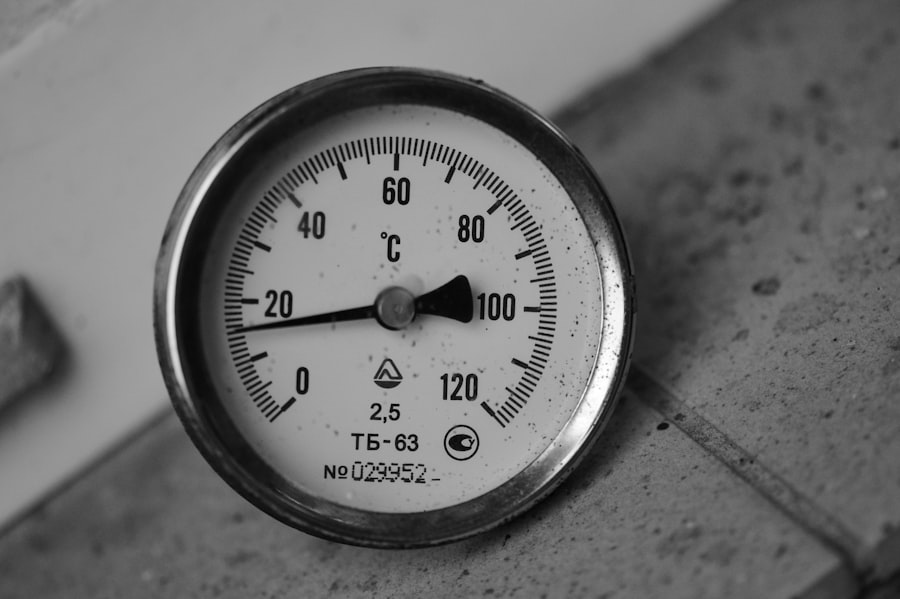
The thermodynamic cycle is the blueprint of any energy conversion system. Its design dictates how energy is transformed and how much useful work can be extracted. Optimizing this design is therefore a critical aspect of maximizing thermodynamic work, focusing on aligning the cycle’s processes with the principles of efficient energy conversion.
The Carnot Cycle as the Theoretical Benchmark
The Carnot cycle, consisting of two isothermal and two adiabatic reversible processes, represents the theoretical maximum efficiency achievable by any heat engine operating between two given temperature reservoirs. While perfectly achievable only in idealized conditions, it serves as an invaluable benchmark against which all real-world cycles are compared. Understanding why the Carnot cycle is so efficient – its reliance on reversible processes and maximum temperature differences – provides fundamental insights into improving practical cycles.
Enhancing Real-World Cycles Beyond Carnot Limitations
Real-world cycles, such as the Rankine cycle (used in power plants) and the Otto or Diesel cycles (used in internal combustion engines), are inherently irreversible. The challenge lies in modifying these cycles to approach Carnot efficiency as closely as practically possible. This involves minimizing irreversibilities within each process and strategically manipulating operating parameters.
Reheating and Regenerative Cycles
Reheating involves expanding the working fluid in a turbine to an intermediate pressure and then returning it to a heat source for further heating before continuing the expansion. This increases the average temperature at which heat is added, leading to higher efficiency. Regenerative cycles, on the other hand, utilize waste heat from a later stage of the cycle to preheat the working fluid in an earlier stage. This reduces the amount of heat that needs to be supplied externally, thus improving overall efficiency. These techniques effectively “recycle” energy within the system, minimizing external energy input for a given work output.
Intercooling and Multistage Compression/Expansion
In systems involving compression and expansion, such as gas turbines and refrigeration cycles, intercooling is employed. After initial compression, the working fluid is cooled before further compression. This reduces the work of compression, as gases are more easily compressed at lower temperatures. Conversely, reheating (or expansion with reheating) during expansion can increase the work output. Employing multiple stages of compression and expansion, each with intercooling or reheating, further refines these processes, bringing them closer to ideal performance.
Leveraging Advanced Materials and Working Fluids

The choice of materials and working fluids can significantly impact the thermodynamic performance of a system. Advanced materials can withstand higher temperatures and pressures, enabling more efficient cycles, while carefully selected working fluids can possess properties that minimize irreversibilities and maximize energy transfer.
High-Temperature Materials for Enhanced Cycle Performance
Many thermodynamic cycles are limited by the material properties of their components. For instance, in thermal power plants, the maximum steam temperature is often dictated by the creep strength of the turbine blades and boiler tubes. The development of advanced alloys, ceramics, and composite materials that can withstand higher temperatures and pressures allows for operation at more extreme conditions. This directly translates to higher Carnot efficiencies and thus greater work output from the same heat input.
Novel Working Fluids with Optimal Thermodynamic Properties
The selection of a working fluid is critical. Ideal working fluids exhibit properties that facilitate efficient heat transfer, minimize viscous losses, and have appropriate phase transition characteristics. For example, in refrigeration cycles, refrigerants with low boiling points and high latent heats are preferred. In organic Rankine cycles, used for low-grade heat recovery, specific organic fluids are chosen for their suitability at lower operating temperatures. The ongoing research into supercritical fluids, ionic liquids, and alternative refrigerants aims to find fluids that offer superior thermodynamic performance and reduced environmental impact.
Supercritical Fluids and their Applications
Supercritical fluids, existing at temperatures and pressures above their critical point, exhibit unique properties that can be advantageous in thermodynamic processes. They possess densities similar to liquids and viscosities similar to gases, allowing for efficient heat transfer and mass transport with reduced pumping power. Supercritical CO2, for instance, is being explored as a working fluid for power generation cycles, offering potential for higher efficiencies and environmental benefits compared to traditional steam cycles.
Ionic Liquids and their Thermodynamic Potential
Ionic liquids (ILs) are salts that are liquid at or below 100°C. Their tunable properties, including low vapor pressure, high thermal stability, and good ionic conductivity, make them attractive for various thermodynamic applications. ILs can be used as working fluids in heat engines, as solvents for reactions, or as heat transfer fluids. Their unique intermolecular interactions can also influence phase behavior and reaction kinetics, opening avenues for novel thermodynamic cycles.
In exploring the fascinating relationship between information and thermodynamic work, one can gain deeper insights into how information theory intersects with the laws of thermodynamics. A particularly interesting article that delves into this topic can be found at Freaky Science, where the implications of information processing on energy efficiency are discussed. This connection highlights how the manipulation of information can lead to significant thermodynamic consequences, ultimately shaping our understanding of energy systems in both natural and engineered contexts.
Implementing Advanced Control and Monitoring Systems
| Metrics | Data |
|---|---|
| Information | Measured in bits, represents the amount of uncertainty reduced by a message or data |
| Entropy | Quantifies the amount of disorder or uncertainty in a system, often used in information theory and thermodynamics |
| Work | In thermodynamics, it is the transfer of energy from one system to another, often measured in joules or calories |
| Heat | Form of energy transfer between two systems due to a temperature difference, important in thermodynamics |
Even with an optimized design and advanced materials, the performance of a thermodynamic system can degrade over time due to variations in operating conditions, component wear, and external disturbances. Advanced control and monitoring systems are essential for maintaining peak efficiency and maximizing thermodynamic work throughout the system’s operational life.
Real-Time Performance Monitoring and Data Analytics
Modern thermodynamic systems are equipped with a sophisticated array of sensors that continuously collect data on parameters such as temperature, pressure, flow rates, and power output. This data is then processed using advanced analytics techniques, including artificial intelligence and machine learning. By analyzing this real-time data, operators can identify subtle deviations from optimal performance, predict potential equipment failures, and make informed decisions to maintain efficiency.
Predictive Maintenance and Proactive Adjustments
Instead of relying on scheduled maintenance, predictive maintenance utilizes performance data to anticipate when components are likely to fail or degrade. This allows for maintenance to be performed proactively, before significant efficiency losses occur or catastrophic failures happen. For example, if sensors detect an increase in vibration in a turbine bearing, predictive algorithms might suggest an inspection or lubrication adjustment before the bearing fails, thus preventing a shutdown and a loss of work output.
Adaptive Control for Dynamic Optimization
Adaptive control systems continuously adjust operating parameters in response to changing conditions, such as variations in fuel quality, ambient temperature, or load demand. These systems can automatically fine-tune settings like fuel injection rates, valve timings, or cooling water flow to ensure that the system operates at its maximum thermodynamic efficiency under any given circumstance. This dynamic optimization is crucial for maintaining peak performance in the face of real-world variability.
By embracing these multifaceted strategies, from understanding fundamental thermodynamic principles to leveraging cutting-edge materials and intelligent control systems, engineers and scientists continue to push the boundaries of efficiency, striving to maximize the thermodynamic work extracted from every joule of energy. This ongoing pursuit is not just an academic exercise but a vital component of building a more sustainable and energy-efficient future.

Why the Universe Makes You Pay to Forget
FAQs
What is thermodynamic work?
Thermodynamic work is the work done on or by a system as it undergoes a change in its state. It is a form of energy transfer that occurs when a force is applied to move an object over a distance.
How is thermodynamic work related to information?
In the context of thermodynamics, information can be used to describe the state of a system. The relationship between information and thermodynamic work is studied in the field of information thermodynamics, which explores how information processing and thermodynamic processes are interconnected.
What are some examples of information and thermodynamic work in everyday life?
An example of information and thermodynamic work in everyday life is the operation of a refrigerator. The refrigerator uses information about the temperature inside and outside the appliance to perform thermodynamic work in order to maintain a lower temperature inside.
What are the implications of information and thermodynamic work in scientific research and technology?
Understanding the relationship between information and thermodynamic work has implications for fields such as computer science, physics, and engineering. It can lead to the development of more efficient information processing systems and technologies that take advantage of thermodynamic principles.
How is information and thermodynamic work relevant to the study of entropy?
Entropy is a measure of the amount of disorder or randomness in a system. Information and thermodynamic work are relevant to the study of entropy because they are both related to the organization and transfer of energy within a system, which can impact its entropy.