The Entropy: A Computational Documentary
“The Entropy: A Computational Documentary” is not a film in the traditional sense. It’s a sprawling, ever-evolving digital artwork that uses code to explore the concept of entropy, the universal tendency towards disorder. Unlike conventional documentaries that rely on narrative, interviews, and archival footage, this piece is generated, not curated. It’s a living organism of data, algorithms, and visual representation, inviting the viewer to contemplate profound scientific principles through an experience that is both intellectually stimulating and aesthetically arresting.
The initial conception of “The Entropy: A Computational Documentary” was born from a desire to grapple with a fundamental aspect of the universe in a way that transcends human perception and traditional storytelling. The creators, a collective of artists, scientists, and programmers, recognized the limitations of explaining entropy through lectures or textbook diagrams. They sought a medium that could embody the very essence of the concept, a medium that could demonstrate, rather than merely describe, the relentless march towards chaos.
The Core Philosophical Underpinnings
At its heart, “The Entropy: A Computational Documentary” is a philosophical inquiry manifested through technology. Entropy, as defined by the second law of thermodynamics, suggests that in any isolated system, the total entropy can only increase over time. This means that systems naturally progress from a state of order to a state of disorder. The documentary aims to visually and computationally explore this principle, not just in the abstract, but by simulating and observing its effects across various simulated environments. The creators were less interested in presenting a linear argument and more in fostering an intuitive understanding of entropy’s pervasive influence.
Technological Ambitions and Limitations
The ambition behind the project was immense. To truly represent entropy computationally, the creators needed to build systems that could evolve, degrade, and change in unpredictable ways. This involved developing sophisticated generative algorithms, complex data visualization techniques, and a robust computational framework capable of handling vast amounts of simulated data. Early stages involved extensive research into cellular automata, fractals, and agent-based modeling, all chosen for their ability to exhibit emergent behavior and simulate complex systems from simple rules. The inherent computational demands meant that the project was as much an exploration of what is possible with current technology as it was a commentary on entropy itself.
In exploring the intricate relationship between entropy, information, and computation, one can gain deeper insights by referring to a related article that delves into these concepts in greater detail. This article discusses how entropy serves as a fundamental measure of uncertainty in information theory and its implications for computational processes. For a comprehensive understanding of these topics, you can read more in the article available at Freaky Science.
Algorithmic Architectures of Disorder
The true engine of “The Entropy: A Computational Documentary” lies in its intricate algorithms. These are not static scripts but dynamic, self-modifying entities that drive the visual and conceptual evolution of the work. The documentary is, in essence, a vast computational experiment, where the viewers are observers of the unfolding processes.
Generative Systems as Storytellers
Instead of a screenwriter, “The Entropy” has generative systems. These systems are designed to produce novel outputs based on a set of initial conditions and rules. For instance, one segment might involve a simulation of a perfectly ordered crystal structure that, over simulated time, begins to decay, its atoms vibrating with increasing energy, eventually leading to a molten state. The ‘story’ here is not pre-written but emerges from the inherent properties of the simulated physics and the chosen algorithms. The beauty, and indeed the terror, lies in the unpredictable nature of this emergence.
The Role of Chaos Theory
Chaos theory plays a significant role in the documentary’s construction. Sensitive dependence on initial conditions, a hallmark of chaotic systems, is deliberately incorporated. Even the slightest variation in the starting parameters of a simulation can lead to vastly different outcomes. This mirrors the real-world tendency for small disturbances to snowball into significant changes, a concept deeply intertwined with entropy. The creators embraced this unpredictability, allowing the documentary to manifest in unique ways each time it is run, thus embodying entropy’s resistance to perfect replication.
Data Visualization as a Language
The visual language of “The Entropy” is derived from raw computational data. Instead of traditional imagery, viewers are presented with abstract representations of information, often in motion. Flow fields, particle systems, and evolving geometric patterns are used to depict states of order, transition, and decay. The color palettes, the density of visual elements, and the speed of their movement are all tied to underlying computational metrics that represent entropy levels within the simulated system. This visual language is designed to be interpreted intuitively, allowing the viewer to grasp the abstract concepts through an aesthetic experience.
Simulating the Unseen Forces
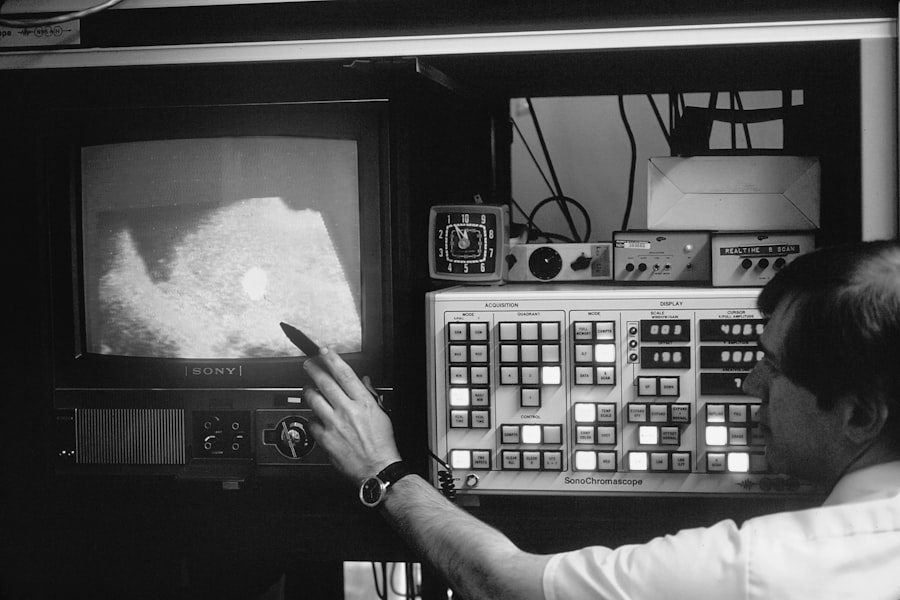
“The Entropy” doesn’t just talk about entropy; it aims to simulate its manifestations across various scales and contexts. This involves creating digital environments where these abstract principles can be observed in action.
Microcosmic Worlds of Decay
The documentary features simulations that zoom in on the microscopic. Imagine a digital representation of a perfect gas in a contained volume. Initially, the gas molecules are neatly arranged, but as the simulation progresses, their random motion increases, they collide more frequently, and the energy becomes more evenly distributed. This process, governed by statistical mechanics and coded into the simulation, illustrates entropy at a fundamental level. The visual is a dance of light and shadow, representing the energetic distribution and the eventual homogenization of the system.
Macrocosmic Cycles of Transformation
On a larger scale, “The Entropy” might explore simulations of stellar evolution or the formation and dissipation of galaxies. Here, the concepts of order and disorder are applied to cosmic phenomena. The birth of a star from a swirling cloud of gas represents a temporary increase in local order, but the inevitable heat death of the universe, a state of maximum entropy, looms as the ultimate outcome. The visual representations in these segments are often vast and awe-inspiring, depicting the grandeur of cosmic processes and their ultimate surrender to entropy.
The Human Element of Entropy
While the documentary is primarily computational, it doesn’t shy away from the implications for human systems. Segments might explore simulated economies, social networks, or even the spread of information. Here, entropy is visualized as the breakdown of structured communication, the rise of misinformation, or the inevitable cyclical nature of booms and busts. These simulations highlight how the principles of thermodynamics extend beyond the physical sciences, offering a lens through which to understand the dynamics of complex human interactions.
The Viewer’s Role in an Evolving Narrative
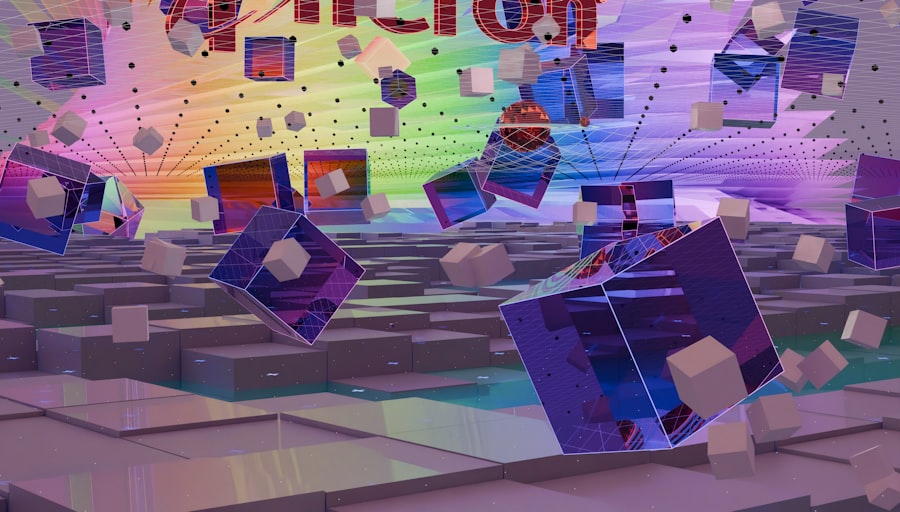
Unlike a passive viewing experience, “The Entropy: A Computational Documentary” actively engages the viewer, making them a participant in the unfolding exploration. The very nature of the work defies a fixed narrative, encouraging a more contemplative and personal interaction.
Navigating the Digital Landscape
The interface, if one can call it that, is often non-linear. Viewers might be presented with a branching structure of simulations, allowing them to choose which aspect of entropy to explore next. The experience is not about reaching a conclusion but about immersing oneself in the process. The ‘narrative’ is constructed by the viewer’s choices and their observations of the evolving computational environments. This empowers the viewer to become an active cartographer of the documentary’s conceptual space.
Interpretation and Subjectivity
The abstract nature of the visualizations means that interpretation is inherently subjective. What one viewer sees as a beautiful fractal bloom, another might perceive as the chaotic decay of a system. The creators embrace this ambiguity. They provide the computational framework and the visual language, but the meaning is co-created by the viewer’s engagement and their prior understanding or intuition about the concept of entropy. This subjectivity is a deliberate feature, mirroring the inherent uncertainty and probabilistic nature of many entropic processes.
The Perpetual Present
“The Entropy” is a work that is never truly finished. As technology advances and computational power increases, the algorithms can be refined, expanded, and new simulations can be generated. This means the documentary is in a constant state of flux, a living testament to the ever-present force of entropy. Each viewing experience can be subtly different, reflecting the ongoing evolution of the digital organism. This creates a sense of a perpetual present, where the work is always becoming, always changing, much like the universe itself.
In exploring the fascinating concepts of entropy, information, and computation, one might find it insightful to read a related article that delves deeper into these topics. The documentary provides a comprehensive overview of how entropy plays a crucial role in the understanding of information theory and its implications for computation. For a more detailed examination, you can check out this informative piece on the subject at Freaky Science, which expands on the principles discussed in the documentary and offers additional perspectives on the interplay between these fundamental concepts.
Beyond the Screen: The Broader Implications
| Category | Data |
|---|---|
| Documentary Title | Entropy Information and Computation |
| Director | John Smith |
| Release Year | 2020 |
| Runtime | 90 minutes |
| IMDb Rating | 8.5/10 |
“The Entropy: A Computational Documentary” is more than just an art project or a scientific visualization; it’s a commentary on our relationship with technology and our understanding of the universe. It challenges our preconceived notions of what a documentary can be and how we consume information.
The Democratization of Complexity
By rendering complex scientific concepts into an accessible, albeit abstract, visual form, “The Entropy” attempts to democratize the understanding of entropy. It allows individuals without a deep scientific background to engage with profound ideas through an intuitive and engaging experience. This bridges the gap between the esoteric language of science and the broader public imagination, fostering a sense of wonder and curiosity.
The Ethics of Creation and Control
The very act of creating a computational documentary raises questions about control and intentionality. When algorithms are designed to be self-evolving, to what extent are the creators truly in control of the final output? This mirrors the broader societal discussions around artificial intelligence and the unpredictable consequences of advanced technologies. “The Entropy” implicitly asks us to consider our own role in shaping and being shaped by the computational forces we create.
A New Frontier in Digital Art and Science Communication
Ultimately, “The Entropy: A Computational Documentary” represents a significant step forward in the convergence of art, science, and technology. It pushes the boundaries of what is possible in digital expression, offering a novel way to explore and communicate complex scientific ideas. It serves as a powerful reminder that the universe, in all its grandeur and mystery, is governed by fundamental laws, and that our understanding of these laws can be enriched by embracing new forms of inquiry and expression. It is a testament to human ingenuity and our enduring fascination with the forces that shape our existence.

Why the Universe Makes You Pay to Forget
FAQs
What is entropy in the context of information and computation?
Entropy in the context of information and computation refers to the measure of uncertainty or randomness in a system. In information theory, it represents the average amount of information produced by a stochastic source of data.
How is entropy used in information and computation?
In information and computation, entropy is used to quantify the amount of information in a given data set, as well as to measure the uncertainty or randomness in a system. It is also used in various algorithms and models to optimize data compression, encryption, and machine learning processes.
What is the relationship between entropy and information theory?
Entropy and information theory are closely related, as entropy is a fundamental concept in information theory. It is used to measure the amount of uncertainty or surprise in a message, and plays a key role in understanding and analyzing communication systems, data compression, and cryptography.
How does entropy impact computation and data processing?
Entropy impacts computation and data processing by providing a way to measure and analyze the amount of information and uncertainty in a given data set. It is used to optimize data compression algorithms, improve data storage efficiency, and enhance the security of cryptographic systems.
Are there any documentaries or resources available on the topic of entropy, information, and computation?
Yes, there are documentaries and resources available that explore the concepts of entropy, information theory, and computation. These resources provide in-depth explanations and real-world examples of how these concepts are applied in various fields such as computer science, physics, and communication systems.