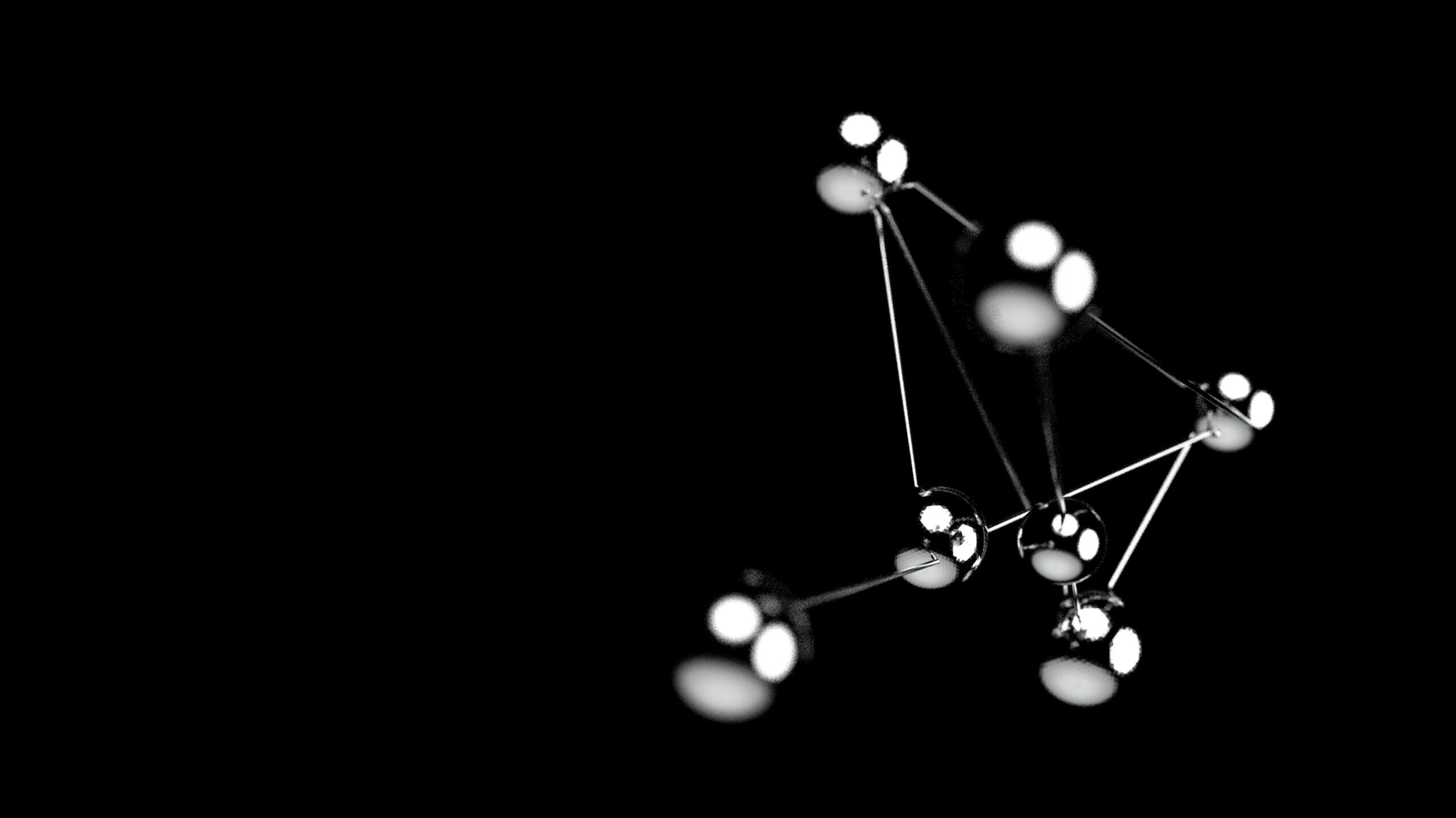
The intricate dance of atoms, unseen by the naked eye, holds the fundamental blueprint for the macroscopic world. Within the seemingly rigid form of crystals lies a profound secret: their ability to store and perpetuate shape. This article delves into the fascinating realm of crystal structure, exploring how this ordered arrangement of matter dictates the physical properties and enduring form of countless substances.
The journey from a disordered collection of atoms or molecules to a beautifully formed crystal is a testament to the fundamental forces governing matter. This transformation is not accidental; it is a carefully orchestrated process driven by energy minimization.
The Building Blocks: Atoms and Molecules as Architects
At the heart of every crystal lies the fundamental unit: an atom or a molecule. These tiny entities are not static but are in constant motion, vibrating and interacting with their neighbors. The nature of these interactions – electrostatic forces, covalent bonds, van der Waals forces – dictates how these building blocks will arrange themselves.
Electrostatic Attractions: The Foundation of Ionic Crystals
In ionic crystals, such as table salt (sodium chloride), the building blocks are ions, charged atoms. The positively charged sodium ions ($text{Na}^+$) and the negatively charged chloride ions ($text{Cl}^-$) are strongly attracted to each other by electrostatic forces. This attraction is omnidirectional, meaning an ion attracts all oppositely charged ions in its vicinity. However, to achieve stability, the crystal structure must balance these forces.
The Lattice Energy: A Measure of Stability
The net energy released when ions come together to form a crystal lattice is known as lattice energy. A higher lattice energy indicates a more stable crystal. This energy is a crucial factor in determining the melting point and hardness of ionic compounds. The stronger the electrostatic attractions, the more energy is required to overcome them and disrupt the structure.
Covalent Bonds: The Strong Arms of Molecular Structures
In materials like diamond, the building blocks are individual atoms linked by strong covalent bonds. These bonds involve the sharing of electrons between atoms, creating a robust, three-dimensional network. In diamond, each carbon atom is covalently bonded to four other carbon atoms in a tetrahedral arrangement, forming an extremely strong and rigid structure.
Directed Bonding: Dictating Specific Geometries
Covalent bonds are directional, meaning they are strongest when atoms are aligned in specific orientations. This directionality is a key reason why molecules adopt specific shapes, and how these molecular shapes are then replicated and extended in a crystalline lattice. The precise angles and lengths of these bonds are crucial for the overall crystal structure.
Intermolecular Forces: The Gentle Embrace of Molecular Crystals
For molecular crystals, like ice or sugar, the building blocks are whole molecules. The forces holding these molecules together are typically weaker intermolecular forces, such as hydrogen bonds or van der Waals forces. While individually weaker than ionic or covalent bonds, the collective effect of these forces across a large number of molecules can still lead to the formation of a well-ordered crystal structure.
The Influence of Molecular Shape on Crystal Packing
The shape of the individual molecules plays a significant role in how they pack together in a crystal. Spherical molecules tend to pack more densely, while irregularly shaped molecules may lead to less efficient packing and potentially more complex crystal structures. This interplay between molecular geometry and intermolecular forces is a fundamental aspect of molecular crystal formation.
Nucleation and Growth: The Crystallization Process
The transition from a disordered state to an ordered crystal doesn’t happen instantaneously. It proceeds through two key stages: nucleation and crystal growth.
Nucleation: The Spark of Order
Nucleation is the initial formation of a stable, microscopic crystalline seed within a supersaturated solution or a molten substance. This seed acts as a template for subsequent growth. Nucleation can be homogeneous, occurring spontaneously within the bulk of the material, or heterogeneous, occurring on existing surfaces or impurities.
The Role of Surface Energy in Nucleation
Homogeneous nucleation requires overcoming an energy barrier associated with the creation of a new surface. This surface energy can be substantial, which is why spontaneous nucleation often requires significant supersaturation or supercooling. Heterogeneous nucleation, on the other hand, can lower this energy barrier, making it a more common phenomenon.
Crystal Growth: The Expansion of the Ordered Framework
Once a stable nucleus has formed, crystal growth begins. New building blocks from the surrounding medium attach themselves to the surface of the nucleus, extending the crystalline lattice in a highly ordered manner. This growth is guided by the existing structure of the nucleus, ensuring the perpetuation of its specific arrangement.
Diffusion and Surface Attachment: The Mechanisms of Growth
The growth process involves the diffusion of building blocks to the crystal surface and their subsequent attachment to specific sites on that surface. The rate of diffusion and the kinetics of attachment influence the speed and morphology of crystal growth. Surface defects and irregularities can also influence where new building blocks attach, leading to different growth patterns.
The fascinating relationship between crystal structure and the way it stores shape is explored in depth in the article available at Freaky Science. This resource delves into how the arrangement of atoms within a crystal lattice not only defines the material’s physical properties but also influences its ability to maintain specific shapes under various conditions. Understanding this connection can provide valuable insights into material science and engineering, highlighting the importance of crystal structures in the development of new technologies.
The Crystal Lattice: A Symphony of Repetition and Symmetry
The defining characteristic of a crystal is its repeating three-dimensional arrangement of atoms or molecules, known as the crystal lattice. This lattice is not a random collection but a precisely organized structure governed by fundamental principles of symmetry.
Unit Cells: The Repeating Motif of the Crystal
The smallest repeating unit of the crystal lattice is called the unit cell. Imagine it as a microscopic Lego brick that, when stacked in three dimensions, builds the entire crystal. The shape and dimensions of the unit cell, along with the types of atoms or molecules located at its corners, edges, faces, and within its volume, define the unique crystal structure.
Bravais Lattices: The Frameworks of Order
There are 14 unique ways to arrange points in three-dimensional space such that each point has an identical environment. These are known as the 14 Bravais lattices. They are categorized based on their unit cell shapes and the positions of lattice points within them, forming the fundamental frameworks upon which all crystal structures are built.
Primitive, Body-Centered, Face-Centered, and Base-Centered Lattices
These Bravais lattices are further classified based on whether the unit cell contains lattice points only at the corners (primitive), at the center of the unit cell (body-centered), at the center of each face (face-centered), or at the center of two opposite faces (base-centered). The specific arrangement of these points dictates the symmetry and packing efficiency of the crystal.
Symmetry Operations: The Rules of Crystalline Order
Symmetry is the backbone of crystal structure. It describes the operations that can be performed on a crystal to leave it unchanged. These operations, such as rotation, reflection, and inversion, dictate the overall shape and external appearance of a crystal.
Rotation Axes: Spinning into Identity
A rotation axis is a line about which a rotation leaves the crystal indistinguishable from its original orientation. Crystals can possess rotation axes of order 2 (180-degree rotation), 3 (120-degree rotation), 4 (90-degree rotation), or 6 (60-degree rotation). The combination and orientation of these axes are critical in defining the crystal system and point group.
The Significance of 2-fold, 3-fold, 4-fold, and 6-fold Symmetry
The presence of a 2-fold rotation axis implies a certain symmetry, while a 6-fold axis suggests a higher degree of rotational symmetry, often leading to hexagonal or trigonal crystal systems. The number and types of rotation axes are fundamental to classifying crystal structures.
Mirror Planes: Reflecting Perfect Order
A mirror plane is a plane of symmetry such that one side of the crystal is a mirror image of the other. Reflection across this plane leaves the crystal unchanged. The presence and orientation of mirror planes further constrain the possible arrangements of atoms or molecules within the unit cell.
Enantiomorphism: The Case of Non-Superimposable Mirror Images
Some crystals exhibit enantiomorphism, meaning they exist as two non-superimposable mirror images, similar to left and right hands. This property arises from the absence of mirror planes in certain crystal structures and is particularly important in the field of stereochemistry and crystallography of organic molecules.
Inversion Centers: The Point of Opposite Symmetry
An inversion center is a point within the crystal such that for every atom or molecule at a position (x, y, z), there is an identical atom or molecule at the equivalent position (-x, -y, -z). This operation effectively inverts the structure through a central point.
The Absence of Inversion Centers in Some Structures
While many crystal structures possess inversion centers, their absence in certain cases can lead to unique physical properties, such as piezoelectricity, where mechanical stress generates an electric charge, and vice versa.
Planes and Directions: The Internal Architecture of Crystal Shape

While the unit cell and symmetry operations describe the fundamental repeating unit and its symmetry, the internal architecture of a crystal is defined by its planes and directions. These concepts are crucial for understanding how the crystal grows and how its macroscopic shape is realized.
Crystal Planes: Slices of Ordered Atoms
Crystal planes are imaginary planes that pass through lattice points within the crystal structure. These planes are not arbitrary; they are specific and ordered, and their orientations are fundamental to the crystal’s properties.
Miller Indices: A Universal Language for Crystal Planes
Miller indices are a system of notation used to describe the orientation of crystal planes. They are derived from the reciprocals of the intercepts that a plane makes with the crystallographic axes, reduced to the smallest integers. This system provides a concise and unambiguous way to identify and refer to different crystal planes.
Understanding the Relationship Between Miller Indices and Crystal Faces
The external faces of a crystal are typically composed of specific crystal planes. The Miller indices of these prominent planes are often directly related to the observed macroscopic shape of the crystal, revealing the underlying internal structure.
Crystal Directions: Lines of Atomic Alignment
Crystal directions represent lines passing through lattice points within the crystal. Similar to crystal planes, these directions are highly ordered and defined by the arrangement of atoms.
Using Indices to Define Crystal Directions
Crystal directions are also described using a system of indices, typically represented by square brackets. These indices indicate the components of a vector along the crystallographic axes that defines the direction.
The Importance of Closest-Packed Directions
Certain directions within a crystal are characterized by a high density of atoms. These closest-packed directions often correspond to the directions of fastest growth or deformation in the crystal, influencing its mechanical properties and the development of its external form.
Defects: Imperfections that Sculpt the Crystal

While we often idealize crystals as perfectly ordered structures, real crystals are rarely flawless. The presence of defects, deviations from the perfect lattice, plays a surprisingly significant role in how crystals form, grow, and exhibit their properties.
Point Defects: Localized Disruptions
Point defects are localized imperfections that affect only a few atoms or lattice sites. These include vacancies (missing atoms), interstitial atoms (atoms occupying spaces between lattice sites), and substitutional atoms (atoms of a different element replacing host atoms).
Vacancies: The Empty Seats in the Lattice
Vacancies are common in most crystals and can influence diffusion rates and electrical conductivity. Their presence can also affect the stability of the surrounding lattice.
Interstitials and Substitutional Atoms: Introducing Foreign Elements
The introduction of interstitial or substitutional atoms can significantly alter the properties of a crystal, often leading to solid solutions with different strengths, hardness, or electrical characteristics. This is a fundamental principle in materials science for tailoring material properties.
Line Defects: Discontinuities in Rows
Line defects, also known as dislocations, are one-dimensional defects that run through the crystal lattice. They are essentially rows of atoms that are misaligned. Dislocations are critically important in determining the mechanical behavior of crystalline materials, particularly their ductility.
Edge and Screw Dislocations: The Two Fundamental Types
Edge dislocations occur when an extra half-plane of atoms is inserted into the lattice, creating a line of distortion. Screw dislocations involve a helical distortion of the lattice around a line. Both types of dislocations can move through the crystal under stress, allowing for plastic deformation.
Dislocations and Plastic Deformation: The Secret to Malleability
The movement of dislocations is the primary mechanism by which crystalline solids deform plastically. Without dislocations, most metals would be brittle. Their ability to glide through the lattice allows for the shaping of metals into wires, sheets, and intricate forms.
Surface Defects: The Edges of Imperfection
Surface defects are imperfections that exist at the surface of a crystal. These include steps, kinks, and vacancies on the surface, which are crucial for processes like adsorption, catalysis, and crystal growth.
The Role of Surfaces in Chemical Reactions
The surfaces of crystals are where many chemical reactions occur. The presence of specific surface defects can greatly influence the reactivity and catalytic activity of a material.
Growing Crystals by Controlling Surface Defects
Understanding and controlling surface defects is essential for designing and growing crystals with desired properties and morphologies. Techniques like molecular beam epitaxy carefully control atom deposition to create highly ordered surfaces.
The fascinating way in which crystal structures can store and influence shape is explored in depth in a related article that delves into the principles of crystallography and material science. Understanding how these structures interact with their environment can lead to innovative applications in various fields, including engineering and nanotechnology. For more insights on this topic, you can read the article here: Freaky Science.
The Crystallographic Code: How Structure Dictates Properties
| Aspect | Details |
|---|---|
| Atomic Arrangement | Regular, repeating pattern of atoms |
| Symmetry | Geometric arrangement of atoms in a symmetrical manner |
| Lattice Structure | Network of points representing the positions of atoms |
| Unit Cell | Smallest repeating unit of the crystal lattice |
| Crystal Faces | Flat surfaces that result from the arrangement of atoms |
The fundamental principle underlying crystal structure’s ability to store shape is that the arrangement of atoms dictates the properties of the material. The ordered repetition of unit cells, governed by symmetry and defined by planes and directions, creates a predictable and reproducible framework.
Anisotropy: Directional Dependence of Properties
Due to the ordered, non-spherical arrangement of atoms, many properties of crystals are anisotropic, meaning they vary depending on the direction within the crystal. This is a direct consequence of the crystal structure.
Optical Properties: Light’s Journey Through a Crystal
The way light interacts with a crystal depends on its internal structure. Refractive indices, birefringence, and dichroism are all directional properties directly linked to the arrangement of atoms and the symmetry of the crystal. For example, in anisotropic crystals, light polarized in different directions will travel at different speeds, leading to interesting optical phenomena.
Pleochroism: Color that Changes with Orientation
Pleochroism, the property of some minerals to exhibit different colors when viewed from different directions, is a striking example of anisotropy in optical properties, directly reflecting the directional arrangement of chromophoric (color-causing) atoms or groups within the crystal structure.
Mechanical Properties: Strength and Deformation
The strength, hardness, and elasticity of a crystal are all influenced by the forces between atoms and the orientation of the crystal planes. Slip systems, which are specific planes and directions along which dislocations can move, dictate the plastic deformation behavior of a crystal.
Cleavage: The Tendency to Break Along Specific Planes
Cleavage, the tendency of a crystal to break along specific planes of weakness, is a direct manifestation of the arrangement of atoms and the strength of bonding along those planes. The distinct, flat surfaces produced by cleavage are a visual testament to the internal structure.
Isotropy: Uniformity in All Directions
In contrast to anisotropic crystals, some crystals, particularly those with high symmetry like cubic crystals, exhibit isotropic properties. In these cases, properties like refractive index or thermal expansion are the same in all directions. This is because the atomic arrangement is the same in all directions, or the symmetry operations average out directional differences.
Cubic Crystals: The Pinnacle of Symmetry and Isotropy
Cubic crystals, with their high degree of symmetry, often exhibit isotropic behavior for many properties. This makes them simpler to understand and predict in terms of their physical responses.
Chemical Reactivity: The Surface and its Architecture
The chemical reactivity of a crystal is largely determined by its surface structure. Different crystal faces have different arrangements of atoms and bonding, leading to varying reactivity.
Facets and Their Influence on Catalysis
In catalytic applications, the specific crystal facets exposed at the surface can significantly influence the efficiency and selectivity of a chemical reaction. Understanding which crystal planes are exposed is crucial for designing effective catalysts.
The Role of Surface Energy in Chemical Interactions
The surface energy of different crystal planes varies, influencing their interaction with other molecules. Planes with higher surface energy are generally more reactive. This principle is fundamental in understanding adsorption and the initiation of chemical processes on crystal surfaces.
In conclusion, the secret of crystal structure lies in its inherent order. The precise arrangement of atoms or molecules, dictated by fundamental physical forces and governed by principles of symmetry, creates a three-dimensional scaffold that dictates the material’s form and its properties. From the microscopic dance of ions in a salt crystal to the intricate network of covalent bonds in diamond, the crystal lattice is a testament to the power of order, allowing seemingly simple substances to store and perpetuate their unique shapes across vast scales of time and space. The study of crystal structure, therefore, is not merely an academic pursuit; it is the key to unlocking the fundamental nature of matter and harnessing its potential.

This Metal Remembers What It Used to Be
FAQs
What is crystal structure?
Crystal structure refers to the arrangement of atoms, ions, or molecules in a crystalline material. It is characterized by a repeating, three-dimensional pattern that extends throughout the material.
How does crystal structure store shape?
Crystal structure stores shape through the arrangement of its constituent particles in a repeating pattern. This arrangement allows the crystal to maintain its specific shape and form, even when subjected to external forces.
What are some examples of materials with crystal structure?
Examples of materials with crystal structure include salt, diamonds, quartz, and metals such as iron and copper. These materials exhibit distinct geometric shapes and patterns due to their crystalline structure.
How does crystal structure affect the properties of a material?
The crystal structure of a material can significantly impact its properties, such as strength, hardness, and conductivity. For example, the arrangement of atoms in a crystal can determine how easily it can be deformed or how well it conducts electricity.
Can crystal structure be altered or manipulated?
Crystal structure can be altered or manipulated through processes such as heating, cooling, or applying pressure. These methods can lead to changes in the arrangement of atoms within the crystal, resulting in different properties and shapes.