
Planetary exploration, a field long defined by the robust yet often rigid wheels that have carried rovers across alien terrains, is poised for a profound transformation. The advent of nitinol tires promises a paradigm shift, offering an unparalleled combination of resilience, adaptability, and efficiency that could redefine our capabilities for traversing the challenging landscapes of Mars, the Moon, and beyond. This innovative material, a shape-memory alloy, is not merely an incremental improvement; it represents a fundamental rethinking of how we interact with extraterrestrial environments, opening up new avenues for scientific discovery and resource utilization.
For decades, planetary exploration vehicles, or rovers, have relied on metallic, often spoked or solid disk wheels, to navigate the often unforgiving surfaces of other worlds. These designs, while proven and robust, are not without their inherent limitations, particularly as we push the boundaries of exploration into increasingly complex and unpredictable terrains.
Durability Under Stress
The harsh conditions of planetary surfaces—abrasive dust, extreme temperatures, and unpredictable obstacles like rocks and craters—place immense stress on conventional wheels. While engineers have developed sophisticated designs to mitigate damage, failures can still occur, leading to mission-ending scenarios. The constant impact and abrasion wear down materials, and even minor damage can compromise a rover’s mobility.
The Dust Problem
Perhaps the most pervasive and insidious threat to wheeled exploration is planetary dust. Fine, abrasive, and electrostatically charged, this dust infiltrates every crevice, wears down moving parts, and can even interfere with sensitive scientific instruments. On Mars, the omnipresent Martian dust has been a constant challenge, requiring robust sealing mechanisms and regular cleaning protocols. Conventional wheels, with their intricate spokes and exposed articulation points, are particularly susceptible to dust accumulation, leading to increased friction, wear, and eventual failure.
Rock and Obstacle Encounters
Navigating rocky terrains, a common feature on many celestial bodies, poses significant risks to traditional wheels. Sharp rocks can puncture tires or bend spokes, while large obstacles can impede movement or even cause the rover to become high-centered. The reliance on a fixed wheel geometry means that rovers must either circumvent these challenges or risk damage, limiting their operational range and the potential for accessing scientifically interesting sites.
Mobility and Agility Constraints
The fixed nature of conventional wheels inherently limits a rover’s agility and its ability to navigate highly varied terrain. While designs have evolved to incorporate articulation and suspension systems, they still operate within the constraints of a generally rigid wheel structure. This can lead to inefficient energy transfer, reduced speed, and an inability to overcome certain types of inclines or soft surfaces.
Energy Inefficiency on Soft Surfaces
On sandy or dusty surfaces, conventional wheels can dig in, leading to significant energy loss as the rover expends considerable effort to gain traction. This “wheeling in” effect reduces efficiency, drains power reserves faster, and can even lead to a rover becoming immobilized. The need for specialized treads and drive systems to combat this issue adds complexity and weight.
Limited Obstacle Negotiation
The ability of a rover to traverse obstacles is largely determined by the wheel’s diameter and the rover’s ground clearance. While larger wheels offer better obstacle clearance, they also increase the vehicle’s mass and complexity. This trade-off often forces mission planners to accept compromises in maneuverability and terrain accessibility.
Weight and Complexity
Traditional wheel assemblies, especially those designed for durability and complex terrain navigation, can be quite heavy and intricate. This added weight impacts the overall mass of the spacecraft, which has significant implications for launch costs and the size of scientific payloads. The mechanical complexity also increases the potential for failure points and requires extensive testing and validation.
Nitinol tires have emerged as a groundbreaking innovation for planetary exploration, offering unique properties such as shape memory and superelasticity that can adapt to extreme environments. For a deeper understanding of the potential applications of advanced materials in space exploration, you can read a related article that discusses various innovative technologies being developed for this purpose. Check it out here: Innovative Technologies for Space Exploration.
The Promise of Nitinol: A Material Revolution
Nitinol, a portmanteau of Nickel Titanium Naval Ordnance Laboratory, is a remarkable alloy possessing two unique properties: shape memory and superelasticity. These characteristics, when harnessed in the design of planetary rover tires, offer a compelling solution to many of the limitations faced by conventional wheel technologies.
Shape Memory Effect
The shape memory effect allows nitinol to “remember” its original shape and return to it after being deformed, when subjected to a specific temperature change. This means that a nitinol component, when heated above a certain transition temperature, will revert to its pre-programmed form. For tire applications, this could translate to a tire that can self-repair minor punctures or dents.
Self-Healing Capabilities
Imagine a scenario where a tire encounters a sharp rock. With a conventional tire, this could mean a puncture and the potential loss of mobility. With a nitinol tire, the material, upon warming to its operational temperature, could subtly shift and reform, effectively sealing minor breaches. This self-healing capability dramatically enhances the tire’s lifespan and reduces the risk of catastrophic failure.
Adaptable Geometry for Different Terrains
Beyond self-healing, the shape memory effect could also be utilized to create tires with dynamically adaptable geometries. By controlling the temperature of specific sections of the tire, engineers could potentially alter its shape to optimize grip on different surfaces – becoming wider and flatter for soft sand, or more rugged and defined for rocky ascents.
Superelasticity
Superelasticity is the ability of nitinol to undergo very large elastic deformations without permanent plastic deformation. This means the material can bend, twist, and stretch significantly and then return to its original shape once the stress is removed. This property is crucial for absorbing impacts and navigating rough terrain.
Extreme Impact Absorption
The superelastic nature of nitinol allows it to absorb kinetic energy from impacts with an efficiency far exceeding that of conventional metals. When a nitinol tire encounters a rock or a sudden drop, the material can deform elastically, dissipating the energy and preventing damage to the tire structure or the rover’s suspension. This is akin to having a built-in shock absorber that is integral to the wheel itself.
Deformation and Resilience
This inherent resilience means nitinol tires can withstand significant deformation without permanent damage. They can conform to uneven surfaces, effectively “hugging” the terrain for better traction, and then spring back to their original form. This adaptability allows for smoother rides, reduced vibrations transmitted to the rover’s sensitive instruments, and a more consistent contact patch with the ground.
Lightweight and Durable Construction
Compared to traditional metal wheels, nitinol components can be designed to be lighter while maintaining exceptional strength and durability. This reduction in mass is a critical advantage in space exploration, where every kilogram saved translates to lower launch costs and the ability to carry more scientific equipment.
Reduced Mass, Increased Payload
The inherent strength-to-weight ratio of nitinol allows for the creation of robust tires that are significantly lighter than their conventional counterparts. This directly translates to a lower overall rover mass, enabling either smaller and more cost-effective launch vehicles or the inclusion of a greater scientific payload for a given launch capacity.
Simplified Mechanical Design
The unique properties of nitinol can also lead to a simplification of the rover’s mechanical design. Features that might require separate components in traditional designs, such as suspension or impact absorption, can be integrated directly into the tire itself. This reduces the number of moving parts, decreasing complexity and further enhancing reliability.
Revolutionizing Martian Traverse Capabilities
The application of nitinol tires to Mars exploration holds the potential to unlock unprecedented capabilities, enabling rovers to venture into regions previously deemed too hazardous or inaccessible.
Enhanced Mobility in Diverse Martian Environments
Mars presents a formidable array of terrains, from vast sandy plains to boulder-strewn craters and steep slopes. Nitinol tires offer a significant advantage in navigating this diverse landscape with greater ease and efficiency.
Conquering the Dunes
The fine, powdery regolith of Martian sand dunes can be a bane for conventional wheels, leading to energy-draining slippage. The superelasticity and adaptable nature of nitinol tires would allow them to deform and conform to the soft, yielding surface, providing a larger contact patch and improved traction, enabling rovers to traverse dunes with less effort and greater speed.
Negotiating Rocky Outcrops
The intricate, uneven surfaces of Martian rock fields, often littered with sharp, abrasive rocks, pose a constant threat to traditional wheels. Nitinol’s ability to absorb impacts and its self-healing properties would make it far more resilient to punctures and damage, allowing rovers to navigate these treacherous areas with confidence. The tires could potentially conform around obstacles, maintaining continuous ground contact.
Ascending Steep Slopes
The combination of improved traction from the adaptable tread and the inherent strength of nitinol could enable rovers to ascend steeper slopes than previously possible, opening up access to higher-elevation geological formations for scientific investigation.
Increased Mission Longevity and Scientific Return
The enhanced durability and self-healing capabilities of nitinol tires directly contribute to extending the operational lifespan of a rover, thereby maximizing the scientific return of a mission.
Reduced Wear and Tear
The constant abrasion from Martian dust and rocks significantly degrades conventional wheels over time. Nitinol’s inherent resistance to wear and its ability to self-repair minor damage would drastically reduce the rate of degradation, allowing missions to operate for much longer periods without concern for wheel failure.
Access to Previously Inaccessible Sites
With increased mobility and resilience, rovers equipped with nitinol tires could explore scientifically rich areas that were previously considered too risky or technically challenging. This could include the interiors of craters, the slopes of volcanoes, or regions containing evidence of past water activity.
Sustained Scientific Operations
A longer-lasting, more capable rover means more time for scientific data collection, analysis, and exploration. This translates to a higher probability of making groundbreaking discoveries and a more comprehensive understanding of Mars.
Novel Exploration Strategies
The advent of nitinol tires could usher in entirely new approaches to planetary exploration, moving beyond simply driving to more dynamic and interactive forms of surface interaction.
Active Terrain Manipulation
Future iterations of nitinol tires could potentially incorporate active actuators, allowing for more sophisticated terrain manipulation. This could include a controlled deformation to “dig in” for stability on a slope or even to dislodge small obstacles.
Enhanced Sample Collection and Deployment
The ability of nitinol wheels to adapt their shape could also be leveraged for more efficient sample collection. Imagine a wheel that could gently cup a small rock or create a more stable platform for deploying scientific instruments.
Improved Maneuverability for Complex Tasks
The increased agility afforded by nitinol tires could allow for more precise maneuvering during complex tasks, such as the deployment of solar panels, the excavation of soil samples, or the precise placement of scientific equipment.
Applications Beyond Mars: Lunar and Asteroid Exploration
The advantages of nitinol tires are not confined to the Martian surface; they hold immense promise for other celestial bodies as well.
The Lunar Regolith Challenge
The Moon, with its fine, abrasive, and electrostatically charged regolith, presents similar challenges to Mars. Nitinol’s resilience to dust and its ability to maintain traction on soft surfaces would be highly beneficial for lunar rovers.
Dust Mitigation
Lunar dust is notoriously problematic, adhering to surfaces and abrading equipment. Nitinol’s inherent smoothness and potential for self-cleaning could offer a significant improvement in mitigating this persistent issue, reducing the wear and tear on rover components.
Enhanced Traversal of Lunar Craters and Lava Tubes
The rugged terrain of the Moon, including impact craters and the entrances to potential lava tubes, would be more accessible with the enhanced mobility and obstacle negotiation capabilities of nitinol tires. This opens up opportunities for exploring subsurface environments, which could hold valuable resources or scientific insights.
Increased Endurance for Extended Lunar Missions
The durability of nitinol would be invaluable for prolonged lunar surface operations, supporting the development of permanent lunar bases and extended scientific expeditions.
Asteroid Rendezvous and Surface Operations
The exploration of asteroids, particularly those with irregular shapes and diverse surface compositions, presents a unique set of challenges. Nitinol tires could offer novel solutions for asteroid interaction.
Adapting to Irregular Surfaces
Asteroids are often irregularly shaped and possess highly variable surface gravity. Nitinol tires, with their ability to deform and conform to complex geometries, would be ideal for maintaining contact and traction on such unpredictable surfaces.
Anchoring and Stability
For sample collection or scientific deployments on an asteroid, stable anchoring is crucial. The adaptable nature of nitinol tires could be used to create a more secure grip, even in low-gravity environments.
Future Applications in Asteroid Mining
As the prospect of asteroid mining becomes more tangible, nitinol tires could play a vital role in the development of autonomous mining vehicles capable of navigating and operating on these celestial bodies. Their durability and adaptability would be key to sustained mining operations.
Nitinol tires are gaining attention for their potential applications in planetary exploration due to their unique properties, such as shape memory and superelasticity, which could enhance vehicle performance on diverse terrains. For a deeper understanding of innovative materials in space exploration, you can read about other advancements in this field in a related article found here. These developments could revolutionize how we navigate and study other planets, making missions more efficient and effective.
Engineering Challenges and Future Development
| Property | Value |
|---|---|
| Material | Nitinol (Nickel Titanium) |
| Advantages | Shape memory, superelasticity, lightweight |
| Application | Planetary exploration rovers |
| Benefits | Ability to withstand extreme conditions, reduce weight, improve mobility |
While the potential of nitinol tires is immense, significant engineering challenges remain to be addressed before they become a standard component of planetary exploration missions.
Material Science and Manufacturing Innovations
Scaling up the production of high-quality nitinol components for large-scale tires, while maintaining cost-effectiveness and precision, requires further advancements in materials science and manufacturing techniques.
Precise Alloy Composition and Processing
Ensuring the precise composition and heat treatment of nitinol alloys is critical for achieving the desired shape memory and superelastic properties. Developing robust and repeatable manufacturing processes for large, complex tire structures will be a significant undertaking.
Integration with Rover Systems
Designing the interface between nitinol tires and the rover’s suspension, drive systems, and power management will require careful consideration. The dynamic nature of nitinol might necessitate novel approaches to power distribution and control.
Thermal Management and Control Systems
The performance of nitinol is temperature-dependent. Developing sophisticated thermal management systems to ensure the tires operate within their optimal temperature range, regardless of ambient conditions, will be crucial.
Active Temperature Control
This might involve developing localized heating or cooling elements integrated into the tire structure, allowing for precise control over the nitinol’s properties. This would enable engineers to dynamically adjust the tire’s behavior to suit different terrains and mission objectives.
Passive Thermal Regulation
Exploring passive thermal regulation techniques, such as specialized coatings or structural designs, could also contribute to maintaining optimal operating temperatures without relying solely on active systems.
Durability Testing and Validation in Simulated Environments
Rigorous testing in simulated planetary environments is essential to validate the performance and durability of nitinol tires before they are deployed on actual missions.
Simulating Extreme Conditions
Developing highly accurate simulations that replicate the abrasive dust, extreme temperature fluctuations, and varied geological formations of different celestial bodies will be paramount. This includes replicating the effects of radiation and vacuum.
Long-Term Performance Evaluation
Beyond initial functionality, extensive testing will be required to assess the long-term performance and degradation mechanisms of nitinol tires under sustained operational stress. This will inform future design iterations and maintenance protocols.
Cost-Effectiveness and Mission Constraints
The cost of developing and manufacturing nitinol tires will need to be weighed against the potential benefits and the overall mission budget. As the technology matures and production scales, costs are expected to decrease.
Research and Development Investment
Significant investment in research and development will be necessary to overcome the engineering hurdles and bring this technology to fruition. Government agencies and private aerospace companies will need to collaborate to foster innovation.
Phased Implementation
It is likely that nitinol tires will be introduced in a phased manner, perhaps first on smaller, specialized missions or as replacement components for existing rover designs, before being integrated into flagship exploration vehicles. This allows for learning and refinement in real-world scenarios.
The journey of planetary exploration has always been one of overcoming limitations and embracing innovation. Nitinol tires represent a significant leap forward, promising to equip our robotic emissaries with an unprecedented level of adaptability and resilience. As research and development continue, these remarkable shape-memory alloy wheels are set to revolutionize how we traverse the cosmos, bringing us closer than ever to unlocking the profound secrets held within our celestial neighbors.
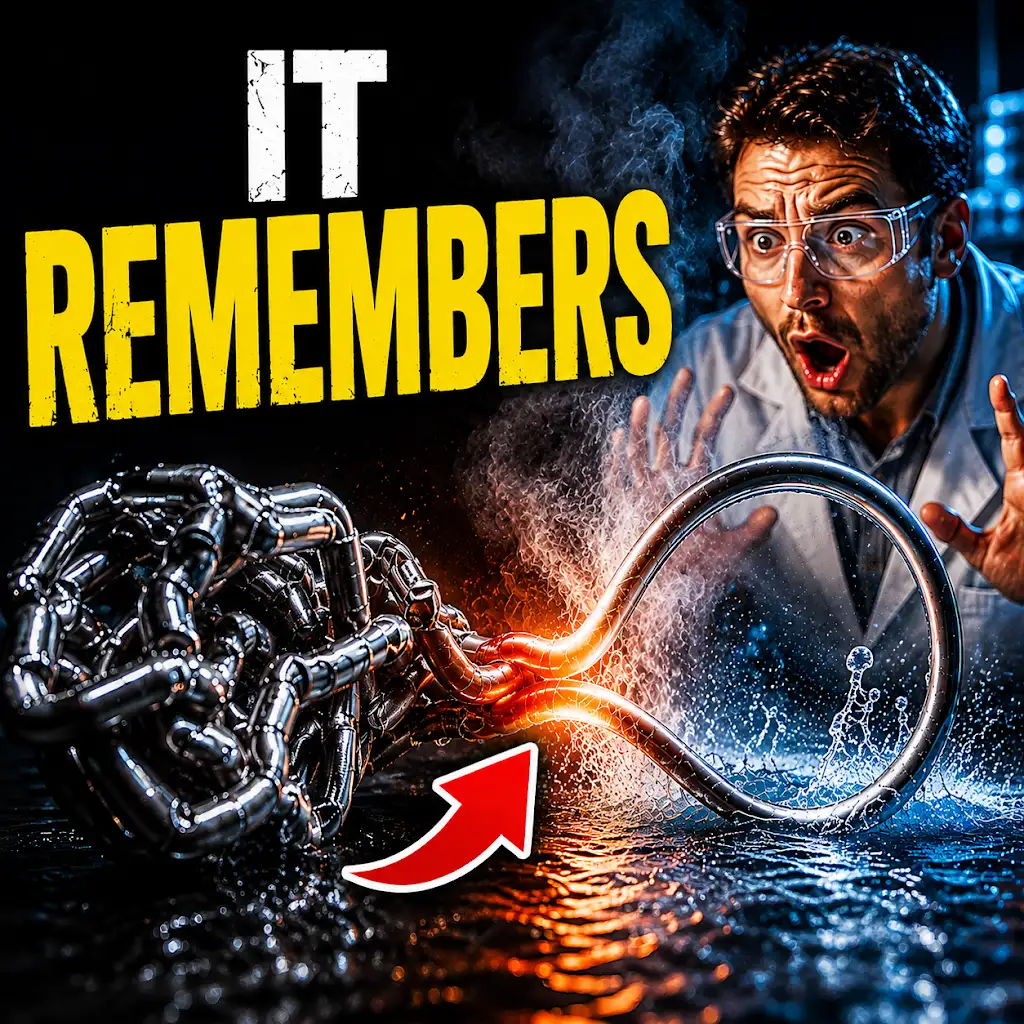
This Metal Remembers What It Used to Be
FAQs
What are Nitinol tires?
Nitinol tires are a type of shape memory alloy tire made from a combination of nickel and titanium. This unique material allows the tire to return to its original shape after being deformed, making it ideal for use in rugged terrains.
How are Nitinol tires beneficial for planetary exploration?
Nitinol tires are beneficial for planetary exploration due to their ability to withstand extreme conditions and adapt to various terrains. They are durable, lightweight, and have the capability to traverse rough surfaces, making them suitable for use in space missions and planetary rovers.
What makes Nitinol tires different from traditional rubber tires?
Unlike traditional rubber tires, Nitinol tires have the ability to undergo significant deformation and return to their original shape. This unique property allows them to withstand the harsh conditions of planetary surfaces and provide better traction and maneuverability.
Are Nitinol tires currently being used in space exploration missions?
While Nitinol tires have shown promise for planetary exploration, they are still in the experimental phase and have not been widely used in space exploration missions. However, ongoing research and development efforts are focused on integrating Nitinol tires into future space exploration vehicles.
What are the potential future applications of Nitinol tires in planetary exploration?
In the future, Nitinol tires could be used in robotic rovers, landers, and other vehicles for exploring the surfaces of planets, moons, and asteroids. Their unique properties make them well-suited for navigating challenging terrains and conducting scientific investigations in space.