The realm of materials science is perpetually on the cusp of revolutionary breakthroughs, and among the most captivating advancements is the emergence of shape-memory alloys, often colloquially termed “shape-shifting metals.” These remarkable materials possess the extraordinary ability to return to a predetermined shape after undergoing significant deformation, a transformation triggered by a change in temperature. This phenomenon, driven by intricate metallurgical processes and quantum mechanics, opens up a world of possibilities across a vast spectrum of industries, from the mundane to the highly specialized.
At the heart of shape-shifting metal lies a fascinating interplay between its crystalline structure and temperature. These alloys are not inherently endowed with the ability to morph; rather, their unique characteristic is a consequence of their phase transformations. Understanding these transformations is key to grasping the magic of heat-activated movement.
Martensitic Transformation: The Underlying Mechanism
The primary mechanism behind shape memory is the reversible solid-state phase transformation known as the martensitic transformation. In a typical shape-memory alloy, such as the widely studied Nickel-Titanium (NiTi), also known as Nitinol, there exist two distinct crystallographic phases: austenite and martensite. At higher temperatures, the alloy exists in its stable, high-symmetry austenitic phase. This phase is characterized by a specific arrangement of atoms within the crystal lattice.
As the temperature decreases, the austenite phase becomes thermodynamically unstable, and the material undergoes a transformation into a lower-symmetry, distorted phase called martensite. This martensitic phase is not a single, fixed structure but rather a collection of different crystallographic variants. Crucially, the transformation from austenite to martensite involves a change in the atomic arrangement that allows for significant deformation without fracturing the material. This deformation in the martensitic phase is often accompanied by the formation of specific crystallographic twins within the martensite structure.
The Role of Stress and Temperature
The beauty of shape-memory alloys lies in their sensitivity to both stress and temperature. While cooling below a certain transition temperature (often referred to as the martensite start and finish temperatures, Ms and Mf respectively) initiates the formation of martensite, applying mechanical stress at these lower temperatures can induce a further rearrangement of the martensitic variants. This rearrangement is what enables the macroscopic deformation of the material. The stress essentially forces the existing martensitic twins to reorient themselves, leading to a macroscopic shape change.
When the deformed martensitic material is subsequently heated above another critical temperature (the austenite start and finish temperatures, As and Af), the reverse transformation occurs. The martensite phase reverts back to the high-symmetry austenitic phase. During this reverse transformation, the atoms strive to return to their original positions in the austenite lattice. Because the austenitic phase has a fixed, predefined shape, the material effectively “remembers” its original form and unfolds itself, erasing the deformation imposed in the martensitic state. This recovery of the original shape is what gives these alloys their “shape memory” designation.
Hysteresis: The Energy Barrier
A critical aspect of the martensitic transformation is hysteresis. This means that the temperatures at which the transformation occurs during cooling are different from those during heating. This temperature difference, or hysteresis loop, represents the energy barrier that must be overcome for the transformation to proceed. The width of this hysteresis loop can be influenced by factors such as the alloy composition, processing history, and the presence of impurities. A wider hysteresis loop often implies a greater amount of energy is required for both the forward and reverse transformations, which can be advantageous in certain applications where a more robust response is desired.
Metals exhibit fascinating properties when subjected to heat, one of which is their ability to expand and contract. This phenomenon is crucial in various applications, from engineering to everyday objects. For a deeper understanding of how heat affects metal and the science behind it, you can explore this related article on thermal expansion and its implications in different fields. For more information, visit this article.
Composition and Alloying: Tailoring the Memory
The specific composition of a shape-memory alloy plays a pivotal role in determining its transformation temperatures, the magnitude of the shape recovery, and its overall performance. While Nickel-Titanium alloys are the most prevalent and widely studied, researchers have explored a variety of other compositions and alloying elements to fine-tune the properties of these remarkable materials.
Nickel-Titanium (NiTi) Alloys: The Gold Standard
NiTi alloys, particularly those with near-equiatomic compositions of Nickel and Titanium, exhibit excellent shape memory properties. The precise ratio of Ni to Ti is crucial, as even slight deviations can significantly alter the transformation temperatures. The addition of small amounts of other elements, such as Iron (Fe), Copper (Cu), or Cobalt (Co), can be used to further adjust these temperatures. For example, adding Iron can lower the transformation temperatures, making the alloy more responsive at lower ambient conditions. Conversely, other alloying elements might be introduced to enhance mechanical strength or corrosion resistance.
The processing of NiTi alloys is also critical. Techniques such as vacuum arc remelting and subsequent heat treatments are employed to achieve the desired microstructural homogeneity and control the phase transformation characteristics. The memory effect can be “trained” into the material through a series of deformation and heating cycles, allowing engineers to dictate the specific shape the alloy will recover.
Other Shape Memory Alloy Systems
While NiTi dominates the landscape, other alloy systems also exhibit shape memory behavior. Copper-based alloys, such as Copper-Zinc-Aluminum (CuZnAl) and Copper-Aluminum-Nickel (CuAlNi), are also well-known shape memory alloys. These alloys generally have lower transformation temperatures and can be less expensive to produce than NiTi. However, they often suffer from lower ductility and a tendency for premature fatigue failure.
Ferrous-based shape memory alloys, such as Iron-Manganese-Silicon (FeMnSi) alloys, have also garnered attention due to their potential for lower cost and excellent magnetic properties. These alloys are often considered more environmentally friendly than some other systems. Research continues into developing new shape memory alloy systems with improved properties and wider applicability, including shape memory polymers which offer unique advantages in terms of flexibility and processability.
The Impact of Alloying Elements
The strategic addition of alloying elements is a powerful tool for tailoring the performance of shape-memory alloys. For instance, in NiTi alloys, controlling the interstitial content of elements like Oxygen, Nitrogen, and Carbon is crucial. These interstitial elements can segregate to grain boundaries and form precipitates, which can negatively impact the ductility and fatigue life of the alloy. Alloying with elements like Niobium (Nb) can improve creep resistance and high-temperature stability.
Understanding the phase diagrams of these complex multi-component systems is essential for predicting the behavior of the alloys under different thermal and mechanical conditions. Computational materials science and advanced characterization techniques are invaluable in this endeavor, allowing researchers to explore a vast parameter space and design alloys with precisely engineered properties.
Applications Unfolding: From Medical Devices to Aerospace

The unique ability of shape-shifting metals to undergo controlled, reversible deformation has opened up a plethora of innovative applications across diverse industries. Their inherent “smart” capabilities, responding to external stimuli like temperature, make them ideal for solutions that require adaptability, precision, and minimal external manipulation.
Medical Marvels: Minimally Invasive Procedures
In the medical field, shape-memory alloys have revolutionized minimally invasive surgical techniques. Nitinol is particularly prevalent due to its biocompatibility and excellent mechanical properties.
Stents: Keeping Vessels Open
One of the most prominent medical applications of Nitinol is in the fabrication of vascular stents. These small, tube-like devices are designed to be compressed into a compact form, introduced into a narrowed or blocked artery, and then deployed by the body’s own heat. Once inside the artery, the body’s temperature causes the Nitinol stent to expand back to its predetermined, larger shape, holding the artery open and restoring blood flow. The radial force exerted by the expanding stent is precisely controlled by the alloy’s composition and the temperature at which it is deployed.
Orthodontic Archwires: Gentle and Effective Tooth Movement
Orthodontic archwires made from Nitinol are another significant advancement. Traditional stainless steel wires can exert significant force, leading to discomfort and potentially damaging tooth roots. Nitinol wires, on the other hand, possess a low elastic modulus and a high yield strength, allowing them to exert a constant, gentle force over a wide range of tooth movements. This means fewer adjustments are needed, and the treatment process is generally more comfortable for the patient. The wires are delivered to the mouth at room temperature in a deformed state and then heated by body temperature to exert their therapeutic force.
Surgical Instruments and Implants
Beyond stents and wires, shape-memory alloys are increasingly used in a variety of surgical instruments. Their ability to bend and spring back allows for the creation of flexible and maneuverable tools that can navigate complex anatomical pathways. Furthermore, shape-memory alloys are being explored for use in self-deploying bone plates and screws, as well as in other implantable devices where precise deployment and tissue integration are critical.
Aerospace and Automotive: Lightweight and Efficient Solutions
The aerospace and automotive industries are constantly seeking materials that offer a combination of light weight, high strength, and unique functionalities. Shape-memory alloys fit this bill perfectly.
Actuation Systems: Smart Movement Without Motors
The ability of shape-memory alloys to act as actuators—devices that convert one form of energy into mechanical motion—is a game-changer for these industries. Instead of relying on bulky electric motors or hydraulic systems, shape-memory alloy actuators can provide controlled movement through simple heating.
In aerospace, this can translate to adaptive wing structures that can change their shape to optimize aerodynamic performance at different flight conditions. They can also be used in deployable components like antennas or solar panels, which can be compactly stored during launch and then unfurled in space using only thermal activation. In automotive applications, shape-memory actuators can be used for smart locking mechanisms, adaptive control surfaces, or even in cooling systems to regulate fluid flow based on temperature.
Vibration Damping and Energy Harvesting
The inherent damping properties of some shape-memory alloys, stemming from the energy dissipation during the martensitic transformation, make them suitable for vibration control applications. This can lead to quieter and more comfortable vehicles and aircraft. Furthermore, research is ongoing into utilizing the reverse transformation to harvest energy from ambient temperature fluctuations, potentially powering small electronic devices or sensors in a self-sufficient manner.
Consumer Goods and Everyday Innovations
The impact of shape-shifting metals is also beginning to be felt in everyday consumer products, offering improved functionality and novel design possibilities.
Eyeglass Frames: Durability and Comfort
Nitinol has become a popular material for high-end eyeglass frames. Their flexibility allows them to bend and twist without breaking, making them incredibly durable. They also have a “memory” for their original shape, meaning they can often return to their intended form even after significant deformation, reducing the need for frequent adjustments.
Self-Adjusting Devices and Appliances
Imagine appliances that can automatically adjust their internal components based on operating temperature, or tools that can change their grip based on the object being manipulated. Shape-memory alloys offer the potential for such smart, self-adjusting devices. This could lead to greater energy efficiency, improved user experience, and enhanced product longevity.
Manufacturing and Processing: Crafting the Memory
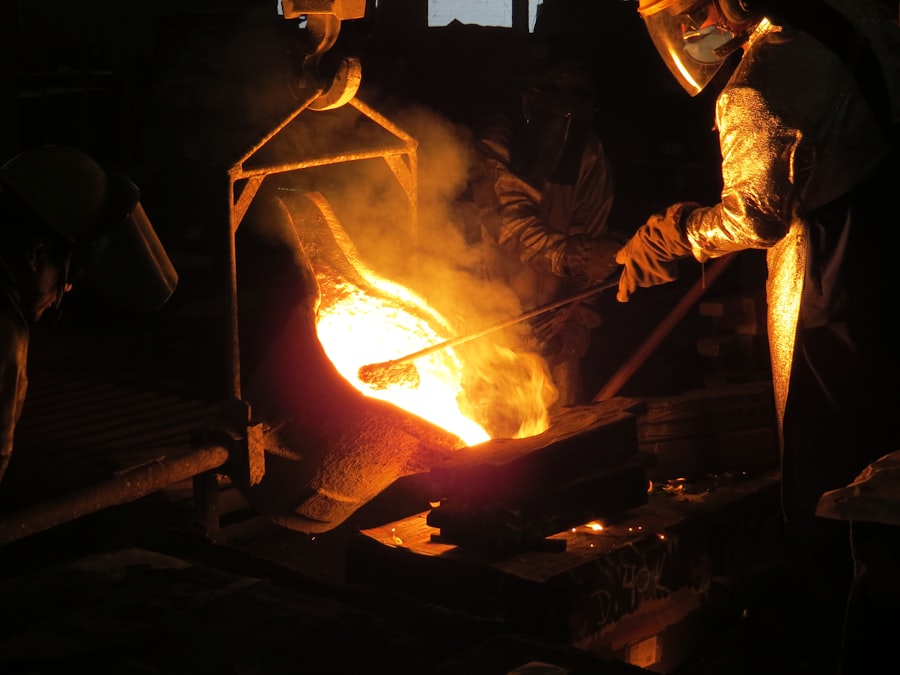
The creation of functional shape-memory alloys involves a precise and often complex manufacturing process. Achieving the desired crystalline structure and controlling the phase transformation temperatures are paramount to unlocking the full potential of these materials.
Melting and Casting: The Foundation of the Alloy
The initial step in producing shape-memory alloys typically involves melting and mixing the constituent elements in the desired proportions. For NiTi alloys, this often involves vacuum induction melting or vacuum arc remelting to ensure high purity and homogeneity. The molten alloy is then cast into ingots or billets. The careful control of the melting and casting process is crucial to prevent the formation of unwanted impurities or segregation of elements, which can adversely affect the shape memory properties.
Thermomechanical Processing: Imparting Strength and Structure
Following casting, the material undergoes thermomechanical processing, which involves a combination of heat treatments and mechanical deformation. This stage is critical for developing the desired microstructure and influencing the phase transformation behavior.
Annealing: Relieving Stresses and Recrystallization
Annealing is a heat treatment process where the material is heated to a specific temperature and held for a period, followed by controlled cooling. This process helps to relieve internal stresses introduced during previous manufacturing steps, promotes recrystallization (the formation of new, strain-free grains), and can influence the grain size of the material. The annealing temperature and time are carefully chosen to optimize the crystallographic structure for subsequent processing.
Hot and Cold Working: Shaping the Material
Hot working, performed at temperatures above the recrystallization temperature, and cold working, performed at room temperature, are used to shape the alloy into its desired form, such as wires, tubes, or sheets. These deformation processes also play a crucial role in inducing the necessary dislocation structures and influencing the martensitic transformation. The amount of deformation and the temperature at which it is performed are critical parameters that determine the final properties of the shape-memory alloy.
Heat Treatment and Training: Activating the Memory
The defining characteristic of shape-memory alloys – their ability to recover a specific shape – is often “trained” into them through a specific heat treatment process. This involves deforming the alloy in its martensitic state to the desired shape and then heating it above the austenite transformation temperature.
The Training Process: Encoding the Shape
The training process typically involves several steps. First, the alloy is heated to the fully austenitic state to erase any prior shape memory. Then, it is cooled to below its martensite finish temperature, where it becomes amenable to deformation. The material is then plastically deformed into the target shape. Finally, it is heated above its austenite finish temperature, causing the martensite to transform back into austenite. During this reverse transformation, the material remembers and recovers the deformed shape. This process can be repeated to enhance the “trained” shape memory.
Controlled Cooling and Heating Rates
The rates of cooling and heating during these treatments are also important. Rapid cooling can sometimes lead to the formation of finer martensitic structures, which can influence the transformation temperatures and the mechanical properties. Similarly, controlled heating rates during the training process can ensure a uniform and complete recovery of the trained shape.
When metals are heated, they often expand due to the increased kinetic energy of their atoms, a phenomenon that can be observed in various applications, from engineering to everyday cooking. This property is crucial in understanding how materials behave under different temperatures, which is explored in detail in a related article on thermal expansion. For more insights on this fascinating topic, you can read the full article here.
Challenges and Future Directions: Refining the Technology
| Metal | Temperature at which it moves |
|---|---|
| Aluminum | 660.3°C |
| Copper | 1,085°C |
| Iron | 1,538°C |
| Lead | 327.5°C |
Despite the remarkable progress in shape-memory alloys, several challenges remain, and ongoing research is focused on overcoming these limitations and expanding their capabilities even further.
Fatigue Life and Degradation: Ensuring Longevity
One of the primary challenges for shape-memory alloys, particularly in applications involving repeated cycling of stress and temperature, is their fatigue life. The repeated martensitic transformations can lead to microstructural degradation, such as the formation of cracks or the accumulation of dislocations, which can ultimately limit the material’s lifespan.
Research is actively focused on developing strategies to improve fatigue resistance. This includes optimizing alloy compositions to reduce defect formation, refining processing techniques to create more uniform microstructures, and exploring protective coatings. Understanding the fundamental mechanisms of fatigue crack initiation and propagation in these alloys is crucial for developing more durable materials.
Cost and Scalability: Broadening Accessibility
While NiTi alloys offer exceptional performance, their production can be expensive, limiting their widespread adoption in cost-sensitive applications. Developing more cost-effective manufacturing methods and exploring alternative, more abundant raw materials are key areas of research.
The scalability of production is also important. As demand for shape-memory alloys grows, efficient and high-volume manufacturing processes are needed to meet market needs. Innovations in continuous casting, powder metallurgy, and additive manufacturing (3D printing) are being explored to improve the scalability and reduce the cost of producing complex shape-memory alloy components.
Advanced Characterization and Modeling: Deeper Understanding
A deeper understanding of the complex physical phenomena governing the behavior of shape-memory alloys is essential for further advancements. This requires the use of advanced characterization techniques to probe the material at the atomic and microstructural levels.
In-Situ Microscopy and Spectroscopy: Observing Transformations in Real-Time
Techniques such as transmission electron microscopy (TEM) and scanning electron microscopy (SEM) are invaluable for observing the martensitic transformation and the evolution of microstructures during processing and operation. In-situ experiments, where these observations are conducted while the material is subjected to changes in temperature and stress, provide crucial insights into the dynamic processes occurring. Advanced spectroscopic techniques can also provide information about the chemical composition and bonding within the material.
Computational Materials Science: Predicting and Designing
Computational materials science, including density functional theory (DFT) and molecular dynamics simulations, plays a vital role in understanding the fundamental thermodynamics and kinetics of phase transformations. These models can predict the behavior of new alloy compositions, guide experimental design, and accelerate the discovery of novel shape-memory materials with tailored properties. By simulating the atomic interactions and phase equilibria, researchers can virtually explore a vast design space, identifying promising candidates for further investigation.
Expanding the Functionality: Beyond Shape Recovery
The future of shape-memory materials extends beyond simple shape recovery. Researchers are exploring ways to imbue these materials with additional functionalities.
Multi-Shape Memory and Programmable Materials
The concept of “multi-shape memory” involves materials that can be trained to recover multiple different shapes. This could lead to highly adaptable structures that can reconfigure themselves in response to different stimuli. Furthermore, research into “programmable” materials, where the shape recovery can be controlled with greater precision and external input, is an exciting frontier.
Integration with Other Smart Materials
Combining shape-memory alloys with other smart materials, such as piezoelectric or magnetostrictive materials, could lead to synergistic effects and the development of truly advanced smart systems. For example, a system that can sense a change in its environment and then respond by changing its shape and generating an electrical signal.
The journey of shape-shifting metals from a scientific curiosity to a transformative technology is a testament to human ingenuity and the relentless pursuit of innovation. As research continues to unravel the complexities and refine the capabilities of these remarkable materials, their impact on our lives, from the medical field to the frontiers of space exploration, is poised to grow even more profound. The era of heat-activated movement is only just beginning.

This Metal Remembers What It Used to Be
FAQs
What is the metal that moves when heated?
The metal that moves when heated is known as shape memory alloy (SMA). It is a type of metal that can “remember” its original shape and return to it when heated.
How does shape memory alloy work?
Shape memory alloy works through a process called “martensitic transformation.” When the SMA is deformed at a low temperature, it can return to its original shape when heated due to the rearrangement of its internal structure.
What are the applications of shape memory alloy?
Shape memory alloy has various applications, including in medical devices such as stents and orthodontic wires, as well as in actuators for robotics and aerospace components.
What are the advantages of using shape memory alloy?
Some advantages of using shape memory alloy include its ability to exert large forces, its durability, and its ability to be activated by temperature changes, making it suitable for various engineering and medical applications.
Are there any limitations to using shape memory alloy?
Some limitations of using shape memory alloy include its relatively high cost compared to other materials, as well as the need for precise control of temperature for its activation. Additionally, SMA may experience fatigue over time with repeated use.