You stand on the precipice of a revolution, a silent transformation that reshaped your world from the ground up. Before the advent of synthetic nitrogen fertilizer, your ability to feed yourself, your community, and eventually, the burgeoning global population, was tethered to the earth’s natural rhythms. For millennia, agriculture was a delicate dance with nature, relying on methods passed down through generations. But then, a scientific breakthrough, born from necessity and curiosity, unlocked a powerful force that would redefine food production forever. This is the story of how you came to harness the very air you breathe, transforming it into the lifeblood of modern agriculture.
Imagine a world where the yield of your crops was a gamble against the fertility of the soil. For your ancestors, this was not imagination, but a harsh reality. The nitrogen cycle, a fundamental biological process, dictated the limits of agricultural productivity. Plants, your essential food sources, require nitrogen to grow, to produce those vital proteins and chlorophyll. Yet, the vast majority of nitrogen exists as a gas in the atmosphere – N2 – a form that plants cannot directly utilize. Nature had its own ingenious methods of fixing this atmospheric nitrogen, but these were slow, localized, and insufficient to meet the demands of a growing human population.
The Gifts of Nature: Natural Sources of Nitrogen
Your forebears understood the importance of enriching the soil, even if they didn’t grasp the underlying chemistry. They observed that certain practices led to more abundant harvests. Animal manure, a direct byproduct of livestock, was a prized commodity. The waste of animals, rich in organic matter and available nitrogen compounds, was carefully collected and spread on fields, a testament to the understanding that “waste” could be transformed into sustenance.
Leguminous plants, like beans, peas, and clover, also held a special place in traditional farming. You likely noticed how these plants, when rotated with other crops, seemed to replenish the soil’s vigor. What you didn’t know then was the remarkable symbiosis occurring beneath the soil’s surface. Specific bacteria residing in root nodules of these legumes could convert atmospheric nitrogen into a usable form, effectively “fixing” it and making it available to the plant, and subsequently, to the soil. This natural nitrogen fixation was a cornerstone of sustainable agriculture for centuries, allowing for cycles of planting and resting the land.
The Limits of the Cycle: When Nature Couldn’t Keep Up
Despite these natural methods, the relentless march of population growth presented an ever-increasing challenge. As communities expanded, the demand for food outstripped the capacity of these traditional agricultural practices. The soil, over-farmed and inadequately replenished, began to show signs of depletion. Yields stagnated, and in some regions, famine became a recurring specter. You faced a fundamental constraint: the finite supply of naturally available nitrogen. The amount of manure you could produce was limited by the number of animals you could keep, and the effectiveness of natural nitrogen fixation was slow and geographically dependent. The world was teetering on the edge of an agricultural crisis, a Malthusian dilemma that seemed insurmountable without a radical intervention.
The history of synthetic nitrogen fertilizer is a fascinating topic that highlights the intersection of agricultural innovation and environmental impact. For a deeper understanding of this subject, you can explore the article available at Freaky Science, which delves into the development and implications of synthetic fertilizers in modern agriculture. This resource provides valuable insights into how these fertilizers have transformed farming practices and their effects on ecosystems worldwide.
The Dawn of an Idea: Harnessing the Air’s Abundance
The turning point arrived not in a farmer’s field, but in the hallowed halls of scientific inquiry. The late 19th and early 20th centuries were a period of intense scientific exploration, a time when humanity was unraveling the fundamental building blocks of matter and energy. The puzzle of atmospheric nitrogen, this ubiquitous but inaccessible element, became a focal point for ambitious chemists. The idea was audacious: could you artificially replicate nature’s nitrogen-fixing processes, but on a scale that could meet the demands of a modernizing world?
The Great Minds at Work: Early Pioneers of Nitrogen Fixation
The journey to synthetic nitrogen fertilizer was paved with brilliant minds and persistent experimentation. The challenge was immense: breaking the incredibly strong triple bond in the N2 molecule. This bond, formed by three covalent links between two nitrogen atoms, requires a substantial amount of energy to overcome. Early researchers experimented with various methods, often involving high temperatures and pressures, to achieve this feat.
One of the earliest and most significant breakthroughs came from a German chemist named Fritz Haber. His work, often conducted under difficult circumstances and with limited resources, focused on finding a way to combine nitrogen and hydrogen gas at high temperatures and pressures, using a catalyst to speed up the reaction. It was a painstaking process of trial and error, but Haber’s persistence eventually paid off. In 1909, he announced the Haber-Bosch process, a monumental achievement that allowed for the direct synthesis of ammonia (NH3) from atmospheric nitrogen and hydrogen.
The Haber-Bosch Process: A Scientific Triumphant
The Haber-Bosch process was, and remains, a cornerstone of industrial chemistry. It involves reacting nitrogen gas (N2) from the air with hydrogen gas (H2) at extremely high temperatures (around 400-500°C) and pressures (around 150-250 atmospheres). A catalyst, typically iron-based, is crucial to lower the activation energy of the reaction, making it proceed at a practical rate. The reaction produces ammonia (NH3), a molecule that contains nitrogen in a form readily usable by plants.
The significance of this process cannot be overstated. It was a direct bypass of nature’s slow and inefficient methods. Suddenly, humanity had the capacity to produce ammonia, the precursor to virtually all synthetic nitrogen fertilizers, on an industrial scale. This was not just a scientific curiosity; it was a tangible solution to a looming global problem. The ability to “manufacture” plant food from the air itself was a paradigm shift.
The Industrial Revolution of Agriculture: From Lab to Field

The Haber-Bosch process, while a remarkable scientific feat, was initially an expensive and complex undertaking. Transforming this laboratory marvel into a practical tool for farmers required further innovation and industrial scaling. The development of large-scale ammonia synthesis plants was the next crucial step, followed by the conversion of ammonia into various fertilizer products that could be easily applied to the soil.
The Rise of Ammonia and Its Derivatives
Ammonia itself can be directly applied as a fertilizer, but it is volatile and can be lost to the atmosphere. To make it more stable and easier to handle, it was converted into other forms. Nitric acid, produced by oxidizing ammonia, became a key intermediate. Nitric acid could then be reacted with ammonia to produce ammonium nitrate (NH4NO3), a highly effective and widely used nitrogen fertilizer. Other derivatives, such as urea (CO(NH2)2), a solid fertilizer that is easily transported and applied, were also developed, further enhancing the versatility and accessibility of synthetic nitrogen.
Scaling Up Production: Feeding the Factories, Feeding the World
Building and operating Haber-Bosch plants required significant investment in infrastructure, energy, and technical expertise. The process is energy-intensive, as it requires high temperatures and pressures. However, the potential benefits of increased food production were so profound that nations, particularly those facing food shortages, prioritized the development of this industry. World War I, with its immense demand for explosives (which also utilize nitrogen compounds), further spurred the development and expansion of ammonia production facilities, ironically creating a surplus of capacity that could then be redirected towards agriculture after the war.
The Fertilizer Revolution: Transforming Agriculture and Society
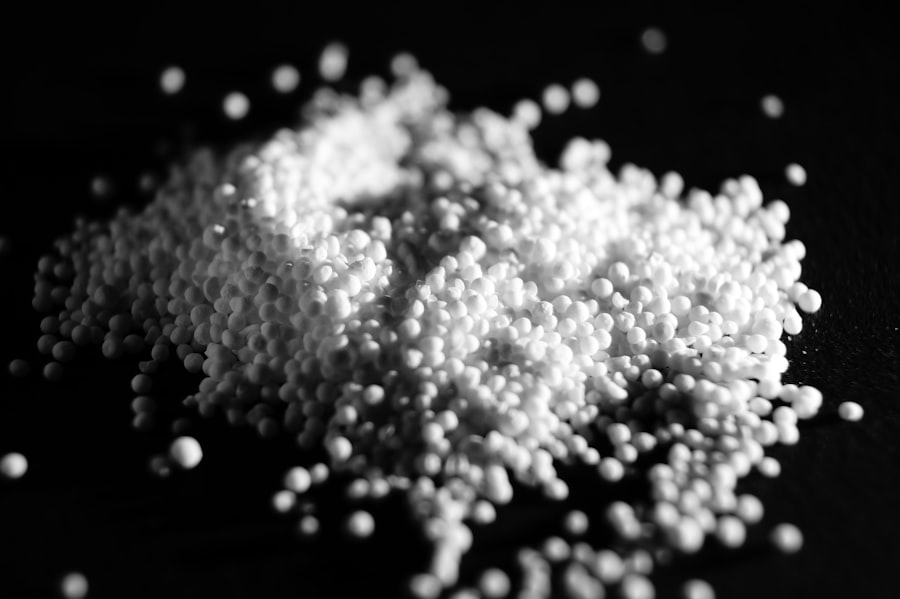
The widespread adoption of synthetic nitrogen fertilizers in the 20th century ushered in an era of unprecedented agricultural productivity. You witnessed a dramatic increase in crop yields, transforming the landscape of food production and fundamentally altering the relationship between humanity and the land. This revolution, however, was not without its complexities and consequences.
The Green Revolution: A Cascade of Abundance
The impact of synthetic nitrogen fertilizer was most prominently seen during the “Green Revolution” of the mid-20th century. This period saw the development and widespread adoption of high-yielding varieties of staple crops like wheat, rice, and maize. These new varieties were bred to respond exceptionally well to increased nutrient availability, and synthetic nitrogen fertilizer was the key to unlocking their genetic potential. Combined with improved irrigation techniques and pesticides, these advancements led to a dramatic surge in global food production, effectively averting widespread famine and supporting a rapidly growing global population. You were no longer limited by the natural fertility of the soil; you could now actively supplement it, pushing the boundaries of what was agriculturally possible.
Economic and Social Impacts: From Subsistence to Surplus
The fertilizer revolution had profound economic and social implications. For many farmers, it meant a transition from subsistence farming to more commercialized agriculture. Increased yields translated into higher incomes, improved livelihoods, and greater food security. It fueled industrialization by freeing up labor from agriculture, allowing people to move to urban centers and contribute to other sectors of the economy. The ability to produce more food with less land also reduced the pressure to convert natural habitats into farmland, although this was not always the case.
The Geopolitics of Nitrogen: Power and Dependency
The control and production of synthetic nitrogen fertilizer became a matter of national security and geopolitical influence. Nations with the capacity to produce their own fertilizers were less reliant on imports and better equipped to feed their populations. This led to a strategic importance for countries with access to natural gas, the primary source of hydrogen for the Haber-Bosch process, and the industrial infrastructure to support ammonia production. The global fertilizer market became a significant economic force, influencing trade relationships and international development.
The history of synthetic nitrogen fertilizer is a fascinating journey that has significantly impacted agriculture and food production worldwide. For those interested in exploring this topic further, an insightful article can be found at Freaky Science, which delves into the development and implications of synthetic fertilizers. This innovation not only revolutionized farming practices but also raised important questions about sustainability and environmental effects.
The Double-Edged Sword: Challenges and the Future of Nitrogen
| Year | Event |
|---|---|
| 1913 | First large-scale production of synthetic nitrogen fertilizer by Fritz Haber |
| 1928 | Development of the Haber-Bosch process for ammonia synthesis |
| 1950s | Widespread adoption of synthetic nitrogen fertilizer in agriculture |
| 1960s | Green Revolution, increased use of synthetic nitrogen fertilizer to boost crop yields |
| 2000s | Concerns about environmental impact of excessive nitrogen fertilizer use |
While the benefits of synthetic nitrogen fertilizer are undeniable, its widespread and sometimes indiscriminate use has also brought about significant environmental and ecological challenges. As you continue to rely on this powerful tool, understanding and addressing these consequences is paramount for sustainable agriculture and a healthy planet.
Environmental Consequences: The Nitrogen Footprint
The excessive application of synthetic nitrogen fertilizers has led to a range of environmental problems. When nitrogen is applied to fields, not all of it is absorbed by the crops. Excess nitrogen can be leached from the soil into waterways, leading to eutrophication – the over-enrichment of water bodies with nutrients. This can cause algal blooms, which deplete oxygen levels and harm aquatic life. Furthermore, nitrogen compounds can be converted into nitrous oxide (N2O), a potent greenhouse gas that contributes to climate change. The production of nitrogen fertilizers itself is also energy-intensive, contributing to your carbon footprint.
Soil Health and Biodiversity: A Delicate Balance
Over-reliance on synthetic fertilizers can also negatively impact soil health and biodiversity. The emphasis on readily available nitrogen can lead to a decline in beneficial soil microorganisms and a reduced capacity of the soil to retain nutrients naturally. Monoculture farming practices, often facilitated by high-input agriculture, can further reduce biodiversity in agricultural landscapes, making them more vulnerable to pests and diseases.
The Quest for Sustainability: Towards a Greener Nitrogen Future
The future of nitrogen fertilizer use lies in finding more sustainable and efficient methods. This includes developing slow-release fertilizers that provide nitrogen gradually, reducing leaching and improving uptake. Precision agriculture, using technology to apply fertilizers only where and when they are needed, is another crucial strategy. Furthermore, research into alternative nitrogen sources, such as bio-fertilizers derived from microbial communities, and enhancing natural nitrogen fixation processes holds great promise for reducing your dependence on synthetic inputs. You are now at a point where you must innovate once again, not to create nitrogen, but to use it wisely and harmoniously with the natural systems that sustain you. The history of synthetic nitrogen fertilizer is a testament to human ingenuity, but its future will be defined by your commitment to responsible stewardship of the planet.

We Figured Out How to Turn Air Into Food
FAQs
What is synthetic nitrogen fertilizer?
Synthetic nitrogen fertilizer is a man-made chemical compound that contains nitrogen in a form that is easily absorbed by plants. It is used to supplement the natural nitrogen levels in soil, promoting plant growth and increasing crop yields.
When was synthetic nitrogen fertilizer first developed?
The process for synthesizing ammonia, the key component of synthetic nitrogen fertilizer, was developed by German chemist Fritz Haber in the early 20th century. This led to the large-scale production of synthetic nitrogen fertilizer, which revolutionized agriculture.
How has synthetic nitrogen fertilizer impacted agriculture?
The development and widespread use of synthetic nitrogen fertilizer has significantly increased agricultural productivity, allowing for the production of larger crop yields on a global scale. This has helped to support the growing global population and improve food security.
What are the environmental impacts of synthetic nitrogen fertilizer?
While synthetic nitrogen fertilizer has been instrumental in increasing crop yields, its use has also led to environmental concerns. Excessive use of synthetic nitrogen fertilizer can contribute to water pollution, soil degradation, and greenhouse gas emissions.
What are the alternatives to synthetic nitrogen fertilizer?
There are several alternatives to synthetic nitrogen fertilizer, including organic fertilizers, crop rotation, and cover cropping. These methods aim to improve soil health and fertility without relying on synthetic chemicals, and can help mitigate some of the environmental impacts associated with synthetic nitrogen fertilizer.