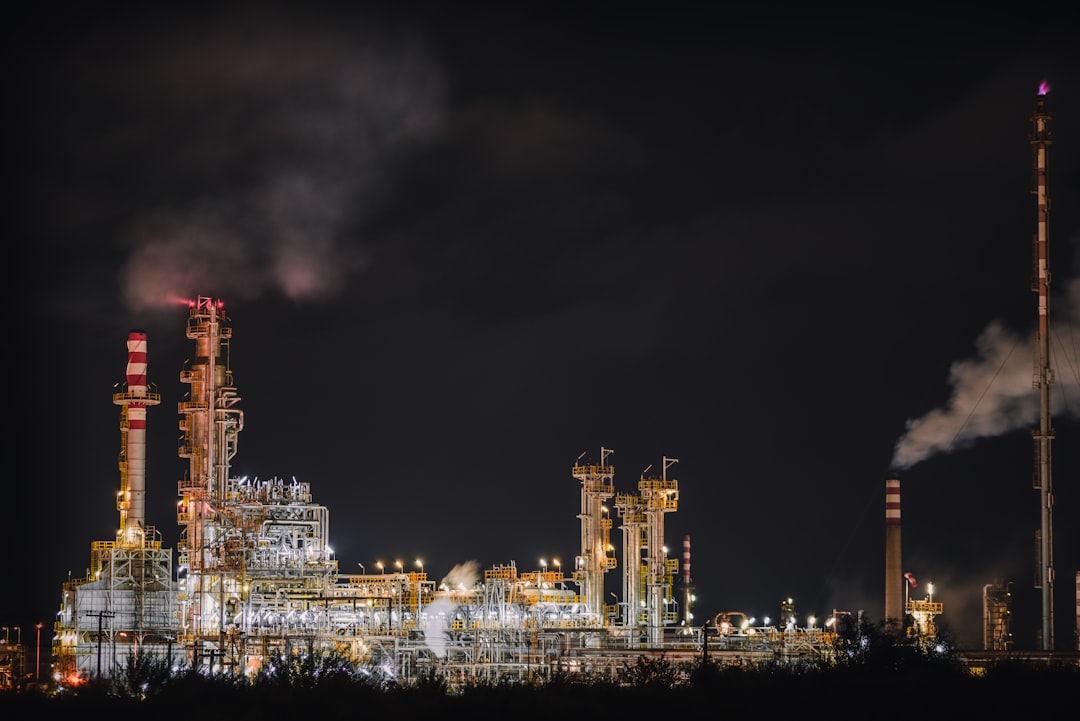
You stand on the precipice of a world transformed. A world where the specter of widespread famine has been pushed back, where artificial fertilizers fuel an unprecedented agricultural boom, and where the very foundations of modern industry are built upon a single, colorless gas. This transformation, this leap from scarcity to abundance, owes an immeasurable debt to one man: Carl Bosch. You might not know his name as readily as those of inventors whose creations are held in your hand, but his work is as fundamental to your daily life as the air you breathe. He was the alchemist of the modern age, turning the seemingly inert nitrogen of the atmosphere into the lifeblood of agriculture and industry.
The Nitrogen Conundrum: A World on the Brink of Starvation
For centuries, humanity has grappled with a fundamental limitation: the scarcity of nitrogen. While the air around you is about 78% nitrogen, this diatomic gas (N₂) is incredibly stable, its two atoms tightly bound by a triple covalent bond. Plants, unlike the bacteria that live in their roots, cannot directly break this bond and assimilate atmospheric nitrogen. They relied, for millennia, on natural sources of fixed nitrogen: decaying organic matter, animal waste, and mineral deposits like guano and Chilean saltpeter.
Imagine a world where these natural sources were finite and increasingly depleted. As populations grew, the demand for food soared. The agricultural revolution, a slow but steady increase in food production, was beginning to falter against the inexorable reality of nitrogen limitation. Scientists understood the problem, but the solution remained elusive. The energy required to break the formidable N-N bond in atmospheric nitrogen was simply too great, too costly, and too inefficient to be practical on an industrial scale. This was the nitrogen conundrum, a silent threat lurking behind every rising grain of wheat, a Malthusian specter threatening to cap human progress.
The Natural Limits of Nitrogen Fixation
- The Soil’s Slow Metabolism: For ages, farmers have understood the importance of rotating crops and allowing fields to lie fallow, a rudimentary form of nitrogen replenishment. These natural processes, however, were too slow to keep pace with growing demands.
- The Guano Rush and its Aftermath: The discovery of vast guano deposits in South America in the 19th century provided a temporary nitrogen bonanza. However, these reserves were finite, and their exploitation led to geopolitical tensions and ultimately, a return to the problem of scarcity.
- The Chilean Saltpeter Monopoly: Similarly, deposits of sodium nitrate in Chile became a vital source of fertilizer. But this too was a finite resource, concentrated in one region, making global supply vulnerable to political instability and economic control. The stage was set for a crisis.
Carl Bosch’s contributions to industrial ammonia production have had a profound impact on agriculture and the chemical industry. His work, particularly in the development of the Haber-Bosch process, revolutionized the way ammonia is synthesized, enabling the mass production of fertilizers that support global food supply. For further insights into the scientific principles and advancements related to ammonia production, you can read a related article on this topic at Freaky Science.
The Haber-Bosch Process: A Symphony of Pressure and Heat
Enter Carl Bosch. A brilliant chemical engineer and a man of immense perseverance, Bosch was tasked by the formidable German chemical conglomerate BASF (Badische Anilin- & Soda-Fabrik) to solve this critical problem. He wasn’t working in isolation; he built upon the groundbreaking laboratory work of Fritz Haber, who had discovered a way to synthesize ammonia (NH₃) from nitrogen and hydrogen (H₂) under high pressure and temperature using a catalyst. Haber’s achievement, while scientifically monumental, was impractical for industrial production. His laboratory apparatus was inefficient, and the yields were low. The challenge before Bosch was to scale up Haber’s discovery from the benchtop to the factory floor, a task that required not just scientific insight but also an extraordinary engineering prowess.
Bosch’s genius lay in his ability to envision and overcome the monumental engineering hurdles. He understood that to achieve practical ammonia synthesis, they needed to operate at pressures far exceeding anything previously attempted in industrial chemistry – pressures that could reach hundreds of atmospheres. This meant developing entirely new materials, new reactor designs, and entirely new safety protocols. Imagine the sheer audacity of building machines that could withstand such titanic forces, that could contain and control such volatile reactions.
Engineering the Impossible: High-Pressure Reactors
- The Material Science Challenge: Standard steel would buckle and deform under the immense pressures required. Bosch and his team had to experiment with and develop specialized alloys, capable of withstanding not only the pressure but also the corrosive effects of the high-temperature reaction and the presence of hydrogen.
- The Furnace of Innovation: The reactors themselves were behemoths, designed to operate continuously under extreme conditions. Bosch’s team had to devise methods for feeding the gases, for precisely controlling the temperature, and for extracting the ammonia without compromising the integrity of the system.
- The Catalyst’s Crucial Role: While Haber had identified the potential for catalysts, Bosch’s team refined and optimized them. The specific catalyst used in the Haber-Bosch process is a finely tuned mixture, often based on iron, which facilitates the breaking of the nitrogen triple bond and the formation of ammonia. The catalyst needed to be robust, long-lasting, and highly efficient at the required temperatures and pressures.
Optimizing the Reaction Conditions
- Temperature’s Double-Edged Sword: Higher temperatures generally increase reaction rates, but they also favor the reverse reaction (ammonia decomposition) and can degrade the catalyst. Bosch had to find the “sweet spot” – a temperature that provided a reasonable reaction rate without sacrificing yield or catalyst lifespan.
- Pressure’s Powerful Influence: The equilibrium of the ammonia synthesis reaction favors the formation of ammonia at higher pressures. This was the key to overcoming the kinetic limitations, but it demanded the immense engineering feats described above.
- Recycling and Continuous Flow: To maximize efficiency, the unreacted nitrogen and hydrogen were continuously recycled back into the reactor, ensuring that as much of the raw material as possible was converted into ammonia. This continuous flow system was a hallmark of Bosch’s engineering vision.
From Laboratory Curiosity to Industrial Juggernaut
The journey from Haber’s laboratory to a fully functioning industrial plant was fraught with setbacks and immense financial investment. Bosch’s initial pilot plants were plagued with failures. The high pressures and temperatures proved incredibly challenging to manage, and equipment frequently broke down. There were moments of profound doubt, where the dream of industrial ammonia synthesis seemed to be slipping away. Yet, Bosch’s unyielding determination and his team’s relentless problem-solving kept the project alive.
Imagine the early days: the roar of machinery, the hiss of escaping steam, the constant tension of working with such powerful forces. The initial plants were incredibly expensive to build and operate, and the economic viability of the process was uncertain. However, as the technology matured, and the efficiency of the Haber-Bosch process increased, the cost of producing ammonia began to fall. This was a turning point, moving ammonia synthesis from an expensive scientific curiosity to a cornerstone of industrial production.
The First Industrial Plants: A Testament to Engineering Might
- The Leuna Works: One of the most significant early implementations of the Haber-Bosch process was at the Leuna works in Germany. This massive industrial complex became a symbol of BASF’s dominance and the power of large-scale chemical engineering.
- Scaling Up the Challenges: The successful operation of plants like Leuna demonstrated that the seemingly insurmountable engineering problems had been solved. It proved that ammonia could be produced in vast quantities, reliably and cost-effectively.
- The Economic Revolution: As production ramped up, the price of ammonia plummeted, making it accessible to farmers worldwide. This marked the beginning of the fertilizer revolution.
The Birth of Synthetic Fertilizers: Feeding a Growing World
The most immediate and profound impact of the Haber-Bosch process was on agriculture. For the first time, humanity had a practically limitless source of nitrogen fertilizer. This synthetic fertilizer could be applied directly to the soil, dramatically increasing crop yields and allowing farmers to feed far more people with the same amount of land. The Malthusian specter began to recede, replaced by an era of unprecedented agricultural productivity.
- Boosting Crop Yields: Studies and real-world applications showed that the application of synthetic nitrogen fertilizers could increase yields of grains like wheat, rice, and corn by as much as 50% or more.
- Intensification of Agriculture: The availability of fertilizers allowed for more intensive farming practices, including year-round cultivation in some regions and the development of high-yield crop varieties.
- Preventing Widespread Famine: Historians and economists largely agree that the Haber-Bosch process has prevented billions of deaths from starvation since its widespread adoption. It is arguably one of the most impactful inventions of the 20th century for human survival.
Beyond Agriculture: The Industrial Applications of Ammonia
While its role in feeding the world is its most celebrated achievement, ammonia’s utility extends far beyond the farm. Bosch’s invention unlocked a chemical building block that underpins a vast array of modern industries. Ammonia itself is a crucial ingredient, and its constituent elements, nitrogen and hydrogen, are also vital.
A Versatile Chemical Intermediate
- The Production of Nitric Acid: Ammonia is the primary feedstock for the production of nitric acid (HNO₃), itself a vital chemical used in the manufacture of explosives, dyes, and other chemicals.
- Urea Production: Ammonia is a key component in the production of urea, another important nitrogen fertilizer, as well as in the manufacturing of plastics and adhesives.
- Refrigeration’s Unsung Hero: Anhydrous ammonia is a highly effective refrigerant. You might not realize it, but the chilling systems in large industrial freezers, cold storage facilities, and even some ice rinks rely on ammonia.
The Explosive Potential: A Double-Edged Sword
The ability to produce vast quantities of ammonia had a significant impact on warfare. Ammonia is a direct precursor to nitric acid, which is essential for the production of explosives like TNT and nitroglycerin. During World War I, Germany, cut off from Chilean saltpeter by Allied naval blockades, was able to continue its war effort thanks to the domestic production of ammonia via the Haber-Bosch process. This invention, intended to avert a food crisis, also became a critical factor in global conflict.
Carl Bosch’s contributions to industrial ammonia production have significantly impacted agricultural practices and chemical manufacturing. For a deeper understanding of the innovations in ammonia synthesis and their implications, you can explore a related article that discusses the evolution of chemical engineering techniques. This resource provides valuable insights into how Bosch’s work laid the groundwork for modern processes. To read more about these advancements, visit this article.
Carl Bosch: The Man Behind the Revolution
Carl Bosch was more than just a brilliant engineer; he was a visionary leader who understood the immense potential of scientific discovery and the importance of applying it to solve real-world problems. He was born in Gohlis, Germany, in 1874, and showed an early aptitude for chemistry. After studying at the University of Leipzig and working briefly at a copper smelting plant, he joined BASF in 1902.
Bosch was known for his practical, hands-on approach. He wasn’t afraid to get his hands dirty, working alongside his engineers and technicians to troubleshoot problems and refine the process. He was also a shrewd businessman, understanding the economic implications of his work and advocating for the resources needed to bring his ambitious projects to fruition. He recognized that scientific breakthroughs were only valuable if they could be translated into tangible products that benefited society.
A Legacy of Innovation and Responsibility
- The Nobel Laureate: For his groundbreaking work in the development of high-pressure chemical processes, Carl Bosch was awarded the Nobel Prize in Chemistry in 1931, sharing it with his colleague Fritz Haber.
- Leadership and Vision: Bosch rose through the ranks at BASF, eventually becoming Chairman of the Board. He oversaw the company’s expansion and diversification, always with an eye towards innovation and industrial progress.
- The Ethical Dimension: While the Haber-Bosch process undeniably brought immense benefits, its dual use in the production of explosives also presented a moral complexity that Bosch, like many scientists of his era, had to contend with.
You live in a world shaped by Carl Bosch’s relentless pursuit of a solution to the nitrogen conundrum. The food on your table, the materials that build your cities, and even the medicines that heal you, all bear the subtle imprint of his pioneering work. He was a man who understood the fundamental forces of chemistry and harnessed them to uplift humanity, transforming a world on the brink of scarcity into one of unprecedented abundance. His legacy is not etched in stone monuments, but in the thriving fields of grain, the bustling factories, and the billions of lives made possible by the simple, yet profound, act of creating ammonia from thin air.

We Figured Out How to Turn Air Into Food
FAQs
What is industrial ammonia production?
Industrial ammonia production refers to the large-scale production of ammonia, a compound made up of nitrogen and hydrogen, for use in various industrial processes such as fertilizer production, refrigeration, and chemical manufacturing.
Who is Carl Bosch and what is his role in industrial ammonia production?
Carl Bosch was a German chemist and engineer who, along with Fritz Haber, developed the Haber-Bosch process for industrial ammonia production in the early 20th century. This process revolutionized the production of ammonia on a large scale and has had a significant impact on agriculture and industry.
What is the Haber-Bosch process?
The Haber-Bosch process is a chemical process that combines nitrogen and hydrogen under high pressure and temperature in the presence of a catalyst to produce ammonia. This process is the most widely used method for industrial ammonia production and has been in use since its development in the early 20th century.
What are the uses of industrial ammonia?
Industrial ammonia is primarily used in the production of fertilizers, as a refrigerant in cold storage and food processing, in the manufacturing of plastics, fibers, and explosives, and in various chemical processes such as the production of nitric acid.
What are the environmental impacts of industrial ammonia production?
Industrial ammonia production can have environmental impacts, particularly in terms of energy consumption and greenhouse gas emissions. The production of ammonia requires large amounts of energy, and the Haber-Bosch process is known to produce significant amounts of carbon dioxide as a byproduct. Efforts are being made to develop more sustainable and environmentally friendly methods for industrial ammonia production.