You’re probably using them every day, whether you realize it or not. Those invisible forces humming through the air, powering your phone, cooking your dinner, and broadcasting your favorite music. We’re talking about electromagnetic radiation, specifically microwaves and radio waves. While they’re both part of the same vast spectrum, understanding their differences is crucial, especially when it comes to how they interact with you and your environment. This guide is designed to demystify these ubiquitous forms of radiation, helping you grasp their fundamental nature, applications, and the science behind their interaction with matter.
To truly understand microwaves and radio waves, you first need to place them within their broader family: the electromagnetic spectrum. Imagine a vast, ordered highway of energy, stretching from the incredibly short wavelengths of gamma rays to the incredibly long wavelengths of radio waves. Each point on this highway represents a different type of electromagnetic radiation, distinguished by its wavelength and frequency.
Wavelength and Frequency: The Defining Characteristics
The fundamental difference between any two points on the electromagnetic spectrum boils down to two interrelated properties: wavelength and frequency.
Wavelength: The Distance Between Peaks
Think of electromagnetic radiation as a wave. The wavelength is simply the distance between two consecutive peaks (or troughs) of that wave. Microwaves have shorter wavelengths, typically ranging from about one millimeter to one meter. Radio waves, on the other hand, have much longer wavelengths, extending from meters to kilometers. This difference in length is a primary differentiator.
Frequency: The Number of Cycles per Second
Frequency is the inverse of wavelength. It represents how many complete wave cycles pass a given point in one second. Since wavelength and frequency are inversely proportional (a shorter wavelength means a higher frequency, and vice versa), microwaves have higher frequencies than radio waves. Microwaves operate in the gigahertz (GHz) range, while radio waves are found in the kilohertz (kHz) to megahertz (MHz) range. This higher frequency of microwaves means they carry more energy per photon compared to radio waves, which is a critical factor in their applications.
Energy Levels: A Spectrum of Power
The energy carried by electromagnetic radiation is directly proportional to its frequency. This means that higher frequency radiation, like microwaves, carries more energy per photon than lower frequency radiation, like radio waves.
Ionizing vs. Non-Ionizing Radiation
This energy difference leads to a crucial distinction: ionizing versus non-ionizing radiation. Ionizing radiation, such as X-rays and gamma rays, possesses enough energy to strip electrons from atoms, creating ions. This ionization can damage biological tissues and DNA. Non-ionizing radiation, which includes radio waves, microwaves, visible light, and infrared radiation, does not have enough energy to ionize atoms. Their primary interaction with matter is through heating or other less energetic processes. Both microwaves and radio waves fall firmly into the non-ionizing category.
Microwave radiation and radio waves are both forms of electromagnetic radiation, but they differ significantly in their frequency and applications. For a deeper understanding of these differences, you can explore the article on Freaky Science, which provides insights into the characteristics and uses of various types of electromagnetic waves. To read more about this topic, visit Freaky Science.
Microwaves: The Speedy Heaters and Communicators
Microwaves are a fascinating segment of the electromagnetic spectrum, sitting between radio waves and infrared radiation. Their relatively short wavelengths and high frequencies give them unique properties that have led to a wide array of applications, from cooking your food to enabling global communication.
The Mechanism of Microwave Heating
The most common encounter you have with microwaves is likely through your kitchen appliance. The magic behind microwave ovens lies in their ability to directly interact with water molecules.
Dielectric Heating: Stirring Water Molecules
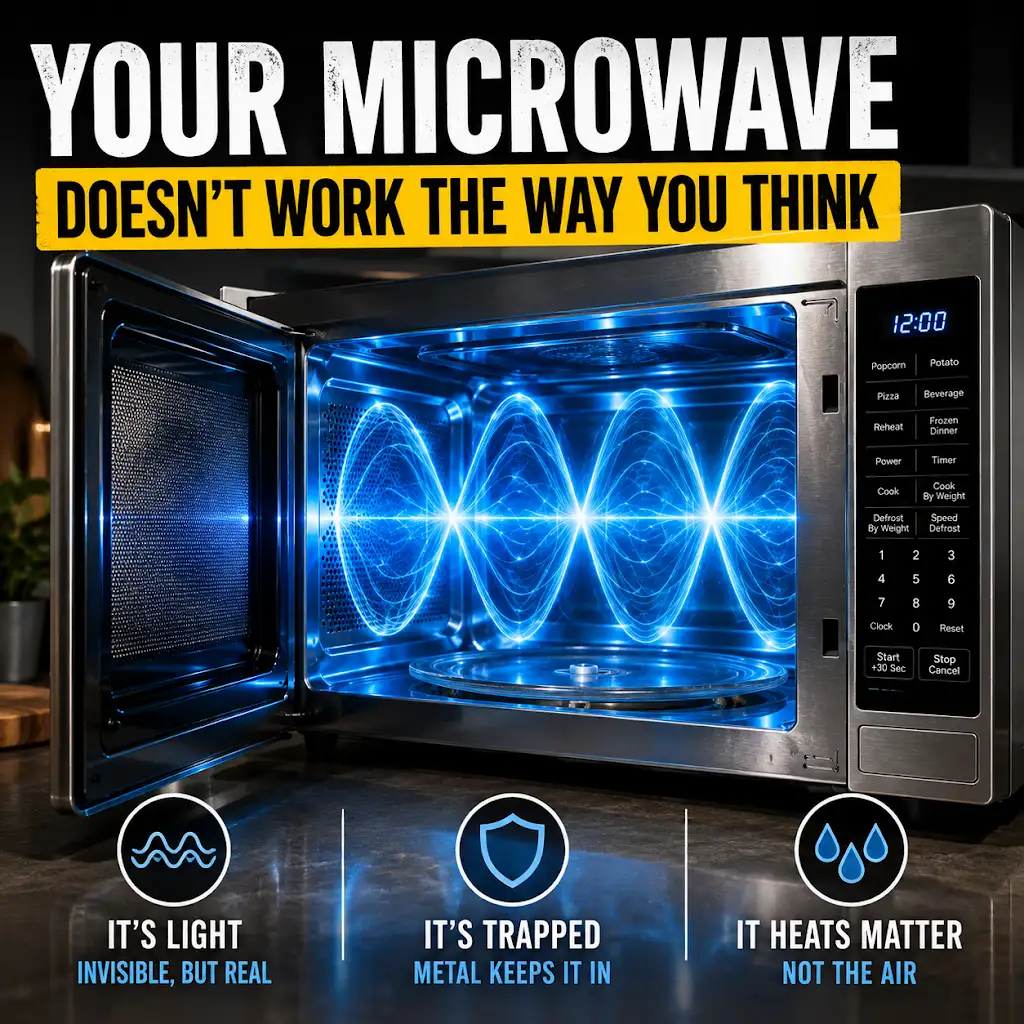
Microwave ovens generate electromagnetic waves at a specific frequency (typically 2.45 GHz). Water molecules are polar, meaning they have a slightly positive charge on one end and a slightly negative charge on the other. When these polar molecules are exposed to the rapidly oscillating electric field of microwaves, they try to align themselves with the field. As the field flips billions of times per second, the water molecules are essentially twisted and turned at an incredible rate. This constant jiggling and friction between molecules generates heat, cooking your food from the inside out.
Penetration and Uniformity
Microwaves penetrate food to a certain depth, usually a few centimeters. This penetration allows for relatively rapid and uniform heating compared to conventional ovens, which rely on conduction and convection from the outside in. However, it’s important to note that thicker or denser foods might still cook unevenly, leading to hot and cold spots.
Communication and Data Transmission
Beyond the kitchen, microwaves are indispensable for modern communication. Their ability to carry large amounts of data efficiently makes them ideal for various transmission methods.
Satellite Communication
Satellites orbit the Earth, acting as relays for communication signals. Microwaves are used to transmit signals from ground stations to satellites and then back down to other ground stations. This is how satellite television, GPS, and long-distance telephone calls often function. The relatively narrow beams of microwave radiation can be precisely directed, minimizing interference.
Terrestrial Microwave Links
Point-to-point terrestrial microwave links are a crucial part of our telecommunications infrastructure. These systems use dish antennas to send and receive microwave signals over line-of-sight distances, often between tall towers. They are used for transmitting telephone traffic, internet data, and broadcast television signals, especially in areas where laying fiber optic cable is impractical or too expensive.
Wi-Fi and Mobile Phones
The Wi-Fi signals that connect your devices to the internet and the signals that your mobile phone uses to communicate with cell towers also operate within the microwave frequency range. These technologies have revolutionized how we access information and stay connected, all thanks to the efficient data-carrying capabilities of microwaves.
Radio Waves: The Broadcast Backbone of Information
Radio waves are the longest and lowest-frequency members of the electromagnetic spectrum. Despite their lower energy compared to microwaves, they are fundamental to a vast array of technologies that have shaped our modern world, from broadcasting entertainment to powering critical navigation systems.
Broadcasting: From Airwaves to Your Ears
The most familiar application of radio waves is in broadcasting. AM and FM radio stations, along with television broadcasts, all utilize radio waves to transmit audio and visual information over considerable distances.
AM and FM Broadcasting
Amplitude Modulation (AM) and Frequency Modulation (FM) are two primary methods used for broadcasting.
Amplitude Modulation (AM)
In AM radio, the amplitude (the strength or intensity) of the radio wave is varied to encode the audio signal. AM waves can travel long distances, especially at night, by bouncing off the ionosphere. However, they are more susceptible to interference from electrical noise.
Frequency Modulation (FM)
In FM radio, the frequency of the radio wave is varied to encode the audio signal. FM broadcasts generally have higher fidelity and are less prone to static and interference than AM broadcasts, making them ideal for music. FM waves typically travel in straight lines and are limited by the curvature of the Earth.
Television Broadcasting
Similar to radio, television broadcasting uses radio waves to transmit both audio and video signals. Older analog television broadcasts relied on amplitude modulation for video and frequency modulation for audio. Modern digital television also uses radio waves, but with more complex encoding techniques.
Long-Distance Communication and Navigation
The ability of radio waves to travel long distances, especially at lower frequencies, makes them invaluable for various communication and navigation purposes.
Amateur Radio (Ham Radio)
Amateur radio operators use a wide range of radio frequencies to communicate with other enthusiasts around the globe. These operators play a vital role in emergency communications and often provide essential services during natural disasters when traditional communication infrastructure fails.
Emergency Services and Public Safety
Police, fire departments, and ambulance services rely heavily on radio waves for communication. Dedicated radio frequencies allow these essential services to coordinate their efforts and respond quickly to emergencies.
Navigation Systems (e.g., GPS)
While GPS satellites primarily use microwave frequencies for their primary signals, the underlying principles of radio wave propagation are crucial. Radio waves are also used in older navigation systems like LORAN (Long Range Navigation), which utilized low-frequency radio waves.
Scientific and Industrial Applications
Radio waves aren’t just for entertainment and communication; they also play a significant role in scientific research and various industrial processes.
Radio Astronomy
Radio telescopes are used to detect radio waves emitted by celestial objects like stars, galaxies, and quasars. This allows astronomers to study the universe in ways that are not possible with visible light, revealing phenomena such as the cosmic microwave background radiation, a relic of the Big Bang.
Radar Systems
Radar (Radio Detection and Ranging) systems use radio waves to detect objects and determine their distance, speed, and direction. This technology is widely used in aviation, meteorology (weather forecasting), maritime navigation, and military applications.
The Interaction of Microwaves and Radio Waves with Matter
The way these electromagnetic waves interact with different materials is the key to understanding their applications and potential effects. As non-ionizing radiation, their primary impact is through energy transfer.
Absorption and Reflection: The Fundamental Interactions
When microwaves or radio waves encounter matter, they can be absorbed, reflected, or transmitted. The outcome depends on the properties of the material and the frequency of the radiation.
Absorption: Energy Transfer and Heating
As discussed with microwave ovens, absorption is the process where the energy of the electromagnetic wave is taken up by the material. This energy often manifests as increased molecular motion, leading to heating. Materials with high water content, like food, are excellent absorbers of microwaves. Many plastics and ceramics are largely transparent to microwaves, allowing them to pass through.
Reflection: Bouncing Off Surfaces
Certain materials, particularly good conductors of electricity like metals, are highly reflective of microwaves and radio waves. This is why microwave ovens have metal interiors and why radar dishes are made of metal. Reflection can also occur at boundaries between different materials, such as the surface of water or the ionosphere.
Transmission: Passing Through
Some materials are transparent to certain frequencies of electromagnetic radiation, meaning the waves can pass through them with little interaction. Glass, for example, is largely transparent to visible light but can be somewhat reflective or absorbent to microwaves. Air is generally transparent to both radio waves and microwaves, allowing them to travel freely.
Dielectric Properties: A Key to Material Behavior
The dielectric properties of a material are crucial in determining how it interacts with electromagnetic fields, especially at microwave frequencies.
Dielectric Constant and Loss Tangent
The dielectric constant (often denoted by $\epsilon_r$) measures a material’s ability to store electrical energy when placed in an electric field. Materials with high dielectric constants, like water, tend to interact strongly with microwaves. The loss tangent (often denoted by $\delta$) quantifies how much energy is lost as heat due to dielectric polarization within the material. Materials with a high loss tangent are good absorbers of microwave energy.
The Impact on Biological Tissues
Understanding how these waves affect living organisms is of paramount importance. As non-ionizing radiation, neither microwaves nor radio waves have been shown to cause the type of DNA damage associated with ionizing radiation.
Thermal Effects: The Primary Concern
The primary biological effect of exposure to high levels of microwaves and radio waves is thermal. When biological tissues absorb this energy, it can lead to an increase in temperature. This is the principle behind microwave cooking. At very high intensities, this heating can cause burns and tissue damage.
Non-Thermal Effects: A Subject of Ongoing Research
While thermal effects are well-understood and accounted for in safety guidelines, there has been ongoing research into potential non-thermal effects of radiofrequency and microwave radiation. These studies investigate whether lower levels of exposure, below those that cause significant heating, could have other biological impacts. However, the scientific consensus, as reflected by major health organizations, is that there is no established evidence of adverse health effects from exposure to radiofrequency and microwave radiation at levels below international safety guidelines. These guidelines are designed to protect against known thermal effects.
Understanding the differences between microwave radiation and radio waves is essential for grasping how various technologies operate. Both forms of electromagnetic radiation play crucial roles in communication and heating, yet they differ significantly in their wavelengths and applications. For a deeper exploration of this topic, you can read more in the article found here, which provides insights into the characteristics and uses of these two types of waves.
Safety Considerations and Regulations
| Aspect | Microwave Radiation | Radio Waves |
|---|---|---|
| Frequency | Higher frequency (300 MHz – 300 GHz) | Lower frequency (30 kHz – 300 GHz) |
| Usage | Used in microwave ovens, wireless communication, and radar | Utilized in broadcasting, communication, and navigation systems |
| Penetration | Can penetrate through materials like glass, plastic, and ceramics | Can penetrate through walls and buildings |
| Health Concerns | Exposure to high levels can cause tissue heating and potential health risks | Considered generally safe for human exposure |
Given the widespread use of microwave and radio wave technologies, understanding safety considerations and the regulations in place is essential for public health and well-being.
Exposure Limits and Guidelines
International and national bodies establish guidelines and limits for human exposure to radiofrequency and microwave radiation to ensure safety. These limits are based on extensive scientific research and are designed to prevent adverse health effects, primarily thermal effects.
International Commission on Non-Ionizing Radiation Protection (ICNIRP)
ICNIRP is an independent, international scientific organization that provides guidance on the health and environmental effects of non-ionizing radiation. Their guidelines are widely adopted by national regulatory bodies.
Federal Communications Commission (FCC) in the US
In the United States, the Federal Communications Commission (FCC) sets regulations for radiofrequency exposure from devices that emit radio waves, including cell phones and Wi-Fi routers. These regulations are based on guidelines from organizations like the National Council on Radiation Protection and Measurements (NCRP).
How Devices are Tested and Regulated
Devices that emit radiofrequency and microwave radiation undergo rigorous testing to ensure they comply with established safety standards.
Specific Absorption Rate (SAR)
One common metric used to assess radiofrequency exposure from personal devices, particularly mobile phones, is the Specific Absorption Rate (SAR). SAR measures the rate at which energy is absorbed by the body when exposed to radiofrequency fields. Regulatory bodies set maximum allowable SAR values for different types of devices.
Compliance Testing
Manufacturers are required to test their devices to ensure they meet SAR limits and other relevant exposure guidelines. This testing is usually conducted by independent laboratories. Devices that pass these tests are then approved for sale and use.
Responsible Use of Technology
While regulations are in place to ensure public safety, responsible use of technology also plays a role in minimizing potential exposure.
Device Placement and Usage
For devices like Wi-Fi routers, placement in a central location can ensure better signal strength, potentially allowing you to use lower power settings or be further away from the device. When using mobile phones, opting for hands-free devices or speakerphone can increase the distance between the phone and your head, reducing exposure.
Understanding Your Devices
Becoming familiar with the user manuals of your electronic devices can provide valuable information about their operation and any specific safety recommendations. Many manufacturers also provide information on their websites regarding SAR values and compliance.
The Future of Microwave and Radio Wave Technologies
The evolution of microwave and radio wave technologies is a continuous journey, driven by innovation and the ever-increasing demand for faster, more efficient, and more versatile communication and applications.
5G and Beyond: The Next Generation of Connectivity
The rollout of 5G wireless technology represents a significant advancement in radio wave and microwave applications. 5G utilizes a wider range of frequencies, including higher millimeter-wave bands, to achieve significantly faster data speeds and lower latency.
Millimeter Waves (mmWave)
Millimeter waves are a portion of the microwave spectrum with very short wavelengths (1 to 10 millimeters) and very high frequencies (30 to 300 GHz). These frequencies offer enormous bandwidth, enabling the high speeds promised by 5G. However, mmWaves have a shorter range and are more easily blocked by obstacles, requiring a denser network of base stations.
Increased Capacity and Speed
The ability to utilize these new frequency bands allows 5G networks to handle a vastly greater number of connected devices and significantly increase data transfer rates, impacting everything from mobile internet to industrial automation.
Advancements in Microwave Applications
Beyond communication, microwaves continue to find new and innovative applications in various fields.
Industrial Heating and Processing
Microwave technology is increasingly being used for more efficient and precise industrial heating processes, such as drying, sterilization, and curing of materials. This can lead to reduced energy consumption and improved product quality.
Medical Applications
Microwave technology is being explored and used in medical treatments, such as hyperthermia therapy for cancer treatment, where targeted heating can help destroy cancer cells. It’s also being researched for non-invasive medical imaging techniques.
The Evolving Landscape of Radio Wave Use
Radio waves, with their established infrastructure and long-range capabilities, will continue to be a cornerstone of our connected world.
Enhanced Broadband Access
As demand for data grows, advancements in radio wave technologies will continue to focus on improving broadband access, especially in rural or underserved areas where traditional wired infrastructure may be limited.
Internet of Things (IoT)
The burgeoning Internet of Things (IoT) relies heavily on wireless communication. Radio waves, with their diverse frequency bands and power efficiency, will play a crucial role in connecting billions of devices, from smart home appliances to industrial sensors.
The Continued Importance of Scientific Research
As we push the boundaries of what’s possible with microwaves and radio waves, ongoing scientific research remains vital. This research will not only drive technological innovation but also ensure our continued understanding of their interactions with the environment and human health, paving the way for a safe and beneficial future.
Your Microwave Doesn’t Work the Way You Think
FAQs
What is the difference between microwave radiation and radio waves?
Microwave radiation and radio waves are both forms of electromagnetic radiation, but they differ in their frequency and wavelength. Microwave radiation has a higher frequency and shorter wavelength compared to radio waves.
How are microwave radiation and radio waves used in everyday life?
Microwave radiation is commonly used in microwave ovens for cooking and heating food, as well as in communication devices such as cell phones and Wi-Fi routers. Radio waves are used for broadcasting radio and television signals, as well as in communication technologies like AM and FM radio, and Bluetooth.
What are the potential health risks associated with microwave radiation and radio waves?
Exposure to high levels of microwave radiation can cause tissue heating and burns, while long-term exposure to radio waves has been linked to potential health effects such as cancer and other biological impacts. However, the health risks are generally considered to be low for both microwave radiation and radio waves when used within safety guidelines.
How do microwave radiation and radio waves differ in terms of their sources?
Microwave radiation is often produced by man-made devices such as microwave ovens and communication technologies, while radio waves can be produced by both natural sources (such as lightning) and man-made devices (such as radio transmitters and cell phones).
What are the similarities between microwave radiation and radio waves?
Both microwave radiation and radio waves are forms of electromagnetic radiation, and they both travel at the speed of light. They are also used for various communication and technology applications, and both are regulated for safety by government agencies.