You might be a whiz in the kitchen, expertly navigating the differences between sautéing and simmering, but when it comes to the invisible forces heating your food – microwaves and infrared radiation – the lines can get a little blurry. You’ve likely stood before your oven, marveling at the speedy transformation of frozen pizza into a cheesy delight via microwave, or perhaps you’ve felt the comforting warmth of an infrared heater on a chilly evening. While both technologies involve waves of energy, their fundamental nature, how they interact with matter, and their resulting applications are distinct. Understanding these differences isn’t just for the scientifically curious; it can lead you to make more informed choices, whether you’re selecting an appliance, appreciating the science behind your comfort, or even considering their impact on the environment.
The Electromagnetic Spectrum: Where They Fit
To truly grasp the contrast between microwaves and infrared radiation, you need to understand their place within the vast and fascinating electromagnetic spectrum. Imagine a rainbow, but extend it far beyond what your eyes can perceive, encompassing a spectrum of energy waves. This spectrum is ordered by wavelength and frequency, with longer wavelengths and lower frequencies at one end, and shorter wavelengths and higher frequencies at the other.
Wavelength and Frequency: The Core Distinction
At the heart of the difference lies their position on this spectrum. Microwaves and infrared radiation are both forms of electromagnetic radiation, meaning they travel at the speed of light and don’t require a medium to propagate. However, they occupy different segments.
Microwaves: Shorter and Higher Frequency than Radio Waves
Microwaves reside in a frequency range typically between 300 megahertz (MHz) and 300 gigahertz (GHz). This translates to wavelengths ranging from about one meter down to one millimeter. Think of them as being “higher” up the spectrum than radio waves, which have much longer wavelengths. This higher frequency means microwaves carry more energy per photon than radio waves, but less than visible light or X-rays.
Infrared Radiation: Longer and Lower Frequency than Visible Light
Infrared (IR) radiation, on the other hand, falls in the frequency range from about 300 GHz to 400 terahertz (THz). This corresponds to wavelengths from one millimeter down to about 700 nanometers (nm). This places infrared radiation just below visible light on the spectrum. You can think of it as the “heat you can’t see.” When objects absorb energy and then re-emit it as heat, they are often emitting infrared radiation.
Microwaves and infrared radiation are both forms of electromagnetic radiation, but they differ significantly in their wavelengths and applications. While microwaves are commonly used in cooking and communication technologies, infrared radiation is often associated with heat and thermal imaging. For a deeper understanding of these differences and their practical implications, you can read a related article on this topic at Freaky Science.
Interaction with Matter: How They Heat Your Food (and You)
The way these electromagnetic waves interact with the molecules in substances is the key to their distinct heating mechanisms and applications. This is where the practical differences become most apparent.
Microwaves: The Dielectric Heating Phenomenon
The magic of microwave cooking lies in a phenomenon called dielectric heating. This process specifically targets certain molecules within food, primarily water, fat, and sugar.
The Role of Water Molecules
Water molecules are polar, meaning they have a slight positive charge at one end and a slight negative charge at the other. When microwaves enter the food, their oscillating electromagnetic field causes these polar water molecules to rapidly flip back and forth, trying to align themselves with the field. This rapid rotation and collision of water molecules generates friction, and it’s this friction that produces heat. This is why foods with high water content, like vegetables and meats, heat up effectively in a microwave.
Selective Heating and Penetration
Microwaves penetrate food to a certain depth, typically a few centimeters. This means that while the outer layers heat up quickly, the heat is then conducted inward. This selective heating of water molecules is what makes microwave cooking so fast. However, it also explains why some foods can develop unevenly heated spots if the water content is not distributed uniformly. Dry or dense foods, with less water, tend to heat less effectively or require longer cooking times.
Infrared Radiation: Direct Energy Transfer and Absorption
Infrared radiation heats objects through direct absorption. Unlike microwaves, which excite specific molecules, infrared radiation’s energy is absorbed by all molecules in its path, causing them to vibrate more intensely and thus increase in temperature.
Absorption and Re-emission of Heat
When an infrared emitter, like the heating element in your oven or an infrared lamp, produces radiation, these waves travel outwards and strike objects. The molecules in these objects absorb the infrared energy, which increases their kinetic energy – their internal vibration. This increased vibration is perceived as heat. This is why you can feel the warmth radiating from a fireplace even before the air around you has significantly heated up.
Surface Heating and Penetration
Infrared radiation primarily heats the surface of an object. While some infrared wavelengths can penetrate slightly, the majority of the energy is absorbed at the surface. This makes infrared heating excellent for browning and crisping food, as it directly heats the surface layers. In industrial applications, this focused surface heating is crucial for processes like curing paints or drying materials.
Applications: From Kitchens to Comfort
The distinct ways microwaves and infrared radiation interact with matter have led to a diverse range of applications, impacting everything from how you prepare your meals to how you stay warm.
Microwave Applications: Speed and Convenience
Microwave ovens are the most recognizable application of microwave radiation in your daily life, but their uses extend beyond the kitchen.
Food Preparation and Reheating
Your trusty microwave oven is a prime example. Its ability to rapidly heat food by exciting water molecules makes it ideal for reheating leftovers, defrosting frozen items, and cooking certain dishes quickly. The convenience and speed are undeniable.
Industrial and Scientific Uses
Beyond the home, microwaves are used in various industrial processes, such as drying lumber, curing rubber, and even in telecommunications as a way to transmit information over long distances. In scientific research, microwave spectroscopy is a technique used to study the molecular structure of substances.
Infrared Applications: Warmth and Transformation
Infrared radiation’s ability to transfer heat directly and its focused energy have carved out unique niches.
Home Heating and Comfort
Infrared heaters are becoming increasingly popular for both indoor and outdoor spaces. They work by directly warming people and objects in their path, rather than heating the air, which can be more energy-efficient in drafty environments or when spot heating is desired. Think of patio heaters or electric fireplaces.
Cooking and Browning
Many modern ovens utilize infrared broilers or elements to achieve superior browning and crisping. The intense infrared heat sears the surface of food, creating that desirable texture and flavor. Infrared grills also leverage this technology for faster, more even cooking.
Medical and Scientific Uses
In the medical field, infrared therapy is used to promote healing and reduce pain by increasing blood flow to tissues. Thermography, an imaging technique that detects infrared radiation emitted by the body, can be used to identify areas of inflammation or disease. Scientists also use infrared spectroscopy to identify and analyze chemicals.
Safety Considerations: What You Need to Know
While both microwave and infrared radiation are forms of energy, and generally safe when used as intended, understanding their potential effects is important.
Microwave Radiation: Containment and Shielding
Microwave ovens are designed with safety in mind, incorporating features to prevent leakage.
Leakage and Shielding
Microwave ovens are enclosed in metal casings and have mesh screens in the doors to contain the radiation. The metal reflects microwaves, preventing them from escaping. Modern ovens are rigorously tested to ensure they meet safety standards for leakage. However, it’s always advisable to ensure your microwave door is properly sealed and free from damage.
Biological Effects of High Exposure
While the low-level exposure from a properly functioning microwave is considered safe, high levels of microwave radiation can cause tissue heating and potential burns. This is why it’s crucial to use only microwaves designed for food preparation and to follow manufacturer instructions.
Infrared Radiation: Burns and Eye Safety
The primary concern with infrared radiation is its potential to cause burns.
Thermal Burns
Because infrared radiation directly heats objects, prolonged or intense exposure can lead to thermal burns. This is especially true for high-powered industrial infrared emitters. You can experience a burn if you touch a hot infrared heating element or if you’re exposed to a very intense source for an extended period.
Eye Safety
Certain wavelengths of infrared radiation can be harmful to the eyes, potentially causing cataracts with prolonged exposure to intense sources. This is why protective eyewear is recommended in industrial settings where high-powered infrared equipment is used. For typical home use, the risk is minimal.
When exploring the distinctions between microwaves and infrared radiation, it’s fascinating to consider how both forms of electromagnetic radiation play unique roles in our daily lives. For a deeper understanding of these differences, you can refer to a related article that delves into the science behind these waves and their applications. This informative piece can be found at Freaky Science, where you will discover more about how these technologies impact everything from cooking to communication.
Environmental Impact: Energy Efficiency and Beyond
When considering the broader implications of these technologies, their energy efficiency and environmental footprint come into play.
Microwave Efficiency: Targeted Heating
Microwaves excel at targeted heating, which can translate to energy savings in certain scenarios.
Rapid Heating and Reduced Cooking Times
The speed of microwave cooking often means less overall energy is consumed compared to conventional ovens for reheating or cooking smaller portions. Because they heat water molecules directly, they can be more efficient than heating an entire oven cavity.
Standby Power and Usage Patterns
Like any electronic appliance, microwaves consume some power even when not in active use (standby power). Optimizing usage by cooking appropriate items and avoiding unnecessary reheating can further enhance energy efficiency.
Infrared Efficiency: Direct Warming and Applications
Infrared radiation’s efficiency varies depending on the application.
Direct Heating Benefits
In the case of infrared heaters, their ability to directly warm people and objects can be more energy-efficient than heating the entire air volume of a room, especially in situations where only localized warmth is needed or in poorly insulated spaces.
Industrial Energy Consumption
In industrial applications, the energy efficiency of infrared heating depends on the specific process and the design of the equipment. While it can offer advantages for certain tasks like drying and curing, the overall energy consumption needs to be assessed within the context of the industrial operation.
By delving into the nuances of microwaves and infrared radiation, you’ve gained a clearer understanding of these invisible forces. You now appreciate that while both are forms of electromagnetic energy, their unique wavelengths, frequencies, and interactions with matter lead to distinct applications and considerations. From the rapid culinary creations in your kitchen to the comforting warmth on your skin, these waves play an integral role in your daily life. Armed with this knowledge, you can navigate the world of heating technologies with greater confidence and insight.
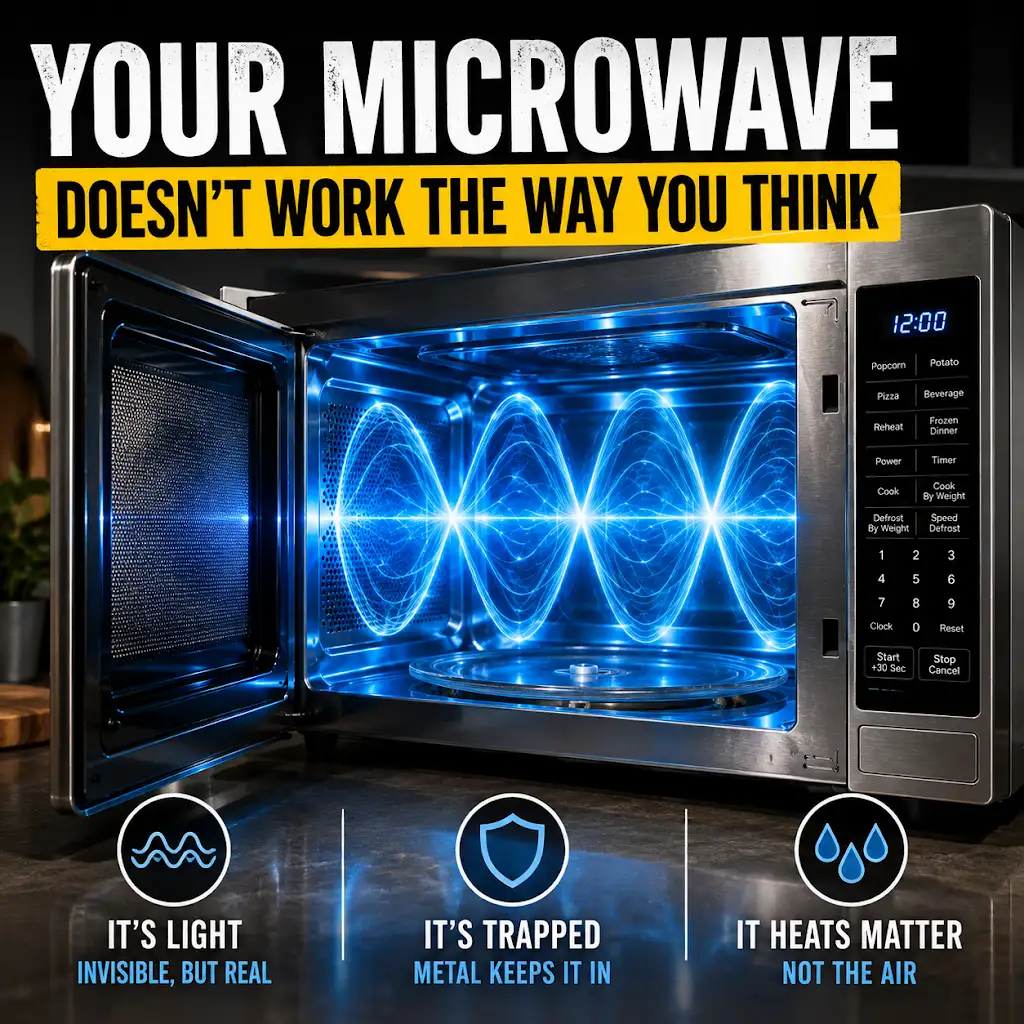
Your Microwave Doesn’t Work the Way You Think
FAQs
What is the difference between microwaves and infrared radiation?
Microwaves and infrared radiation are both forms of electromagnetic radiation, but they have different wavelengths and properties. Microwaves have longer wavelengths and lower frequencies than infrared radiation. Infrared radiation is closer to the visible light spectrum and has shorter wavelengths and higher frequencies.
How are microwaves and infrared radiation used in everyday life?
Microwaves are commonly used in microwave ovens for cooking and heating food. They are also used in communication technologies such as cell phones and Wi-Fi. Infrared radiation is used in remote controls, thermal imaging cameras, and in heating applications such as infrared saunas and heat lamps.
What are the health effects of exposure to microwaves and infrared radiation?
Exposure to high levels of microwaves can cause tissue heating and burns, so it is important to follow safety guidelines when using microwave ovens and other microwave devices. Infrared radiation is generally considered safe, but prolonged exposure to high levels of infrared radiation can cause skin burns and eye damage.
How do microwaves and infrared radiation interact with matter?
Microwaves are absorbed by water, fats, and sugars, which is why they are effective for heating and cooking food. Infrared radiation is absorbed and emitted by molecules, causing them to vibrate and produce heat. Both microwaves and infrared radiation can penetrate certain materials, but their interactions with matter differ based on their wavelengths and frequencies.
What are some examples of natural sources of microwaves and infrared radiation?
Natural sources of microwaves include cosmic microwave background radiation, which is leftover radiation from the Big Bang, and thermal radiation from astronomical objects such as stars and galaxies. Natural sources of infrared radiation include the heat emitted by the Earth’s surface, the Sun, and other celestial bodies.