You might not realize it, but the technology that keeps you connected to the internet and the appliance that heats your leftovers are more closely related than you think. It’s a surprising connection that delves into the fundamental physics of how we communicate and cook. You’re likely familiar with both: the omnipresent Wi-Fi signal that blankets your home and the humming microwave oven in your kitchen. While their purposes seem vastly different – one for information, the other for food – the underlying principle that powers them is the same: electromagnetic radiation.
To truly grasp the connection between your Wi-Fi router and your microwave, you need to understand the concept of electromagnetic radiation. Think of it as a spectrum of invisible energy waves that travel at the speed of light. This spectrum encompasses everything from the low-frequency radio waves used for broadcasting to the high-frequency gamma rays emitted by radioactive materials. The key difference between these various forms of radiation lies in their wavelength and frequency.
Wavelength and Frequency: The Fundamental Duo
Imagine waves on the surface of water. Wavelength refers to the distance between two consecutive crests (or troughs) of the wave. Frequency, on the other hand, measures how many of these waves pass a given point in one second. These two properties are inversely related: the shorter the wavelength, the higher the frequency, and vice-versa. This relationship is defined by the equation: speed of light = wavelength × frequency.
The Electromagnetic Spectrum: A Broad Landscape
You’ve encountered parts of the electromagnetic spectrum in your daily life, perhaps without realizing it.
Radio Waves: The Broadcasters’ Domain
These are at the lower frequency, longer wavelength end of the spectrum. Radio waves are used for everything from AM/FM radio to television broadcasts and, crucially for this discussion, the frequencies that Wi-Fi utilizes. Their long wavelengths allow them to travel great distances and penetrate obstacles, which is why you can often pick up a radio signal from miles away.
Microwaves: The Sweet Spot for Heating and Communication
This is where things get interesting. Microwaves occupy a specific band within the electromagnetic spectrum, falling between radio waves and infrared radiation. Their wavelengths are shorter than radio waves but longer than infrared. This particular range of wavelengths is remarkably useful for both heating food and transmitting data.
Infrared Radiation: The Warmth We Feel
You’ve experienced infrared radiation as heat. When you stand near a fire or under a heat lamp, you’re feeling infrared waves. They are also used in thermal imaging and remote controls.
Visible Light: The Spectrum We See
This is the narrow band of the electromagnetic spectrum that our eyes are sensitive to, ranging from red to violet.
Ultraviolet (UV) Radiation: Beyond the Visible
UV radiation, from the sun for example, can cause sunburn and is used in tanning beds and sterilization.
X-rays and Gamma Rays: High Energy, High Impact
These are at the extreme high-frequency, short-wavelength end of the spectrum. They possess much higher energy and can penetrate solid objects, which is why they are used in medical imaging and, unfortunately, can be harmful.
WiFi and microwaves are both forms of electromagnetic radiation, which means they share similar properties and can sometimes interfere with each other. This relationship is explored in detail in the article found at Freaky Science, where the author discusses how the frequency ranges of WiFi signals and microwave ovens overlap, potentially leading to disruptions in wireless connectivity. Understanding this connection can help users optimize their home networks and avoid common pitfalls associated with electronic interference.
Wi-Fi’s Invisible Highways: Transmitting Data with Radio Waves
Your Wi-Fi router doesn’t magically beam information into your devices. Instead, it uses radio waves, a specific portion of the electromagnetic spectrum, to create invisible highways for data. These waves are carefully modulated to carry the digital information that makes up your web pages, emails, videos, and everything else you do online.
The Role of Frequency Bands: Managing the Airwaves
To prevent interference and ensure efficient data transmission, Wi-Fi operates within specific frequency bands. The most common are the 2.4 GHz and 5 GHz bands.
The 2.4 GHz Band: The Long-Haul Traveler
This band has longer wavelengths, which means it can travel further and penetrate obstacles like walls more effectively. This is why your Wi-Fi signal might reach further into your home with the 2.4 GHz band. However, it also means it’s more susceptible to interference from other devices operating in the same frequency range, such as cordless phones and Bluetooth devices.
The 5 GHz Band: The Speedy Commuter
The 5 GHz band offers shorter wavelengths, resulting in higher data transfer speeds. It also experiences less interference because fewer devices operate in this range. However, its shorter wavelengths mean it doesn’t penetrate walls as well, so you’ll generally get a stronger signal when you’re closer to your router.
Modulation and Demodulation: The Language of Data
The digital information – the ones and zeros that make up your data – isn’t directly transmitted as simple on-off pulses. Instead, it’s encoded onto the radio waves through a process called modulation. Your Wi-Fi router modulates the radio waves, essentially altering their properties (like amplitude or frequency) to represent the data. Your device then receives these modulated waves and demodulates them, extracting the original digital information.
Antennas: The Gateways to the Airwaves
Both your Wi-Fi router and your devices have antennas. These are crucial components that convert electrical signals into electromagnetic waves (when transmitting) and electromagnetic waves back into electrical signals (when receiving). The design and placement of these antennas significantly impact the strength and reach of your Wi-Fi signal.
The Heart of the Microwave: Heating Through Molecular Excitation

Now, let’s turn our attention to the microwave oven. Its primary function is to heat food, and it achieves this through a very specific application of electromagnetic radiation – microwaves. The magic happens because microwaves have a particular wavelength that is absorbed efficiently by water molecules, which are abundant in most foods.
Magnetrons: The Microwave Generators
The core component of any microwave oven is the magnetron. This is a vacuum tube that generates high-frequency electromagnetic waves, specifically microwaves. The magnetron converts electrical energy into microwave energy. You can think of it as the engine that powers the heating process.
The Resonance Effect: Why Water Heats Up
The key to microwave heating lies in the resonant frequency of water molecules. Water molecules are polar, meaning they have a slight positive charge on one end and a slight negative charge on the other. When exposed to the oscillating electric field of the microwaves, these polar molecules attempt to align themselves with the field. As the electric field rapidly flips direction (billions of times per second), the water molecules are forced to spin back and forth, vibrating intensely. This molecular friction generates heat, which is then transferred to the surrounding food.
Wavelength Matters: The 2.45 GHz Sweet Spot
Most microwave ovens operate at a frequency of around 2.45 GHz. This specific frequency falls within the microwave portion of the electromagnetic spectrum and is particularly effective at exciting water molecules. This is a critical point of connection with Wi-Fi, as you’ll see shortly.
How Microwaves Cook Food: Beyond Just Water
While water is the primary target, other molecules in food, such as fats and sugars, also absorb microwave energy to some extent, contributing to the overall heating process. However, the efficiency of heating varies depending on the composition of the food. For example, very dry foods will heat much slower than foods with high water content.
The Surprising Overlap: Wi-Fi and Microwaves Sharing a Frequency

Here’s where the “surprising connection” truly reveals itself. Both your Wi-Fi router and your microwave oven, in many cases, operate within the same frequency band: around 2.4 GHz. This is not a coincidence; it’s a matter of electromagnetic physics and practicality.
The 2.4 GHz Band: A Crowded Neighborhood
As mentioned earlier, the 2.4 GHz band is highly desirable for Wi-Fi due to its excellent penetration capabilities and range. It was one of the first bands allocated for wireless communication, and it’s still widely used.
Microwave Oven Design: Efficiency and Cost-Effectiveness
Microwave ovens were developed and standardized to operate at 2.45 GHz because this frequency is highly efficient for heating water. This frequency was readily available and relatively inexpensive to generate with the technology of the time.
The Interference Conundrum: When Your Wi-Fi Drops During Dinner Prep
Because both technologies often occupy this crowded 2.4 GHz spectrum, interference can occur. When you turn on your microwave oven, it emits a powerful burst of microwave radiation. If your Wi-Fi router is also operating on the 2.4 GHz band and is in close proximity, the intense electromagnetic field generated by the microwave can disrupt the weaker Wi-Fi signals. This disruption can manifest as a temporary slowdown or complete loss of your Wi-Fi connection.
Why This Happens: Signal Disruption and Competition
Think of it like trying to have a quiet conversation in a room where someone is blasting loud music. The music (microwaves) overwhelms the quieter conversation (Wi-Fi signals), making it difficult to communicate effectively. The microwave’s powerful radiation can essentially “drown out” or corrupt the data packets being transmitted by your Wi-Fi router.
The Mitigation Strategies: Living in Harmony
Fortunately, engineers have developed strategies to minimize this interference:
Shielding:
Microwave ovens are designed with metal casings and metal mesh screens in the door. This shielding is crucial for containing the microwave radiation within the oven. However, it’s not perfect, and some leakage can occur, especially if the oven is damaged or the door seal is compromised. This leakage, even if small, can still be enough to affect nearby Wi-Fi signals.
Distance:
The simplest solution is often the most effective. Keeping your Wi-Fi router a reasonable distance away from your microwave oven can significantly reduce the chances of interference. The intensity of electromagnetic radiation decreases with the square of the distance, so even moving your router a few feet can make a difference.
Router Placement:
Consider the placement of your router. If you primarily use your devices in a specific area, try to position your router in a way that it’s not directly in the “line of fire” of the microwave when it’s in use.
Using the 5 GHz Band:
If your Wi-Fi router and devices support the 5 GHz band, switching to this less crowded frequency can provide a more stable connection. As discussed, the 5 GHz band is generally less susceptible to interference from microwave ovens. This is a highly recommended solution for many households experiencing this issue.
Router Quality and Antenna Design:
Higher-quality routers with better antenna design and signal processing capabilities may be more resilient to interference. Some routers also have features that allow for better management of the 2.4 GHz band, helping to mitigate interference.
WiFi and microwaves share a fascinating connection, as both technologies utilize electromagnetic waves to transmit information and energy. This relationship is explored in greater detail in a related article that discusses the similarities and differences between these two forms of radiation. If you’re curious about how these waves interact and the implications for everyday technology, you can read more about it in this insightful piece on Freaky Science. Understanding this connection can help demystify the science behind our wireless communications and kitchen appliances.
Beyond Interference: The Broader Implications of Electromagnetic Use
| Aspect | WiFi | Microwaves |
|---|---|---|
| Frequency | 2.4 GHz and 5 GHz | 2.45 GHz |
| Usage | Wireless networking | Cooking and heating food |
| Interference | Potential for interference with other WiFi networks | Can cause interference with WiFi signals |
| Regulation | Regulated by government agencies for safety and interference | Regulated for safety and interference with electronic devices |
The shared frequency between Wi-Fi and microwaves highlights a broader principle: our modern lives are increasingly reliant on the controlled manipulation of the electromagnetic spectrum. This reliance brings both incredible convenience and potential challenges.
The Spectrum Crunch: Demand Outstrips Supply
As more and more devices become wireless, the demand for available frequencies in the electromagnetic spectrum is growing rapidly. This leads to what’s known as a “spectrum crunch,” where various services compete for limited bandwidth. Regulators constantly work to allocate and manage these frequencies to ensure efficient and non-interfering use.
Emerging Technologies and Frequency Allocation
New wireless technologies, from advanced 5G mobile networks to the burgeoning Internet of Things (IoT), require access to specific frequency bands. The allocation of these bands involves complex negotiations and scientific research to determine the most suitable frequencies for different applications.
The Future of Wireless Communication and Heating
The research and development in wireless technology are ongoing. We might see future advancements that utilize different frequency bands for Wi-Fi or develop more efficient and less interfering microwave heating technologies. For instance, some newer microwave ovens are designed to operate on slightly different frequencies or incorporate more advanced shielding techniques.
Electromagnetic Compatibility (EMC): Designing for Coexistence
The concept of Electromagnetic Compatibility (EMC) is crucial in engineering. It’s about designing electronic devices so they can function properly in their electromagnetic environment without causing or being susceptible to undue interference from other devices. This is why manufacturers test their products for EMC compliance.
The Power and Peril of Invisible Forces
Ultimately, your Wi-Fi router and microwave oven serve as tangible examples of how we harness the invisible forces of the electromagnetic spectrum. They enable us to connect with the world and prepare our meals with remarkable ease. Understanding the surprising connection between them isn’t just an academic exercise; it’s about appreciating the intricate physics that underpin our modern conveniences and recognizing the potential for their interactions. By understanding these principles, you can better troubleshoot issues, make informed choices about your technology, and perhaps even marvel a little more at the invisible world around you. So, the next time your Wi-Fi falters as you heat up your popcorn, you’ll have a deeper appreciation for the shared wavelength that’s causing the momentary digital silence.
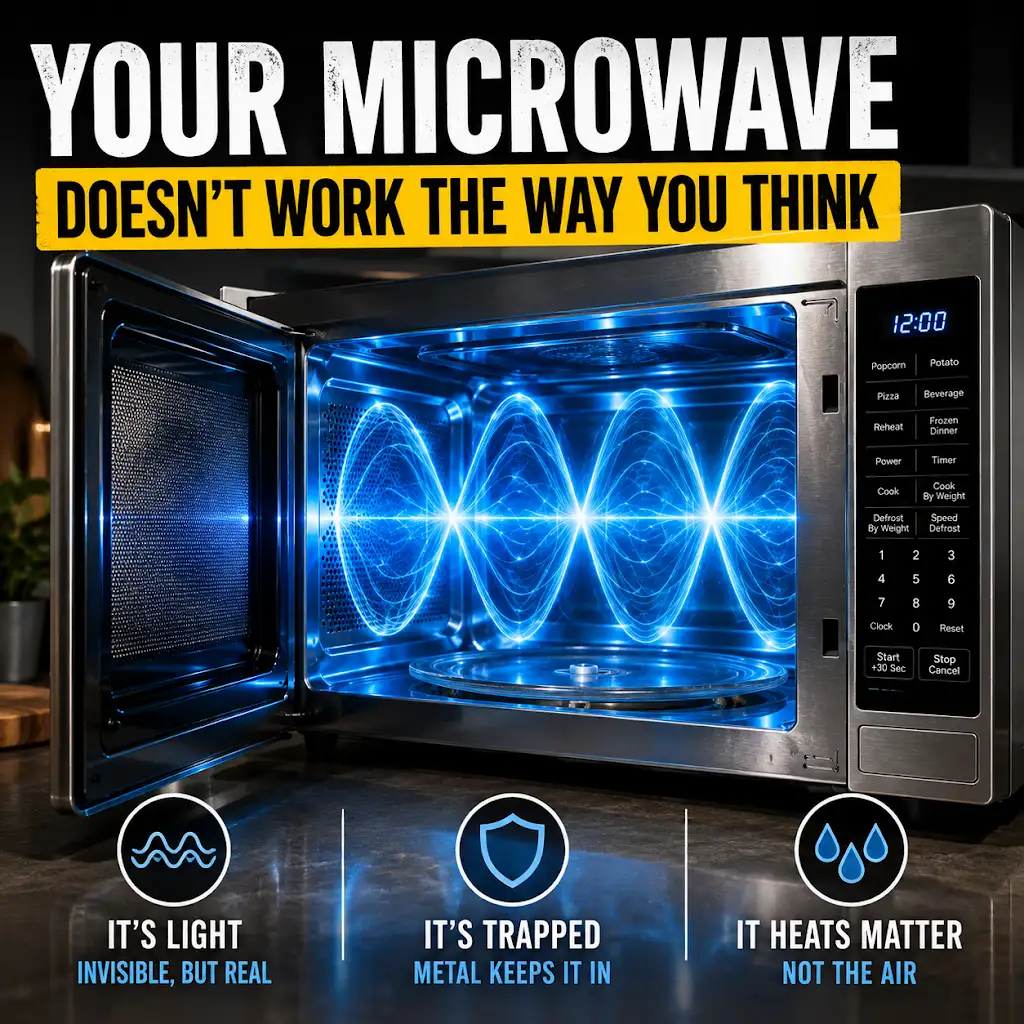
Your Microwave Doesn’t Work the Way You Think
FAQs
1. How are WiFi and microwaves related?
Microwaves and WiFi both operate on the same frequency band, which is the 2.4 GHz band. This means that they both use similar technology to transmit and receive signals.
2. Can microwaves interfere with WiFi signals?
Yes, microwaves can interfere with WiFi signals because they both operate on the 2.4 GHz frequency band. When a microwave is in use, it can cause temporary disruptions to WiFi signals in close proximity.
3. How does microwave interference affect WiFi performance?
Microwave interference can cause a decrease in WiFi performance, leading to slower internet speeds and potential disconnections. This interference is usually temporary and resolves once the microwave is no longer in use.
4. Are there ways to minimize microwave interference with WiFi?
To minimize microwave interference with WiFi, you can try relocating the WiFi router to a different location, away from the microwave. Additionally, using a WiFi router that operates on the 5 GHz frequency band can reduce interference from microwaves.
5. Can WiFi signals interfere with microwave ovens?
While WiFi signals can potentially interfere with microwave ovens, the impact is minimal. Microwave ovens are designed to contain their own signals, so interference from WiFi is unlikely to significantly affect their performance.