Have you ever wondered what’s happening inside that humming appliance, the microwave oven, as it transforms your cold leftovers into steaming delights? It’s not some kind of culinary magic; it’s a fascinating interplay of physics and chemistry, all powered by a humble yet potent form of electromagnetic radiation. You’ve likely experienced its convenience, but understanding the science behind microwave energy and heat generation unlocks a deeper appreciation for this everyday marvel. This exploration will delve into the very core of how microwaves work, from the generation of the energy itself to the specific ways it interacts with your food to create that satisfying warmth.
Microwave energy is transformed into heat through a process known as dielectric heating, where polar molecules in food absorb microwave radiation and begin to vibrate, generating heat. For a deeper understanding of this phenomenon and its applications, you can explore the article on microwave energy and its effects on food at Freaky Science. This resource provides insights into the science behind microwave cooking and the technology that makes it possible.
The Genesis of Microwave Energy: From Magnetron to Cavity
At the heart of every microwave oven lies a crucial component: the magnetron. This is where the magic, or rather, the science, truly begins. You might not see it, but this vacuum tube is the workhorse responsible for generating the microwave energy that cooks your food. Understanding its function is the first step in demystifying the entire process.
How a Magnetron Creates Microwaves
The magnetron is a marvel of engineering, designed to produce high-frequency electromagnetic waves. It operates by using a combination of a magnetic field and an electric field to accelerate electrons. Imagine a central cathode emitting electrons when heated. These electrons are then bombarded by a powerful magnetic field, causing them to spiral. Simultaneously, an electric field is applied across the anode, which is structured with a series of resonant cavities. As the spiraling electrons pass these cavities, they induce oscillations at a specific microwave frequency.
The Role of Electron Flow
The controlled flow of electrons is paramount. The magnetic field’s strength and direction, along with the electric field’s intensity, dictate the path and speed of the electrons. This intricate dance is what allows the magnetron to generate coherent and powerful microwave radiation.
Resonant Cavities: Amplifying the Waves
The anode of the magnetron isn’t just a simple piece of metal; it’s a carefully designed structure containing multiple resonant cavities. These cavities act like tiny echo chambers for electromagnetic waves. As the electrons interact with the electric field, they create oscillating electromagnetic fields within these cavities. When the frequency of these oscillations matches the natural resonant frequency of the cavities, the waves are amplified, producing the high-power microwave output that is directed towards your food.
The Waveguide: Channeling the Energy
Once generated, the microwave energy needs a pathway to reach the food. This is where the waveguide comes into play. It’s essentially a hollow metal tube that efficiently guides the microwave radiation from the magnetron to the cooking cavity.
Metal as a Conductor
The waveguide is constructed from conductive metal, typically aluminum. This metallic enclosure prevents the microwaves from escaping and ensures they are directed precisely where they need to go. The dimensions of the waveguide are also critical, designed to match the wavelength of the generated microwaves for optimal transmission.
Preventing Leakage and Ensuring Efficiency
The waveguide’s design is crucial for both safety and efficiency. It acts as a barrier, minimizing the loss of microwave energy and preventing it from leaking out of the oven, which could pose a safety hazard. Think of it as a meticulously engineered tunnel for the invisible waves.
The Cooking Cavity: A Reflective Environment
The cooking cavity, the familiar metal box where you place your food, plays a vital role in the heating process. It’s not just an inert container; it’s a carefully designed environment that maximizes the interaction between the microwaves and your food.
Reflective Walls
The interior walls of the cooking cavity are made of metal. This metal acts as a highly efficient reflector of microwave radiation. When the microwaves enter the cavity, they bounce off these walls, creating a complex pattern of wave reflections.
Stirring the Waves
This constant bouncing and reflection is essential for distributing the microwave energy as evenly as possible throughout the cavity. Without this, certain areas of your food would receive much more energy than others, leading to uneven cooking. Some microwaves also incorporate a rotating turntable or a stirrer fan to further enhance this distribution, ensuring more uniform heating.
The Mechanism of Microwave Heating: Molecular Excitation and Friction

Now that you understand how the microwave energy is generated and channeled, let’s delve into the heart of the matter: how this energy actually heats your food. It’s a process that relies on the unique interaction of microwaves with specific molecules within the food itself.
Dielectric Heating: The Primary Mechanism
The dominant mechanism by which microwaves heat food is known as dielectric heating. This process involves the interaction of the oscillating electromagnetic field of the microwaves with polar molecules in the food.
Polar Molecules: The Key Players
Think of molecules like water, fats, and sugars. These molecules have a positive and a negative end, much like tiny magnets. They are called polar molecules because of this uneven distribution of electrical charge. Water, in particular, is abundant in most foods and is highly polar.
The Electric Field’s Influence
When microwaves, which are oscillating electric and magnetic fields, pass through the food, they exert a force on these polar molecules. The oscillating electric field causes the polar molecules to try and align themselves with the rapidly changing field. Imagine trying to quickly turn a compass needle back and forth by constantly shifting the direction of a magnet near it.
Rotational Motion and Friction
This rapid back-and-forth rotation of the polar molecules, as they try to keep up with the oscillating electric field, is the crucial step. As these molecules spin and jostle against their neighbors, they generate friction. This molecular friction is the direct source of the heat you feel radiating from your microwaved food. The faster the molecules rotate, the more friction they create, and the hotter the food becomes.
Other Heating Mechanisms (Less Significant)
While dielectric heating is the primary driver, other mechanisms can contribute to microwave heating, though to a lesser extent.
Ionic Conduction
Some foods contain dissolved salts, which dissociate into ions (charged particles). These ions can also be influenced by the oscillating electric field of the microwaves. They will move back and forth, creating an electric current. This movement of ions also generates friction and contributes to heating, particularly in foods with higher salt content.
Dipolar Polarization and Interfacial Polarization
Beyond the simple rotation of permanent dipoles (like water), microwaves can also cause other forms of polarization. In dipolar polarization, even non-polar molecules can develop temporary dipoles under the influence of the electric field. Interfacial polarization occurs at the boundaries between different materials within the food (e.g., between water and fat). The charge carriers accumulate at these interfaces, creating a dipole moment that then rotates with the field, generating heat.
The Role of Water, Fats, and Sugars: Selective Heating

Not all components of food are heated equally by microwaves. The effectiveness of microwave heating is directly related to the specific molecular properties of the substances present. This is why you might notice certain foods cooking faster or more evenly than others.
Water: The Primary Heat Generator
As mentioned earlier, water is the star of the microwave heating show. Its highly polar nature makes it extremely susceptible to the oscillating electric field of microwaves.
High Dielectric Constant
Water has a high dielectric constant, meaning it can store a significant amount of electrical energy. This property allows it to effectively absorb microwave energy and convert it into heat through molecular rotation.
The Importance of Moisture Content
This is why foods with higher moisture content tend to cook faster and more efficiently in a microwave. Dry foods, on the other hand, will heat up much more slowly and may require additional moisture to cook properly.
Fats and Oils: Contributing to the Cook
Fats and oils are also effective absorbers of microwave energy, though generally less so than water.
Moderate Polarity
Fats and oils exhibit some degree of polarity, allowing them to participate in dielectric heating. Their molecular structure leads to less intense rotational motion compared to water, but they still contribute significantly to the overall heating process.
Unique Textural Changes
The heating of fats and oils also contributes to the unique textural changes observed in microwaved foods, such as the softening and melting of butter or the crisping of certain fried foods.
Sugars and Other Carbohydrates: Variable Absorption
Sugars and other carbohydrates can also absorb microwave energy, but their heating efficiency can vary depending on their chemical structure and their state (e.g., solid or dissolved).
Complex Molecular Structures
Some sugars, like glucose, are polar and will heat effectively. Others, particularly complex carbohydrates, may have varying degrees of polarity and thus varying absorption rates.
Caramelization and Browning
The heating of sugars can also lead to caramelization and browning reactions, which contribute to the flavor and appearance of microwaved foods, although these reactions are often more pronounced with conventional heating methods.
Microwave energy is fascinating as it transforms into heat through a process called dielectric heating, where polar molecules in food absorb microwave radiation and begin to vibrate, generating heat. For a deeper understanding of this phenomenon, you can explore a related article that delves into the science behind microwave cooking and its efficiency. This insightful piece can be found here, offering a comprehensive look at how microwaves interact with various materials and the implications for everyday cooking.
Factors Influencing Microwave Heating Efficiency
| Process | Description |
|---|---|
| Microwave Energy Absorption | When microwaves enter the food, they are absorbed by water, fats, and sugars in the food. |
| Molecular Vibration | The absorbed microwaves cause the molecules in the food to vibrate, generating heat. |
| Frictional Heating | The vibrating molecules create friction, which in turn generates heat throughout the food. |
| Temperature Increase | As the heat accumulates, the temperature of the food increases, cooking it from the inside out. |
Several factors can influence how efficiently and effectively your microwave oven heats your food. Understanding these variables can help you optimize your cooking and achieve better results.
Food Composition and Density
The intrinsic properties of the food itself play a significant role.
Water Content
As we’ve discussed, higher water content leads to more efficient heating.
Fat and Sugar Content
The presence and proportion of fats and sugars also influence how quickly and evenly food heats.
Density and Thickness
Denser and thicker foods will generally take longer to heat through, as the microwaves need to penetrate deeper into the food. Uneven thickness can lead to uneven cooking.
Quantity of Food
The amount of food you place in the microwave directly impacts heating time.
More Food, More Energy Needed
More food requires more microwave energy to reach the desired temperature. Attempting to heat a large quantity of food in a short amount of time will result in unevenly heated portions.
Optimal Load Size
Microwave ovens are designed to operate most efficiently with a certain load size. Overfilling the cavity can reduce efficiency and lead to longer cooking times.
Shape and Arrangement of Food
The geometry of your food can significantly affect how it heats.
Edges vs. Centers
The edges and thinner portions of food tend to heat up faster than the thicker center.
Strategic Placement
Arranging food in a circular pattern on the turntable, with the thicker parts facing outwards, can help promote more even heating. Avoid large, dense clumps.
Microwave Oven Power and Settings
The power output of your microwave and the settings you choose are critical.
Wattage Matters
Higher wattage microwaves deliver more power, leading to faster cooking times.
Power Levels for Control
Most microwaves offer adjustable power levels. Lower power levels are useful for gentle heating, defrosting, or preventing overcooking of delicate items.
Preset Programs
Many ovens have preset cooking programs that attempt to optimize cooking time and power for specific food types.
Safety and Limitations of Microwave Energy
While incredibly useful, it’s important to understand the safety considerations and inherent limitations of microwave energy. Responsible use ensures both effective cooking and your well-being.
Preventing Microwave Leakage
Microwave ovens are designed with safety mechanisms to prevent harmful leakage of radiation.
Metal Enclosures and Seals
The metal cavity of the oven and the door, with its specialized seals, are designed to contain the microwaves. The door also typically has interlock switches that immediately shut off the magnetron when the door is opened.
Regular Inspection
It’s wise to periodically inspect your microwave oven for any signs of damage, particularly to the door seals or the oven cavity, as this could compromise containment.
What NOT to Microwave
Certain materials and food items can be hazardous or simply won’t cook properly in a microwave.
Metal and Foil
Metal objects, including aluminum foil, can reflect microwaves and cause arcing (sparking), which can damage the oven and pose a fire risk.
Certain Plastics
Not all plastics are microwave-safe. Some can melt or leach harmful chemicals into your food. Always check for the microwave-safe symbol.
Whole Eggs and Sealed Containers
Microwaving whole eggs can cause them to explode due to the buildup of steam inside. Similarly, sealed containers can build up pressure and rupture. Always vent or pierce food items.
Uneven Heating and Hot Spots
Despite best efforts, microwaves can sometimes create uneven heating, leading to hot spots.
The Science Behind Hot Spots
This is often due to the wave patterns within the cavity and the varying absorption rates of different food components.
Mitigation Strategies
Using a turntable, stirring food midway through cooking, and allowing for a resting period after cooking can help distribute heat more evenly and mitigate the risk of severe hot spots.
Nutritional Considerations
While microwaves are efficient at heating, the impact on nutrient content is a common concern.
Minimal Nutrient Loss
Generally, microwave cooking, when done correctly, results in minimal nutrient loss compared to other cooking methods. This is because it requires less water and shorter cooking times, which helps preserve water-soluble vitamins.
Overcooking Risks
However, overcooking in any appliance, including a microwave, can lead to nutrient degradation. Following recommended cooking times is crucial.
By understanding the science behind microwave energy and heat generation, you gain a newfound appreciation for the technology that graces your kitchen. From the intricate workings of the magnetron to the molecular ballet within your food, each step is a testament to human ingenuity and the power of physics. So, the next time you press that start button, you’ll know that it’s not just about convenience; it’s about a fascinating journey of energy transformation that brings warmth and flavor to your table.
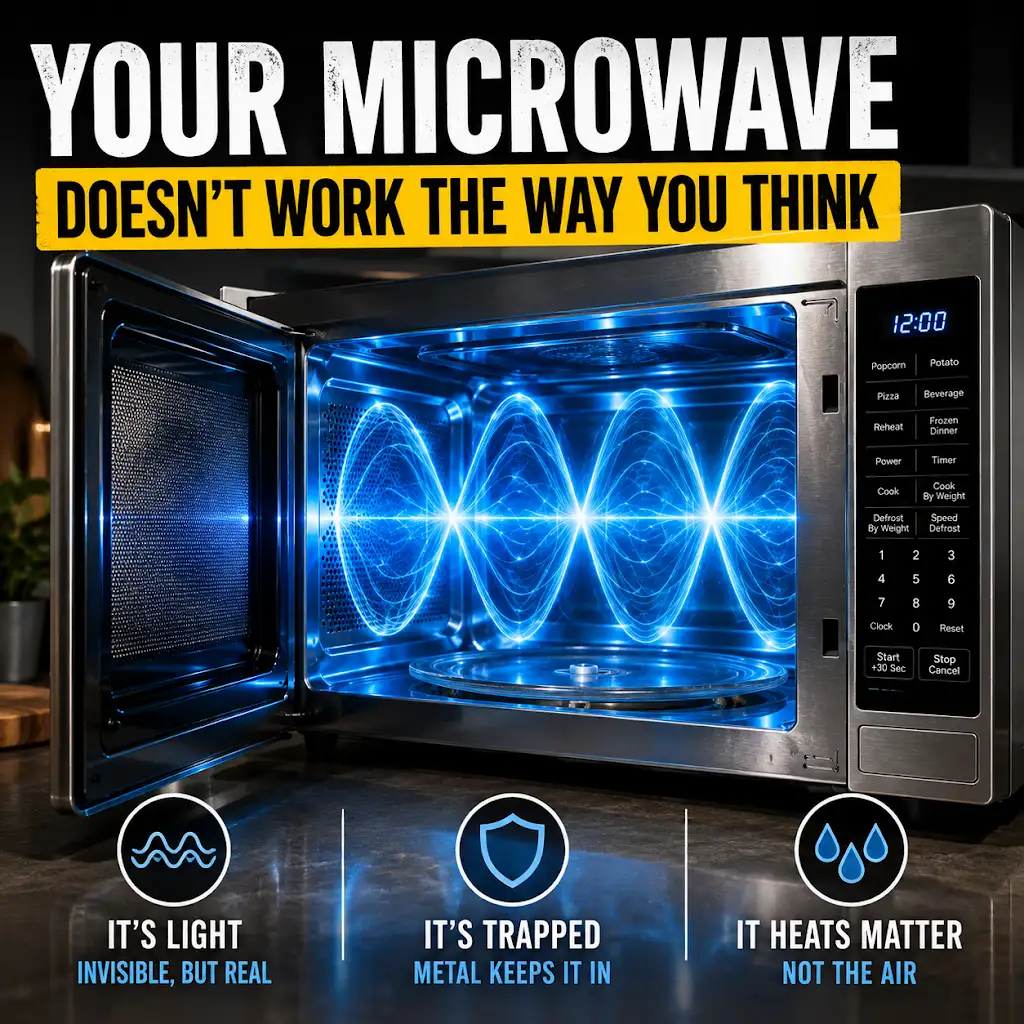
Your Microwave Doesn’t Work the Way You Think
FAQs
What is microwave energy?
Microwave energy is a type of electromagnetic radiation that has a wavelength longer than infrared light but shorter than radio waves. It is commonly used in microwave ovens to heat food.
How does microwave energy heat food?
Microwave energy heats food by causing water molecules within the food to vibrate, creating friction and generating heat. This process is known as dielectric heating.
What happens to the molecules in the food when exposed to microwave energy?
When food is exposed to microwave energy, the water molecules in the food rapidly align themselves with the alternating electric field of the microwaves, causing them to vibrate and generate heat.
Can microwave energy cause any changes in the nutritional content of food?
Microwave heating can cause some loss of nutrients in food, as with any cooking method. However, because it is a quick and efficient method of heating, it can also help to preserve more nutrients compared to other cooking methods.
Is microwave energy safe for heating food?
When used according to manufacturer’s instructions, microwave ovens are considered safe for heating food. However, it is important to use microwave-safe containers and follow recommended cooking times to ensure safety.