You know the drill. You’re starving, short on time, and that frozen meal beckons from the frosty depths of your freezer. You carefully read the instructions, aim for that perfect, evenly heated culinary creation, and then… the dreaded cold center. You poke, you prod, you nuke it again, only to find the edges are scorching while the middle remains stubbornly frigid. It’s a universally frustrating experience, and you’ve likely wondered why this happens. Well, let’s peel back the plastic film and delve into the fascinating science behind those stubbornly cold centers in your frozen microwave meals.
It’s easy to assume that a microwave just zaps food with some kind of invisible heat beam. But the reality is far more nuanced, and understanding these nuances is key to understanding why your meal can be both steaming and ice-cold simultaneously.
How Microwaves Actually Work
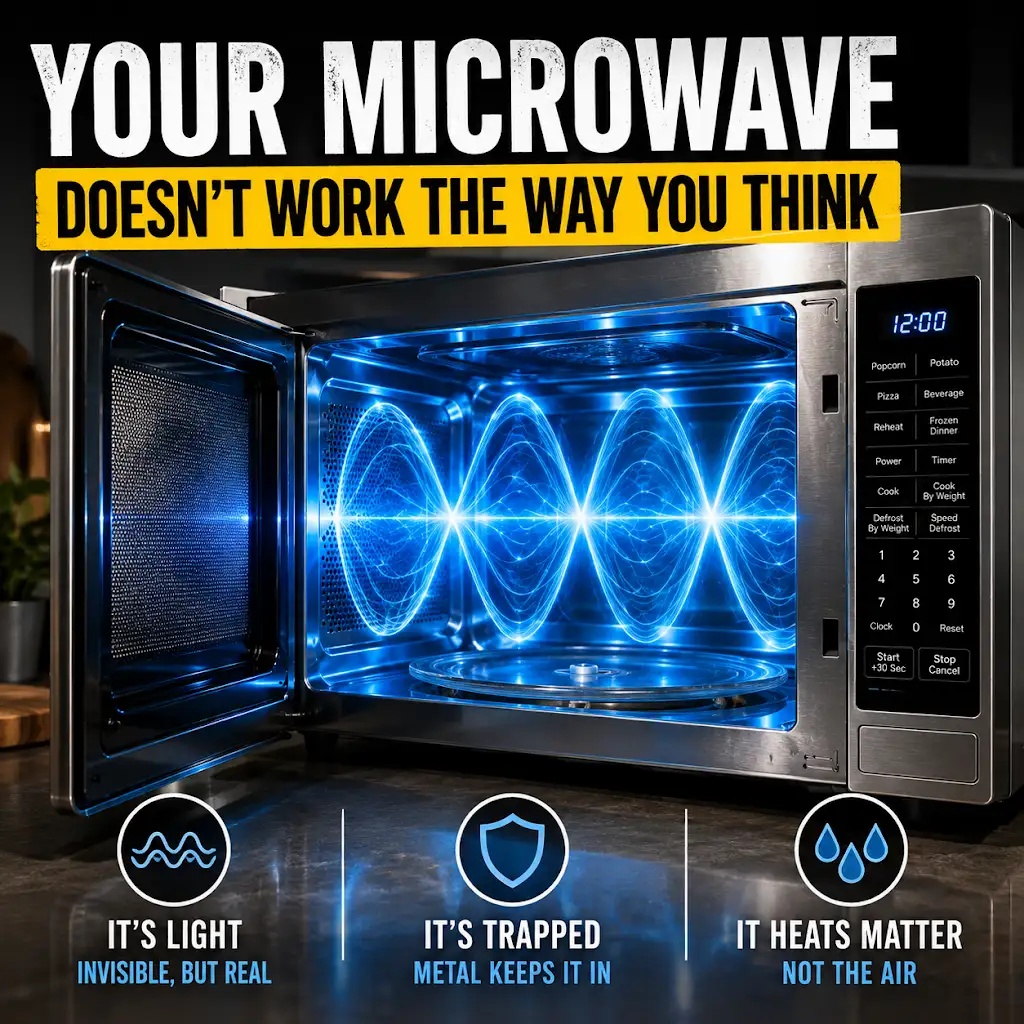
When you press that start button, your microwave oven generates electromagnetic waves, specifically in the microwave frequency range. These waves are not like light; they are much longer and carry less energy individually. However, their power lies in their ability to interact with certain molecules in your food. The primary target for these microwaves are water molecules. Water has a unique property: it’s a polar molecule, meaning it has a slightly positive end and a slightly negative end, like a tiny magnet. When the microwave’s electromagnetic field oscillates, it causes these polar water molecules to try and align themselves with the changing field. This rapid wiggling and tumbling of water molecules generates friction, and it’s this friction that produces heat. It’s essentially kinetic energy being converted into thermal energy.
Dielectric Heating: The Engine of Your Meal
This process is known as dielectric heating. It’s incredibly efficient for foods containing water. However, not all parts of your meal are created equal in terms of water content or how easily microwaves can penetrate them. This is where the complexities begin. Think of it like this: the microwaves are like a frenetic dance caller, and the water molecules are the dancers. The more water molecules there are, the more vigorous the dance, and the hotter that section of food gets.
Penetration Depth: The Invisible Barrier
Microwaves don’t just magically heat everything simultaneously. They have a limited penetration depth. This means they can only effectively heat the food to a certain distance into the product. For a typical microwave oven, this depth is usually around 1 to 1.5 inches. Anything beyond this depth needs to be heated by conduction – the slow transfer of heat from hotter parts of the food to colder parts. This is a crucial factor in why those thicker, denser sections in the middle of your meal often remain cold. The microwaves might be doing their job on the surface, but the heat isn’t effectively reaching the core.
Frozen microwave meals often have cold centers due to uneven heating, which can be influenced by factors such as the meal’s composition, packaging, and microwave wattage. For a deeper understanding of this phenomenon, you can explore the article titled “Why Frozen Microwave Meals Have Cold Centers” available at Freaky Science. This resource delves into the science behind microwave cooking and offers insights into how to achieve more consistent heating for your frozen meals.
The Culinary Conundrum: Food Structure and Composition
It’s not just the physics of the microwave; the very nature of the food you’re trying to heat plays a significant role in the cold center phenomenon. Food isn’t a uniform block of water; it’s a complex matrix of fats, proteins, carbohydrates, and, of course, water.
Water Content: The Primary Driver of Heating
As we discussed, water is the star of the microwave heating show. Meals with a higher overall water content will generally heat more quickly and evenly. However, even within a single meal, the distribution of water can be uneven. For instance, a chunk of chicken might have more inherent water than a dense vegetable like a potato. If that chicken is placed in the center of a potato, the microwaves will preferentially heat the chicken, leaving the potato core relatively untouched.
Density and Thickness: The Physical Obstacles
The density and thickness of different food components are major antagonists to even heating. Denser foods, like a frozen block of lasagna or a thick piece of meat, have more molecules packed into a given volume. This means it takes longer for microwaves to penetrate and for heat to conduct through them. When you have a thicker portion in the center, the outer layers might be getting thoroughly cooked (or even overcooked), but the microwaves are struggling to reach that interior. Imagine trying to dry a very thick, sodden sponge with a fan – the outside will dry, but the center will take ages.
Fat and Protein: The Heat Redirectors and Insulators
Fats and proteins also complicate the picture. Fats tend to absorb microwaves less efficiently than water, meaning they don’t heat up as quickly. Proteins can actually absorb microwave energy and convert it into heat, but their structure can also create barriers to heat penetration. Furthermore, cooked fats can act as a barrier, hindering the conductive transfer of heat from the outer layers to the center. Some argue that proteins can even reflect microwaves away from the center, though this is less pronounced than the effects of density and water content.
The Packaging Problem: More Than Just a Pretty Wrapper

You might think the packaging is just there to keep your meal sealed and presentable. However, the design and material of microwave meal packaging can significantly influence how your food heats.
Material Matters: The Invisible Shield
The materials used in microwave meal packaging are chosen for their ability to withstand freezing and heating. However, some materials are better at allowing microwaves to pass through than others. Plastics, for example, are generally microwave-transparent, meaning the waves can pass through them relatively unimpeded. However, certain types of plastic, or plastics with embedded metallic elements (like susceptors, which we’ll discuss later), can alter how microwaves interact with the food. If a particular part of the packaging is more opaque to microwaves, it can create a shadow, preventing those waves from reaching the food directly beneath it.
Geometric Considerations: The Shape of Things to Come (or Not Come)
The shape of the meal and its container also play a role. A perfectly uniform, thin meal will heat much more evenly than a dish with varying depths and protrusions. Think about a round, shallow meal versus a tall, cylindrical one. Microwaves tend to concentrate in areas of higher curvature and can reflect off surfaces, leading to uneven energy distribution. Manufacturers try to account for this by designing containers that promote more even heating, but it’s a constant battle against the inherent physics.
The Role of Susceptors: Designed for Crisping, Not Always for Evenness
You might have noticed some microwave meals come with a special tray or film that gets noticeably hot. These are called susceptors. They are typically made of a thin layer of metal, often aluminum, embedded in a cardboard or plastic base. Susceptors are designed to absorb microwave energy and convert it into radiant heat, similar to a grill or broiler. This is brilliant for achieving crispy textures on things like pizza crusts or fried chicken. However, their localized heating can sometimes exacerbate the cold center problem. The susceptor heats up intensely in certain areas, while the microwaves might still struggle to penetrate the denser parts of the food, leaving them cold even as the outer layers are crisping up.
The Art of the Cook: Your Role in the Heating Game
While the science of microwaves and food is complex, your actions can significantly impact the outcome. You have more agency than you might think in avoiding that icy core.
Decoding the Instructions: Your Microwave Rosetta Stone
Those seemingly tedious instructions on the back of the box are not merely suggestions; they are carefully crafted guidelines based on the specific meal’s composition and the intended microwave wattage. Manufacturers test their products extensively to determine the optimal cooking time and power level. Deviating too far from these instructions is a surefire way to invite uneven heating.
Power Levels: The Nuance You Might Be Missing
Most microwave ovens offer adjustable power levels. You might be accustomed to hitting 100% power for every meal. However, lower power settings are crucial for achieving more even heating, especially for denser or thicker foods. At lower power levels, the microwaves are delivered in pulses, allowing more time for heat to conduct from the hotter, outer regions to the colder, inner regions. Think of it as a slower, more deliberate approach to heating, which encourages uniformity.
Stirring and Rotating: The Manual Intervention
This is perhaps the most effective weapon in your arsenal against the cold center. The instructions will often tell you to stir the food halfway through cooking or to rotate the dish. Do it! Stirring breaks up any frozen clumps, redistributes the heat, and exposes colder areas to the microwave energy. Rotating the dish ensures that all sides of the meal are exposed to the microwave field in a more balanced way. If you’re feeling particularly ambitious, you can even take the meal out, break it apart, stir vigorously, and then resume cooking.
Standing Time: The Silent Heat Conductor
The “standing time” indicated on the package is not a suggestion for when you can finally sit down with your meal; it’s a critical part of the cooking process. During standing time, the heat that has been generated by the microwaves continues to distribute throughout the food via conduction. Those colder spots will gradually warm up as the heat from the surrounding, hotter areas slowly makes its way to the center. Skipping this step is a common reason for encountering a cold core.
Many people have experienced the frustration of biting into a frozen microwave meal only to find that the center is still cold, which can be both unappetizing and concerning. This phenomenon often occurs due to uneven heating, as microwaves can cook food inconsistently. For a deeper understanding of this issue, you might find it interesting to read an article that explores the science behind microwave cooking and offers tips for achieving more evenly heated meals. You can check it out here: Freaky Science.
The Future of Frozen Meals: Towards a Warmer Tomorrow
| Reasons for Frozen Microwave Meals Having Cold Centers |
|---|
| Uneven Distribution of Heat |
| Insufficient Microwave Power |
| Incorrect Microwave Cooking Time |
| Food Density and Thickness |
| Improper Packaging or Covering |
The quest for the perfectly heated frozen meal is ongoing, and scientists and food manufacturers are constantly innovating to overcome the challenges of microwave heating.
Advanced Packaging Technologies: Smarter Wrappers
Packaging is an area of intense research. We’re seeing the development of more sophisticated susceptors that can provide more controlled and even heating. Some packaging is being designed with specific geometric features that help to direct microwave energy more effectively to the center of the food. There’s also exploration into materials that can actively manage heat distribution, ensuring that hotter areas don’t overcook while colder areas catch up.
Novel Food Formulations: Engineering for Evenness
Beyond packaging, manufacturers are also looking at the food itself. This includes optimizing the size and shape of ingredients to promote more uniform cooking. For instance, cutting vegetables into more consistent sizes can help them heat more evenly. They are also experimenting with different ingredient combinations and cooking techniques before freezing to ensure that heat penetration is more efficient when the meal is microwaved.
The Rise of “Smart” Ovens and Sensors: A Technological Revolution
The future might also lie in the microwave oven itself. The development of “smart” ovens with built-in sensors that can detect the temperature and moisture content of food is on the horizon. These ovens could then adjust the microwave power and timing in real-time, ensuring that every part of your meal reaches the perfect temperature. Imagine an oven that knows your lasagna is still cold in the middle and automatically adjusts its heating to address it.
So, the next time you find yourself staring at a stubbornly cold center in your frozen microwave meal, you can now appreciate the intricate interplay of physics, food science, and packaging design that led to this culinary conundrum. And with a little understanding and a few strategic interventions, you can become a master of achieving that perfectly heated, satisfying meal, one zap at a time.
Your Microwave Doesn’t Work the Way You Think
FAQs
1. Why do frozen microwave meals have cold centers?
Frozen microwave meals may have cold centers because the microwave may not have evenly distributed the heat throughout the meal, leaving some parts colder than others.
2. How can I prevent frozen microwave meals from having cold centers?
To prevent frozen microwave meals from having cold centers, it is important to follow the cooking instructions on the packaging, and to stir or rotate the meal halfway through the cooking time to ensure even heating.
3. Are there any safety concerns with consuming frozen microwave meals with cold centers?
Consuming frozen microwave meals with cold centers may pose a safety concern as the food may not have been heated to a safe temperature to kill bacteria and pathogens. It is important to ensure that the meal is heated thoroughly before consuming.
4. Can I use a different cooking method to avoid cold centers in frozen microwave meals?
Using alternative cooking methods such as a conventional oven or stovetop may help to avoid cold centers in frozen microwave meals, as these methods provide more even heating compared to microwaves.
5. Are there specific microwave settings or techniques to prevent cold centers in frozen meals?
Using lower power settings and longer cooking times, as well as covering the meal with a microwave-safe lid or vented plastic wrap, can help to prevent cold centers in frozen microwave meals by allowing the heat to distribute more evenly.