You’re standing in your kitchen, a plate of last night’s leftovers in your hands, ready to zap it back to life in the microwave. It’s a ritual you’ve performed countless times. But have you ever stopped to think about why some microwave meals heat more evenly than others? It’s not just about the wattage of your appliance or how long you set the timer. The humble shape of your food plays a surprisingly significant role in how it succumbs to microwave radiation. Get ready to discover the hidden physics behind your reheated meals.
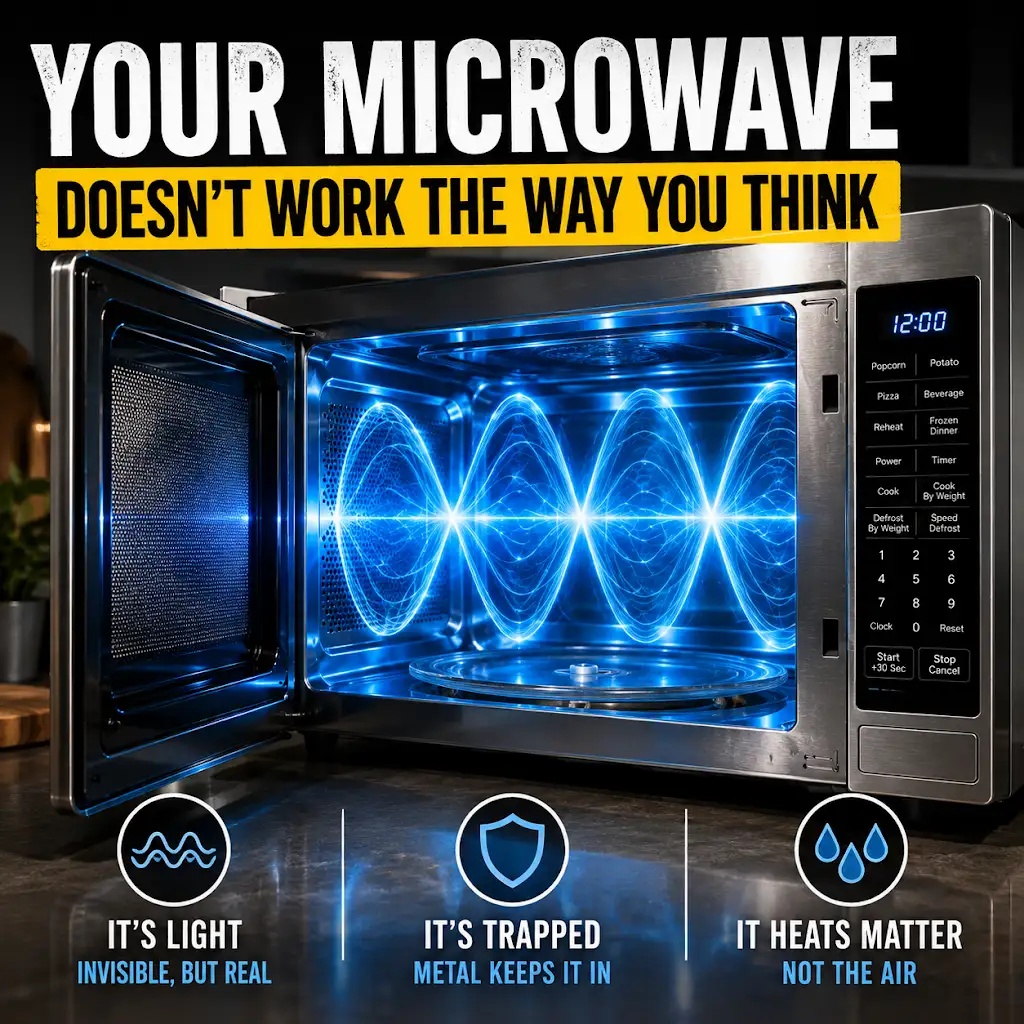
You might think of microwaves as tiny ovens, but their heating mechanism is fundamentally different. Inside your microwave, a magnetron generates electromagnetic waves, specifically at a frequency of around 2.45 gigahertz. These waves, invisible to the naked eye, are the workhorses of your kitchen’s rapid cooking. When they enter your microwave cavity, they bounce around erratically, a chaotic dance of energy. Your food becomes the ultimate recipient of this energetic ballet.
The Dielectric Dance: Water Molecules Under Siege
The primary way microwaves heat food is by agitating its water molecules. Water molecules are polar, meaning they have a slightly positive end and a slightly negative end, much like tiny bar magnets. When exposed to the rapidly oscillating electromagnetic field of the microwaves, these polar molecules are forced to twist and turn, attempting to align themselves with the changing field. This constant wriggling and jostling creates friction, and it’s this friction that generates heat. The faster the water molecules move, the hotter your food becomes.
Beyond Water: Other Polar Players
While water is the star of the microwave heating show, other polar molecules in your food also contribute. Fats and sugars, with their own polar characteristics, can also absorb microwave energy and contribute to the overall heating process. However, water’s high dielectric constant and abundance in most foods make it the dominant factor. This is why dry foods, with little to no water content, are notoriously difficult to heat effectively in a microwave.
Penetration Depth: The Limits of Microwave Power
Microwaves don’t just heat the surface of your food; they can penetrate into it. However, this penetration isn’t infinite. The depth to which microwaves can effectively heat your food, known as the “penetration depth,” varies depending on the composition of the food itself. Dense, moist foods will allow microwaves to penetrate further than drier, less dense items. This concept is crucial when considering how shape influences internal heating.
Understanding how the shape of food affects microwave heating is crucial for achieving even cooking and avoiding cold spots. A related article that delves into this topic can be found at Freaky Science, where it explores the science behind microwave energy distribution and how different shapes can influence the heating process. This insight can help you optimize your microwave cooking techniques for better results.
The Geometry of Heat: How Shape Dictates Microwave Absorption
Now, let’s get to the heart of the matter: how the shape of your food influences this intricate dance of microwave energy. It’s a principle rooted in how the electromagnetic waves interact with different geometries, leading to uneven absorption and, consequently, uneven heating.
Surface Area to Volume Ratio: The First Clue
One of the most fundamental geometric considerations is the surface area to volume ratio. Think about it: a flat, thin piece of food has a large surface area exposed to the microwaves relative to its volume. This means more of its water molecules are directly accessible to the electromagnetic field, leading to faster and potentially more even heating of the entire piece. Conversely, a thick, dense piece of food has a smaller surface area to volume ratio. This means that while the outer layers might heat up quickly, the microwaves struggle to penetrate efficiently to the center, leading to a temperature gradient.
Irregularities and Hot Spots: The Microwave’s Bane
The microwave cavity itself is a rather complex environment for electromagnetic waves. Waves bounce off the metal walls, creating areas of constructive and destructive interference. These interference patterns lead to “hot spots” and “cold spots” within the cavity. When you introduce food, its shape can either exacerbate or mitigate these natural unevenness.
Sharp Corners and Edges: Drawing Microwave Power
Consider a food item with sharp corners or thin edges. These areas, due to their geometry, tend to concentrate the microwave energy. Think of a lightning rod attracting electrical charge; similarly, sharp points can act as focal points for microwave radiation. This means these parts of your food will heat up significantly faster, often to the point of becoming overcooked or even burnt, while the thicker or more rounded sections remain cooler. This is why a perfectly circular or spherical food item might heat more evenly than a square one with distinct corners.
Curved Surfaces: A Smoother Ride for Microwaves
Conversely, food items with smooth, curved surfaces tend to allow microwaves to flow over them more evenly. There are fewer concentrated points for the energy to gather. Imagine water flowing over a smooth stone versus being forced to navigate a jagged rock. The smooth curve allows for a more uniform interaction with the microwave field, distributing the energy more evenly across the surface and facilitating deeper penetration.
The “Edginess” Factor: More Edge, More Heat
This concept is often referred to as the “edginess” factor. The more exposed edges a food item has relative to its overall mass, the more it will be susceptible to rapid and potentially uneven heating. Think of a thin strip of bacon versus a thick slab of pork. The bacon, with its high edge-to-mass ratio, will cook much faster and more uniformly (or unevenly, if you’re not careful) than the thick slab.
Specific Shapes and Their Heating Quirks
Let’s move from general principles to concrete examples. How do common food shapes fare in the microwave? Understanding these specific scenarios can help you optimize your reheating strategies.
The Sphere vs. The Cube: A Tale of Two Shapes
Imagine a perfectly spherical ball of mashed potatoes and a perfectly cubic block of the same mashed potatoes. The sphere, with its continuous curved surface and absence of sharp corners, is generally the ideal shape for microwave heating. The microwaves can interact with its surface more uniformly, and the heat generated can distribute more evenly towards the center. The cube, on the other hand, presents corners and edges that will act as localized hot spots, leading to a situation where the corners might be scalding hot while the center remains lukewarm.
The Law of the Center: Why Cores Remain Cool
In thicker, more compact shapes like cubes or even thick rounds, the center of the food is often the last to heat. This is because the microwaves have to travel through already heated outer layers to reach the core. The outer layers will absorb a significant portion of the microwave energy, leaving less for the center. The shape of the food dictates how efficiently this energy can reach that core.
Flat vs. Thick: The Surface Area Advantage
This is a straightforward principle. A flat, thin food item like a pancake or a piece of fish will heat much faster and more evenly than a thick steak or a dense cake. The large surface area exposed to microwaves means the energy can be absorbed and distributed throughout the entire piece more effectively. The thickness of the food creates a barrier to microwave penetration, leading to a more pronounced temperature gradient.
The “Reaching the Middle” Challenge
For thick food items, the challenge is always about getting the heat to the very center without overcooking the exterior. The shape plays a direct role here. A thicker, more compact shape makes this challenge significantly harder.
Ring and Donut Shapes: The Magic of the Hole
Intriguingly, foods shaped like rings or donuts often heat exceptionally well. Think of a bundt cake or a bagel. The central hole in these shapes allows microwaves to penetrate from the outside and the inside simultaneously. This dual penetration significantly reduces the distance the microwaves need to travel to reach the center, leading to much more uniform heating. This is why, if you’re reheating something like a dense casserole, arranging it in a circular or ring shape can be surprisingly effective.
The “Two-Sided” Approach to Microwave Heating
The hole effectively creates a “two-sided” heating scenario, allowing energy to reach the interior much more readily than in a solid block.
Optimizing Your Reheating: Practical Tips for Better Results

Understanding the impact of food shape on microwave heating isn’t just academic; it has practical implications for your daily life. By making small adjustments to how you arrange or cut your food, you can significantly improve your microwave cooking and reheating experiences.
Arranging for Evenness: The Power of Spacing and Shape
The way you arrange food on your plate can make a big difference.
Spreading it Out: Don’t Overcrowd
Avoid piling food into a dense mound. Instead, spread it out in a single layer or in smaller, more manageable portions. This increases the surface area exposed to microwaves and allows for better energy penetration. Imagine reheating a portion of rice; spreading it out on the plate will heat it much more evenly than leaving it in a compact clump.
Creating Holes: The Ring Strategy Revisited
If you’re reheating something like a casserole, chili, or even a portion of pasta, try to create a well or a ring in the center. This allows microwaves to reach the interior more directly, preventing the edges from becoming overcooked while the center remains cold.
Cutting for Consistency: The Art of Uniformity
The way you cut your food before microwaving can also impact heating.
Uniform Pieces: Think Cubes or Slices
When reheating food that you can cut, aim for uniform pieces. If you’re reheating chicken breasts, for example, slicing them into smaller, similarly sized pieces will ensure they all heat at roughly the same rate. Avoid having one very thick piece and several thin ones.
Cutting Along the Grain (Where Applicable): Minimizing Resistance
For some foods, like certain meats, cutting along the grain can sometimes facilitate slightly more even heating, as it might reduce the density and resistance to microwave penetration in certain directions. This is a subtler effect, but worth considering for more finicky items.
Stirring and Rotating: Active Intervention for Better Heating
Don’t underestimate the power of active intervention during the microwaving process.
The Mid-Cook Stir: Breaking Up Hot Spots
Stirring your food halfway through the cooking or reheating time is one of the most effective ways to ensure even heating. This redistributes the heat from the hotter areas to the cooler ones. For dishes like soups, stews, or pasta, a good stir can work wonders.
Rotating the Plate: Even Exposure to the Cavity
Many microwaves have a turntable that rotates the food automatically. If yours doesn’t, or if you’re not using it, manually rotating your plate every minute or so can help expose all sides of the food to the different microwave intensity zones within the cavity.
The way food shape affects microwave heating is an intriguing topic that can significantly influence cooking efficiency and even food safety. For a deeper understanding of this phenomenon, you might find the article on microwave cooking techniques helpful. It explores how different shapes and sizes of food items can lead to uneven heating, which is crucial for ensuring that your meals are cooked thoroughly. To read more about this, check out the article on Freaky Science.
The Science Behind “Cold Spots” and “Hot Spots”
| Food Shape | Microwave Heating Effect |
|---|---|
| Spherical | Heats more evenly due to uniform shape |
| Flat | May heat unevenly, with edges cooking faster than center |
| Irregular | Heating may be inconsistent, with some parts overcooked and others undercooked |
You’ve experienced it: that perfectly heated bite of food followed by a chillingly cold one. This phenomenon is directly linked to the physics of microwave heating and the geometry of your food.
Microwave Interference Patterns: A Chaotic Landscape
As mentioned earlier, the microwaves within your oven don’t travel in straight lines. They bounce off the metal walls, creating a complex pattern of waves. Where these waves meet and reinforce each other (constructive interference), you get a “hot spot.” Where they meet and cancel each other out (destructive interference), you get a “cold spot.” The shape of your food can either align itself with these patterns or disrupt them.
The Standing Wave Phenomenon: Peaks and Troughs of Energy
This interference creates “standing waves” – patterns of high and low energy intensity that remain relatively fixed within the microwave cavity. These are the invisible hot and cold zones you’re trying to navigate.
Food Shape as an Antenna: Amplifying or Diminishing Effects
The shape of your food can act like an antenna, either amplifying these existing hot spots or, in some cases, helping to diffuse the energy more evenly.
Sharp Edges as Energy Magnets
As we’ve discussed, sharp edges and points can act like energy magnets, drawing in and concentrating the microwave energy, thus creating localized superheated zones. This is a direct amplification of the inherent hot spots within the microwave cavity.
Rounded Forms as Energy Diffusers
Conversely, smooth, rounded shapes tend to diffuse the microwave energy more evenly. They don’t have the same concentrating effect as sharp points, allowing the energy to spread out more broadly and potentially mitigating the extreme highs and lows created by interference patterns.
The “Law of the Edge” Revisited: Why Edges Heat First
The “Law of the Edge” is a direct consequence of these combined factors. The edges of your food are exposed to more microwave energy due to a combination of higher surface area to volume ratio, the tendency for energy to concentrate at edges, and the proximity to the hotter zones within the microwave cavity. This is why the edges of a pizza slice or the outer rim of a circular dish will always be the first to become hot.
Beyond the Plate: Other Factors Influencing Microwave Heating
While shape is a significant player, it’s not the only factor dictating how your food heats in the microwave. A comprehensive understanding involves considering these other elements as well.
Food Composition: The Role of Water, Fat, and Sugar
We’ve touched on this, but it bears repeating. The dielectric properties of your food – its ability to absorb and convert microwave energy into heat – are paramount.
Water Content: The Primary Heat Generator
As established, water is the main driver of microwave heating. Foods with high water content will heat much more effectively and rapidly.
Fat and Sugar: Secondary Contributors to Heat
Fats and sugars also absorb microwave energy, albeit to a lesser extent than water. Their presence can contribute to the overall heating process and can also influence how quickly certain parts of the food cook. For instance, sugary sauces can caramelize quickly, leading to burnt spots.
Microwave Power Settings: Controlling the Energy Flow
Your microwave’s power setting isn’t just about speed; it influences the intensity and duration of microwave radiation.
Lower Power for Evenness: A Slower, Gentler Approach
Using lower power settings allows the microwaves to penetrate the food more deeply and for longer periods. This gives the heat more time to distribute evenly throughout the food, reducing the likelihood of extreme hot and cold spots. It’s a more controlled and less aggressive approach to heating.
Higher Power for Speed: The Risk of Unevenness
High power settings deliver intense bursts of microwave energy. While this is great for speed, it can quickly overheat the outer layers of food, leading to uneven cooking and a higher chance of encountering those dreaded cold spots in the center.
The Microwave Cavity Itself: Design and Function
The design and condition of your microwave also play a role.
Turntable Functionality: Ensuring Rotation
A functioning turntable is crucial for ensuring that the food is continuously rotated, exposing all sides to the varying microwave intensities within the cavity. If your turntable isn’t working, you’ll need to manually rotate your food more frequently.
Cleanliness: A Clear Path for Waves
A clean microwave cavity, free from food splatters and debris, allows the microwaves to travel and reflect more predictably. Caked-on food can absorb or deflect microwave energy in unpredictable ways, further contributing to uneven heating.
Container Material: The Barrier to Energy
The material of the container you use can also impact heating.
Microwave-Safe Materials: Allowing Energy Through
Microwave-safe containers are designed to allow microwaves to pass through them relatively unimpeded. Glass, ceramic, and certain plastics fall into this category.
Metal and Other Obstructions: Blocking the Waves
Metal containers are a no-go in the microwave, as they reflect the microwaves and can cause arcing and damage to your appliance. Even non-metallic containers with metal trim can cause issues. Similarly, dense, non-porous materials can create a barrier, preventing microwaves from reaching the food efficiently.
By considering all these factors – the shape of your food, its composition, the microwave settings, the appliance itself, and your container choice – you can gain a much deeper understanding of why your microwaved meals heat the way they do. This knowledge empowers you to make smarter choices in the kitchen and enjoy perfectly heated leftovers every time.
Your Microwave Doesn’t Work the Way You Think
FAQs
1. How does the shape of food affect microwave heating?
The shape of food can affect microwave heating because microwaves penetrate food unevenly. Irregularly shaped foods may have hot and cold spots, leading to uneven heating.
2. What shapes of food heat more evenly in the microwave?
Generally, flat and thin shapes of food heat more evenly in the microwave. This is because the microwaves can penetrate the food more uniformly, resulting in more consistent heating.
3. Why do round or spherical foods heat unevenly in the microwave?
Round or spherical foods heat unevenly in the microwave because the microwaves can only penetrate the outer layers of the food. This can result in the center of the food remaining cold while the outer layers become hot.
4. How can the shape of food be adjusted for more even microwave heating?
To adjust the shape of food for more even microwave heating, consider cutting or slicing the food into smaller, more uniform pieces. This can help the microwaves penetrate the food more evenly, resulting in better heating.
5. Are there any specific shapes of containers that can improve microwave heating of food?
Using microwave-safe, flat and wide containers can help improve the heating of food in the microwave. This allows the microwaves to penetrate the food more evenly, resulting in more consistent heating.