You stand in your kitchen, perhaps microwaving a quick lunch or reheating last night’s dinner. It’s a convenience you likely take for granted, a seamless part of your daily routine. But have you ever paused to consider the story behind this ubiquitous appliance? It’s a tale of accidental discovery, ingenious adaptation, and a single inventor who, quite literally, warmed the world. This is the story of Percy Spencer, the radar engineer who stumbled upon the magic of microwave cooking.
Your understanding of Percy Spencer’s contribution begins with a world teetering on the brink of conflict. The year is 1941, and the Second World War is raging. In the United States, like many nations, there’s an urgent need to develop advanced technologies to gain an advantage. Your focus at this time, as a brilliant engineer working for the Raytheon Corporation, is firmly fixed on radar.
A Nation Mobilized
You are part of a dedicated team, working tirelessly to improve radar systems. Radar, as you know, is a crucial military technology. It uses radio waves to detect objects, whether they are enemy aircraft, ships, or even submarines. Its effectiveness is directly tied to the strength and precision of the radio waves it can generate.
The Magnetron: A Powerful Innovation
A key component in these radar systems is the magnetron, a vacuum tube that generates high-frequency electromagnetic waves. You, Percy Spencer, are an expert in magnetrons. You understand their inner workings, their capabilities, and their limitations. Your work at Raytheon involves designing and improving these powerful devices, ensuring they are robust and efficient enough for the demands of wartime.
The Raytheon Corporation: A Hub of Innovation
Raytheon, where you are employed, is a significant player in the defense industry. They are at the forefront of developing cutting-edge electronics for military applications. Your position within the company places you at the heart of this innovation, contributing to technologies that will shape the outcome of the war. Your days are filled with complex calculations, intricate designs, and the constant pursuit of greater power and reliability for these vital radar systems.
Percy Spencer’s invention of the microwave oven is a fascinating story of innovation born from unexpected circumstances. His discovery came about while working with radar technology during World War II, when he noticed that a chocolate bar in his pocket melted due to the microwave radiation emitted by the equipment. This serendipitous moment led to the development of the first microwave oven, revolutionizing cooking methods in households around the world. For more insights into the intriguing history of scientific discoveries, you can read a related article at Freaky Science.
The Accidental Discovery: A Melted Marvel
It’s a humid afternoon, and you are working on a new, more powerful magnetron. You’re standing in front of an active radar set, a humming behemoth of wires and metal that is emitting powerful microwave energy. The air around you crackles with unseen power.
The Unforeseen Sensation
As you stand near the operating magnetron, you feel a peculiar sensation. It’s subtle at first, a warmth that seems to emanate from your pocket. You reach into your pocket and pull out a candy bar. To your surprise, it’s completely melted. A sugary, gooey mess.
A Moment of Curiosity
Most people might dismiss this as a strange anomaly, a faulty candy bar, or perhaps the heat of the day. But you, Percy Spencer, are not most people. You are an inventor, driven by an insatiable curiosity and a keen eye for the unusual. This melted candy bar sparks a question in your mind: what caused this?
The Hypothesis Forms
You immediately suspect the magnetron. Could the microwave energy it was emitting have somehow heated the candy bar? It’s a bold hypothesis, but one that aligns with your understanding of electromagnetic waves and their potential to transfer energy. You decide to investigate further.
Experimentation Begins
Your curiosity is piqued, and you begin a series of informal experiments. You try other food items. You place popcorn kernels near the active magnetron, and within minutes, you are rewarded with a flurry of popping kernels, scattered across your workbench. Next, you try an egg. You carefully place it in front of the radar set, and it cooks rapidly, eventually exploding due to the intense heat.
The Dawn of an Idea
These experiments confirm your suspicion: the microwaves generated by the magnetron can indeed cook food. It’s a groundbreaking observation, a scientific revelation born from a simple, everyday object. You’ve stumbled upon something extraordinary, something with the potential to revolutionize how people prepare and consume food. The world as you know it is about to change, thanks to a melted candy bar and your inquisitive mind.
From Radar to Refrigerator: The Birth of the Microwave Oven

Your discovery, while accidental, is too significant to ignore. You understand that this phenomenon has far-reaching implications beyond military radar. The challenge now is to harness this power and transform it into a practical appliance for everyday use.
Presenting the Possibility
You enthusiastically present your findings to your superiors at Raytheon. Initially, there’s skepticism. Cooking with microwaves? It sounds like science fiction. However, your meticulous experiments and logical explanations begin to sway them. They recognize the immense potential, the ability to cook food faster and more efficiently than ever before.
The First Prototype
With the company’s backing, you set about designing the world’s first microwave oven. This is no small feat. You’re essentially creating a new category of appliance from scratch. You need to figure out how to contain the microwave energy safely, how to direct it effectively onto food, and how to make it user-friendly.
The “Radarange” Emerges
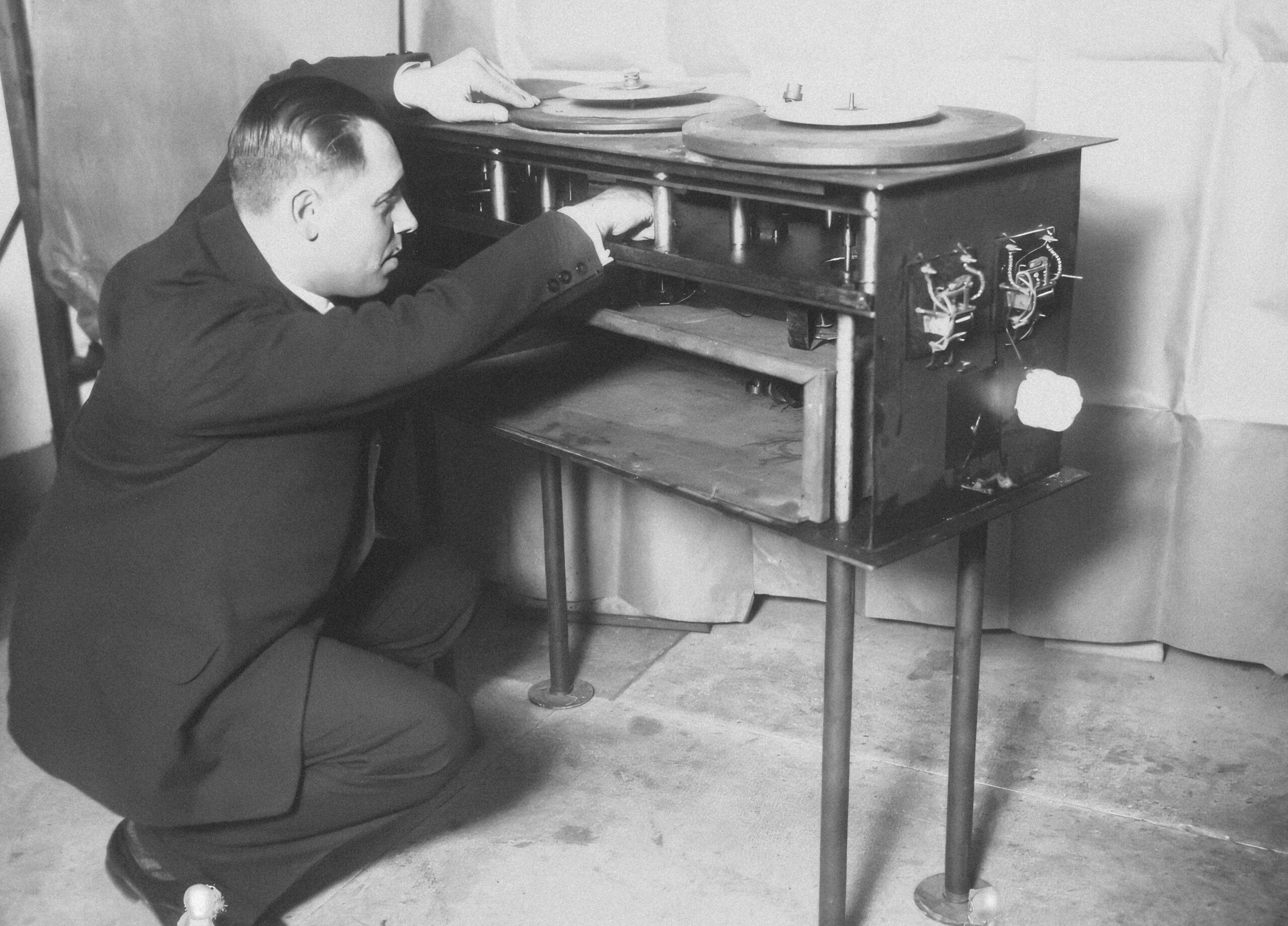
Your initial prototypes are far from the sleek, countertop models you see today. They are massive, towering machines, often referred to as “Radarange.” The first commercial microwave oven, introduced in 1947, stands nearly six feet tall and weighs over 750 pounds. It’s primarily designed for commercial use, such as in restaurants and on ships, where rapid cooking was a significant advantage.
Addressing Safety Concerns
A paramount concern in developing a microwave oven is safety. You understand the potential hazards of microwave radiation. Therefore, you dedicate considerable effort to designing a device that effectively shields the user from harmful exposure. This involves carefully engineering the oven’s casing, door seals, and interlocks to ensure that the microwaves are contained within the cooking chamber.
Refining the Technology
Over the next few years, you and your team at Raytheon continue to refine the Radarange. You work on making it smaller, more efficient, and more affordable. The initial models are incredibly expensive, limiting their widespread adoption. The goal is to eventually bring this revolutionary cooking technology into every home.
The Microwave’s Impact: A Culinary Revolution

The journey from a melted candy bar to a household appliance is a testament to your ingenuity. The microwave oven, once a novelty, gradually becomes an indispensable tool in kitchens worldwide, fundamentally altering how you prepare and consume food.
Speed and Convenience
The most immediate and obvious impact of the microwave oven is the incredible speed at which it cooks. What might have taken hours in a conventional oven can now be accomplished in minutes. This unparalleled convenience is a game-changer for busy individuals and families, allowing for quicker meal preparation and reheating.
Nutritional Preservation
Contrary to some early misconceptions, microwaves can actually be more effective at preserving the nutritional content of food. Because of the shorter cooking times and the use of less water, many vitamins and minerals are retained better compared to traditional boiling or steaming methods.
A Versatile Tool
The microwave isn’t just for reheating leftovers. You discover its versatility in a wide array of cooking tasks. It can bake potatoes, steam vegetables, cook fish, and even prepare popcorn with remarkable ease. It becomes a staple for defrosting frozen foods quickly and efficiently, a task that often proved time-consuming and problematic.
Empowering Home Cooks
The microwave oven democratizes cooking. It makes it accessible to a wider range of people, regardless of their culinary skill level. Simple recipes become achievable, and the intimidation factor often associated with cooking is significantly reduced. It empowers you to prepare fresh meals with minimal effort.
Culinary Innovation
The advent of the microwave also spurs culinary innovation. New recipes are developed specifically for microwave cooking, and food manufacturers begin to produce a wide range of “microwave-ready” meals, catering to the growing demand for convenience.
Percy Spencer’s invention of the microwave oven is a fascinating story of innovation sparked by an unexpected encounter with a chocolate bar. His curiosity and ingenuity led to the development of a device that revolutionized cooking. For those interested in exploring more about the science behind everyday inventions, you can read a related article that delves into various groundbreaking discoveries at Freaky Science. This resource provides insights into how chance and creativity often play a crucial role in technological advancements.
Percy Spencer: The Unsung Hero of the Kitchen
| Year | Event |
|---|---|
| 1945 | Percy Spencer invents the microwave oven after a candy bar in his pocket melts while working with radar equipment. |
| 1947 | The first commercial microwave oven is introduced, standing nearly six feet tall and weighing around 750 pounds. |
| 1967 | The countertop microwave oven is introduced, making microwave cooking more accessible to the general public. |
Despite the profound impact of your invention, your name, Percy Spencer, isn’t as widely recognized as some other prominent inventors. Yet, your contribution is undeniable, silently shaping the daily lives of billions.
A Humble Genius
You were known for your humility and your dedication to your work. You didn’t seek the spotlight or the accolades that often accompany such groundbreaking achievements. Your primary motivation was solving problems and improving technology.
The Legacy Lives On
Your legacy is not etched in grand statues or public squares, but in the hum of countless microwave ovens in kitchens around the globe. Every time you heat a meal, defrost frozen vegetables, or pop a bag of popcorn, you are experiencing the direct result of Percy Spencer’s curiosity and ingenuity.
Raytheon’s Continued Innovation
Raytheon, the company where you made your groundbreaking discovery, has continued to build on the foundation you laid. They have remained a leader in microwave technology, developing advanced applications for everything from industrial heating to medical treatments.
The Enduring Significance
The microwave oven is a prime example of how a seemingly minor observation, when paired with a brilliant mind, can lead to a world-altering invention. Your story serves as an inspiration, reminding you that innovation can be found in the most unexpected places and that even the simplest of accidents can pave the way for extraordinary progress. You are the inventor who, quite literally, changed the way the world eats.

Your Microwave Doesn’t Work the Way You Think
FAQs
1. Who is Percy Spencer and what is his invention?
Percy Spencer was an American engineer and inventor who is best known for inventing the microwave oven. In 1945, while working at Raytheon, he discovered that microwaves from a radar magnetron had melted a candy bar in his pocket, leading to the development of the first microwave oven.
2. How did Percy Spencer’s invention revolutionize cooking and food preparation?
Percy Spencer’s invention of the microwave oven revolutionized cooking and food preparation by providing a quick and efficient way to heat and cook food. It drastically reduced cooking times and made it easier for people to prepare meals, leading to significant changes in the way food is prepared and consumed.
3. What impact did Percy Spencer’s invention have on society and everyday life?
The invention of the microwave oven by Percy Spencer had a profound impact on society and everyday life. It changed the way people cooked and ate, leading to increased convenience and efficiency in the kitchen. It also influenced the food industry, leading to the development of microwaveable meals and snacks.
4. What recognition did Percy Spencer receive for his invention?
Percy Spencer received recognition for his invention of the microwave oven, including being inducted into the National Inventors Hall of Fame in 1999. His invention has also been celebrated for its impact on modern cooking and food preparation.
5. What is the legacy of Percy Spencer’s invention and how is it relevant today?
The legacy of Percy Spencer’s invention of the microwave oven is still relevant today, as it continues to be a staple in kitchens around the world. It has influenced the way people cook and eat, and its impact on convenience and efficiency in food preparation is still felt today.