You’re standing in your kitchen, ready to reheat last night’s delicious leftovers. You slide the plate into the microwave, press a few buttons, and then you hear it – a crackling, popping sound, accompanied by flashes of light. Arcing. It’s startling, a little alarming, and you immediately wonder what’s gone wrong and if your microwave is about to explode. The culprit, more often than not, is something surprisingly simple: sharp metal edges. You might have unknowingly introduced a miniature lightning storm into your culinary appliance.
This isn’t some mystical phenomenon; it’s rooted in fundamental physics and the unique environment your microwave creates. To truly understand why sharp metal edges are the nemesis of a properly functioning microwave, you need to delve into the science behind how microwaves themselves work and the electrical properties of metals. It’s a journey that explains those disconcerting flashes and helps you avoid them in the future.
Before you can understand arcing, you need to grasp the basic principle of how your microwave oven heats food. It’s not about radiating heat in the traditional sense; instead, it utilizes a specific form of electromagnetic radiation.
Generating the Waves: The Magnetron’s Role
At the heart of your microwave lies a device called a magnetron. Think of it as the engine that generates the magic. This vacuum tube uses a combination of strong magnetic fields and electric fields to accelerate electrons. As these electrons move, they emit high-frequency radio waves, specifically in the microwave spectrum, typically around 2.45 gigahertz. This frequency is chosen for a very specific reason: it’s incredibly effective at interacting with water molecules.
The Dance of Water Molecules: Selective Heating
Food is primarily composed of water. When the microwaves generated by the magnetron are directed into the oven cavity, they bounce off the metal walls. This creates a complex electromagnetic field that permeates the food. The key to microwave heating is how these waves interact with the water molecules within your food. Water molecules are polar, meaning they have a positive end and a negative end, much like tiny magnets.
When exposed to the rapidly oscillating electric field of the microwaves, these polar water molecules begin to vibrate and rotate at an astonishing rate. Imagine billions of tiny magnets flipping back and forth billions of times per second. This rapid molecular motion generates friction, and it’s this friction that produces heat, cooking your food from the inside out. Other polar molecules in food, like fats and sugars, also contribute to the heating process, though water is the primary driver.
The Cavity’s Containment: Reflecting and Directing
The interior of your microwave is lined with metal. This isn’t for aesthetic appeal; it’s crucial for containing the microwaves. Metal is an excellent conductor of electricity, and therefore, it reflects microwaves. This reflection ensures that the energy stays within the oven cavity, bouncing around and penetrating the food from multiple angles, leading to more even cooking. The turntable, if your microwave has one, further aids in this even distribution by rotating the food, exposing different sections to the microwave field. Without the reflective walls, the microwaves would simply escape, rendering the appliance useless and potentially posing a safety hazard.
Microwave arcing is a phenomenon that occurs when sharp metal edges come into contact with microwaves, leading to the creation of sparks. This occurs because the sharp edges can concentrate the electric field, causing a discharge of energy that results in arcing. For a deeper understanding of this phenomenon and its implications, you can read a related article that explores the science behind microwave arcing in detail. Check it out here: Freaky Science.
The Electrical Nature of Metals: Conductors and Their Quirks
Metals are fundamental to both the operation and the potential problems of microwave ovens. Their electrical properties are what make them effective reflectors, but also what makes them susceptible to arcing.
Free Electrons: The Backbone of Conductivity
The reason metals conduct electricity so well is due to their atomic structure. In a metallic crystal lattice, the outermost electrons of the metal atoms are not tightly bound to individual atoms. Instead, they form what’s known as a “sea of electrons.” These electrons are free to move throughout the entire metal structure. When an electric potential is applied, these free electrons are pushed, creating an electric current.
This free movement of electrons is what allows metals to act as excellent conductors, guiding electrical energy efficiently. It’s also why they effectively bounce back the microwave energy, keeping it contained within the oven.
Charge Accumulation: Where Things Get Tricky
While metals are excellent conductors, they can also accumulate electric charge. When microwaves, which are essentially oscillating electromagnetic fields, interact with a conductor, they can induce currents. In a solid, uniform piece of metal, these induced currents tend to dissipate relatively evenly. However, the situation changes dramatically when you introduce a sharp edge or a point.
The Electric Field Enhancement: A Lightning Rod Effect
Here’s where the “sharpness” becomes critical. At a sharp edge or a point on a metallic object within the microwave cavity, the electric field lines become highly concentrated. Imagine lines of force that are spread out over a smooth surface becoming squeezed together at a sharp point. This concentration means that the electric field strength at these sharp edges can become significantly higher than in the surrounding areas.
This phenomenon is akin to a lightning rod. The sharp point draws electrical charge and concentrates the electric field, making it easier for a discharge to occur. In the context of a microwave, this enhanced electric field can reach a critical threshold, much like the threshold needed for a lightning strike.
The Spark of Creation: Understanding Arcing

Now that you understand the basics of microwave operation and the electrical nature of metals, you can begin to piece together how arcing occurs. It’s a dramatic demonstration of electrical breakdown.
Reaching the Breakdown Voltage: The Breaking Point
Every insulating material, including the air inside your microwave, has a limit to how much electric field it can withstand before it begins to conduct electricity. This is known as the dielectric strength, often expressed as a breakdown voltage. For air at standard atmospheric pressure, this breakdown voltage is approximately 3 million volts per meter.
When the concentrated electric field at a sharp metal edge reaches this breakdown voltage, the air molecules surrounding the edge become ionized. This means electrons are ripped from the air molecules, creating a plasma – a state of matter composed of ions and free electrons. This plasma is highly conductive.
The Plasma Bridge: Completing the Circuit
Once a plasma channel forms, it acts as a temporary conductor, creating a path for electrical current to flow. This plasma bridge can form between the sharp metal edge and another conductive surface, such as the wall of the microwave or another metal object. The rapid flow of electrons through this plasma channel is what you see as bright flashes of light and hear as crackling sounds. It’s a miniature, albeit uncontrolled, electrical discharge.
Rapid Discharge and Energy Dissipation
The arcing is a very rapid event. Electrons surge through the newly formed plasma bridge, releasing a significant amount of energy in the form of light and heat. This is why you see the flashes. The energy is dissipated as the plasma quickly collapses once the electric field drops below the breakdown threshold, or the conductive path is disrupted. This cycle can repeat itself many times per second, leading to the sustained crackling and popping you might hear.
The Sharp Edge Factor: Why It Matters So Much

You might be wondering why a smooth metal bowl might not cause the same issue. The difference lies in the geometry and the resulting electric field distribution.
The Geometry of Electricity: Points Versus Curves
The principle of electric field enhancement at sharp points is a well-established concept in electrostatics. Imagine drawing electric field lines around a charged object. On a smooth, rounded surface, these lines spread out relatively evenly. However, at a sharp point, the lines converge tightly. This convergence signifies a higher density of electric field lines, and thus, a stronger electric field.
A curved surface, like the rim of a metal bowl, will have a less concentrated electric field compared to a sharp, angular edge found on things like aluminum foil, fork tines, or the crimped edges of certain food packaging. Even seemingly small imperfections or creases in metal can act as points of concentration.
Aluminum Foil: A Prime Offender
Aluminum foil is a classic example. Its thinness and the tendency for it to be folded or crimped create numerous sharp edges. When you crumple aluminum foil or use it to cover parts of food, these sharp edges become prime locations for electric field enhancement. The microwaves then do their work, concentrating the field, reaching the breakdown voltage of air, and initiating arcing.
Other Culprits: Not Just Foil
It’s not just aluminum foil. Anything with sharp metallic edges can be problematic. This includes:
- Metallic trim on dishes: Many decorative plates and bowls have metallic gold or silver trim. These can be thin and have sharp edges, especially where they meet the ceramic.
- Utensils: Forks, spoons, and knives left in the microwave can cause arcing, particularly if their edges are sharp or if they are positioned in a way that creates sharp points against other surfaces.
- Twist ties with metal cores: Some food bags use twist ties that have a thin wire core. If these are left in the microwave, the exposed wire ends can arc.
- Certain food packaging: Some processed foods come in packaging with metallic liners or metallic components designed for sealing. These can be overlooked and lead to arcing.
- Damaged microwave interiors: While less common, a dent or scratch that creates a sharp edge on the interior walls of the microwave itself can also become a source of arcing.
Microwave arcing is a phenomenon that can occur when sharp metal edges are present inside the microwave, as these edges can create concentrated electric fields that lead to sparks. This can be particularly dangerous, as it not only damages the appliance but can also pose a fire hazard. For a deeper understanding of the science behind this effect, you can read more in this informative article on Freaky Science, which explores the interactions between microwaves and metal objects in detail.
Prevention is Key: Keeping Your Microwave Safe and Sound
| Reasons for Microwave Arcing | Explanation |
|---|---|
| Sharp Metal Edges | Sharp metal edges can cause microwave arcing because they can create a concentration of electric field, leading to sparks and arcing. |
| Reflection of Microwaves | Sharp metal edges can reflect microwaves back into the microwave cavity, causing interference and arcing. |
| Disruption of Microwave Distribution | Sharp metal edges can disrupt the even distribution of microwaves, leading to hot spots and potential arcing. |
Understanding the science is one thing; preventing the sparks is another. Fortunately, avoiding microwave arcing is largely a matter of common sense and following a few simple rules.
The Golden Rule: No Metal (Generally)
The most straightforward rule is to avoid putting metal in your microwave unless the manufacturer explicitly states it’s safe. This encompasses everything from foil to cutlery to decorative trim. Always err on the side of caution.
Safe Alternatives: What to Use Instead
- Glass and ceramic dishes: These are excellent, non-metallic options for heating food. Ensure they are microwave-safe, as some ceramics can contain metallic elements.
- Microwave-safe plastics: Many plastic containers are designed for microwave use. Look for the microwave-safe symbol. Be aware that some plastics can warp or melt at high temperatures, so use them according to instructions.
- Paper products: Plain white paper towels and some paper plates are generally safe for short heating times. Avoid those with metallic inks or coatings.
Proper Covering Techniques: If You Must Use Foil
In some specific scenarios, a small amount of aluminum foil might be permissible for shielding parts of food from overcooking, but this should be done with extreme care and only if explicitly recommended by the food or microwave manufacturer. If you do use foil:
- Smooth and rounded edges: Never use crumpled foil. Ensure any foil used is smoothed out as much as possible, and fold it in a way that creates rounded edges rather than sharp points.
- Limited contact: Ensure the foil only covers the food item and does not touch the microwave walls or other metallic components.
- Small quantities: Use only small pieces of foil, just enough to cover the specific area needing shielding.
Regular Inspection and Cleaning
Periodically inspect the inside of your microwave for any signs of damage, such as dents or scratches that could create sharp edges. Clean up any food spills promptly, as dried-on food particles can sometimes contribute to uneven heating and, in rare cases, arcing.
Understanding Your Microwave’s Manual
Every microwave oven is slightly different. Your owner’s manual is your best resource for understanding its specific capabilities and limitations. It will often contain explicit warnings about what not to put in the microwave. If you’re ever unsure, consult your manual.
By understanding the underlying physics of how microwaves interact with electricity and the peculiar properties of sharp metal edges, you can demystify those unsettling flashes and ensure your microwave remains a safe and effective kitchen appliance. The science behind arcing is a fascinating glimpse into the power and potential pitfalls of electromagnetic energy, reminding us that even everyday technology has its own set of invisible rules to follow.
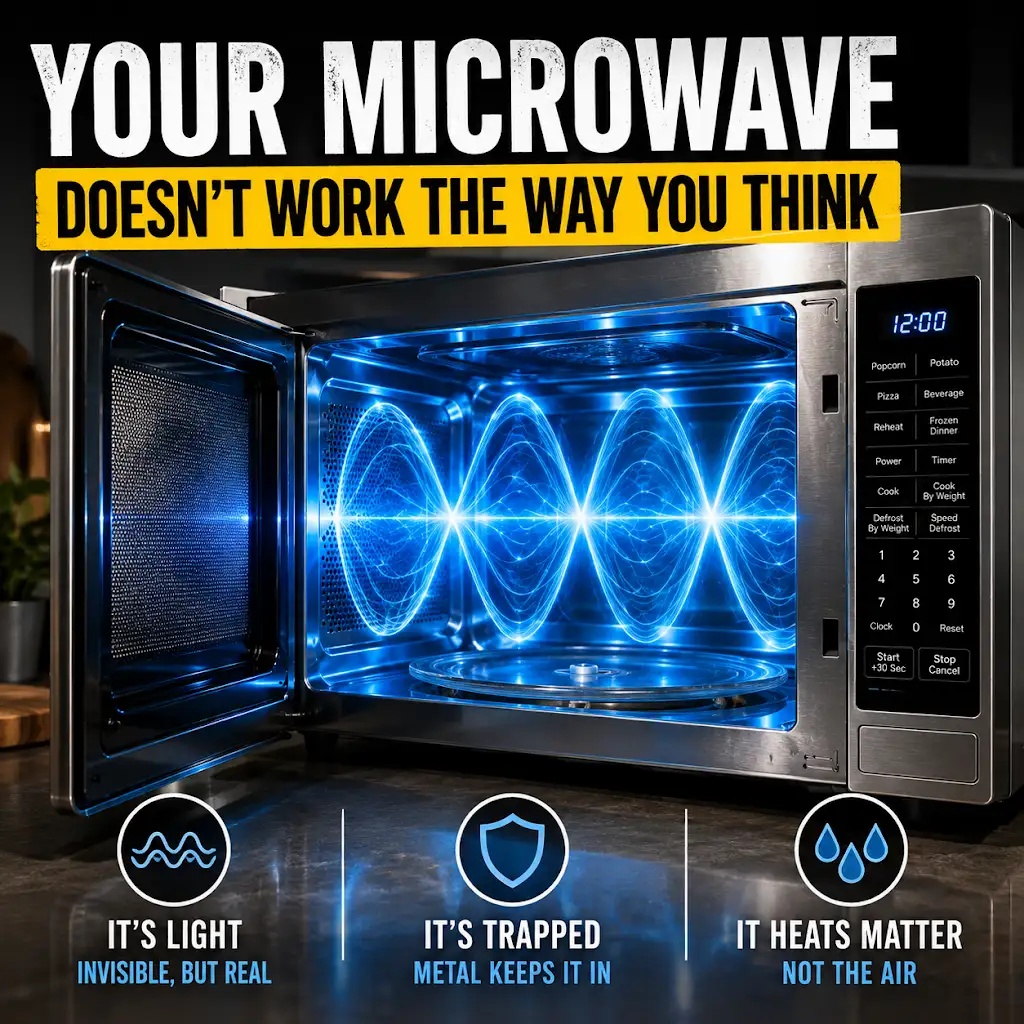
Your Microwave Doesn’t Work the Way You Think
FAQs
1. What causes microwave arcing when sharp metal edges are present?
Metal objects with sharp edges can cause microwave arcing because the electric fields in the microwave can become concentrated around the edges, leading to sparks and potentially damaging the microwave.
2. How does microwave arcing affect the microwave’s performance?
Microwave arcing can damage the interior of the microwave, including the walls and the waveguide cover. It can also cause the microwave to malfunction and potentially become a safety hazard.
3. Can any type of metal cause arcing in a microwave?
While most metal objects can cause arcing in a microwave, sharp edges and points are particularly problematic because they can concentrate the electric fields and increase the likelihood of sparking.
4. How can I prevent microwave arcing from sharp metal edges?
To prevent microwave arcing, avoid putting any metal objects with sharp edges or points inside the microwave. This includes aluminum foil, metal twist ties, and metal skewers.
5. What should I do if I accidentally cause arcing in my microwave with a metal object?
If arcing occurs in your microwave, immediately turn it off and remove the metal object. Inspect the interior for any damage, and if necessary, have the microwave inspected by a professional before using it again.