You’ve probably done it. Maybe out of curiosity, maybe by accident. You’ve placed a fork, a spoon, or even a crinkled aluminum foil wrapper inside your microwave, and then, a magical light show begins. Arcs of brilliant blue and white, crackling like miniature lightning strikes, dance across the metal surfaces. It’s mesmerizing, a little frightening, and you’ve likely been told emphatically never to do it again. But why? What’s truly happening inside that humming box that turns ordinary metal into a conductor of dazzling, dangerous electricity?
Before we delve into the fiery spectacle of sparking metal, it’s crucial to understand the fundamental workings of your microwave oven. It’s not magic, it’s physics, orchestrated by a clever piece of technology called a magnetron.
Generating the Waves: The Magnetron’s Crucial Role
At the heart of every microwave oven lies the magnetron, a vacuum tube that acts as a high-powered oscillator. Its purpose is to generate electromagnetic waves, specifically in the microwave frequency range, typically around 2.45 gigahertz (GHz). This frequency is chosen for a very specific reason: it’s highly effective at exciting water molecules.
The Electron Dance: From Filament to Oscillation
Inside the magnetron, a heated filament emits electrons. These electrons are then drawn towards a surrounding anode by a strong magnetic field. As the electrons move, they are directed to travel in circular paths. This circular motion, combined with the resonance cavities within the magnetron, causes the electrons to oscillate, producing the high-frequency electromagnetic waves. Think of it like a tiny, incredibly fast, controlled electron storm.
Directing the Energy: The Waveguide’s Path
Once generated, these microwave energy waves are channeled out of the magnetron through a metal tube called a waveguide. The waveguide is designed to efficiently direct the microwaves into the cooking cavity. It’s essentially a tunnel for electromagnetic energy.
The Cooking Cavity: A Reflective Chamber
The interior of your microwave oven is a specially designed metal box, often stainless steel or coated with a metallic paint. This metallic lining serves a vital purpose: it reflects the microwaves. Imagine a funhouse mirror for electromagnetic waves. They bounce off the walls, ceiling, and door, ensuring they are distributed throughout the cavity, bombarding your food from multiple angles.
The Rotating Turntable: Even Heating’s Ally
To further ensure even cooking, most microwaves feature a rotating turntable. This allows food to be exposed to the microwave energy from various positions, preventing hot spots and ensuring more uniform heating. Without the turntable, certain areas of your food would receive significantly more energy than others.
The Door’s Shield: Containing the Energy
The microwave door is not just for looking at your food. It’s equipped with a metal mesh screen. This mesh acts as a Faraday cage for the microwaves. The holes in the mesh are smaller than the wavelength of the microwaves, effectively preventing them from escaping the oven cavity while still allowing you to see inside. It’s a critical safety feature, ensuring the electromagnetic energy stays where it belongs.
The phenomenon of metal sparking in microwaves is a fascinating topic that delves into the interaction between electromagnetic waves and conductive materials. For a deeper understanding of the science behind this intriguing occurrence, you can explore a related article on Freaky Science, which provides insights into the principles of microwave radiation and its effects on various materials. To read more, visit Freaky Science.
The Uninvited Guest: Metal’s Unpredictable Response
Now, let’s talk about metal. Unlike the carefully orchestrated environment designed to interact with water molecules, metal behaves in a completely different, and often chaotic, manner when exposed to microwaves. This difference is the root cause of the sparking phenomenon.
Conductivity: Metal as an Electron Highway
Metals are excellent conductors of electricity. This means they have a high density of free electrons that can move easily when an electric field is applied. Microwaves, being electromagnetic waves, carry oscillating electric and magnetic fields. When these fields encounter a metal object, they exert a force on these free electrons.
Electron Accumulation: Charges on the Move
The oscillating electric field of the microwaves causes the free electrons in the metal to move back and forth rapidly. This movement isn’t uniform across the entire metal object. Depending on the shape and surface irregularities of the metal, these electrons can accumulate in certain areas, creating localized regions of positive and negative charge. Think of it like a crowd of people suddenly rushing to one side of a room, then the other, with some areas becoming densely packed and others sparse.
Electric Field Intensification: Sharp Points are Key
This uneven distribution of charge is particularly pronounced at sharp edges, points, or thin areas of the metal. Imagine a smooth, rounded hill versus a sharp, pointed mountain peak. The electric field lines tend to concentrate and intensify at these sharper points. As the electrons are forced into these concentrated areas, the electric field strength can become incredibly high.
Resonance and Reflection: The Bounce Back Effect
Metal objects also reflect microwaves very efficiently. Instead of absorbing the energy like food does (primarily by exciting water molecules), metals bounce it back. This reflection can lead to complex wave patterns within the microwave cavity, creating areas of intense electromagnetic energy.
Standing Waves: Where the Energy Peaks
When microwaves reflect off multiple surfaces within the oven, they can interfere with each other, creating what are known as standing waves. These are stationary patterns of high and low energy intensity. If a metal object is placed in a high-intensity area of a standing wave, it receives a significant amount of microwave energy.
Impedance Mismatch: The Unwilling Host
The interaction between the microwave field and the metal object is an example of an impedance mismatch. The microwave energy is trying to flow through a medium (air) and then encounters an object with a very different electrical impedance (the metal). This mismatch causes energy to be reflected and can lead to the buildup of electrical charge.
The Spark of the Damned: Arcing Explained

So, we have a metal object with accumulating charges, particularly at sharp points, and intense microwave energy concentrated in certain areas. This is the perfect recipe for an electrical discharge, or in simpler terms, a spark.
Reaching the Breakdown Voltage: The Breaking Point
Air, while normally an insulator, can only withstand a certain electric field strength before it starts to conduct electricity. This limit is known as the dielectric breakdown strength of air. When the localized electric field at a sharp point on the metal becomes strong enough, it exceeds the dielectric breakdown strength of the surrounding air.
Ionization of Air: The First Crackle
Once the electric field is strong enough, it begins to pull electrons off the air molecules, ionizing them. These newly formed ions and free electrons then become accelerated by the electric field, colliding with other air molecules and creating even more ions and electrons. This chain reaction is what we perceive as the initial crackle and glow of a spark.
The Plasma Channel: A Tiny Lightning Bolt
The ionized air forms a conductive plasma channel between the metal object and another conductive surface, often the microwave oven wall or another metal object. This plasma channel acts like a tiny lightning bolt, allowing a sudden surge of electrical current to flow. The rapid flow of this current heats the air in the channel to extremely high temperatures, causing it to emit light – the brilliant sparks you see.
Multiple Arcing Points: The Dance of Discharge
In a microwave, there are often multiple points on the metal object where the electric field can become sufficiently intense. This can lead to a series of rapid discharges, or arcing, moving from one sharp point to another, creating the flickering, dancing effect.
The Role of Shape: Smooth vs. Sharp
The shape of the metal object is a critical factor. A smooth, rounded object will generally not spark as readily as a sharp, irregularly shaped one. The sharper the points, the more concentrated the electric field, and the more likely it is to reach the breakdown voltage of the air. Think of a ball bearing versus a bent paperclip.
Surface Roughness: Microscopic Sparks
Even on seemingly smooth metal surfaces, microscopic imperfections can act as points of intense electric field concentration, leading to very fine, almost imperceptible arcing that can still generate heat and potentially damage the microwave.
The Dangers Lurking Within: Why You Shouldn’t Microwave Metal
The mesmerizing light show of sparking metal is not just a visual spectacle; it carries genuine risks for both your microwave and your safety.
Damaging the Magnetron: A Costly Mistake
The intense electromagnetic energy reflected and concentrated by metal can travel back towards the magnetron. This reflected energy can overload and damage the magnetron, the most expensive component of your microwave. A damaged magnetron means a non-functional microwave, and often, a costly repair or replacement.
Energy Backflow: The Magnetron’s Nightmare
The magnetron is designed to emit microwaves into the cavity, not to receive reflected energy. When metal causes a significant amount of energy to bounce back, it’s like sending a powerful signal back into its own source. This backflow of energy can cause overheating and component failure within the magnetron.
Burned-Out Components: The Domino Effect
The damage isn’t always immediate, but repeated exposure to arcing and reflected energy can lead to a domino effect of component failures within the microwave. What might start as a minor issue can escalate into irreparable damage.
Fire Hazards: The Unseen Threat
The sparks generated are essentially tiny arcs of electricity, and these arcs can reach temperatures of several thousand degrees Celsius. If these sparks come into contact with flammable materials within the microwave, such as food residues, paper towels, or packaging, they can easily ignite a fire.
Food Dehydration and Carbonization: The Precursors to Flames
When metal sparks occur near food, they can rapidly dehydrate and even carbonize small areas of the food. This creates a fine, powdery residue that is highly combustible. Once ignited, a fire can spread quickly within the confined space of the microwave.
The Smell of Danger: A Warning Sign
If you ever notice a burning smell coming from your microwave, especially after an incident involving metal, it’s a critical warning sign. Stop the microwave immediately and inspect the interior for any signs of charring or fire.
Radiation Leakage: A Less Obvious but Real Concern
While the metal mesh in the door is designed to contain microwaves, repeated or severe arcing can potentially compromise the integrity of the microwave cavity. If the metal lining or the door seal is damaged by arcing, it’s possible for a small amount of microwave radiation to leak out. While the levels are typically low, it’s a risk that is best avoided entirely.
Compromised Seals and Panels: The Breach of Containment
Intense arcing can physically damage the metal panels of the microwave or the seals around the door. These damages create pathways for microwave energy to escape.
Long-Term Exposure: A Cumulative Risk
While a single instance of leakage is unlikely to cause significant harm, repeated exposure to even low levels of radiation over time is something to be concerned about. This is why maintaining the structural integrity of your microwave is so important.
The phenomenon of metal sparking in microwaves can be quite intriguing, as it involves the interaction between microwave radiation and conductive materials. For a deeper understanding of this fascinating topic, you can explore a related article that delves into the science behind these sparks and their implications. This article provides insights into how microwaves cause electrons in metals to move, leading to the creation of sparks. To learn more about this captivating subject, check out the article here.
The Science of Survival: Safely Using Your Microwave
| Science Behind Metal Sparking in Microwaves |
|---|
| Metal objects with sharp edges or points can cause sparks in a microwave due to the buildup of electrical charges. |
| When metal is placed in a microwave, the electromagnetic field causes the free electrons in the metal to move, creating sparks and potentially damaging the microwave. |
| It is important to avoid putting metal objects, such as aluminum foil or metal utensils, in the microwave to prevent sparking and potential fire hazards. |
Understanding the science behind metal sparking isn’t just about satisfying your curiosity; it’s about ensuring your safety and the longevity of your appliance. Fortunately, avoiding this hazardous phenomenon is straightforward.
The Golden Rule: When in Doubt, Leave it Out
The simplest and most effective rule is to never place metal objects in your microwave unless the manufacturer’s instructions explicitly state it is safe for specific types of metal accessories (e.g., some microwave-safe racks). This includes:
- Cutlery: Forks, spoons, knives.
- Aluminum Foil: Even small pieces or crinkled foil can cause significant sparking.
- Metal Bowls and Plates: Unless specifically designed for microwave use.
- Containers with Metal Trim: Many decorative dishes have metallic accents that will cause arcing.
- Twist Ties and Staples: Often found on bread bags or packaging.
When Metal Might Be (Cautiously) Allowed: The Exceptions
There are very limited circumstances where certain types of metal might be used in microwaves, but these always come with strict caveats and require careful adherence to instructions:
Microwave-Safe Metal Racks: Engineered for Specific Use
Some microwave ovens come with specially designed metal racks that allow for multi-level cooking. These racks are engineered with specific shapes and dimensions to minimize the risk of arcing. They are designed to sit in specific positions and are often part of a system that manages microwave energy flow. Always use these racks according to the manufacturer’s instructions.
Shaped Metal for Shielding: A Carefully Controlled Application
In some industrial or specialized microwave applications, metal can be used in a very controlled manner to shield certain areas from microwave energy. This is a sophisticated application of physics and is not relevant to everyday home microwave use. The shapes and placement of this metal are precisely calculated to prevent arcing and achieve a specific cooking outcome.
Small, Smooth Metal Objects (with Extreme Caution and Observation):
While generally discouraged, a very small, smooth, rounded metal object might not immediately cause dramatic sparking. However, even these can be problematic. The risk of them being positioned in a high-energy zone or developing microscopic surface issues that lead to arcing is always present. It’s far safer to avoid them altogether.
What to Do if You Accidentally Microwave Metal
If you realize you’ve accidentally put metal in the microwave and it starts sparking:
- Immediately Stop the Microwave: Don’t wait to see what happens. Press the stop button or open the door.
- Unplug the Microwave: For added safety, unplug the appliance before attempting to remove the metal.
- Wait for It to Cool: The metal and the interior of the microwave can be very hot. Let it cool down before attempting to remove the object.
- Inspect for Damage: Once cooled, carefully inspect the interior of the microwave for any signs of charring, melted plastic, or damage to the door seal or metal lining.
- If Damaged, Do Not Use: If you see any significant damage, it’s best to have the microwave inspected by a professional or consider replacing it. Do not risk using a damaged appliance.
The Takeaway: Respect the Waves, Respect the Metal
The next time you see a piece of metal gleam under the kitchen lights, remember the powerful forces at play within your microwave oven. It’s a testament to the ingenuity of physics that such a simple appliance can transform raw electromagnetic energy into precisely controlled waves that cook our food. But it’s also a stark reminder that introducing the wrong element, like metal, can turn that controlled symphony into a dangerous, chaotic performance. By understanding the science and adhering to simple safety guidelines, you can continue to enjoy the convenience of your microwave without the dazzling, and potentially damaging, spectacle of sparking metal. Your microwave, and your kitchen, will thank you for it.
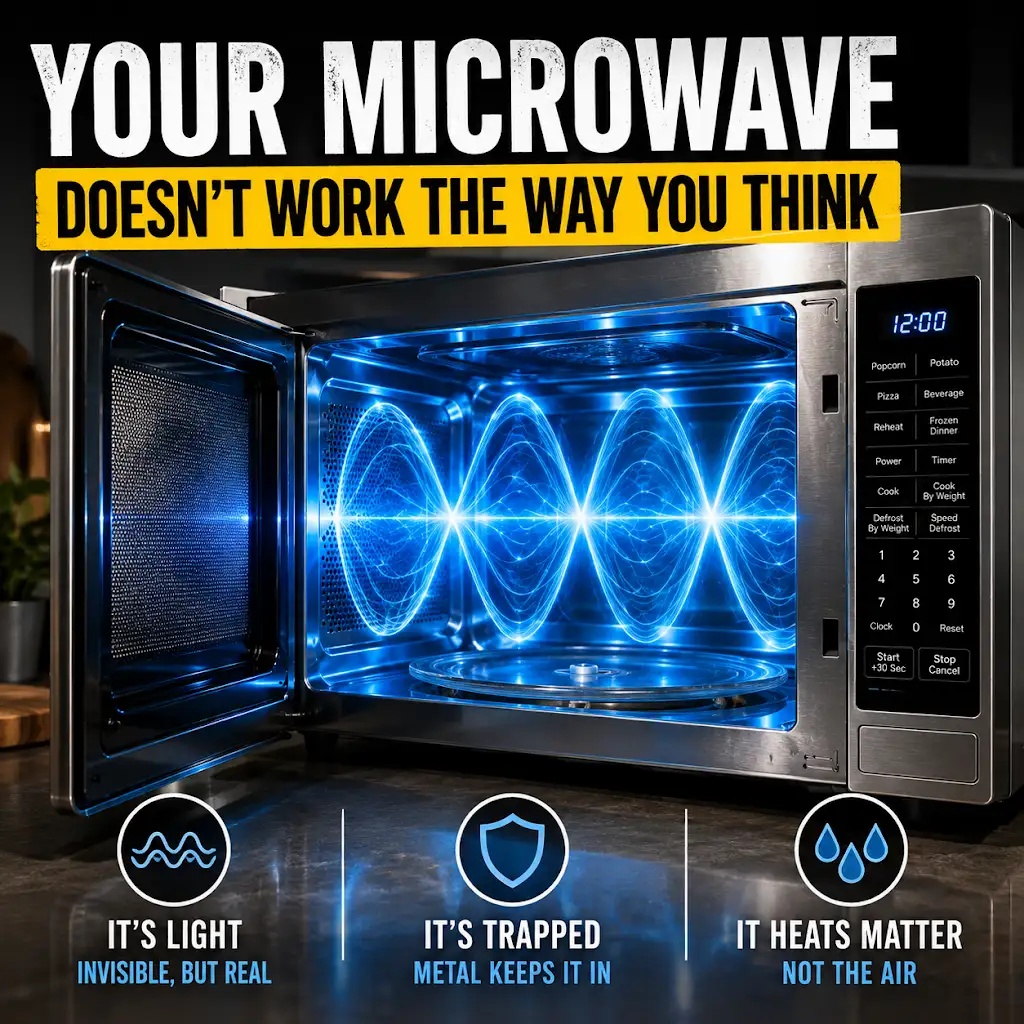
Your Microwave Doesn’t Work the Way You Think
FAQs
What causes metal to spark in a microwave?
Metal sparks in a microwave due to the reflection and concentration of electric fields in the metal, which can cause electrical arcing and sparking.
Is it safe to put metal in a microwave?
It is not safe to put metal in a microwave as it can cause sparking, potentially damaging the microwave and posing a fire hazard.
What types of metal can cause sparking in a microwave?
Any type of metal, including aluminum foil, metal utensils, and metal containers, can cause sparking in a microwave due to their ability to reflect and concentrate electric fields.
How does the design of the microwave affect metal sparking?
The design of the microwave, particularly the shape and placement of the metal components inside the microwave, can affect the likelihood of sparking. Sharp edges and points on metal objects can increase the risk of sparking.
What precautions should be taken to avoid metal sparking in a microwave?
To avoid metal sparking in a microwave, it is important to never put metal objects inside the microwave. This includes aluminum foil, metal utensils, and metal containers. It is also important to follow the manufacturer’s guidelines for microwave use and to inspect the microwave for any metal damage or defects.