
You’ve probably seen it happen. Maybe you were heating up some leftovers, or perhaps you were trying to pop some popcorn, and suddenly, a brilliant flash of light erupts from your microwave. Tiny, crackling sparks dance and flicker, sometimes accompanied by an alarming buzzing sound. It’s a spectacle that can be both mesmerizing and a little terrifying, making you wonder what on earth is going on inside that magical box. You might have even heard whispers and warnings about the dangers of putting metal in the microwave. Well, you’re here because you want to understand the science behind those captivating, yet concerning, metal sparks. This article will demystify the phenomenon, explaining precisely why metal and microwaves don’t play well together.
Before we delve into the fiery display of metal sparks, it’s crucial to understand the invisible forces at play within your microwave oven. This appliance, a staple in most modern kitchens, relies on a specific type of electromagnetic radiation to heat your food.
What Exactly Are Microwaves?
You might have heard the term “microwaves” thrown around, but what does it really mean? Microwaves are a form of electromagnetic radiation, falling within the electromagnetic spectrum between radio waves and infrared radiation. Their wavelengths are typically measured in centimeters, hence the name “micro.”
The Electromagnetic Spectrum: A Quick Overview
Imagine a vast rainbow of energy, but instead of visible light, it’s a spectrum of radiation with different frequencies and wavelengths. This is the electromagnetic spectrum. At one end, you have low-energy, long-wavelength radio waves, used for broadcasting. As you move towards higher energies and shorter wavelengths, you encounter microwaves, then infrared radiation (which we feel as heat), visible light, ultraviolet radiation (which causes sunburn), X-rays, and finally, the extremely high-energy gamma rays. Microwaves occupy a sweet spot in this spectrum, possessing enough energy to interact with water molecules in food.
How Microwaves are Generated: The Magnetron
Your microwave oven isn’t just a metal box with a lightbulb. At its heart lies a device called a magnetron. This ingenious invention is the source of the microwave radiation.
The Inner Workings of a Magnetron
The magnetron is a vacuum tube that uses a combination of strong magnetic fields and electric fields to generate high-frequency electromagnetic waves. Electrons are emitted from a central cathode and are forced to travel in circular paths by the magnetic field. As these electrons interact with specially designed resonant cavities within the tube, they emit microwaves. Think of it as a precisely engineered electron dance that produces a focused beam of microwave energy. This energy is then channeled through a waveguide into the cooking cavity.
The Microwave Oven Cavity: A Reflective Space
Once generated, the microwaves are directed into the cooking chamber. This chamber is essentially a Faraday cage, a metal enclosure designed to contain the electromagnetic radiation and prevent it from escaping.
The Role of the Metal Walls
The metal walls of your microwave cavity play a critical role. They are highly reflective to microwaves. This reflection is essential for the efficient heating of food. The microwaves bounce around the interior, bouncing off the walls, the turntable (if present), and even the food itself, ensuring that the energy is distributed as evenly as possible.
Preventing Microwave Leakage
The reflective nature of the metal also acts as a barrier, preventing the microwaves from escaping the oven and exposing you to potentially harmful radiation. This is why it’s so important to ensure your microwave door seals properly and that there are no significant dents or damage to the metal casing.
The Turntable: Ensuring Even Heating
Many microwaves come equipped with a turntable. This rotating plate serves a crucial purpose: to ensure more uniform heating of your food. As the food rotates, different parts are exposed to the microwave energy from various angles, reducing the likelihood of cold spots and overheated edges.
The Principle of Standing Waves
Without a turntable, food placed in a microwave can experience uneven heating due to a phenomenon called “standing waves.” Microwaves, as they reflect within the cavity, can interfere with each other, creating areas of high and low energy intensity. These hot and cold spots can lead to uneven cooking.
When it comes to understanding why some metals spark in a microwave, it’s essential to explore the science behind electromagnetic waves and their interaction with different materials. For a deeper insight into this phenomenon, you can check out a related article that discusses the principles of microwave radiation and its effects on various substances. This article can be found at Freaky Science, where you will learn more about the reasons behind the sparking and the safety precautions to take when using a microwave.
The Interaction of Microwaves with Food
The magic of microwave cooking lies in its ability to excite molecules within your food. Specifically, it’s the water molecules that are the primary target.
Water Molecules: The Key Players
Water (H₂O) is a polar molecule. This means it has a slightly positive charge on one end (where the hydrogen atoms are) and a slightly negative charge on the other end (where the oxygen atom is). This inherent polarity is what makes water so susceptible to microwave radiation.
Dipolar Rotation: The Molecular Dance
When microwaves enter your food, they interact with these polar water molecules. The oscillating electric field of the microwaves causes the water molecules to rapidly rotate and try to align themselves with the electric field. As the field flips back and forth millions of times per second, the water molecules do a frantic dance, twisting and turning.
Friction and Heat Generation
This rapid rotation and jostling of water molecules create friction between them. It’s this friction, this molecular-level collision, that generates heat. The more water content your food has, the more effectively it will heat up in a microwave. This is why foods with high moisture content, like vegetables, cook much faster than dry foods.
Other Molecules and Their Responses
While water is the star of the show, other molecules in your food can also be affected by microwaves, though to a lesser extent. Fats and sugars also have some polar characteristics and can contribute to the heating process. However, they don’t absorb microwave energy as efficiently as water.
Dielectric Heating Explained
The process of heating food through the interaction of microwaves with polar molecules is known as dielectric heating. It’s a direct conversion of electromagnetic energy into thermal energy at the molecular level.
The Importance of Food Composition
The composition of your food directly influences how quickly and evenly it will heat in a microwave. Foods rich in water, fats, and some sugars will heat up more readily. Conversely, foods with very low moisture content will heat poorly and may even become tough.
The Perils of Metal in the Microwave

Now we arrive at the core of your curiosity: why does metal cause such a spectacular, and potentially problematic, display of sparks in your microwave? The answer lies in how metal interacts with microwave radiation, which is fundamentally different from how food does.
The Nature of Metals and Their Electrons
Metals are characterized by their free electrons. These electrons are not tightly bound to individual atoms and can move relatively freely throughout the metallic structure. This makes metals excellent conductors of electricity.
Free Electrons and Conductivity
When microwaves, which are electromagnetic waves carrying oscillating electric fields, encounter metal, these free electrons are set into motion. The oscillating electric field of the microwaves exerts a force on these free electrons, causing them to move back and forth within the metal.
Electric Currents Induced in Metal
This movement of free electrons constitutes an electric current. The higher the frequency of the microwaves and the more abundant the free electrons, the stronger the induced currents will be.
Reflection vs. Absorption: A Crucial Distinction
Unlike water molecules that absorb and convert microwave energy into heat, metals primarily reflect microwave radiation. However, the interaction isn’t purely reflective, and this is where the sparks begin.
Microwaves and Electric Fields
Microwaves, as they hit a conductive surface like metal, induce strong electric fields on that surface. If the metal object has sharp edges, points, or is very thin, these electric fields can become concentrated.
Charge Accumulation at Sharp Points
Imagine a smooth, rounded metal object. The electric charge is distributed relatively evenly. Now picture a thin piece of metal foil with crinkled edges, or a fork with its pointed tines. These sharp points and edges act as focal points for the accumulating electric charges. The charges build up intensely at these locations.
The Sparking Phenomenon: A Breakdown of Air
When the concentration of electric charge at these sharp points becomes high enough, it can exceed the dielectric strength of the surrounding air. The air, which normally acts as an insulator, can no longer withstand the intense electric field.
Dielectric Breakdown of Air
The dielectric strength of air refers to the maximum electric field strength that air can withstand before it begins to conduct electricity. When this limit is surpassed, the air molecules become ionized, meaning electrons are stripped away from them.
The Creation of Plasma
This ionization creates a plasma – a superheated, electrically conductive gas. This plasma is what you see as a spark or arc. The rapid discharge of electrical energy through the ionized air is the brilliant flash of light and the crackling sound you hear.
Different Shapes, Different Sparks
The shape and thickness of the metal object significantly influence the sparking.
Thin Metal Objects: The Worst Offenders
Thin, crinkled metal objects like aluminum foil (especially when not smoothed out) are notorious for sparking. Their irregular surfaces and thinness create numerous points where electric charges can accumulate and lead to rapid dielectric breakdown.
Objects with Sharp Edges and Points
Forks, knives, and even some metallic decorative trims on dishes can also cause sparks. The pointed tines of a fork or the sharp edges of a knife are ideal locations for charge concentration.
Smooth, Rounded Metal Objects: Less Risky, But Still Not Recommended
Even smooth, rounded metal objects, like the inside of a stainless steel bowl, can cause issues, though typically less dramatic. While they don’t have sharp points for intense charge buildup, the sheer volume of free electrons can still lead to reflected microwaves and potentially create eddy currents that generate heat, though sparking is less common.
The Underlying Physics: Electric Field Intensification
The fundamental principle behind metal sparking is the intensification of the electric field at the surface of the metal due to the interaction with the microwaves.
Faraday’s Law and Induced Currents
Faraday’s Law of Induction states that a changing magnetic field induces an electromotive force (voltage) in a conductor. In a microwave oven, the oscillating electric and magnetic fields of the microwaves induce currents within the metal.
Resonance and Amplification
In some cases, the geometry of the metal object and its interaction with the microwave frequencies can lead to resonance, where the induced currents are amplified, further increasing the electric field intensity.
Why Some Metals Spark More Than Others
While most metals will exhibit some form of interaction with microwaves, some are more prone to sparking than others.
Conductivity and Electron Density
Metals with higher electrical conductivity and a greater density of free electrons will generally experience stronger induced currents and thus are more likely to spark.
Aluminum Foil: A Common Culprit
Aluminum foil is a classic example. Its thinness and the way it tends to crinkle create numerous sharp edges, making it highly susceptible to charge accumulation and sparking.
The Dangers of Metal Sparks
Those dazzling sparks are not just for show; they can pose real risks to your microwave and even your safety.
Damage to the Magnetron
The reflected microwaves, especially when intense and concentrated, can bounce back towards the magnetron, the very device that generates the microwaves. This can cause damage to the magnetron, potentially leading to the premature failure of your microwave oven.
Arc Over and Internal Damage
The arcing that occurs within the microwave cavity can also damage the interior surfaces of the oven, leaving burn marks or even etching the metal.
Fire Hazards
In extreme cases, the sparks can ignite flammable materials within the microwave. This could be food residue, paper towels, or even packaging materials. A microwave fire can be difficult to extinguish and can spread rapidly.
Overheating of Metal Components
While less common with typical kitchenware, prolonged exposure of certain metal components to microwaves can lead to them becoming extremely hot, posing a burn risk.
The Science of Metal Reflection: A Deeper Dive
To truly grasp why metal sparks, we need to understand the physics of reflection and the specific properties of metals that lead to this phenomenon.
How Metals Interact with Electromagnetic Waves
Metals are excellent conductors of electricity due to their abundant free electrons. When an electromagnetic wave, like a microwave, strikes a metal surface, the oscillating electric field component of the wave interacts with these free electrons.
The Response of Free Electrons
The electric field causes the free electrons to oscillate back and forth within the metal. This oscillation creates induced electric currents.
Displacement Currents
These induced currents are essentially a form of electrical current that flows through the metal in response to the incoming electromagnetic field.
The Role of the Waveguide Effect
The way microwaves interact with metal objects can be likened to how they behave within a waveguide. A waveguide is a hollow metal tube used to direct microwave radiation.
Creating a Reflective Cavity
When you place a metal object inside the microwave cavity, it can, in a sense, create a smaller, localized reflective cavity within the larger one. The microwaves bounce off this metal object, just as they do off the walls of the microwave.
Amplification of Fields
If the geometry of the metal object is such that it resonates with the microwave frequencies, it can amplify the electric and magnetic fields within its vicinity.
Skin Effect: Where the Action Happens
The interaction between microwaves and metal is not uniform throughout the metal. A phenomenon known as the “skin effect” comes into play.
Microwaves Travel on the Surface
The skin effect dictates that for high-frequency alternating currents (like those induced by microwaves), the current tends to flow primarily on the surface of the conductor, rather than through its bulk.
Concentration of Currents and Fields
This means that the induced currents and the associated electric fields are concentrated on the outer surface of the metal object. This surface concentration is crucial for the subsequent breakdown of air.
Why Not All Metal Objects Spark Equally
While all metals will reflect microwaves to some extent, the shape, thickness, and the presence of sharp edges or points are critical determinants of whether sparking will occur.
Surface Area and Edge Effects
Objects with a large surface area relative to their thickness, or objects with sharp edges and points, present more opportunities for the concentration of electric charges.
Mathematical Models of Field Intensification
Complex mathematical models are used in electromagnetics to predict how electric and magnetic fields will behave around various shapes. These models show that sharp corners and points are areas of significant field intensification.
The Faraday Cage Principle and its Limits
Your microwave oven itself is designed as a Faraday cage, which effectively blocks external electromagnetic radiation. However, when you introduce metal inside this cage, you are creating a situation where the metal itself becomes a participant in the electromagnetic field.
Internal Reflection and Resonance
The metal object inside the microwave cavity can create internal reflections and, in some cases, resonate with the microwave frequencies, leading to a buildup of energy in specific areas.
The Dangers of Metal Linings in Other Appliances
This principle also explains why certain appliances, like some older blenders with metal blades, have warnings about operating them empty. The blades can interact with the motor’s electrical fields, and in some scenarios, could even generate sparks.
When it comes to understanding why some metals spark in a microwave, it’s fascinating to explore the science behind it. The interaction between microwaves and metal objects can lead to the creation of electric arcs, which are responsible for those startling sparks. For a deeper dive into this phenomenon and other intriguing scientific explanations, you can check out a related article on the topic at Freaky Science. This resource offers insights into various scientific curiosities, making it a great read for anyone interested in the unexpected behaviors of everyday materials.
Safe and Unsafe Microwave Practices
| Metal Type | Reason for Sparking |
|---|---|
| Aluminum foil | Thin edges can cause sparking due to the build-up of electric charge |
| Stainless steel | Irregular shapes or sharp edges can cause sparking |
| Other metals | Presence of any metal with sharp edges or irregular shapes can cause sparking due to the build-up of electric charge |
Understanding the science behind metal sparks is the first step toward using your microwave safely. Armed with this knowledge, you can avoid potentially damaging your appliance and prevent hazardous situations.
What You Should NEVER Put in Your Microwave
There’s a general rule of thumb that you’ve likely heard: don’t put metal in the microwave. This applies to a wide range of items.
Metal Utensils
Forks, spoons, knives, whisks – these are all obvious no-gos. Their shape and the presence of points and edges make them prime candidates for sparking.
Decorative Metal Trim on Dishes
Many ceramic dishes and plates have metallic decorative bands or patterns. These, even if seemingly thin, can cause sparks and damage your microwave. Always check the rim of your dishes for any metallic elements.
Aluminum Foil and Other Wrappings
While sometimes used for shielding in conventional ovens, aluminum foil is a major culprit for microwave sparks. Its thinness and tendency to crinkle create ideal conditions for electric charge buildup.
Metal Twist Ties and Staples
Even small metal items like twist ties from bread bags or staples from packaging can cause sparks if they end up inside the microwave.
Ovens with Metal Components
Some ovens have internal metal components that are not designed for microwave interaction. If you’re unsure about a specific item, it’s always best to err on the side of caution.
Safe Alternatives and Microwave-Friendly Materials
The good news is that there are plenty of safe and effective materials you can use in your microwave.
Glass and Ceramic Cookware
Most glass and ceramic dishes are excellent choices for microwave use, provided they don’t have any metallic decorations. They are non-reactive and do not conduct microwaves.
Microwave-Safe Plastics
Many plastics are designed to be microwave-safe. Look for the “microwave-safe” symbol on the bottom of plastic containers. These plastics are engineered to withstand the heat and not leach harmful chemicals into your food.
Paper Products (with caveats)
Plain white paper towels can be used to cover food or absorb grease. However, avoid paper products with metallic inks or coatings, as these can spark. Also, be cautious with paper plates or cups that might have a waxy or plastic coating, as some can melt or catch fire.
Venting Your Food
When heating foods that can build up steam, like covered dishes or potatoes, always ensure there is a way for the steam to escape. This is often done by leaving a small gap in the cover or poking holes in the food. This prevents pressure buildup and potential explosions.
What to Do If You Accidentally Put Metal in the Microwave
Accidents happen, and if you find yourself in this situation, don’t panic, but act quickly and safely.
Immediately Stop the Microwave
The moment you see sparks or hear unusual noises, press the “Stop” or “Cancel” button. Do not try to remove the metal while the microwave is still running.
Open the Door and Let it Cool
Once the microwave has stopped, open the door and allow the appliance to cool down for a few minutes. This will reduce the risk of burns from residual heat.
Inspect for Damage
Carefully inspect the interior of the microwave for any signs of damage, such as burn marks, scorch marks, or melted plastic.
If You Notice Significant Damage
If you observe any significant damage to the interior, or if the microwave continues to malfunction after removing the metal and cooling down, it’s best to unplug it and have it inspected by a qualified technician or consider replacing it.
When in Doubt, Throw it Out (or Use a Different Method)
If you are unsure whether an item is microwave-safe, it’s always better to err on the side of caution. Use a different cooking method or a known microwave-safe container.
The Importance of Reading Labels and Following Instructions
Manufacturers provide guidelines for a reason. Always read the labels on your food packaging and cookware, and follow the instructions provided with your microwave oven.
Understanding Microwave Wattage
The wattage of your microwave affects cooking times. Higher wattage microwaves heat food faster. Understanding your microwave’s wattage can help you adjust cooking times and prevent overcooking or burning.
Experimenting Safely
When trying new dishes or cookware in your microwave, start with short cooking times and check the food frequently. This allows you to gauge how the food and the cookware interact with the microwave energy.
By understanding the science behind those dazzling metal sparks, you can confidently navigate the world of microwave cooking, ensuring both delicious meals and a safe kitchen environment. Remember, a little knowledge goes a long way in preventing a fiery display and protecting your trusty appliance.
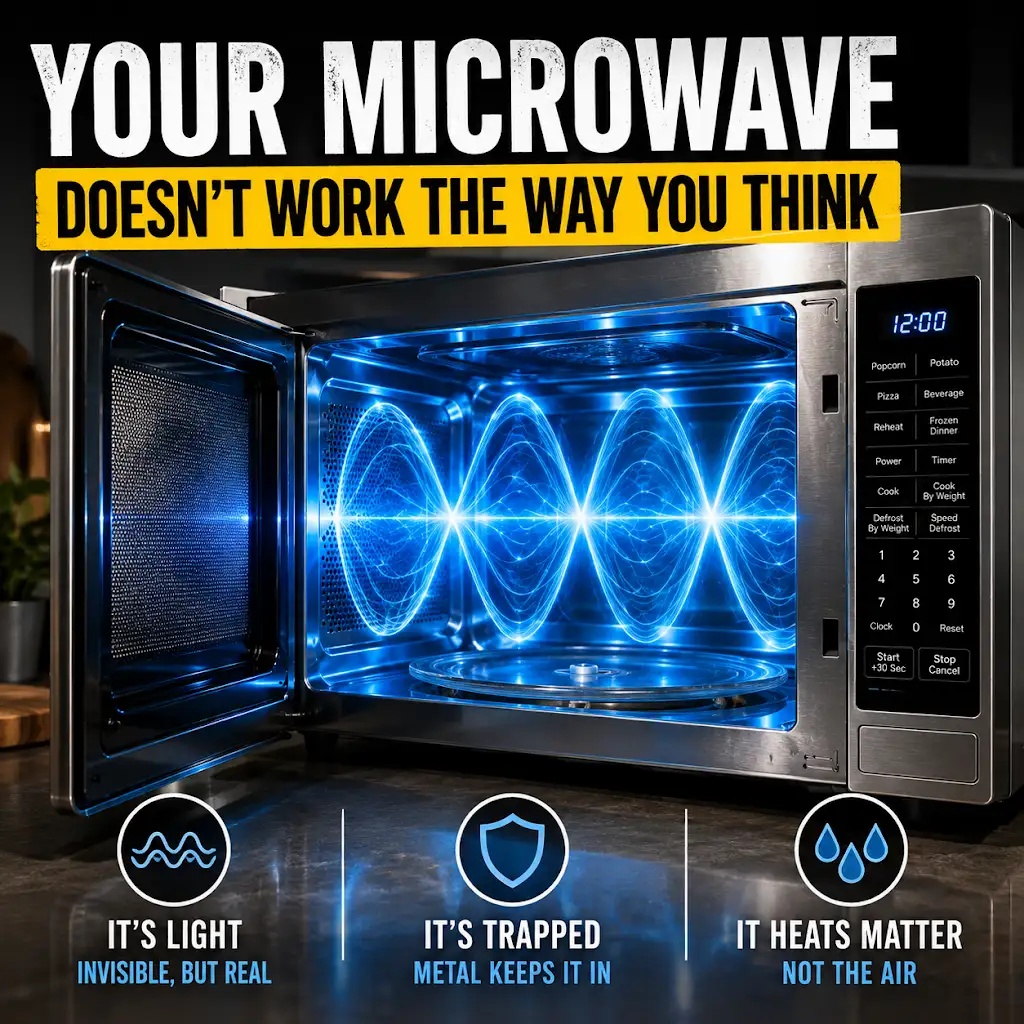
Your Microwave Doesn’t Work the Way You Think
FAQs
What happens when metal sparks in a microwave?
When metal sparks in a microwave, it can cause arcing, which is a discharge of electricity. This can potentially damage the microwave and create a fire hazard.
Why does metal spark in a microwave?
Metal sparks in a microwave because it reflects the microwaves, causing an accumulation of electrical energy. This can lead to arcing and potentially damage the microwave.
What types of metal can cause sparking in a microwave?
Any type of metal, including aluminum foil, metal utensils, and metal trim on dishes, can cause sparking in a microwave due to their ability to reflect microwaves.
Is it safe to put metal in a microwave?
It is not safe to put metal in a microwave as it can cause arcing, potentially damaging the microwave and creating a fire hazard. It is important to follow the manufacturer’s guidelines and only use microwave-safe materials.
How can I safely heat food with metal in a microwave?
To safely heat food with metal in a microwave, use microwave-safe containers and utensils. Avoid using metal foil or metal-trimmed dishes, and always follow the manufacturer’s guidelines for safe microwave use.