You’re standing in your kitchen, reaching for the microwave to heat up last night’s leftovers. You press a few buttons, hear the hum, and moments later, your food is steaming. But have you ever stopped to wonder why you call it a “Radarange”? It’s a peculiar name for a kitchen appliance, isn’t it? It sounds more like a science fiction weapon than a device that warms up your pizza. Yet, this seemingly odd moniker holds the key to understanding how microwave ovens came to be and how they earned their distinctive title. Your journey into the origin of the “Radarange” is a fascinating exploration of wartime innovation, serendipitous discovery, and the evolution of technology into everyday life.
The Dawn of Radar and its Unforeseen Potential
To understand “Radarange,” you must first understand radar. During World War II, the Allied forces faced a desperate need to detect enemy aircraft and ships before they could launch devastating attacks. The development of radar (Radio Detection and Ranging) was a monumental undertaking, a race against time and technological adversaries. Imagine a world without the ability to see beyond visual range, a world where a surprise aerial bombardment could cripple defenses before they even knew what hit them. Radar offered a glimmer of hope, a way to pierce the fog of war and enemy stealth.
Percy Spencer and the Magnetron’s Warm Secret
The story of the “Radarange” is inextricably linked to one man: Percy Spencer. Spencer was a brilliant, self-taught engineer working for the Raytheon Manufacturing Company. Raytheon was a key player in the development of radar technology, and Spencer was instrumental in improving the magnetron, a crucial component that generated the powerful microwave beams used by radar systems. He was a hands-on tinkerer, someone who understood machines not just from textbooks but from the practical application of metal, wires, and electricity.
One fateful day in 1945, while working on an active radar set, Spencer experienced something peculiar. He was standing near a magnetron that was generating microwaves when he noticed a candy bar in his pocket had melted. This wasn’t just a little bit of softening; it was completely liquefied. His curiosity, a driving force throughout his life, was immediately piqued.
The “Aha!” Moment: Beyond Detection
Spencer wasn’t content with merely observing this strange phenomenon. His mind, already trained to analyze and understand complex systems, began to probe the implications. He realized that the microwaves emitted by the magnetron were not just bouncing off objects to detect them; they were also interacting with the food molecules themselves, causing them to heat up rapidly. This was a revolutionary concept, a byproduct of military technology that had the potential for an entirely different, non-military application. It was an unintended consequence, a serendipitous discovery born from the relentless pursuit of wartime advantage.
From Battlefield to the Kitchen: A Paradigm Shift
The initial realization was purely scientific. Spencer began experimenting further, using popcorn kernels and an egg. The popcorn popped, and the egg, to his surprise and perhaps a bit of messy dismay, cooked and exploded. These were clear demonstrations of the heating power of microwaves. It wasn’t just an academic curiosity anymore; it was a tangible effect, one that could be harnessed. The implications for cooking were enormous. Imagine a device that could cook food in a fraction of the time of conventional ovens. This was a radical departure from the slow, laborious processes that had defined cooking for centuries.
Microwave ovens were originally called Radarange due to their development from radar technology used during World War II. The connection to radar comes from the fact that the microwaves generated by these ovens are similar to the electromagnetic waves used in radar systems. For a more in-depth exploration of the history and science behind microwave ovens, you can read the related article on this topic at Freaky Science.
The Birth of the “Radarange”: A Name Forged in Innovation
Raytheon’s Vision and the Commercialization of a Discovery
Once the potential of microwave heating was recognized, Raytheon saw a commercial opportunity. They understood that this technology, born from the crucible of war, could revolutionize the way food was prepared. However, bringing such a novel technology to market required a name that would capture its essence and communicate its capabilities. This is where the “Radarange” moniker truly takes root.
Connecting the Dots: Radar and its Range
The name “Radarange” is a portmanteau, a clever combination of two key concepts: “radar” and “range.”
“Radar”: The Technological Ancestry
The first part, “radar,” directly acknowledges the technological lineage of the appliance. The magnetron, the heart of the microwave oven, was originally developed for radar systems. The very principles of generating and utilizing radio waves were derived from this military technology. By incorporating “radar” into the name, Raytheon was highlighting the advanced, cutting-edge science behind the invention. It evoked a sense of power, sophistication, and technological prowess, qualities associated with the wartime efforts that had spurred its creation. It was a way of saying, “This appliance is born from the same incredible technology that helped win the war.”
“Range”: The Functional Promise
The second part, “range,” speaks to the appliance’s primary function: cooking. In the context of ovens and stoves, “range” refers to the apparatus used for cooking and heating. By combining it with “radar,” the name suggested that this new device was a new kind of cooking range, one that operated on principles derived from radar. It implied a broader scope of cooking capabilities, a wider “range” of culinary possibilities, made possible by the speed and efficiency of microwave technology. It hinted at a future where cooking was no longer confined by traditional limitations.
A Name That Signaled the Future
The “Radarange” was not just a functional name; it was a name that signaled a paradigm shift. It was a bold declaration of innovation, suggesting a radical departure from existing cooking methods. It projected an image of efficiency, speed, and modern convenience, all powered by the unseen force of radio waves. It was a name that resonated with the post-war optimism and the desire for technological advancements that would improve everyday life.
The First Radarange: A Giant of the Kitchen
The Dawn of the Commercial Microwave: A Bulky Beginning
The first commercially available microwave oven, introduced by Raytheon in 1947, was anything but the sleek, compact appliance you’re familiar with today. It was an industrial-sized behemoth, a far cry from the countertop convenience we now take for granted. The original Radarange was a massive, heavy unit, standing nearly six feet tall and weighing over 750 pounds. Imagine trying to fit that into your modern kitchen! It was primarily designed for commercial use, intended for high-volume establishments like restaurants, railway dining cars, and ships, where speed and efficiency were paramount.
Catering to the Masses (of Food, Not Homes)
These early Radarange units were not for the average household. They were expensive, costing thousands of dollars, making them an impractical investment for most families. Their target audience was businesses that needed to quickly heat or cook large quantities of food. Think of a busy diner needing to serve hundreds of meals during peak hours, or a ship’s galley needing to prepare food for a large crew at sea. For these environments, the Radarange’s speed was a game-changer, allowing for faster service and reduced labor costs.
The Technology Behind the Beast: Magnetrons and Power
The impressive size of the early Radarange was due to the powerful magnetrons and the necessary safety shielding required to contain the microwave energy. These were not the miniaturized components you find in today’s microwaves. The magnetron itself was a substantial piece of equipment, and the entire unit was encased in robust metal to prevent any stray microwave radiation from escaping. The power output was also significantly higher than what we see in domestic models, reflecting its commercial purpose.
Early Adaptations and Use Cases
Despite its size and cost, the Radarange found its niche. It was particularly useful for tasks that required rapid heating, such as thawing frozen foods, cooking vegetables, and reheating meals. Its ability to cook food quickly without excessive drying or loss of nutrients was a significant advantage in commercial settings. It represented a new era of food preparation, one that prioritized speed and efficiency without compromising quality.
The Evolution of the Radarange: Towards the Modern Microwave
From Commercial Giants to Domestic Dreams
The initial success of the Radarange in commercial settings paved the way for its eventual integration into the home. However, the path from industrial behemoth to countertop convenience was a long and gradual one. As technology advanced and manufacturing processes improved, the size and cost of microwave ovens began to decrease.
Miniaturization and Affordability: The Keys to Household Adoption
Engineers and designers worked tirelessly to miniaturize the components, improve the efficiency of the magnetron, and develop safer, more user-friendly designs. The goal was to make microwave cooking accessible and affordable for the average household. This involved significant research and development, focusing on making the appliances smaller, lighter, and more energy-efficient. The complex shielding was refined, and the power levels were adjusted for domestic use.
The 1960s and 1970s: The Rise of the Home Microwave
The 1960s and 1970s saw a significant shift. Japanese manufacturers, in particular, played a crucial role in developing more compact and affordable microwave ovens. Companies like Sharp and Panasonic introduced models that were more suitable for home kitchens, and the price began to drop significantly. This period marked the true beginning of microwave ovens becoming a common household appliance. You might even recall your parents or grandparents talking about their first microwave, a novelty that promised to revolutionize family mealtimes.
The Name Sticks: A Legacy of Innovation
Even as the appliances themselves underwent radical transformations in size, design, and functionality, the name “Radarange” often persisted, at least colloquially, as a descriptor for the technology. While specific manufacturers started using their own brand names (like “Sharp Microwave Oven” or “Panasonic Microwave”), the term “Radarange” became almost synonymous with the concept of microwave cooking, much like “Kleenex” is to tissues. It was a testament to the pioneering spirit of Raytheon and Percy Spencer’s groundbreaking discovery. The original name, with its clear connection to radar, served as a constant reminder of the advanced technology that made this culinary revolution possible.
Microwave ovens were originally called Radarange due to their connection with radar technology developed during World War II. The invention of the microwave oven was a serendipitous result of research into radar equipment, where scientists discovered that microwaves could be used to heat food. For a deeper understanding of this fascinating history, you can read more in this related article on the topic. To explore the origins of the Radarange and its evolution into the modern microwave oven, visit this link.
Beyond the Name: The Lasting Impact of the Radarange
| Reason | Explanation |
|---|---|
| Use of Radar technology | Microwave ovens were originally called Radarange because they used the same technology as radar systems developed during World War II. |
| Heating method | The name “Radarange” emphasized the use of microwaves to rapidly heat and cook food, similar to the way radar waves are used for detection and communication. |
| Marketing strategy | The name was also a marketing strategy to highlight the advanced and futuristic nature of the appliance at the time. |
A Revolution in the Kitchen and Beyond
The invention and subsequent evolution of the Radarange have had a profound and lasting impact on our lives. It’s not just about heating up leftovers; it’s about how we approach food preparation, how we manage our time, and even how we think about technology’s role in our homes.
Redefining Convenience and Time Management
The most immediate and obvious impact is the sheer convenience and time-saving aspect. You can prepare a meal, reheat food, or defrost ingredients in a matter of minutes, a stark contrast to the hours required by traditional cooking methods. This has allowed for more flexible meal planning, enabled quicker lunches, and made it easier for busy individuals and families to get a hot meal on the table. It’s fundamentally changed the pace of domestic life for many.
The Scientific Principles at Play: A Deeper Understanding
While you might not think about it every time you use it, the Radarange operates on sophisticated scientific principles. Understanding how microwaves interact with food molecules – causing water molecules to vibrate and generate heat through dielectric heating – offers a glimpse into the power of applied physics. This understanding has not only led to better microwave ovens but has also spurred research into other applications of microwave technology in fields ranging from medicine to industrial processes.
The Legacy of Serendipity and Ingenuity
The story of the Radarange is a powerful reminder of the role of serendipity and human ingenuity. A chance observation during wartime research, coupled with a curious and brilliant mind like Percy Spencer’s, led to a technology that would transform everyday life. It underscores the importance of encouraging curiosity, fostering innovation, and recognizing the potential in unexpected discoveries. The “Radarange” isn’t just a name; it’s a symbol of that incredible journey from a military necessity to a kitchen staple. It’s a testament to how groundbreaking inventions can emerge from the most unlikely of circumstances, ultimately shaping the world you live in.
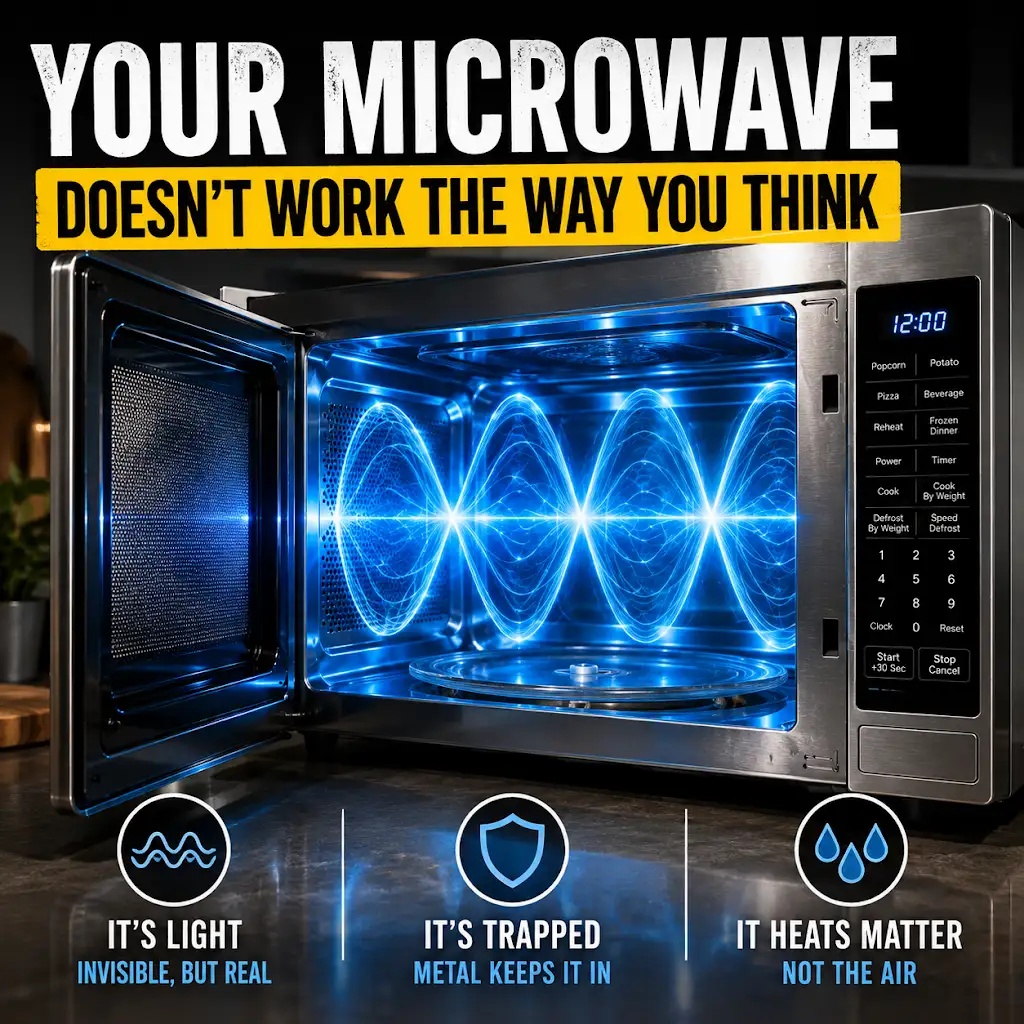
Your Microwave Doesn’t Work the Way You Think
FAQs
What is the origin of the name “Radarange” for microwave ovens?
The name “Radarange” was originally used by the company Raytheon, which introduced the first commercially available microwave oven in 1947. The name was a combination of “radar” and “range,” highlighting the technology’s connection to radar and its ability to cook food quickly.
How did radar technology influence the development of microwave ovens?
Microwave ovens were developed as a result of research into radar technology during World War II. Scientists noticed that microwave radiation could heat food quickly, leading to the invention of the first microwave oven.
When were microwave ovens first introduced to the public?
The first commercially available microwave oven, the Radarange, was introduced by Raytheon in 1947. However, it was not until the 1960s that microwave ovens became more widely available and affordable for consumers.
Why did the name “Radarange” eventually change to “microwave oven”?
As the technology became more common and other companies began producing similar appliances, the name “Radarange” was eventually replaced by the more descriptive term “microwave oven” to better reflect the appliance’s function.
What impact did the introduction of microwave ovens have on cooking and food preparation?
The introduction of microwave ovens revolutionized cooking and food preparation by providing a quick and convenient way to heat and cook food. It also led to the development of new types of convenience foods specifically designed for microwave cooking.