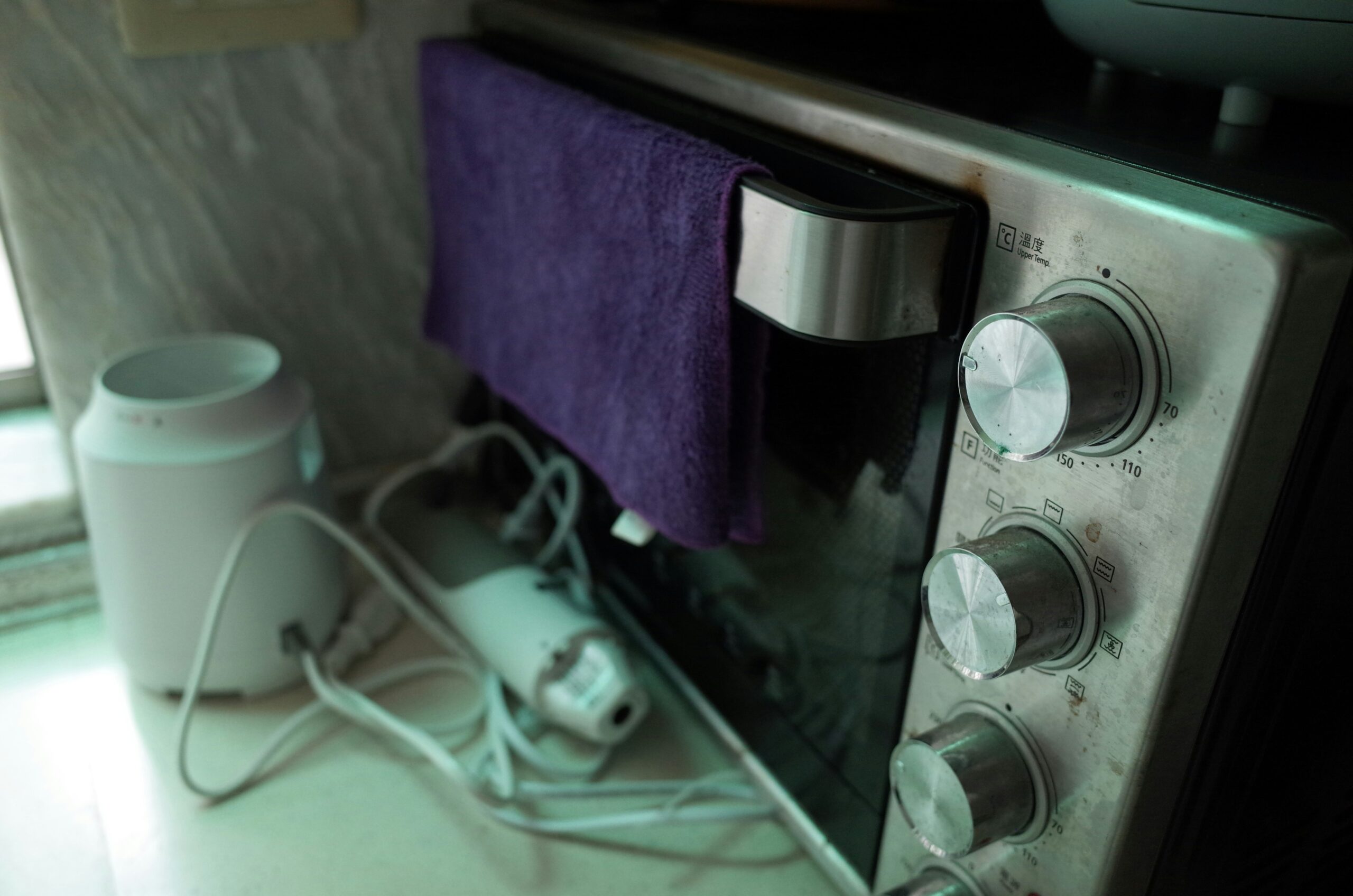
You stand before your microwave, a familiar silver box humming with latent power. You’ve popped popcorn, reheated leftovers, and perhaps even attempted a daring mug cake or two within its confines. But have you ever paused to consider the gleaming metal walls that enclose your culinary experiments? Why, you might wonder, is the inside of a microwave made of metal? It’s not just for aesthetics, you know. This metallic interior is a carefully engineered component, crucial for both your safety and the very function of the appliance. Let’s delve into the fascinating world of microwave interiors and uncover the secrets behind that shiny enclosure.
The most significant reason for the metal interior of your microwave is to create a Faraday cage. You’ve likely heard of Faraday cages in the context of protecting electronics from electromagnetic pulses or even as a theoretical shield against lightning. In your microwave, this principle is applied to contain the microwave radiation generated by the magnetron.
How Microwave Radiation Works (and Why It Needs Containing)
Before we dive deeper into the Faraday cage, it’s essential to understand how a microwave oven heats your food. The heart of the appliance is the magnetron, a vacuum tube that generates microwave radiation. These are a form of electromagnetic energy, similar to radio waves and visible light, but with a specific frequency (typically around 2.45 gigahertz).
When you activate your microwave, the magnetron emits these microwaves. The metal interior of the oven then reflects these waves. Imagine throwing a ball into a room with mirrored walls; the ball would bounce around endlessly. Microwave radiation behaves similarly, bouncing off the metal surfaces. This bouncing is vital because it ensures the microwaves are directed towards your food, where they can do their work.
The Role of Metal in Reflection
Metal, particularly the type used in microwave interiors (usually stainless steel or coated mild steel), is an excellent conductor of electricity. This property makes it highly effective at reflecting electromagnetic radiation. The microwaves are essentially unable to penetrate the metal. Instead, they are bounced back into the cooking chamber, ensuring that the energy is concentrated on the food.
Why Containment is Paramount for Safety
If the metal interior wasn’t there, the microwave radiation would simply escape the appliance. This would be a significant safety hazard. Prolonged exposure to high-intensity microwave radiation can be harmful to living tissues, causing burns and other health problems. The Faraday cage effect of the metal interior acts as a crucial barrier, preventing these dangerous waves from reaching you and anything outside the microwave.
The Science Behind the Reflection: Electron Behavior
The reason metal reflects microwaves lies in the behavior of its electrons. Metals have a large number of free electrons that are not tightly bound to individual atoms. When electromagnetic waves, like microwaves, encounter these free electrons, they exert a force on them, causing them to oscillate. These oscillating electrons then re-radiate the electromagnetic energy in the opposite direction, effectively reflecting the wave. It’s a dance of electrons and energy, keeping the radiation where it needs to be.
The interior of a microwave is made of metal to effectively reflect microwaves and ensure even cooking of food. This design allows the microwaves to bounce around the interior, maximizing their interaction with the food. For a deeper understanding of the science behind microwave technology and its components, you can read a related article at Freaky Science.
Directing the Heat: Ensuring Efficient Cooking
Beyond safety, the metal interior plays a crucial role in the efficiency and effectiveness of your microwave oven. It’s not just about keeping the radiation in; it’s also about directing it precisely where you want it.
The Importance of Even Distribution
The bouncing of microwaves off the metal walls isn’t random. It’s a calculated process designed to distribute the energy as evenly as possible throughout the cooking cavity. Without this reflection, the microwaves might only hit certain parts of your food, leading to uneven cooking – some areas scorching while others remain cold.
The Turntable’s Partnership with the Metal Interior
You’ve probably noticed the turntable that rotates your food. This is another crucial component that works in tandem with the metal interior to ensure even cooking. As the food rotates, different parts of it are exposed to the reflected microwaves from various angles. This, combined with the multi-directional bouncing from the metal walls, helps to minimize “hot spots” and “cold spots” within your food.
Minimizing Energy Loss
The metal interior also helps to minimize energy loss. If the cavity were made of a material that absorbed microwaves, a significant amount of energy would be wasted. By reflecting the waves, the metal ensures that almost all the generated microwave energy is directed towards heating your food, making your microwave an energy-efficient appliance.
The Cavity as a Resonant Chamber
In a sense, the metal interior creates a resonant chamber. The dimensions and shape of the cavity, combined with the reflective properties of the metal, are designed to optimize the interaction between the microwaves and the food. This means that the energy is absorbed by the water molecules in your food most effectively.
Preventing Punctures and Maintaining Structural Integrity
The metal interior isn’t just a thin skin; it’s a robust enclosure that contributes to the overall durability and safety of your microwave.
The Strength of Sheet Metal
Sheet metal, commonly used for microwave interiors, is inherently strong and resistant to damage. This provides a protective barrier against accidental impacts and wear and tear that might occur during regular use. Imagine if the inside were made of glass or plastic; it would be far more susceptible to cracks and breaks.
Withstanding Heat and Steam
Microwave ovens generate heat, and food often releases steam. The metal interior is designed to withstand these conditions without degrading or warping. It’s a material that can handle the thermal stresses of cooking without compromising its structural integrity or its ability to reflect microwaves.
Easy to Clean and Hygienic
The smooth, non-porous surface of metal is also a significant advantage when it comes to cleaning and hygiene. Spills and splatters can be easily wiped away, preventing the buildup of food residue that could harbor bacteria or affect the performance of the oven. This ease of maintenance contributes to the longevity and safety of the appliance.
Protection from the Magnetron
The metal interior also provides a physical barrier between you and the powerful magnetron. While the magnetron itself is designed with safety features, the robust metal enclosure offers an extra layer of protection, ensuring that you are never directly exposed to its intense radiation.
The Importance of the Door Seal: A Critical Component

While the metal walls are vital, their effectiveness is greatly enhanced by the door seal. This often-overlooked component is critical for maintaining the integrity of the Faraday cage.
Sealing the Gaps
The door of a microwave oven is a point where the metal enclosure is interrupted. To maintain the Faraday cage effect, it’s essential that there are no significant gaps or openings when the door is closed. The door seal, typically made of a rubber or silicone material, presses against the oven cavity when the door is shut, creating a tight seal.
The Waveguide and its Role
Another important element is the waveguide. This is a metal channel that directs the microwaves from the magnetron into the cooking cavity. The waveguide is designed to prevent microwaves from escaping through the connection point. The door seal ensures that even this crucial connection point is well-protected.
Preventing Microwave Leakage
A compromised door seal can lead to microwave leakage. This is why it’s so important to ensure your microwave door closes properly and the seal is intact. Damaged or worn seals should be replaced immediately to maintain the safety of the appliance. A healthy seal is your guarantee that the Faraday cage is doing its job effectively.
The Mesh Screen in the Window
You might also notice a fine metal mesh embedded in the glass of the microwave door window. This mesh acts as another layer of protection, further reinforcing the Faraday cage effect. The holes in the mesh are smaller than the wavelength of the microwaves, preventing them from passing through while still allowing you to see your food as it cooks. It’s a clever integration of visibility and safety.
The inside of a microwave is made of metal primarily to reflect microwaves and ensure even cooking of food. This design allows the microwaves to bounce around the interior, maximizing their interaction with the food. For a deeper understanding of how microwaves work and the science behind their design, you can explore this informative article on Freaky Science, which delves into the fascinating principles of microwave technology and its applications.
Beyond the Basics: Special Features and Materials
| Reasons | Explanation |
|---|---|
| Reflects Microwaves | The metal interior of a microwave reflects the microwaves generated by the magnetron, ensuring that they are evenly distributed throughout the cooking chamber. |
| Prevents Leakage | The metal interior helps to prevent the leakage of microwaves from the cooking chamber, ensuring that the food is cooked efficiently and safely. |
| Easy to Clean | Metal interiors are easy to clean and maintain, making them a practical choice for the inside of a microwave. |
While the fundamental principle of a metal interior remains constant, there are some variations and special features that enhance the performance and user experience of your microwave.
Different Types of Metal Finishes
The metal interior isn’t always just plain, unadorned metal. You’ll often find different finishes, such as enamel coatings or brushed stainless steel. These finishes can contribute to aesthetics, ease of cleaning, and even some minor improvements in heat distribution.
The Role of the Cavity Liner
Some microwaves feature a removable cavity liner, often made of glass or ceramic. While the primary cooking cavity is still metal, these liners can offer added convenience for cleaning baked-on messes. However, it’s crucial to ensure that these liners are designed to be used in a microwave and do not interfere with the microwave radiation.
Advanced Insulation Techniques
Modern microwaves also employ advanced insulation techniques to further enhance efficiency and safety. This insulation helps to minimize heat loss from the cooking cavity, meaning less energy is wasted, and the exterior of the microwave remains cooler to the touch.
The Future of Microwave Interiors
As technology advances, we may see further innovations in microwave interior design. Research into new materials and coatings that can enhance energy absorption, improve heat distribution, or even offer self-cleaning properties is ongoing. However, the core principle of using metal for its reflective and containment properties is likely to remain central to microwave oven design for the foreseeable future.
In conclusion, the gleaming metal interior of your microwave is far more than just a surface; it’s a sophisticated engineering marvel. It’s your guardian against stray radiation, ensuring your safety through the powerful principle of the Faraday cage. It’s the architect of efficient cooking, reflecting and directing energy to heat your food evenly. And it’s a testament to durability, protecting the appliance’s internal components. So, the next time you reach for that reheat button, take a moment to appreciate the silent, shimmering workhorse within – the metal interior that makes your microwave a safe and indispensable kitchen tool.

Your Microwave Doesn’t Work the Way You Think
FAQs
1. Why is the inside of a microwave metal?
The inside of a microwave is lined with metal to reflect the microwaves produced by the magnetron back into the food, ensuring even cooking.
2. Is it safe to have metal inside a microwave?
It is safe to have metal inside a microwave as long as it is designed for microwave use. However, metal objects with sharp edges or points should be avoided as they can cause sparks and damage the microwave.
3. Can I put any type of metal in a microwave?
No, not all types of metal are safe to put in a microwave. It is important to only use microwave-safe metal cookware and utensils to avoid damaging the microwave or causing sparks.
4. What happens if I put non-microwave-safe metal in a microwave?
Putting non-microwave-safe metal in a microwave can cause sparks, damage to the microwave, and potentially start a fire. It is important to always use microwave-safe materials.
5. How does the metal inside a microwave affect the cooking process?
The metal inside a microwave reflects the microwaves produced by the magnetron back into the food, ensuring that the food is cooked evenly and efficiently.