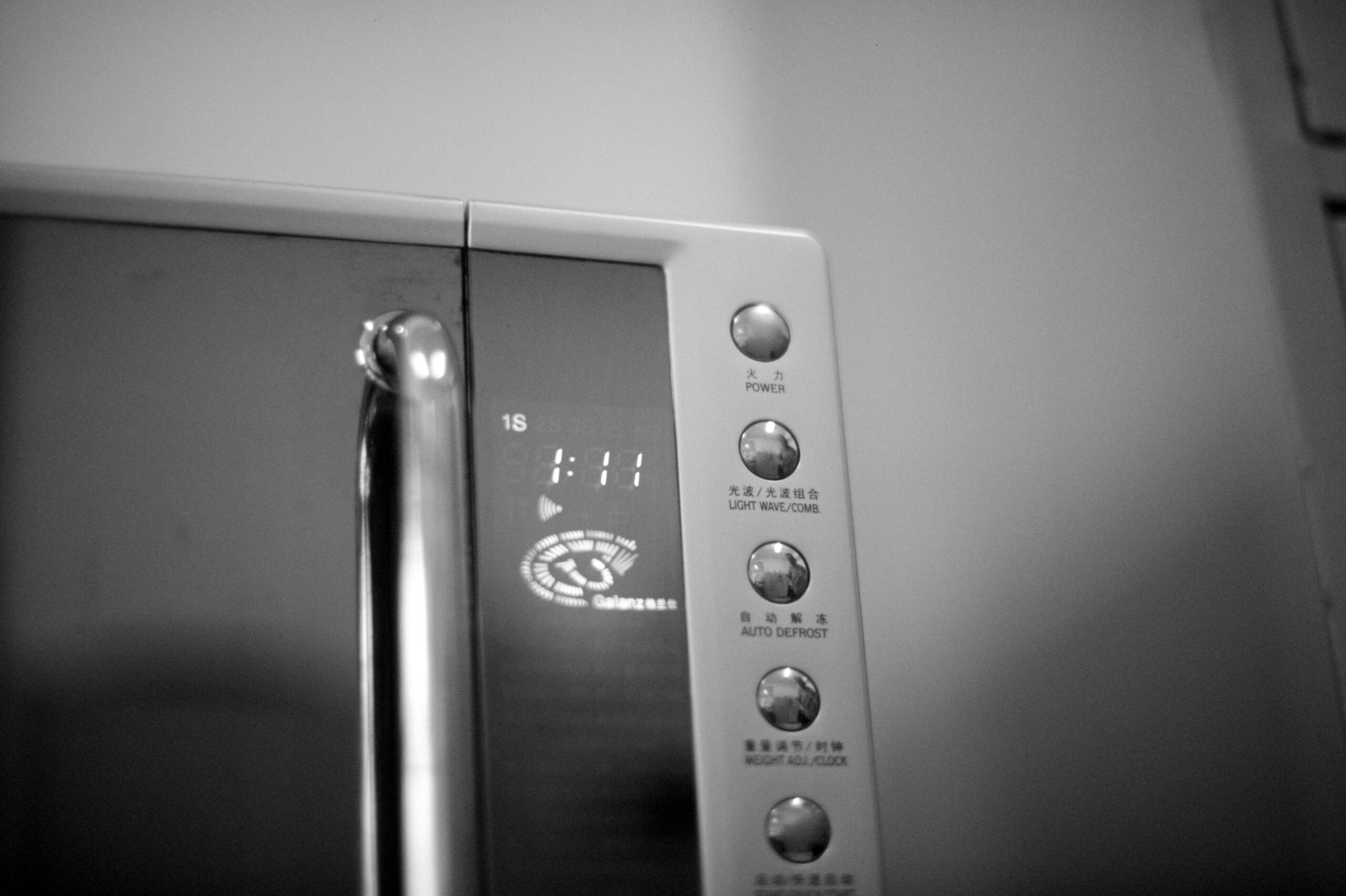
You’ve probably zapped countless leftovers, defrosted meats, and perhaps even brewed a mug of tea in your microwave. It’s a kitchen staple, a testament to convenience. But have you ever stopped to consider the sheer scientific marvel hidden within that humming box? It’s not just a magical appliance; it’s a carefully engineered piece of technology that harnesses principles of physics to heat your food, and the science behind it is far more fascinating than you might imagine. Prepare to have your understanding of that everyday appliance revolutionized as we delve into the microscopic wonders and surprising microwave science.
The heart of your microwave oven is its ability to generate and manipulate electromagnetic radiation in a specific frequency range – microwaves. These are not your typical radio waves or visible light; they occupy a unique band on the electromagnetic spectrum. The magic happens when these waves interact with the food you place inside.
The Magnetron: The Microwave Generator
At the core of every microwave oven lies a device called a magnetron. Think of it as the engine that powers the entire operation.
Generating Electrons and Magnetic Fields
The magnetron is a high-powered vacuum tube that works by creating a cascade of electrons. A filament at the center heats up, releasing electrons. These electrons are then subjected to a strong magnetic field, forcing them to travel in a circular path.
The Role of Resonant Cavities
As the electrons move, they pass by a series of specially designed resonant cavities. These cavities are crucial because they amplify the electromagnetic waves produced by the electron’s motion. It’s akin to plucking a guitar string; the string vibrates at a specific frequency, and the body of the guitar resonates, amplifying the sound. In the magnetron, the electron’s movement excites these cavities, causing them to generate and emit microwaves at a specific frequency.
The Frequency is Key: 2.45 GHz
The magnetron in your microwave is specifically engineered to produce microwaves at a frequency of approximately 2.45 gigahertz (GHz). This particular frequency is not arbitrary; it’s chosen for a very important reason related to how it interacts with water molecules, the primary component of most foods.
Directing the Waves: The Waveguide and Stirrer
Once generated, the microwaves need to be directed into the cooking cavity. This is where the waveguide and stirrer come into play.
The Waveguide: A Metal Tunnel
The waveguide is a hollow metal tube that acts as a conduit, channeling the microwaves from the magnetron to the inside of the oven cavity. The dimensions of the waveguide are precisely calculated to ensure efficient transmission of the microwaves without significant loss of energy.
The Stirrer or Turntable: Even Heating
Microwaves tend to propagate in patterns, creating areas of high and low intensity. If you were to cook food without any mechanism to distribute these waves, you’d end up with hot spots and cold spots. This is why microwaves are equipped with either a rotating stirrer fan (usually located at the top of the cavity, out of sight) or a rotating turntable.
The Stirrer Fan: Deflecting the Waves
The stirrer fan, often made of metal, rotates and reflects the microwaves in different directions, effectively scattering them throughout the cooking chamber. This helps to break up the standing wave patterns and distribute the microwave energy more evenly.
The Turntable: Moving the Food Through the Waves
Alternatively, many microwaves use a rotating turntable. This physically moves the food through the microwave field, ensuring that different parts of the food are exposed to varying intensities of microwave radiation, leading to more uniform heating.
If you’re intrigued by the fascinating world of microwave science, you might want to explore an article that delves into some surprising facts you probably did not know. This piece not only highlights the science behind microwave technology but also uncovers its unexpected applications in everyday life. To learn more, check out the article here: Microwave Science Facts You Probably Did Not Know.
The Magic Molecule: Water and Microwave Heating
The primary reason your food heats up in a microwave is its interaction with water molecules. Water is a polar molecule, meaning it has a positive end and a negative end. This polarity is the key to microwave heating.
Polar Molecules: The Heart of the Matter
Water (H₂O) is a molecule where the oxygen atom is more electronegative than the hydrogen atoms. This uneven distribution of electrons creates a partial negative charge on the oxygen atom and partial positive charges on the hydrogen atoms.
Dipole Moment: A Tiny Magnet
This separation of charge gives water molecules a “dipole moment,” essentially making them behave like tiny magnets with a north and south pole.
The Electric Field’s Dance
When microwaves, which are electromagnetic waves, enter the cooking chamber, they create a rapidly oscillating electric field. This electric field exerts a force on the charged particles within the food.
Rotational Excitation: The Molecular Shimmy
Because water molecules are polar, they try to align themselves with the oscillating electric field. As the field flips back and forth billions of times per second (at 2.45 GHz), the water molecules are forced to twist and turn to keep up. This constant, rapid rotation and jostling of water molecules is what generates heat through friction.
Kinetic Energy and Temperature Rise
This molecular motion increases the kinetic energy of the water molecules, and as kinetic energy increases, so does the temperature. It’s a direct conversion of microwave energy into thermal energy, powered by the dance of water molecules.
Beyond Water: Other Polar Molecules
While water is the most abundant and impactful molecule in microwave heating, other polar molecules present in food, such as fats and sugars, also contribute to the heating process. However, their dielectric properties (how they interact with electric fields) are generally different from water, meaning they heat up at different rates and efficiencies.
The Science of Cooking: More Than Just Heating

Microwave cooking isn’t just about brute force heating; it involves a complex interplay of heat transfer and chemical changes within the food. Understanding these processes reveals why microwave cooking can sometimes produce different results than conventional cooking methods.
Heat Transfer Mechanisms
In a conventional oven, heat is transferred through conduction, convection, and radiation. Microwaves primarily rely on dielectric heating, but conventional heat transfer still plays a role.
Dielectric Heating: The Primary Mechanism
As discussed, the rapid rotation of polar molecules is the dominant mechanism. This happens throughout the food where water is present.
Conduction: Spreading the Heat
Once the water molecules are heated, they transfer their kinetic energy to neighboring molecules through collisions. This process, known as conduction, allows heat to spread from the heated areas to cooler parts of the food. This is why food continues to cook for a short while after being removed from the microwave.
Convection: Less Significant in Microwaves
Convection, the movement of heat through fluids (like air or steam), plays a less significant role in the initial heating of food within a microwave compared to conventional ovens. However, as moisture in the food heats up and turns to steam, it can contribute to internal pressure and further cooking.
Chemical Transformations: Cooking Begins
The heat generated by microwave energy triggers various chemical reactions that we recognize as cooking.
Maillard Reaction: Browning and Flavor
The Maillard reaction, a complex series of chemical reactions between amino acids and reducing sugars, is responsible for the browning of many foods, like bread crusts and seared meats. This reaction typically requires higher temperatures and longer cooking times, which is why microwave-cooked foods often lack the characteristic browning seen in oven-baked or pan-fried dishes.
Protein Denaturation: Texture Changes
The heat from microwaves causes proteins to unfold and coagulate, a process called denaturation. This changes the texture of foods like eggs and meats.
Caramelization: Sweetness Development
Sugars undergo caramelization at high temperatures, developing complex flavors and colors. This process also occurs more efficiently at the higher temperatures achieved through conventional cooking.
The “Edge” Effect and Dielectric Loss
Microwaves have a tendency to penetrate food to a certain depth, typically a few centimeters. Areas closer to the surface, where microwaves can penetrate and interact more effectively with water molecules, will heat up faster than the core. This is sometimes referred to as the “edge” effect.
Dielectric Loss: Energy Absorption
The efficiency with which a material absorbs microwave energy is quantified by its “dielectric loss.” Water has a high dielectric loss at 2.45 GHz, making it an excellent absorber of microwave energy. Other materials, like ceramics and glass, have very low dielectric loss, which is why they are safe to use in microwaves.
The Unseen Hazards: Safety and Design

While microwaves are incredibly convenient, their operation involves powerful electromagnetic radiation. Therefore, safety considerations and clever engineering are paramount to ensuring they are safe for home use.
Shielding the Radiation: The Faraday Cage Principle
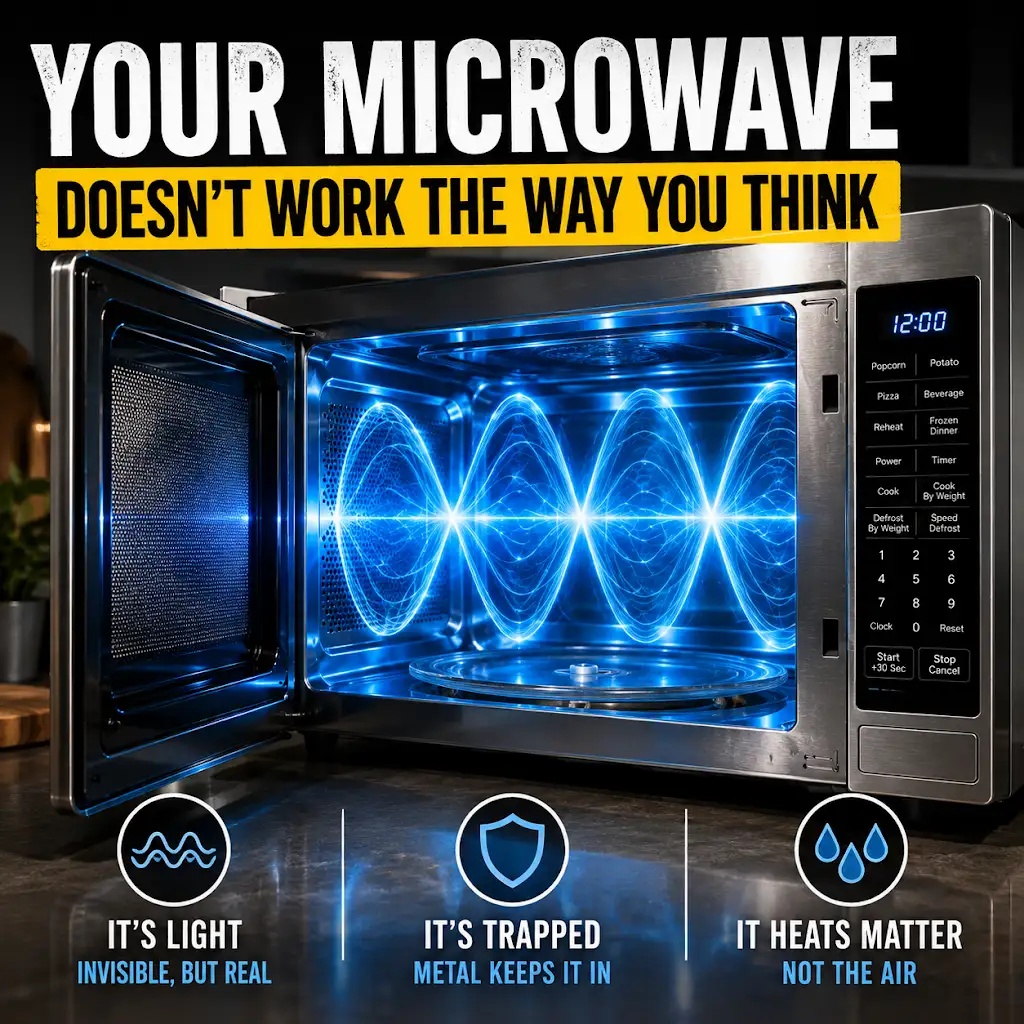
Your microwave oven is designed as a sophisticated Faraday cage. This is a crucial safety feature that prevents the microwaves from escaping into your kitchen.
The Metal Box: A Reflective Barrier
The oven cavity itself is made of metal. Metal is an excellent reflector of electromagnetic waves. When microwaves are generated and bounce around inside the cavity, the metal walls reflect them back, keeping them contained.
The Door Seal: The Critical Interface
The door is the most vulnerable point for microwave leakage. To prevent this, microwave ovens have a specialized door with a metal mesh or a series of metal strips embedded in the glass. This mesh acts as a barrier, allowing you to see inside while effectively blocking the escape of microwaves.
The Mesh Pattern: Smaller Than Wavelength
The openings in the mesh are designed to be significantly smaller than the wavelength of the microwaves (which is about 12.2 cm for 2.45 GHz). This prevents the microwaves from passing through the openings, much like how water can flow through a net but a fish cannot.
Interlock Switches: Safety First
Microwave ovens are also equipped with multiple interlock switches. These are safety mechanisms that ensure the oven will not operate unless the door is fully closed and latched. If any of these switches are faulty, the oven will not turn on, preventing accidental exposure to radiation.
Understanding Microwave Penetration Depth
It’s important to understand that microwaves don’t penetrate infinitely deep into food.
The Limit of Penetration
For most foods, the penetration depth of microwaves is typically around 2 to 4 centimeters. This means that the outer layers of the food are heated directly by the microwaves, while the inner layers are heated by conduction from the outer layers.
Thicker Foods: A Challenge for Microwaves
This penetration limit explains why very thick or dense foods can sometimes be unevenly cooked, with the outer parts being overcooked before the center is properly heated. This is where the concept of “standing time” comes into play, allowing heat to distribute through conduction.
Electromagnetic Interference (EMI)
Microwaves, like all electronic devices, can generate electromagnetic interference (EMI).
Preventing Interference
The metal enclosure and shielding of the microwave oven are designed to minimize EMI. However, you might occasionally notice that other electronic devices, like some older cordless phones or radios, can experience static or interference when a microwave is in operation. This is a testament to the power of the microwaves being generated.
If you’re fascinated by the science behind everyday appliances, you might be surprised by some of the intriguing facts about microwaves that you probably did not know. For instance, did you know that microwaves cook food from the inside out? This unique heating method is a result of how microwave radiation interacts with water molecules in food. To explore more fascinating insights into the world of science, check out this related article on Freaky Science, where you can uncover even more mind-blowing facts that challenge your understanding of the technology we often take for granted.
Surprising Applications and Future Frontiers
| Fact | Description |
|---|---|
| Discovery | Microwaves were discovered accidentally during World War II when it was found that radar waves had melted a candy bar in a pocket. |
| Frequency | Microwaves have frequencies ranging from about 1 gigahertz (GHz) to 300 gigahertz (GHz). |
| Heating | Microwaves heat food by causing water molecules to vibrate, generating heat through friction. |
| Speed | Microwaves travel at the speed of light, approximately 186,282 miles per second. |
| Applications | Microwaves are used in various applications including communication, cooking, and medical treatments. |
The science of microwaves extends far beyond your kitchen counter. From industrial processes to medical treatments, microwave technology has a surprisingly diverse range of applications.
Industrial Heating and Drying
The ability of microwaves to efficiently heat and dry materials has led to their use in various industrial settings.
Food Processing
Beyond reheating, microwaves are used in the food industry for pasteurization, sterilization, and even cooking large batches of food products. They offer faster processing times and can help preserve nutrients.
Manufacturing
In manufacturing, microwaves are employed for curing plastics and rubber, drying wood and textiles, and even in the production of ceramics and composites. Their rapid and targeted heating can significantly reduce manufacturing cycle times.
Medical Applications: Precision Healing
Microwaves have also found valuable applications in the medical field, particularly in non-invasive treatments.
Thermal Ablation
Microwave thermal ablation is a minimally invasive surgical technique used to destroy cancerous tumors. A microwave antenna is inserted into the tumor, and microwave energy is used to heat and destroy the diseased tissue. This technique offers precise targeting and can be effective for various types of cancers.
Hyperthermia Therapy
Hyperthermia therapy, often used in conjunction with radiation or chemotherapy, involves heating cancerous tumors to temperatures that make them more susceptible to treatment. Microwaves can be used to deliver this targeted heating.
Scientific Research and Beyond
Microwave technology continues to be a vital tool in scientific research, enabling new discoveries and advancements.
Astronomy
Radio telescopes, which are essentially giant microwave receivers, are crucial for studying distant galaxies, pulsars, and other celestial objects. They allow us to detect and analyze the faint microwave signals that have traveled across vast cosmic distances.
Communication
While not directly the microwaves from your oven, the principle of using electromagnetic waves for communication is fundamental to our modern world. This includes everything from Wi-Fi signals to satellite communication.
The Future of Microwave Science
As our understanding of electromagnetism and materials science deepens, the applications of microwave technology are likely to expand even further.
Advanced Materials
Researchers are exploring the use of microwaves for creating novel materials with unique properties, such as advanced composites and nanomaterials.
Sustainable Technologies
The efficiency and speed of microwave heating offer potential for more sustainable industrial processes, reducing energy consumption and waste.
From the humble act of reheating your coffee to the complex frontiers of medical science, microwaves are a testament to the power and ingenuity of applied physics. You’ve peeked behind the curtain of that everyday appliance and discovered a world of microscopic wonders, a symphony of oscillating fields and dancing molecules. The next time you press “start” on your microwave, remember the surprising science at play, and appreciate the invisible force that makes your meals so conveniently warm.
Your Microwave Doesn’t Work the Way You Think
FAQs
What are some surprising facts about microwave science?
– Microwaves were first used in cooking in 1946, and the first microwave oven for home use was introduced in 1967.
– Microwaves work by causing water molecules in food to vibrate, generating heat that cooks the food.
– The microwave background radiation is a faint glow of microwaves that fills the universe, leftover from the Big Bang.
– Microwaves are also used in communication, such as in satellite transmissions and wireless internet.
– Microwaves are a form of non-ionizing radiation, meaning they do not have enough energy to remove electrons from atoms or molecules.
How do microwaves work in cooking?
Microwaves work by causing water molecules in food to vibrate, generating heat that cooks the food. The microwaves penetrate the food and cause the water molecules to rotate and generate heat through friction. This heats the food quickly and efficiently.
What are some other uses of microwaves besides cooking?
In addition to cooking, microwaves are used in communication, such as in satellite transmissions and wireless internet. They are also used in radar technology for navigation, weather forecasting, and defense applications. Additionally, microwaves are used in medical treatments, such as in microwave ablation to destroy cancer cells.
What is the microwave background radiation?
The microwave background radiation is a faint glow of microwaves that fills the universe, leftover from the Big Bang. It was first discovered in 1965 and is considered one of the strongest pieces of evidence for the Big Bang theory. The radiation is nearly uniform in every direction and has a temperature of about 2.7 degrees above absolute zero.
Are microwaves safe to use?
Microwaves are a form of non-ionizing radiation, meaning they do not have enough energy to remove electrons from atoms or molecules. When used according to manufacturer’s instructions, microwave ovens are considered safe for cooking and heating food. However, it is important to use microwave-safe containers and follow safety guidelines to prevent burns and other accidents.