
You’ve probably stood in front of your microwave oven countless times, pressed a few buttons, and watched as your food magically heats up. It’s a modern marvel, a kitchen staple that makes reheating leftovers or preparing a quick meal incredibly convenient. But have you ever stopped to wonder how it actually works? It’s not just a box that gets hot; there’s a fascinating science at play, a dance of electromagnetic waves that transforms cold food into a steaming delight.
Let’s dive into the intriguing world of microwave oven heating and uncover the scientific principles that make this everyday appliance so effective.
At the core of every microwave oven lies a device called a magnetron. This is the engine that generates the very waves responsible for heating your food. Imagine it as a miniature electron tube, but one that’s specifically designed to produce high-frequency radio waves.
How a Magnetron Creates Microwaves
The process within a magnetron is a complex interplay of magnetic fields, electric fields, and electrons. You don’t need to be an electrical engineer to grasp the basics, though.
The Electron Flow and Magnetic Field Interaction
It all begins with a heated filament, similar to the one in an old-fashioned light bulb, which emits electrons. These electrons are then propelled by a strong electric field. Simultaneously, a powerful magnetic field is applied, perpendicular to the electric field. This magnetic field forces the electrons into a circular, spiraling path.
The Resonant Cavities
Surrounding the electron path are a series of precisely shaped metal cavities. As the spiraling electrons pass by these cavities, they induce oscillating currents within them. These oscillations, when timed just right, resonate, amplifying the radio wave energy. Think of it like pushing a swing at the perfect moment to make it go higher; the cavities are designed to “resonate” with the electron’s movement, building up wave energy.
The Output Waveguide
The amplified electromagnetic waves are then channeled out of the magnetron through a waveguide, a hollow metal tube. This waveguide directs the microwaves into the cooking chamber of your oven.
The science behind microwave oven heating is a fascinating topic that delves into the principles of electromagnetic radiation and how it interacts with food molecules. For a deeper understanding of this process, you can explore a related article that explains the mechanics of microwave heating and its effects on various types of food. To read more, visit this article.
The Mechanism of Heating: Dielectric Heating Explained
So, the magnetron creates microwaves, but how do these waves actually heat your food? The answer lies in a process called dielectric heating, which specifically targets certain molecules within your food.
Understanding Dielectric Materials
Not all materials interact with microwaves in the same way. Those that do are called dielectric materials. The key characteristic of a dielectric material is its ability to store electrical energy when placed in an electric field.
Polar Molecules: The Stars of the Show
The primary players in microwave heating are polar molecules. Water is the most abundant polar molecule in most foods, but fats and sugars also exhibit polarity. A polar molecule, like water, has an uneven distribution of electrical charge. One end of the molecule carries a slight positive charge, while the other end carries a slight negative charge, making it act like a tiny magnet.
How Microwaves Excite Polar Molecules
When microwaves, which are electromagnetic waves, enter the cooking chamber, they create a rapidly oscillating electric field. Imagine this field flipping its direction millions, even billions, of times per second. As this field interacts with the polar molecules in your food, it causes them to try and align themselves with the shifting electrical poles.
The Dance of Rotation and Friction
This constant reorientation – the molecules spinning and twisting back and forth to keep up with the oscillating electric field – generates friction between them. This friction, in turn, produces heat. It’s essentially molecular jiggling, and the more vigorously these molecules jiggle, the hotter your food becomes.
The Role of Water Content
Because water is so prevalent in most foods and is a highly effective dielectric material, foods with higher water content tend to heat up much faster and more evenly in a microwave. This is why you might find that a slice of juicy watermelon heats up quicker than a piece of dry bread.
The Design of the Microwave Cavity: Guiding and Reflecting Waves

The metal box of your microwave oven isn’t just for containment; it’s a carefully designed chamber that helps distribute the microwave energy effectively.
The Reflective Walls
The inner walls of your microwave oven are made of metal. Metal is an excellent reflector of microwaves. This means that the waves, once they enter the cooking cavity, bounce off the walls and are redirected back into the food. This bouncing action helps to distribute the energy throughout the food rather than just having it penetrate in a straight line.
The Turntable: Battling Hot and Cold Spots
Despite the reflective walls, microwave heating isn’t always perfectly uniform. This is due to the nature of electromagnetic waves. They can create standing waves, which are patterns of high and low energy intensity within the cavity. If your food remained stationary, certain areas would receive a lot more microwave energy than others, leading to uneven heating – what we commonly refer to as “hot spots” and “cold spots.”
The Purpose of the Turntable
This is where the turntable comes in. By slowly rotating the food, the turntable ensures that all parts of the food are exposed to both the high-energy and low-energy areas of the standing wave patterns over time. This continuous movement helps to homogenize the heating process, leading to more consistent results.
Stirring and Letting Food Stand
You’ll often see instructions to stir food midway through microwaving or to let it stand for a minute or two after cooking. Stirring serves a similar purpose to the turntable by redistributing heat within the food. Letting food stand allows the heat that has been generated to equalize throughout the food, a process known as thermal conduction.
Penetration Depth and Food Properties

Microwaves don’t just heat the surface of your food; they penetrate into it. However, the depth of this penetration is not infinite and depends on various factors, particularly the composition of the food itself.
The Influence of Water Content on Penetration
As we’ve discussed, water is a key ingredient for microwave heating. However, high concentrations of water can also absorb microwaves more readily, limiting how deeply they can penetrate. In very moist areas of food, the microwaves are absorbed quickly, generating heat and preventing further penetration. This is why thicker, denser foods may still be cold in the center even after being microwaved for a considerable time, especially if their outer layers are very moist.
Other Absorbing Components
While water is the primary absorber, other components in food can also play a role. Fats, for instance, can also be heated by microwaves, though generally less efficiently than water. Sugars also contribute to microwave absorption. The interplay of these different components affects how quickly and deeply your food heats.
The “Cooking” of Food
It’s important to remember that microwaving is a form of cooking. The heat generated by the vibrating molecules breaks down cell structures, denatures proteins, and can even caramelize sugars. This is why microwaved food can sometimes have a different texture and flavor profile compared to food cooked by conventional methods.
The science behind microwave oven heating is fascinating, as it involves the interaction of microwaves with water molecules in food, causing them to vibrate and generate heat. For a deeper understanding of this process, you can explore a related article that delves into the intricacies of microwave technology and its applications in everyday cooking. This informative piece can be found at Freaky Science, where you will discover how these appliances revolutionized meal preparation and the underlying physics that makes it all possible.
Safety Considerations and Proper Usage
| Science Behind Microwave Oven Heating |
|---|
| Microwaves are a form of electromagnetic radiation |
| They cause water molecules in food to vibrate, generating heat |
| Penetration depth of microwaves is limited, leading to uneven heating |
| Rotation of the turntable helps to distribute the heat more evenly |
| Some materials, like metal, cannot be used in microwave ovens due to reflection of microwaves |
While microwave ovens are generally safe when used correctly, there are a few important considerations to keep in mind to ensure both your safety and the optimal performance of your appliance.
What Not to Microwave
Not all materials are microwave-safe. You’ve likely seen warnings about putting metal in the microwave.
Metal and Arcing
Metal reflects microwaves, and if sharp or thin pieces of metal are present, the concentrated electric fields can cause arcing – essentially, miniature lightning bolts jumping between the metal and the oven walls. This can damage your microwave and is a fire hazard. Even thin foil can be problematic. Smooth, thick metal containers might fare better, but it’s generally best to avoid them altogether.
Certain Plastics
While many plastics are microwave-safe, some can leach harmful chemicals into your food when heated. Always look for the “microwave-safe” symbol on plastic containers. If you’re unsure, it’s best to transfer your food to a glass or ceramic dish.
Sealed Containers
Never microwave food in completely sealed containers. The rapid heating of the food can build up pressure inside, potentially causing the container to explode. Always vent containers by lifting a corner of the lid or piercing the film.
Ensuring Even Heating
As we’ve explored, uneven heating is a common issue. Beyond using the turntable and stirring, other tips can help:
Arranging Food Properly
When microwaving multiple items, arrange them in a circular pattern on the turntable, with the thicker parts of the food facing outwards. This allows the outer edges to receive more direct microwave exposure and cook more evenly.
Covering Food
Covering food with a microwave-safe lid or plastic wrap helps to trap steam, which aids in more even cooking and prevents food from drying out. Remember to vent the cover.
Cooking Times
Always follow recommended cooking times and temperatures as a guideline. It’s better to undercook and add more time than to overcook and dry out your food.
Letting Food Stand
The standing time after microwaving is crucial. It allows heat to distribute evenly through the food, ensuring that the center reaches a safe and palatable temperature.
The Science of Standing Waves and Microwave Distribution
The complex patterns of microwave energy within the oven cavity, known as standing waves, are a fundamental aspect of microwave heating. While the turntable helps to mitigate their effects, understanding them can lead to even better results.
Nodes and Antinodes
Standing waves have points of minimum energy intensity called nodes and points of maximum energy intensity called antinodes. If your food were perfectly stationary, the areas aligned with antinodes would heat up much faster than those aligned with nodes.
How the Turntable Mitigates Standing Waves
The rotation of the turntable ensures that no single part of the food remains in a node or antinode for too long. By continuously moving the food through these varying energy zones, the average energy absorbed by the food becomes more uniform.
Advanced Microwave Design
Some higher-end microwave ovens incorporate features designed to further improve wave distribution. This might include multiple magnetrons or specially designed cavity shapes to create a more even energy field. However, the fundamental principle of using reflection and rotation remains the core of most designs.
The science behind your microwave oven is a testament to clever engineering and a deep understanding of physics. From the generation of high-frequency waves by the magnetron to the molecular dance of dielectric heating, every component plays a vital role in bringing your food to the perfect temperature. So, the next time you press that start button, you can appreciate the intricate scientific process working silently within that humble kitchen appliance. It’s more than just a convenience; it’s a marvel of modern science at your fingertips.
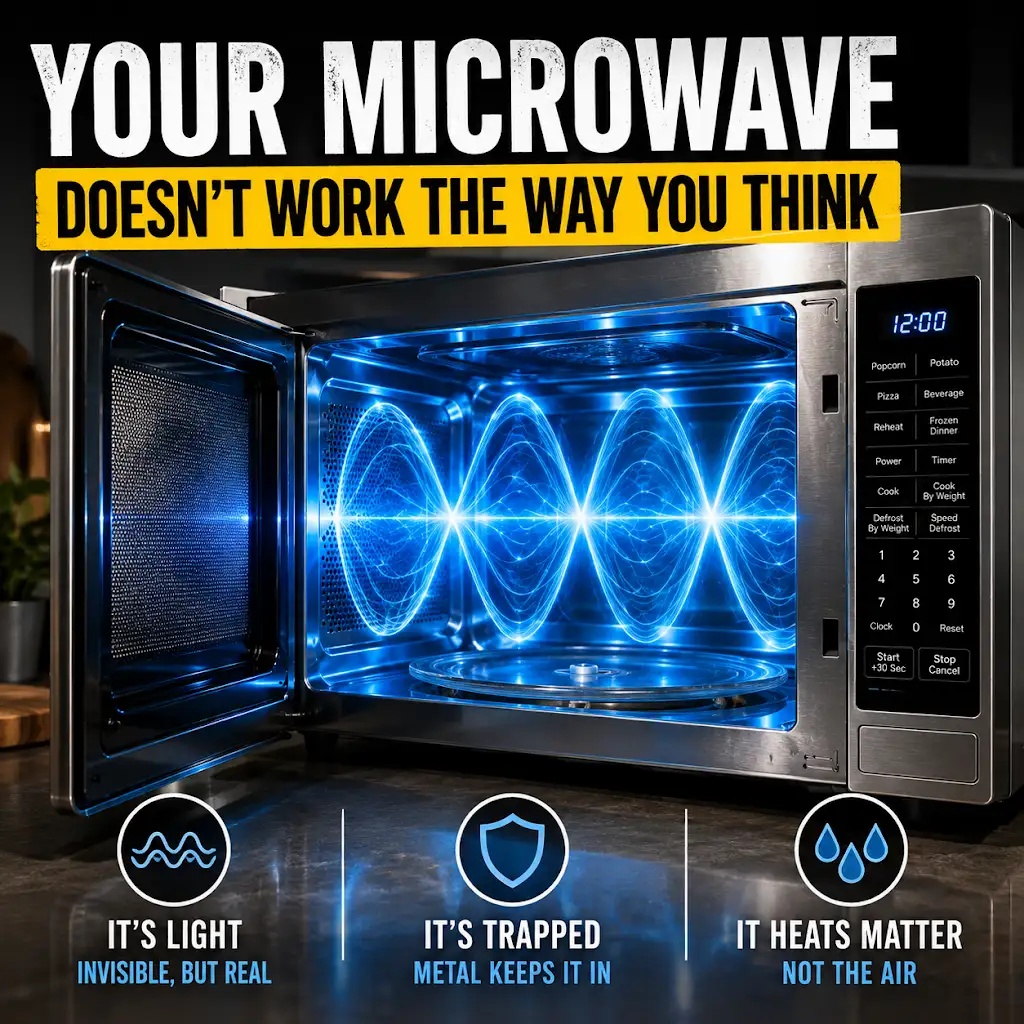
Your Microwave Doesn’t Work the Way You Think
FAQs
What is the science behind microwave oven heating?
Microwave ovens use electromagnetic radiation in the form of microwaves to heat food. These microwaves cause water molecules in the food to vibrate, generating heat through friction and ultimately heating the food.
How do microwave ovens cook food so quickly?
Microwaves penetrate the food and cause the water molecules to vibrate at a high frequency, which rapidly generates heat throughout the food. This allows for quick and efficient cooking compared to traditional methods.
Are there any safety concerns with microwave oven heating?
Microwave ovens are generally safe when used according to the manufacturer’s instructions. However, it’s important to use microwave-safe containers and avoid heating certain materials, such as metal, which can cause sparks and potential damage to the oven.
Can microwave oven heating affect the nutritional value of food?
Microwave heating can actually help retain more nutrients in food compared to other cooking methods, as it requires shorter cooking times and less water, which can leach out nutrients. However, overcooking or overheating food in the microwave can lead to nutrient loss.
How does the size and shape of food affect microwave oven heating?
The size and shape of food can affect how evenly it heats in a microwave oven. Larger or thicker pieces of food may require longer cooking times, and irregularly shaped items may heat unevenly. It’s important to arrange food in a way that promotes even heating, such as placing thicker parts towards the outside of the turntable.