
The Surprising Physics of Everyday Objects
You walk through your day, a silent ballet of forces and principles you rarely acknowledge. The cup of coffee you cradle, the chair you sink into, the very air you breathe – they all hum with the secret language of physics. You might think physics is confined to gleaming laboratories and complex equations, but it’s the invisible architect of your mundane reality. Prepare to be amazed, because the ordinary is far more extraordinary than you ever imagined.
You experience gravity constantly, a relentless tug that keeps your feet planted firmly on the ground. But its influence extends far beyond the simple act of dropping something. It’s the unseen sculptor of planets, the orchestrator of tides, and the very reason you don’t float off into the cosmos.
Newton’s Universal Law: A Cosmic Embrace
You probably remember Newton’s apple from your school days. While the story might be apocryphal, the concept is profound. Every object with mass exerts a gravitational pull on every other object with mass. The more massive an object, the stronger its pull. The closer two objects are, the stronger their attraction. This is Newton’s Universal Law of Gravitation, a fundamental force that governs the universe. You feel it because the Earth, a colossal mass, is pulling you towards its center. But did you know that your own body, infinitesimally small in comparison, is also exerting a tiny gravitational pull on the Earth? It’s true, though so minuscule it’s utterly imperceptible.
The Inverse Square Law: Diminishing Returns
The strength of gravity decreases with the square of the distance between two objects. This means if you double the distance, the gravitational force drops to one-fourth. Triple the distance, and it drops to one-ninth. This inverse square law is crucial for understanding why the Moon orbits the Earth and the Earth orbits the Sun. The vast distances involved mean that while these celestial bodies exert immense gravitational forces, they are not crushing each other. You experience this in your daily life too, though perhaps less dramatically. A strong magnet will pull harder when it’s close to a piece of metal than when it’s a few inches away. This is a similar principle, though electromagnetism is a different force altogether.
Einstein’s Curved Spacetime: Gravity as Geometry
Albert Einstein, with his theory of General Relativity, offered a revolutionary perspective on gravity. Instead of a force pulling objects together, he proposed that mass and energy warp the fabric of spacetime. Imagine placing a heavy bowling ball on a stretched rubber sheet. The ball creates a dip, and any smaller marbles rolled nearby will curve towards the bowling ball, not because of a direct pull, but because the sheet itself is curved. This is Einstein’s analogy for gravity. Massive objects like planets and stars create significant curves in spacetime, and other objects follow these curves, which we perceive as the force of gravity. This elegant idea explains phenomena that Newtonian physics couldn’t, such as the bending of light around massive objects.
Tidal Forces: The Moon’s Gentle Pull
You’ve witnessed the rhythmic rise and fall of the tides. This is a direct consequence of gravity, specifically the differential gravitational pull of the Moon and, to a lesser extent, the Sun. The side of the Earth facing the Moon experiences a stronger pull than the center of the Earth, while the opposite side experiences a weaker pull. This stretching effect creates bulges of water on both the near and far sides of the Earth, leading to high tides. You might not feel the subtle tugs that cause the ocean to shift, but these tidal forces are a constant, gentle reminder of the Moon’s influence.
Everyday objects often hide fascinating principles of physics that can surprise us. For instance, the way a simple coffee cup can demonstrate concepts like thermal conductivity and heat transfer is truly remarkable. If you’re curious to explore more about the physics behind common items, check out this insightful article that delves into the surprising science of everyday objects. You can read it here: Surprising Physics of Everyday Objects.
The Dance of Molecules: Why Things Stick (or Don’t)
You interact with a myriad of surfaces every day, from the smooth finish of your smartphone to the rough texture of a brick wall. The way these surfaces interact, the resistance you feel when you push something, and the very act of holding onto objects are governed by the fascinating physics of intermolecular forces.
Adhesion and Cohesion: The Stickiness Spectrum
Adhesion is the attraction between molecules of different substances. Cohesion is the attraction between molecules of the same substance. These forces are responsible for a surprising number of everyday phenomena. Think about water clinging to a glass. The water molecules (cohesion) are attracted to each other, but they are also attracted to the glass molecules (adhesion). This adhesion allows water to form droplets and to wet surfaces. Conversely, if you try to pour mercury onto a glass surface, you’ll see it bead up. Mercury has strong cohesive forces among its own molecules and weaker adhesive forces with glass.
Surface Tension: The Water Droplet’s Secret
Surface tension, a direct result of cohesive forces, is what allows small insects to walk on water and what gives water droplets their spherical shape. At the surface of a liquid, the molecules are pulled inward and sideways by their neighbors, but not outward. This creates a net inward force, effectively forming a “skin” on the surface. You can see this in action when you carefully place a paperclip on the surface of water, or when you observe water forming beads on a freshly waxed car. The water molecules are holding onto each other so tightly that they resist breaking apart.
Friction: The Brake and the Grip
Friction is the force that opposes motion when two surfaces come into contact. It’s the reason you can walk without slipping, the reason your car tires grip the road, and the reason your brakes actually work. Without friction, life as you know it would be impossible. You’d be sliding everywhere, unable to hold onto anything. There are different types of friction: static friction (when objects are at rest and resisting movement), kinetic friction (when objects are in motion), and rolling friction (when objects roll over a surface). The rougher the surfaces, the greater the friction.
The Microscopic View: Interlocking Hills and Valleys
At a microscopic level, even seemingly smooth surfaces are covered in tiny bumps and ridges. When you push two surfaces together, these irregularities interlock, creating resistance to movement. Lubricants, like oil or grease, work by filling these gaps and reducing the direct contact between the surfaces, thereby decreasing friction. You experience this when you apply hand lotion, making your skin feel smoother and reducing the friction between your hands.
The Silent Architects of Sound: Waves Around You
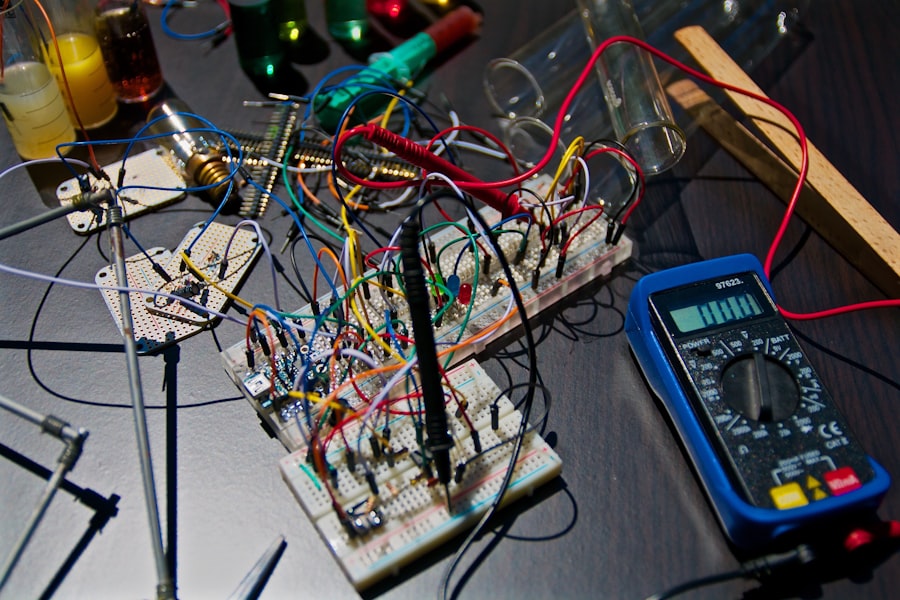
You experience sound as a constant companion, from the gentle hum of the refrigerator to the booming of thunder. But sound itself is a fascinating physical phenomenon – a wave that travels through a medium, carrying energy and information.
Sound Waves: Vibrations on the Move
Sound is produced by vibrations. When an object vibrates, it causes the surrounding air molecules to vibrate as well. These vibrations then propagate outwards as waves of compression and rarefaction. Imagine a domino effect: a vibrating object pushes on the air molecules next to it, which then push on the molecules further away, and so on. This chain reaction is how sound travels to your ears. You feel the vibrations of your voice in your chest when you speak, a direct connection to the source of the sound.
Amplitude and Frequency: The Voice of the Wave
The loudness of a sound is determined by its amplitude, which is the intensity of the vibrations. A higher amplitude means a louder sound. The pitch of a sound is determined by its frequency, which is the number of vibrations per second. A higher frequency means a higher pitch. When you adjust the volume on your stereo, you’re changing the amplitude of the sound waves. When you play a higher note on a piano, you’re increasing the frequency.
Resonance: Amplifying the Echo
Resonance is a phenomenon where an object vibrates with maximum amplitude when it is subjected to a force that matches its own natural frequency of vibration. Think about a swing. If you push the swing at just the right rhythm (its natural frequency), you can make it go higher and higher with relatively little effort. This is resonance. You encounter resonance in many everyday situations. A tuning fork will vibrate when exposed to a sound at its specific frequency. Musical instruments rely on resonance to amplify their sound. Even bridges can be susceptible to resonance if subjected to strong winds at their natural frequency, which can lead to catastrophic collapse, as tragically demonstrated by the Tacoma Narrows Bridge.
Musical Instruments: Engineered Resonance
Every musical instrument is a carefully designed system to produce and amplify sound through resonance. The strings of a guitar vibrate, and this vibration is transferred to the body of the guitar, which resonates at specific frequencies, amplifying the sound. The air column within a flute or a trumpet resonates, creating the characteristic tones of these instruments. You might not be consciously thinking about resonance when you’re listening to music, but it’s the very principle that makes the sounds we enjoy possible.
The Magic of Light: Seeing the World Around You

Light is so fundamental to your perception of reality that you often take it for granted. Yet, the way light behaves, from its creation to its interaction with matter, is a captivating area of physics.
The Electromagnetic Spectrum: More Than Just Visible Light
The light you see is just a tiny portion of a vast spectrum of electromagnetic radiation. This spectrum includes radio waves, microwaves, infrared radiation, visible light, ultraviolet radiation, X-rays, and gamma rays. All of these are waves of energy that travel at the speed of light, but they differ in their wavelengths and frequencies. You use different parts of the electromagnetic spectrum every day without realizing it. Your microwave oven uses microwave radiation, your TV remote uses infrared, and your phone communicates using radio waves.
Reflection and Refraction: Bending the Path
When light encounters a surface, it can be reflected or refracted. Reflection is when light bounces off a surface, allowing you to see yourself in a mirror or perceive the color of objects. The angle of incidence equals the angle of reflection – a principle you apply unconsciously when you judge where to throw a ball to hit a target. Refraction is when light bends as it passes from one medium to another, like from air into water. This is why a straw in a glass of water appears to be bent. It’s also the principle behind lenses in cameras, telescopes, and your own eyes, allowing you to focus light and form images.
Color: The Illusion of Perception
The colors you see are not inherent properties of objects themselves, but rather the result of how objects interact with light. Objects appear a certain color because they absorb some wavelengths of light and reflect others. A red apple absorbs most wavelengths of light but reflects red wavelengths, which are then detected by your eyes. White light, like sunlight, is a combination of all the colors of the visible spectrum. When you see a rainbow, you’re witnessing the spectrum of visible light dispersed by water droplets, which act like tiny prisms.
Polarization: Filtering the Glare
Polarization is a property of light waves that describes the orientation of their oscillations. Sunlight and light reflected off surfaces are often partially polarized. Polarized sunglasses work by filtering out this glare, making it easier to see in bright conditions. You might have noticed that polarized sunglasses can make LCD screens look dark – this is because the screen emits polarized light, and the glasses block it.
Everyday objects often hold fascinating secrets about the laws of physics that govern our world. For instance, a simple paperclip can demonstrate the principles of magnetism and conductivity in surprising ways. If you’re intrigued by how common items can reveal complex scientific concepts, you might find this article on Freaky Science particularly enlightening, as it explores the unexpected physics behind various ordinary objects.
The Ingenuity of Engineering: Bringing Physics to Life
| Everyday Object | Surprising Physics |
|---|---|
| Spinning top | Precession and gyroscopic effects |
| Bouncing ball | Elastic collisions and energy transfer |
| Slinky toy | Propagation of longitudinal and transverse waves |
| Boomerang | Aerodynamics and gyroscopic stability |
| Bubble wrap | Energy absorption and distribution |
The objects you use daily are not simply found; they are designed and built by applying the principles of physics. From the sturdy structure of a bridge to the efficiency of a light bulb, physics is the foundation of our modern world.
Thermodynamics: The Flow of Heat and Energy
Thermodynamics deals with heat, work, and energy, and its laws govern the efficiency of everything from your car engine to your refrigerator. The first law of thermodynamics states that energy cannot be created or destroyed, only transferred or changed in form. This is why you can’t get something for nothing. The second law states that in any energy transfer, some energy is always lost as unusable heat, meaning no process can be 100% efficient. This is why your car engine gets hot and why your smartphone eventually runs out of battery.
Heat Transfer: Conduction, Convection, and Radiation
Heat can be transferred in three ways: conduction (through direct contact), convection (through the movement of fluids like air or water), and radiation (through electromagnetic waves). You experience conduction when you touch a hot stove. You see convection in boiling water, where hotter water rises and cooler water sinks. You feel radiation when you stand in the sun, and your house is heated by radiation from the sun and other sources. Understanding these mechanisms is crucial for designing efficient heating and cooling systems.
Mechanics: The Science of Motion and Force
Mechanics is the study of how forces affect objects and how objects move. This branch of physics underpins the design of everything from a simple lever to the complex machinery of an airplane. The principles of force, motion, energy, and momentum are all at play. When you push a door open, you’re applying force and torque to cause rotation. When you throw a ball, you’re dealing with projectile motion, influenced by gravity and air resistance.
Structural Integrity: Building Stronger
The principles of mechanics are essential for ensuring the structural integrity of buildings, bridges, and vehicles. Engineers use their understanding of forces, stress, and strain to design structures that can withstand the loads they are subjected to. The shape and material of a beam, for instance, are carefully chosen to distribute forces effectively and prevent collapse. You rely on this unseen engineering every time you cross a bridge or enter a sturdy building, trusting that the physics behind its construction holds true.
You interact with physics every single moment, whether you realize it or not. The world around you is a constant demonstration of these fundamental principles. So, the next time you drink your coffee, sit in your chair, or simply walk down the street, take a moment to appreciate the silent, elegant dance of physics that makes it all possible. The ordinary is truly extraordinary.

Your Microwave Doesn’t Work the Way You Think
FAQs
What are some examples of everyday objects with surprising physics?
Some examples of everyday objects with surprising physics include the behavior of a spinning coin, the stability of a rolling hoop, the flight of a boomerang, the movement of a spinning top, and the behavior of a bouncing ball.
How do everyday objects demonstrate principles of physics?
Everyday objects demonstrate principles of physics through their motion, stability, and interactions with forces such as gravity, friction, and air resistance. These objects can illustrate concepts such as angular momentum, center of mass, and conservation of energy.
What are some common physics principles that can be observed in everyday objects?
Some common physics principles that can be observed in everyday objects include Newton’s laws of motion, the conservation of angular momentum, the relationship between force and motion, and the effects of friction and air resistance on an object’s behavior.
Why is it important to understand the physics of everyday objects?
Understanding the physics of everyday objects can help us make sense of the world around us and can also lead to practical applications in engineering, design, and technology. It can also foster a deeper appreciation for the natural laws that govern the behavior of objects in our daily lives.
How can we use the physics of everyday objects to our advantage?
We can use the physics of everyday objects to our advantage by applying principles such as stability, momentum, and energy conservation to improve the design of products, enhance athletic performance, and develop new technologies. Understanding the physics of everyday objects can also help us solve practical problems and innovate in various fields.