You’ve probably seen it: that perfectly toasted, slightly melty marshmallow emerging from the microwave, golden brown and oh-so-tempting. But have you ever noticed the peculiar way marshmallows sometimes cook unevenly in the microwave, one side charred to oblivion while another remains stubbornly pale? This isn’t just a random cooking mishap; it’s a fascinating demonstration of the science of microwave standing waves, and you, my friend, are holding the key to understanding it.
You might think of your microwave as a magic box that simply heats things up, but beneath its sleek exterior lies a sophisticated piece of physics. The heat you experience isn’t generated by the microwave itself in a straightforward manner. Instead, it’s the result of a complex interplay between electromagnetic waves and the water molecules within your food. And at the heart of this process, dictating those occasional marshmallow catastrophes (or triumphs!), are standing waves.
Understanding the Basics: How Microwaves Work
Before we dive into the gooey specifics of marshmallows, let’s establish a foundation for how your microwave oven actually functions. You’re likely familiar with the idea that microwaves heat food, but the mechanism behind it is worth a closer look. It’s not about radiant heat like an oven or conduction like a stovetop. Microwaves employ a unique method involving electromagnetic radiation.
The Magnetron: The Heart of the Operation
The workhorse of your microwave is a device called a magnetron. This ingenious component, invented during World War II, is responsible for generating the microwave radiation – specifically, electromagnetic waves in the frequency range of about 2.45 gigahertz. Think of it as a high-powered electron tube that converts electrical energy into microwave energy. The magnetron emits these waves into the cooking cavity of your oven.
How Microwaves Interact with Food
So, these waves are generated, but how do they cook your food? The answer lies in the composition of most foods: water. Water molecules are polar, meaning they have a slight positive charge on one end and a slight negative charge on the other. When exposed to the oscillating electromagnetic field of the microwaves, these water molecules begin to rapidly rotate, trying to align themselves with the constantly changing field. This rapid rotation, or vibration, generates heat through friction, effectively cooking your food from the inside out. It’s this friction between agitated water molecules that transforms raw ingredients into delicious meals.
The Cooking Cavity: A Reflective Space
The inside of your microwave is designed to be a reflective chamber. The metal walls of the oven bounce the microwaves around, ensuring they reach all parts of your food. This reflection is crucial because it’s what creates the phenomenon of standing waves. Without these reflections, the microwaves would simply pass through your food, and nothing would get cooked. The careful design of the cavity, combined with the reflective properties of its metal walls, sets the stage for the complex wave patterns we’ll explore.
In exploring the fascinating phenomenon of standing waves created by microwaves, you might find the article on the science behind microwave marshmallow standing waves particularly enlightening. This article delves into the principles of wave interference and how they affect the heating of marshmallows in a microwave, offering a clear explanation of the underlying physics. For more detailed insights, you can read the article here: Microwave Marshmallow Standing Waves Explained.
The Birth of Standing Waves
Now, let’s get to the core of the marshmallow mystery. The reflections of microwaves within the confined space of your oven don’t just create a random scattering of energy. Instead, they interfere with each other in a very specific and predictable way, leading to the formation of standing waves. This is where the physics gets truly interesting.
Wave Interference: Constructive and Destructive
Imagine throwing two pebbles into a pond. The ripples from each pebble will spread out and eventually meet. Where the crests of two ripples meet, they reinforce each other, creating a larger wave (constructive interference). Where a crest meets a trough, they cancel each other out, resulting in a flatter surface (destructive interference). Microwaves, being waves, behave in a similar fashion. When the reflected waves from the oven walls meet the incoming waves, they can either add to each other’s intensity or cancel each other out.
Nodes and Antinodes: The Still and the Swirling
This interference pattern creates regions of high and low energy intensity within the microwave cavity. These are known as antinodes and nodes.
- Antinodes: These are the points where the constructive interference is strongest, resulting in maximum microwave energy. Think of them as hot spots, where the water molecules are vibrating most vigorously and cooking happens most rapidly.
- Nodes: Conversely, these are the points where destructive interference occurs, leading to minimal microwave energy. These are the cold spots, where the water molecules are barely agitated and cooking is very slow or nonexistent.
The pattern of these nodes and antinodes is not static. It’s determined by the dimensions of the microwave cavity and the wavelength of the microwaves. For a typical microwave oven, this pattern creates a rather uneven distribution of heat. It’s like having a checkerboard of intensely heated squares and virtually unheated squares spread throughout the cooking space.
The Role of Wavelength and Cavity Dimensions
The wavelength of the microwaves (about 12.2 cm for 2.45 GHz) plays a critical role in determining the spacing of these nodes and antinodes. The dimensions of your microwave cavity (length, width, and height) also influence the pattern of reflections and, consequently, the standing wave distribution. This is why a larger microwave might have a slightly different standing wave pattern than a smaller one, though the fundamental principle remains the same. The complex geometry of the oven cavity and the reflective nature of its walls are essential for creating this interference.
The Marshmallow Phenomenon: A Delicious Demonstration
Now, let’s bring it all back to your snack. Why are marshmallows such a perfect, if sometimes frustrating, subject for observing standing waves? It’s because their sugar content and relatively uniform structure make them highly susceptible to the localized heating effects of these wave patterns.
Why Marshmallows React So Visibly
Marshmallows are primarily composed of sugar, gelatin, and water. When heated, the sugar caramelizes, and the gelatin melts, leading to that characteristic gooey texture and browning. Because they are relatively small and have a fairly consistent water content, they act as excellent indicators of where the high and low energy zones (antinodes and nodes) are located.
- The Charred Bits: When you place a marshmallow in the microwave, the parts that end up in the antinodes will experience intense heating. The sugar will quickly caramelize, and the marshmallow will brown, puff up, and potentially burn if left in too long. You’ll see these as the dark, crispy, and sometimes blackened sections.
- The Pale and Uncooked Bits: In contrast, the sections of the marshmallow that land in the nodes will receive very little microwave energy. They will remain relatively cool, uncaramelized, and pale. These are the parts that seem untouched by the microwave’s heating power.
The Rotating Turntable: A Clever Countermeasure
This is precisely why most modern microwaves come equipped with a rotating turntable. Its purpose is not just to make your food look more dynamic as it cooks; it’s a clever engineering solution to the standing wave problem. By rotating the food, the turntable moves it through different positions within the microwave cavity. This ensures that all parts of the food spend time in both the hot spots (antinodes) and the cooler spots (nodes), leading to more even cooking. So, when you see that perfectly browned marshmallow without any burnt edges, you can thank the turntable for doing its job of distributing the microwave energy more uniformly.
Single Marshmallow vs. Multiple Marshmallows
The effect can be even more pronounced with a single marshmallow. If you place just one in the center of a plate, it might end up with one side severely burnt and the other barely affected. When you arrange multiple marshmallows in a pattern, you can sometimes see distinct zones of cooking across the entire arrangement, mirroring the standing wave pattern. This is because each marshmallow is sampling a different part of the energy landscape within the oven. It’s a visual representation of the invisible forces at play.
Maximizing Your Microwave Marshmallow Mastery
Understanding standing waves gives you the power to control your marshmallow cooking destiny. No more burnt offerings and undercooked centers! By applying a little scientific know-how, you can achieve perfectly toasted marshmallows every time.
The Art of Placement: Strategic Marshmallow Arrangement
The most direct way to leverage your knowledge of standing waves is through strategic placement. If you know where the hot and cold spots are likely to be in your microwave (though this can vary slightly between ovens), you can arrange your marshmallows accordingly. For example, if you can deduce that the center of your microwave tends to be a node, you might place your marshmallows closer to the edges, where antinodes are more common.
The Rotating Turntable: Your Best Friend
As mentioned, the turntable is your greatest ally. Always use it when cooking anything that requires even heating, especially those delicate marshmallows. Ensure the marshmallow (or plate of marshmallows) is positioned so it can rotate freely and isn’t obstructed. A stable, even rotation means a more consistent distribution of heat.
Pre-heating and Cooking Times: The Delicate Balance
The key to perfect marshmallow toasting is timing. Because of the uneven heating, it’s easy to overcook one side while leaving another underdone.
- Short Bursts: Instead of setting a long cooking time, use short bursts. For marshmallows, this might mean 10-15 second intervals. After each burst, check the marshmallows. This allows you to observe the cooking progress and adjust your approach.
- Visual Cues: Learn to recognize the visual cues of perfect toasting: a gentle puffiness, a light golden-brown color, and a slightly melted interior. When you see these signs, stop the microwave immediately.
- The “Almost There” Strategy: It’s often better to stop the microwave when your marshmallows are almost perfectly toasted. The residual heat will continue to cook them slightly as they cool, preventing over-browning. This “carryover cooking” is a crucial part of mastering the microwave.
Understanding Your Microwave’s Quirks
Every microwave oven is a little bit different. The exact placement and intensity of standing waves can vary based on the oven’s make, model, and even the presence of any food or water within it.
- Experimentation is Key: Don’t be afraid to experiment! Try cooking a single marshmallow in different locations within your microwave (with and without the turntable) and observe the results. This will help you understand your specific oven’s “hot zones” and “cold zones.”
- Mapping the Hot Spots: You might even try arranging a grid of marshmallows and cooking them for a short period to visually map out the standing wave pattern in your oven. This might sound like overkill, but it’s a fun and educational way to gain a deeper understanding.
Understanding the phenomenon of standing waves in a microwave can be quite fascinating, especially when it comes to melting marshmallows. For a deeper dive into this topic, you can explore an insightful article that explains the science behind microwave cooking and how it affects different foods. This article provides valuable insights into the behavior of microwaves and their interaction with various materials, making it a great resource for anyone curious about the science of cooking. You can read more about it in this related article.
Beyond Marshmallows: Other Microwave Mysteries Solved
The science of standing waves isn’t limited to confectionery delights. This phenomenon influences the cooking of many foods and explains various microwave quirks you might have observed.
Unevenly Cooked Foods
You’ve probably experienced this with other foods: a slice of pizza with a perfectly heated center and a rubbery crust, or a plate of leftovers with steaming hot edges and a lukewarm middle. These are all consequences of standing waves. The water content and density of different parts of the food will interact with the uneven energy distribution differently.
- Dense vs. Less Dense Areas: Denser parts of food might absorb more energy, while less dense parts might allow microwaves to penetrate further. This, combined with the standing wave pattern, can lead to complex heating variations.
- Shape Matters: The shape of your food also plays a role. Irregularly shaped items are more likely to have some parts exposed to higher energy zones than others.
The “Hot Edge, Cold Center” Phenomenon
This is a classic example of standing wave effects. Foods with a relatively high surface area compared to their volume (like a thin patty or a piece of fish) are particularly prone to this. The edges might be right in an antinode, cooking rapidly, while the center is in a node and remains cooler.
The Importance of Stirring and Rotating
This is why stirring and rotating food midway through cooking are such crucial steps. These actions are essentially your way of manually distributing the microwave energy that the turntable might not fully equalize on its own. By stirring, you’re moving the cooler parts of the food into the hotter zones and vice versa, promoting more even cooking.
Microwave Ovens as Scientific Tools
In essence, your microwave oven, when you understand its workings, becomes a simple yet effective scientific tool. It allows you to observe and even manipulate the principles of wave interference and energy distribution in a tangible, everyday way. The next time you’re toasting a marshmallow, don’t just see a treat; see a visual representation of physics in action.
The Future of Microwave Cooking: Innovations and Solutions
As microwave technology evolves, engineers are constantly seeking ways to mitigate the issues caused by standing waves and improve the overall cooking experience.
Advanced Magnetron Designs
Newer magnetron designs and control systems are being developed to create a more uniform microwave field within the cooking cavity. Instead of emitting waves in a single, powerful burst, these systems can modulate the power and direction of the microwaves, leading to less pronounced hot and cold spots.
Stirrer Fans and Waveguides
Some microwaves employ a “stirrer fan” – a rotating metallic fan at the top of the cavity that reflects microwaves in various directions, helping to break up the standing wave pattern and distribute energy more evenly. Advanced waveguide designs also play a role in directing microwaves more effectively.
Sensor Technology and Smart Microwaves
The integration of sensor technology is another significant advancement. These sensors can detect the steam, temperature, and moisture levels within the food and adjust the cooking power and time accordingly. This “smart” cooking means the microwave can adapt to the food’s needs, compensating for any unevenness caused by standing waves.
Multi-Frequency Microwaves
While most consumer microwaves operate at a single frequency (2.45 GHz), research is ongoing into the potential benefits of using multiple microwave frequencies simultaneously. Different frequencies interact with food components differently, and a combination of frequencies could potentially lead to more uniform heating.
The Role of the Consumer
Ultimately, even with advanced technology, your active participation is key. By understanding the science of standing waves and employing techniques like proper food placement, stirring, and using the turntable, you can significantly improve your microwave cooking results. You are an active participant in the cooking process, not just a passive observer. So, the next time you reach for that bag of marshmallows, remember the invisible forces at play and use your newfound knowledge to achieve microwave perfection. Your taste buds (and your science teachers) will thank you.
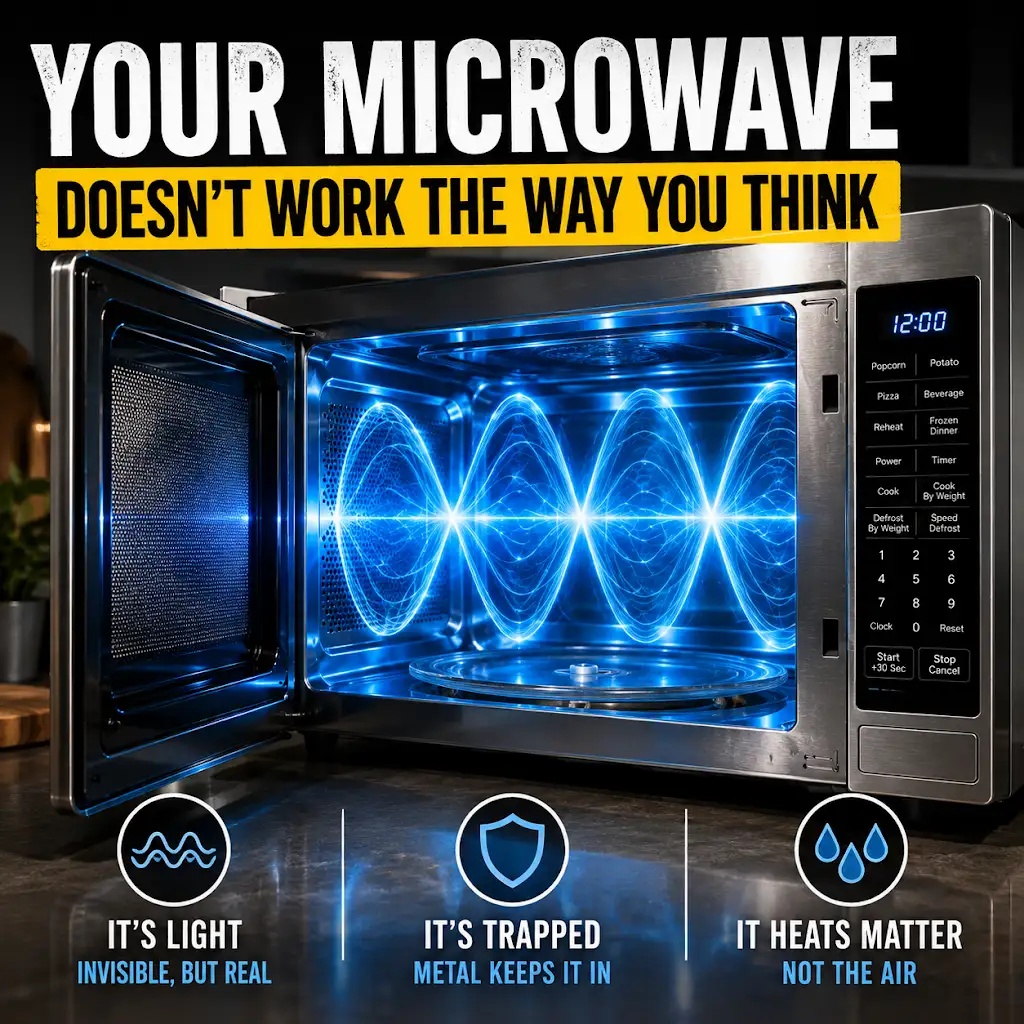
Your Microwave Doesn’t Work the Way You Think
FAQs

What are standing waves in a microwave?
Standing waves in a microwave occur when the microwaves reflect off the walls of the microwave oven and interfere with each other, creating areas of high and low energy within the oven.
How do standing waves affect marshmallows in a microwave?
When a marshmallow is placed in a microwave, it can become a part of the standing wave pattern. This can cause the marshmallow to heat unevenly, resulting in certain areas becoming very hot while others remain cool.
Why do marshmallows expand in a microwave?
When a marshmallow is heated in a microwave, the water molecules inside the marshmallow begin to heat up and turn into steam. This causes the marshmallow to expand as the steam tries to escape.
Can standing waves in a microwave be harmful?
Standing waves in a microwave are not harmful to humans, as long as the microwave is used properly and not damaged. However, they can cause uneven heating of food, which may result in hot spots and potential burns.
How can I prevent uneven heating in a microwave?
To prevent uneven heating in a microwave, it is recommended to use a microwave-safe dish and to stir or rotate the food during the heating process. This can help distribute the energy more evenly and reduce the effects of standing waves.