You’re surrounded by a kaleidoscope of color every single day, from the vibrant hues of a sunset to the subtle shades of your favorite shirt. But have you ever stopped to truly understand how these colors come to life, how your eyes perceive them, and what makes each one distinct? It all boils down to understanding the visible spectrum, that magical band of light that paints your world.
Before you can grasp the colors you see, you need to understand the fundamental nature of light itself. You might think of light as something that simply illuminates, but it’s far more complex and fascinating. Light, you see, is a form of electromagnetic radiation, and it travels in waves. Imagine ripples on a pond, but instead of water, it’s energy moving through space. These waves have different lengths, and this length is the key to unlocking the mystery of color.
The Anatomy of a Light Wave
To visualize this, picture a wave cresting and falling. The distance between two consecutive crests (or troughs) is called the wavelength. Think of it like the distance between two footsteps. These wavelengths vary tremendously, from incredibly short, like those of gamma rays, to very long, like radio waves. The visible spectrum, the part of the electromagnetic spectrum that your eyes are capable of detecting, occupies a surprisingly narrow band within this vast range.
Not All Waves Are Created Equal: Energy and Frequency
Beyond wavelength, light waves also possess frequency, which is essentially how many waves pass a certain point in a given time. Wavelength and frequency are inversely related: shorter wavelengths mean higher frequencies, and longer wavelengths mean lower frequencies. This relationship also ties directly into the energy carried by the light wave. Higher frequency, shorter wavelength waves carry more energy. This understanding is crucial, as it directly influences how light interacts with matter and how you ultimately perceive color.
The Electromagnetic Spectrum: A Vast Continuum
It’s important to remember that the visible spectrum isn’t an isolated phenomenon. It’s just a small portion of the entire electromagnetic spectrum. This spectrum encompasses everything from the powerful gamma rays and X-rays used in medical imaging to the microwaves that heat your food and the radio waves that carry your favorite music. Your eyes have evolved to be sensitive only to a specific sliver of this continuum, the part we call visible light.
The visible spectrum is a fascinating aspect of light that allows us to perceive the world in color. Understanding how it works can deepen our appreciation for the science behind vision and color perception. For a more in-depth exploration of this topic, you can read a related article that delves into the intricacies of light and color at this link: Freaky Science: The Visible Spectrum.
The Human Eye: Your Personal Color Detector
Your eyes are remarkably sophisticated biological instruments, finely tuned to interpret the incoming wavelengths of light and translate them into the vibrant tapestry of colors you experience. It’s a complex process involving specialized cells and intricate neural pathways. Without these marvels of biological engineering, the visible spectrum would simply be an unseen force.
The Retina: Where Light Meets Biology
At the back of your eye lies the retina, a light-sensitive tissue containing millions of specialized cells called photoreceptors. These photoreceptors are the frontline soldiers in your color perception army. They absorb photons – the tiny packets of light energy – and convert them into electrical signals that your brain can understand.
Rods: The Masters of Dim Light
Within the retina, you have two main types of photoreceptors: rods and cones. Rods are incredibly sensitive to light and are primarily responsible for your vision in low-light conditions, often referred to as scotopic vision. They don’t play a significant role in color perception, which is why things appear in shades of gray and black and white when it’s dark. Think about how you can still make out shapes and movement in dim light, but you can’t distinguish colors. That’s the work of your rods.
Cones: The Architects of Color
Cones, on the other hand, are less sensitive to light but are the key players in your ability to see color. You have three different types of cones, each of which is most sensitive to a different range of wavelengths:
- Short-wavelength cones (S-cones): These are most sensitive to blue-violet light.
- Medium-wavelength cones (M-cones): These are most sensitive to green-yellow light.
- Long-wavelength cones (L-cones): These are most sensitive to red-orange light.
It’s the relative stimulation of these three cone types that allows you to perceive the vast array of colors. Your brain doesn’t just see a single color; it interprets the combined signals from all your cones.
The Optic Nerve: The Information Highway to the Brain
Once the photoreceptors in the retina have converted light into electrical signals, these signals are transmitted through the optic nerve, a thick bundle of nerve fibers that connects your eye to your brain. This nerve acts as a high-speed information highway, carrying the visual data from your eyes to the processing centers in your brain.
The Brain: The Ultimate Color Interpreter
The cerebral cortex, specifically the visual cortex, is where the real magic of color perception happens. Your brain receives the electrical signals from the optic nerve and processes them, interpreting the patterns of stimulation from your cones. It’s here that you consciously perceive and identify colors. This is why, even though your eyes detect wavelengths, it’s your brain that constructs the subjective experience of “redness” or “blueness.”
White Light: The Rainbow in Hiding

You often encounter what we call “white light,” like sunlight or the light from many artificial sources. But this “white” isn’t a single color at all; it’s a complex mixture of all the colors within the visible spectrum. Think of it as a symphony orchestra where all instruments are playing at once.
The Spectrum of Sunlight: A Natural Masterpiece
Sunlight is the quintessential example of white light. When you pass sunlight through a prism, a fascinating phenomenon occurs: the white light is split into its constituent colors, revealing the beautiful band of hues we know as the rainbow. This experiment, famously conducted by Isaac Newton, demonstrated that white light is not pure but composed of different wavelengths, each corresponding to a different color.
The Order of the Rainbow: ROYGBIV
The colors of the rainbow, and therefore the colors within white light, always appear in a specific order based on their wavelengths. You might remember the mnemonic ROYGBIV:
- Red: Longest wavelength in the visible spectrum, perceived with the least bending when passing through a prism.
- Orange: Shorter wavelength than red.
- Yellow: Shorter wavelength than orange.
- Green: Shorter wavelength than yellow.
- Blue: Shorter wavelength than green.
- Indigo: A color often debated as distinct from blue and violet, but generally falls in this region.
- Violet: Shortest wavelength in the visible spectrum, perceived with the most bending when passing through a prism.
These are the primary colors of light, and by mixing them in different proportions, you can create all the other colors you see.
Artificial Light: Mimicking the Sun’s Spectrum
Many artificial light sources, like incandescent bulbs and some fluorescent lights, aim to mimic the spectrum of sunlight. However, the precise composition of their emitted light can vary, which is why different light sources can make colors appear slightly different. This is known as color temperature and color rendering index (CRI), factors that lighting designers consider to ensure accurate color representation.
How Objects Get Their Colors: Absorption and Reflection
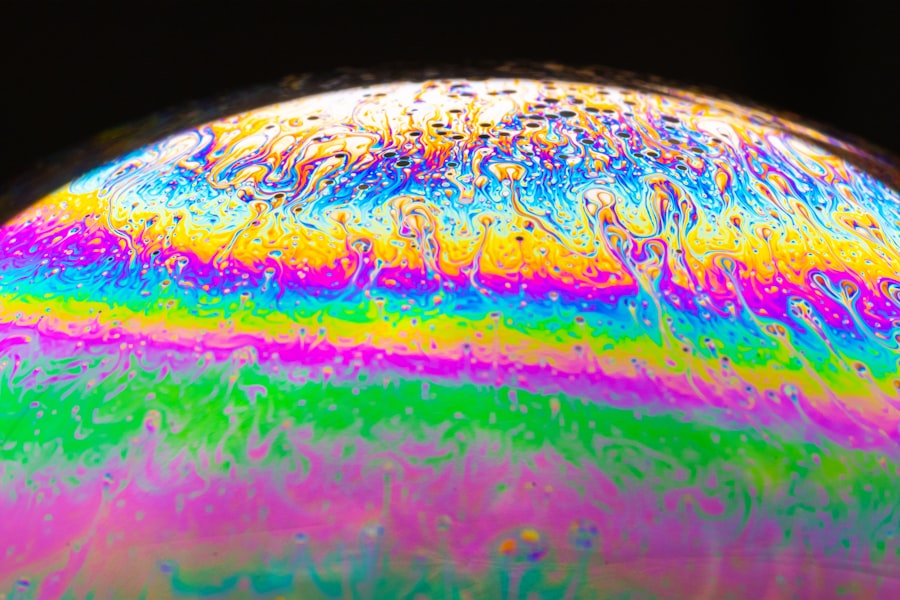
You might wonder why a ripe apple appears red, or a forest canopy looks green. The colors of objects aren’t inherent properties of the objects themselves, but rather how they interact with light. This interaction primarily involves the processes of absorption and reflection.
The Magic of Reflection: What Your Eyes Actually See
When light strikes an object, some wavelengths are absorbed by the object’s surface, and others are reflected. The color you perceive is the combination of the wavelengths that are reflected back to your eyes. So, a red apple appears red because its surface absorbs most of the wavelengths of white light and primarily reflects the red wavelengths.
The Green of Grass: A Chlorophyll Story
Think about the lush green of grass. This green color is due to chlorophyll, the pigment in plants responsible for photosynthesis. Chlorophyll is highly efficient at absorbing red and blue light for energy but reflects green light. This is why plants appear green to us.
Absorption: The Colors That Disappear
Conversely, the wavelengths of light that are absorbed by an object are not seen. If an object absorbs all visible wavelengths of light, it appears black. If it reflects all visible wavelengths, it appears white.
The Depth of Black: A Light-Absorbing Phenomenon
A truly black object absorbs almost all the light that hits it. This is why black clothing can feel hotter in the sun – it’s absorbing more of the sun’s energy. The absence of reflected light is what creates the perception of black.
The Dance of Pigments: Mixing Colors in Matter
When you mix paints or dyes, you’re dealing with pigments. Pigments work differently from light itself. Instead of adding light, pigments absorb certain wavelengths and reflect others. This is why mixing blue and yellow paint creates green. The blue pigment absorbs most of the red and green light, reflecting blue. The yellow pigment absorbs most of the blue and violet light, reflecting yellow. When mixed, they both absorb the red and blue, leaving the green wavelengths to be reflected, creating the color green. This is subtractive color mixing, distinct from the additive mixing of light.
The visible spectrum is a fascinating aspect of light that allows us to perceive the world in color, and understanding how it works can deepen our appreciation for the science of optics. For those interested in exploring this topic further, a related article can be found on Freaky Science, which delves into the intricacies of light and color perception. You can read more about it in this insightful piece on Freaky Science. This exploration not only highlights the physics behind the visible spectrum but also its implications in various fields such as art and technology.
Color Mixing: Creating New Hues
| Color | Wavelength (nm) | Frequency (THz) |
|---|---|---|
| Violet | 380-450 | 670-750 |
| Blue | 450-495 | 606-670 |
| Green | 495-570 | 526-606 |
| Yellow | 570-590 | 508-526 |
| Orange | 590-620 | 484-508 |
| Red | 620-750 | 400-484 |
The way colors interact and blend is a fundamental aspect of their perception. Whether you’re mixing light or pigments, the results are fascinating and predictable. Understanding these principles allows artists, designers, and even everyday observers to manipulate and appreciate the vast spectrum of colors.
Additive Color Mixing: The Science of Light
Additive color mixing applies to light. The primary colors of light are red, green, and blue (RGB). When you add these colors of light together in different proportions, you create other colors.
The Birth of White: All Lights Combined
When you mix red, green, and blue light in equal intensity, you get white light. This is why televisions and computer screens use tiny red, green, and blue pixels to create the illusion of all the colors you see.
The Enigmatic Magenta and Cyan
- Mixing red and green light produces yellow.
- Mixing green and blue light produces cyan.
- Mixing red and blue light produces magenta.
These secondary colors are crucial in additive mixing and are used extensively in digital displays.
Subtractive Color Mixing: The Art of Pigments
As mentioned earlier, subtractive color mixing deals with pigments. The primary colors of pigments are cyan, magenta, and yellow (CMY).
The Mystery of Black: The Absence of Reflection
When you mix cyan, magenta, and yellow pigments, they absorb increasing amounts of light. In theory, mixing all three in equal proportions should result in black because each pigment absorbs a portion of the spectrum, and together they absorb almost all of it. However, in practice, achieving a pure black can be challenging due to pigment impurities, often resulting in a dark, muddy brown. This is why black ink is typically included in printing processes (CMYK, where K stands for key, meaning black).
Creating Secondary Pigment Colors
- Mixing cyan and magenta pigments produces blue.
- Mixing magenta and yellow pigments produces red.
- Mixing cyan and yellow pigments produces green.
This is why if you have primary colored paints (like red, yellow, and blue in traditional art), you can mix them to create secondary colors, and then further mix those to create a wide range of hues.
Beyond the Rainbow: The Subjectivity of Color
While the visible spectrum provides the objective basis for color, your perception of color is ultimately a subjective experience. It’s influenced by a multitude of factors, from your individual biology to your environment and even your past experiences.
Color Blindness: Variations in Cone Sensitivity
Color blindness, or more accurately, color vision deficiency, occurs when one or more types of cone cells in your retina are not functioning correctly or are absent. The most common forms involve difficulties distinguishing between reds and greens, or blues and yellows. This doesn’t mean people with color blindness see in black and white; rather, their perception of certain colors is altered, leading to confusion between specific hues.
The Influence of Context: Lighting and Surroundings
The way you perceive a color can be significantly altered by the lighting conditions and the colors of its surroundings. A vibrant red might appear dull under dim lighting or next to a bright yellow. This is due to simultaneous contrast, where the perception of a color is influenced by the colors around it. Artists and designers meticulously consider these factors to achieve desired visual effects.
Cultural and Linguistic Variations: How We Name and Understand Color
Even the way we categorize and name colors can vary across cultures and languages. While the physical wavelengths of light are universal, the conceptual boundaries we draw between colors can differ. For example, some languages have fewer basic color terms than others, or they might group colors differently. This highlights how language and culture shape our understanding and experience of the world, including color.
Your journey through the visible spectrum is a constant dance between the objective reality of light waves and the subjective interpretation of your senses. From the fundamental physics of light to the intricate workings of your eyes and brain, every element plays a crucial role in bringing the colorful world around you to life. So, the next time you marvel at a vibrant sunset or the intricate pattern on a butterfly’s wing, take a moment to appreciate the incredible science and biology that makes it all possible. You are, in essence, a living, breathing color detector, constantly decoding the electromagnetic symphony that surrounds you.

Why Your Brain Had to Invent Magenta
FAQs
What is the visible spectrum?
The visible spectrum is the portion of the electromagnetic spectrum that is visible to the human eye. It ranges from approximately 380 nanometers to 740 nanometers in wavelength, corresponding to the colors violet to red.
How does the visible spectrum work?
The visible spectrum works by the human eye detecting different wavelengths of light and interpreting them as different colors. When light enters the eye, it passes through the lens and is focused onto the retina, where specialized cells called cones are responsible for detecting different wavelengths and sending signals to the brain to interpret them as colors.
What are the colors of the visible spectrum?
The colors of the visible spectrum, in order of increasing wavelength, are violet, blue, green, yellow, orange, and red. These colors correspond to the different wavelengths of light that the human eye can detect.
How is the visible spectrum used in everyday life?
The visible spectrum is used in everyday life in a variety of ways, including in the fields of art, design, and photography. It is also used in technology such as computer and television screens, where different combinations of red, green, and blue light are used to create a wide range of colors.
What is the significance of the visible spectrum?
The visible spectrum is significant because it allows humans to perceive and differentiate between different colors, which is essential for tasks such as identifying objects, interpreting signals, and appreciating the beauty of the world around us. Additionally, understanding the visible spectrum has led to advancements in various fields, including optics, physics, and biology.