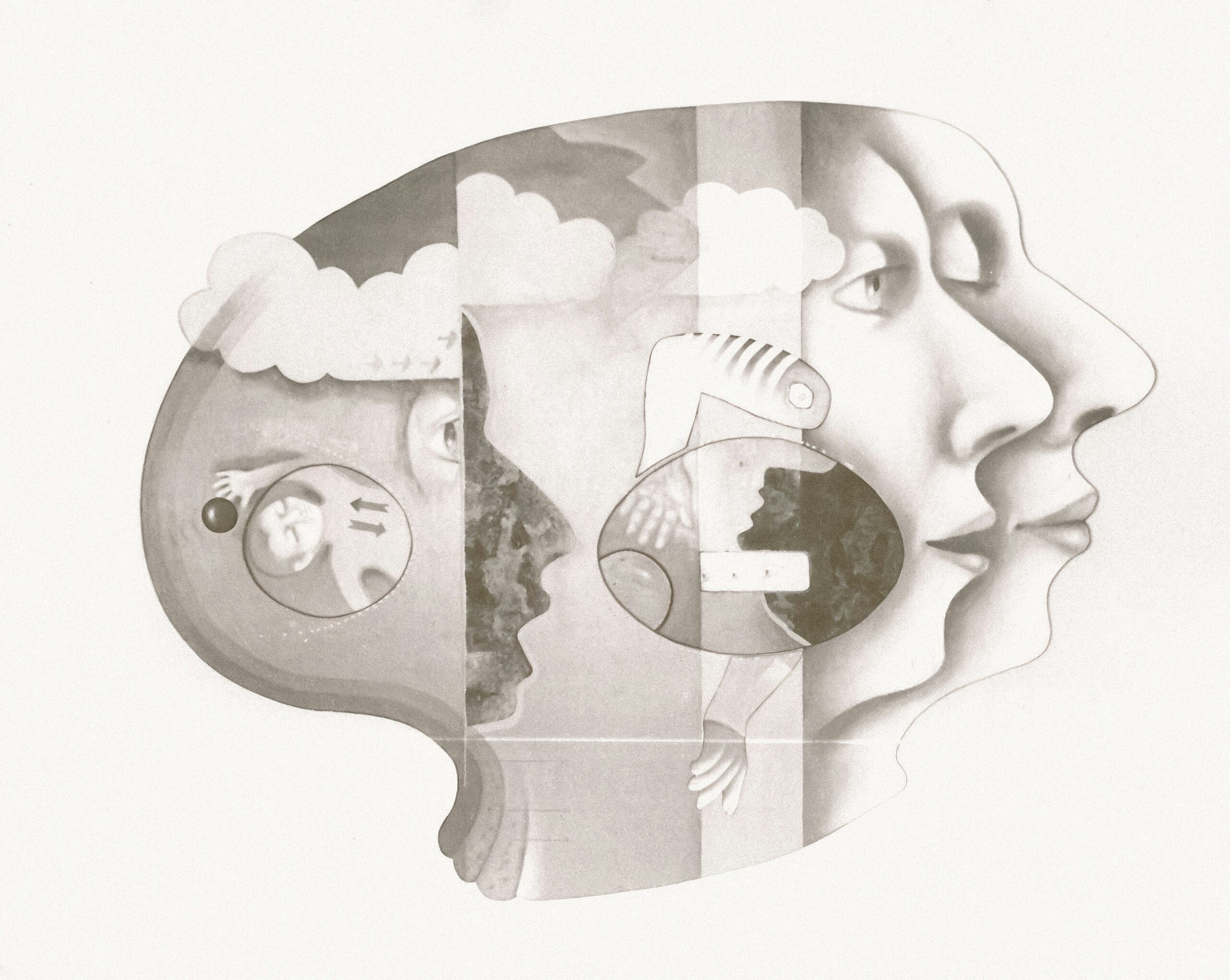
Your brain is a master illusionist, a tireless editor of the raw sensory data that floods in from the world. You might think you perceive reality as it is, a direct download of objective truth. But that’s a delightful, and often useful, fiction. Your experience of the world is a meticulously constructed narrative, a story your brain tells itself, shaping and molding every sight, sound, taste, touch, and smell into a coherent, meaningful whole. This isn’t a flaw; it’s the very engine of your consciousness, the architect of your lived experience.
You navigate your day as if you’re a passive receiver, simply observing what’s “out there.” This couldn’t be further from the truth. Your brain is actively constructing your reality, a process that begins the moment your sensory organs are stimulated. Think of it as a sophisticated internal workshop, constantly receiving raw materials and transforming them into a finished product you can understand and interact with.
Sensory Input: The Raw Clay of Reality
Everything you experience begins with your senses. Light waves hitting your retinas, sound waves vibrating your eardrums, chemicals interacting with your taste buds and olfactory receptors, pressure and temperature stimulating your skin – these are the raw ingredients. But crucially, these are just signals. They are electrical impulses, chemical cascades, patterns of neural activity. They don’t inherently carry meaning.
Light as Electrical Impulses
Consider vision. Light, an electromagnetic wave, enters your eye. It’s not “seeing red” at this stage. It’s photons striking photoreceptor cells (rods and cones) in your retina. This triggers a cascade of chemical reactions, which then convert the light energy into electrical signals. These signals are then transmitted along the optic nerve to your brain, specifically to the visual cortex. Here, the real work of “seeing” begins.
Sound Waves as Neural Firing
Similarly, sound is merely vibrations in the air. These vibrations are channeled by your outer ear, amplified by your middle ear, and then converted into electrical signals by the hair cells in your cochlea. These signals journey to your auditory cortex, where they are interpreted as pitches, tones, and eventually, the familiar sounds of language, music, or the rustling of leaves.
The Brain’s Interpretation Engine: Adding Meaning and Context
Once these raw signals reach your brain, they are not processed in isolation. They are immediately filtered, interpreted, and contextualized. Your brain draws on a vast library of past experiences, memories, expectations, and even your current emotional state to make sense of the incoming data. This is where the magic of perception truly happens.
Feature Detection and Pattern Recognition
Your brain has specialized neurons that act as “feature detectors.” Some fire in response to edges, others to specific colors, others to particular movement patterns. These detectors work in concert to identify basic components of a stimulus. Then, higher-level processing integrates these features into recognizable patterns. For example, a collection of lines and curves isn’t just a jumble; your brain recognizes the pattern as a face, a chair, or a word.
Top-Down vs. Bottom-Up Processing
This process involves two key types of processing: bottom-up and top-down. Bottom-up processing is driven by the sensory input itself. It’s the raw data influencing your perception. Top-down processing, on the other hand, is driven by your existing knowledge, expectations, and goals. Your brain uses this internal information to guide and influence how it interprets the incoming sensory data. For instance, if you’re expecting to see a friend, you’re more likely to interpret ambiguous visual cues as their features.
Recent research has shed light on the fascinating ways in which the brain edits our perception of reality, revealing that our experiences are often shaped by cognitive biases and neural processes. For a deeper understanding of this topic, you can explore the article on the science of perception and reality at Freaky Science, which delves into how our brains construct and sometimes distort the world around us.
The Influence of Past Experiences: Memories as Lenses
Your personal history is not a dusty archive; it’s an active, living force shaping your present perception. Every memory, every learned association, acts like a lens through which you view the world, subtly (and sometimes not so subtly) altering what you see, hear, and feel.
Memory’s Role in Object Recognition
Think about recognizing a familiar object, say, your favorite coffee mug. This isn’t a brand-new perception. Your brain accesses memories associated with that mug – the warmth of it in your hands, the taste of the coffee it holds, perhaps even a specific morning you used it. This pre-existing knowledge makes recognition instantaneous and effortless. Without these memories, each object would be a novel puzzle.
The Power of Familiarity
Familiarity breeds a certain kind of effortless perception. You don’t have to consciously analyze the shape, color, and texture of your mug; your brain retrieves the associated concept instantly. This is why learning new languages or skills feels so effortful at first – your brain is busy building new neural pathways and associations.
Emotional Residue: How Feelings Tint Our Senses
Your emotional state is another powerful editor of your reality. When you’re happy, the world often appears brighter and more vibrant. When you’re anxious, shadows can seem longer, and every creak of the house can sound like a threat. These aren’t objective changes in the environment; they are changes in your brain’s interpretation.
The Amygdala’s Influence
The amygdala, a region of your brain heavily involved in processing emotions, plays a significant role here. It can modulate sensory processing, making you more attuned to stimuli that align with your emotional state. If you’re feeling fear, your amygdala might heighten your sensitivity to potential threats in your environment, making you perceive a rustling bush as a lurking animal.
Conditioned Responses and Associations
Furthermore, through classical conditioning, you can develop strong emotional associations with neutral stimuli. If you’ve had a negative experience in a particular place, even returning to that place when nothing is wrong can trigger feelings of unease, coloring your perception of the surroundings.
Expectations and Biases: The Predictors of Our Reality
Your brain is a prediction machine. It’s constantly trying to anticipate what’s coming next, using patterns and probabilities learned from past experiences. This predictive power is incredibly efficient, but it also means your expectations and ingrained biases can heavily influence what you perceive, sometimes leading you to “see” what you expect to see, rather than what is actually there.
The Principle of Expectancy
Imagine walking into a dimly lit room. If you expect to find a specific object, your brain will actively work to find evidence of that object, even if it’s not clearly visible. This is the power of expectancy. Your perceptual system is primed to confirm your hypotheses about the world.
Perceptual Set: Priming Your Perception
Perceptual set refers to a predisposition to perceive one thing and not another. It’s like a mental readiness to interpret stimuli in a particular way. If you’ve just been reading about dogs, you might be more likely to interpret ambiguous animal shapes as dogs.
Cognitive Biases: The Shortcuts That Can Mislead
Cognitive biases are systematic patterns of deviation from norm or rationality in judgment. They are often unconscious shortcuts your brain takes to simplify decision-making and processing information. While useful for efficiency, they can significantly distort your perception of reality.
Confirmation Bias: Seeking What You Already Believe
Confirmation bias is the tendency to search for, interpret, favor, and recall information in a way that confirms or supports one’s prior beliefs or values. If you believe a certain political candidate is untrustworthy, you’ll be more likely to notice and remember instances that support that belief, while overlooking contradictory evidence. This shapes your perception of the candidate’s character and actions.
Availability Heuristic: The Vividness Effect
The availability heuristic is a mental shortcut that relies on immediate examples that come to a given person’s mind when evaluating a specific topic, concept, method, or decision. If you’ve recently seen news reports about airplane crashes, you might overestimate the risk of flying, even though statistically, it’s very safe. The vividness of the recalled information makes it seem more probable.
The Social Construction of Reality: Shared Perceptions

You don’t exist in a vacuum. Your perceptions are also shaped by the social groups you belong to, the cultures you’re immersed in, and the shared narratives that bind you to others. This collective agreement on what constitutes reality can be incredibly powerful.
Cultural Lenses: Different Worlds in Different Societies
What is considered normal, polite, or even beautiful can vary dramatically across cultures. These cultural norms are internalized from a young age, shaping your perceptions of social interactions, aesthetics, and even the passage of time. For example, the perception of personal space differs significantly between cultures.
Language and Thought: How Words Frame the World
The language you speak doesn’t just describe reality; it can actively shape how you think about and perceive it. The Sapir-Whorf hypothesis suggests that the structure of a language affects its speakers’ worldview or cognition. For instance, languages with more detailed color vocabularies might enable speakers to perceive subtle color distinctions more readily.
Shared Beliefs and Group Identity: The Power of Consensus
When a group of people shares a common belief system, their individual perceptions tend to align. This can create a powerful sense of shared reality, reinforcing existing viewpoints and making it difficult for dissenting opinions to penetrate the group’s collective perception. Think of how shared political or religious beliefs can create distinct “echo chambers.”
The Role of Social Norms
Social norms, the unwritten rules of behavior that govern your interactions, also play a crucial role. You learn to perceive acceptable and unacceptable behavior based on these norms, and your perceptions of others’ actions are often filtered through this lens.
Recent research has shed light on the fascinating ways in which the brain edits our perception of reality, revealing that our experiences are often shaped by cognitive biases and neural processes. For a deeper understanding of this intriguing topic, you can explore a related article that discusses the mechanisms behind these alterations in perception. This article delves into how our brains filter and interpret sensory information, ultimately influencing our understanding of the world around us. To read more about this captivating subject, check out the article here.
The Malleability of Perception: When Reality Shifts
| Aspect | Details |
|---|---|
| Perception | The brain filters and interprets sensory information to create a coherent perception of reality. |
| Memory | Memories are reconstructed and can be influenced by emotions and biases, leading to altered recollections of events. |
| Attention | The brain selectively focuses on certain aspects of reality while ignoring others, shaping our perception of the world. |
| Confirmation Bias | The brain tends to seek out information that confirms pre-existing beliefs, potentially distorting reality. |
| Illusions | The brain can be tricked by optical and cognitive illusions, demonstrating its ability to edit reality. |
The most astonishing aspect of your brain’s reality editing is its inherent malleability. Your perception isn’t fixed; it can change, adapt, and even be deliberately manipulated. This capacity for change is both a source of learning and adaptation, and a vulnerability to deception.
The Brain’s Plasticity: Rewiring Your Worldview
Neuroplasticity, the brain’s ability to reorganize itself by forming new neural connections throughout life, is the foundation of perceptual change. Through learning, practice, and even focused attention, you can literally rewire your brain to perceive the world differently.
Learning New Skills: A New Way of Seeing
Learning to play a musical instrument or becoming proficient in a new sport requires not just motor skills but also a recalibration of your perceptual systems. You learn to hear subtle nuances in music or to anticipate the trajectory of a ball with greater accuracy.
Illusions and Hallucinations: When the Edit Goes Awry
Optical illusions are a prime example of how your brain can be tricked into perceiving something that isn’t objectively there. These illusions exploit the predictable ways your brain processes visual information, revealing the constructed nature of your visual experience. Hallucinations, on the other hand, are perceptions without external stimuli, highlighting the brain’s capacity to generate its own sensory experiences.
Optical Illusions: Glimpses Behind the Curtain
The Müller-Lyer illusion, for instance, demonstrates how perceived line length can be altered by the orientation of surrounding arrows. This isn’t because the lines are actually different lengths, but because your brain interprets the context in a specific way.
The Nature of Hallucinations
Hallucinations, whether drug-induced, caused by mental illness, or even brought on by extreme fatigue, demonstrate the profound influence of internal brain states on perception. They show that your brain can generate vivid sensory experiences independent of the external world.
The Power of Suggestion: Manipulating Perception
The way information is presented to you can powerfully influence your perception. Leading questions in a legal setting, persuasive advertising, or even the tone of voice of someone speaking to you can all subtly steer your interpretation of events and information. You are, in essence, being guided to edit your reality in a particular direction.
Witness Testimony: The Fragility of Memory and Perception
Studies on eyewitness testimony have repeatedly shown how suggestive questioning can lead individuals to recall details that never actually happened. This highlights the vulnerability of your perceptual system to external influence.
Embracing the Edited Reality: The Art of Mindful Perception
Understanding that your brain is an active editor of your reality doesn’t lead to existential despair; it opens up a world of possibilities. It empowers you to become a more conscious and discerning perceiver, to recognize the influences on your experience, and to actively shape your own reality.
Cultivating Mindfulness: Becoming a More Aware Observer
Mindfulness practices, such as meditation, encourage you to pay attention to your thoughts, feelings, and sensory experiences without judgment. This practice helps you to deconstruct the automatic editing process of your brain, allowing you to observe raw sensory input more directly.
Observing Your Thoughts: Recognizing the Editors at Work
By becoming aware of your own thought patterns, biases, and expectations, you can begin to identify when your brain is editing your reality. You can learn to question your initial interpretations and to seek out alternative perspectives.
Challenging Your Biases: Expanding Your Perceptual Horizons
Actively seeking out information that contradicts your existing beliefs and engaging with people who have different perspectives can help to challenge your ingrained biases. This process can be uncomfortable, but it’s essential for expanding your perceptual horizons.
Seeking Diverse Perspectives
Make a conscious effort to listen to and understand viewpoints that differ from your own. This exposure can reveal the limitations of your current perceptual framework and introduce you to new ways of understanding the world.
The Gratitude Practice: Shifting Your Emotional Lens
Practicing gratitude can actively shift your emotional lens, leading you to perceive the world with more positivity and appreciation. By focusing on the good in your life, you are consciously influencing your brain’s emotional processing, which in turn colors your sensory experience.
Reframing Your Experiences
Consciously choosing to reframe challenging experiences in a more positive or growth-oriented light can have a significant impact on your perception of those events. You are not denying the difficulty, but rather choosing to focus on the lessons learned and the resilience gained.
Your brain’s reality edit is an ongoing, dynamic process. It’s a testament to the remarkable complexity and adaptability of your mind. By understanding this intricate dance between raw sensation and internal interpretation, you gain the power to become not just a passive recipient of experience, but an active, conscious architect of your own wonderfully subjective reality.

Why Your Brain Had to Invent Magenta
FAQs
What is reality editing in the brain?
Reality editing in the brain refers to the process by which the brain filters, interprets, and alters incoming sensory information to create a coherent and meaningful perception of the world. This process involves various cognitive mechanisms that shape our perception of reality.
What are some examples of reality editing in the brain?
Examples of reality editing in the brain include perceptual illusions, selective attention, and cognitive biases. Perceptual illusions, such as the famous “rubber hand illusion,” demonstrate how the brain can be tricked into perceiving false information. Selective attention allows the brain to focus on specific stimuli while ignoring others, and cognitive biases can influence how we interpret and remember information.
How does the brain edit reality?
The brain edits reality through a combination of sensory processing, attentional mechanisms, memory, and cognitive biases. Sensory processing involves the initial reception and encoding of sensory information, while attentional mechanisms filter and prioritize certain stimuli. Memory plays a role in shaping our perception of reality by influencing how we interpret and recall past experiences. Cognitive biases, such as confirmation bias and the availability heuristic, can also distort our perception of reality.
What are the implications of reality editing in the brain?
The implications of reality editing in the brain are far-reaching and can impact various aspects of human behavior and cognition. For example, understanding how the brain edits reality can shed light on the mechanisms underlying perception, decision-making, and belief formation. It can also have implications for fields such as psychology, neuroscience, and philosophy.
Can the brain’s editing of reality be manipulated?
Yes, the brain’s editing of reality can be manipulated through various means, such as sensory illusions, cognitive training, and psychoactive substances. By understanding the mechanisms involved in reality editing, researchers and practitioners can develop techniques to influence perception and cognition. However, ethical considerations must be taken into account when manipulating the brain’s perception of reality.