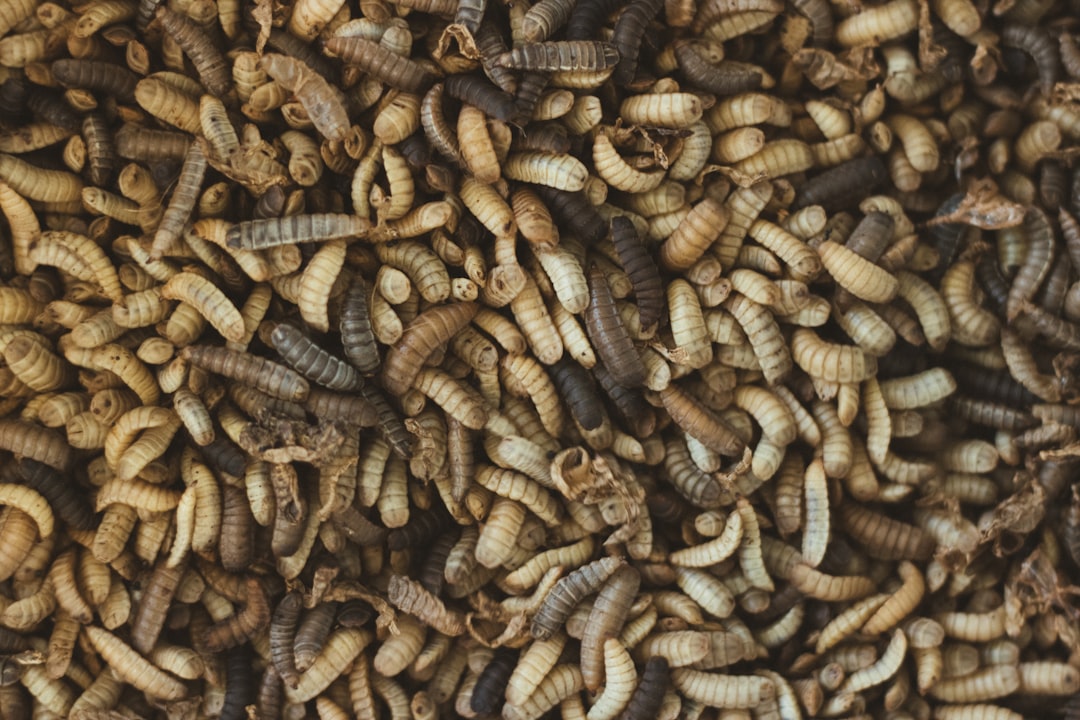
You’ve probably seen them, or something remarkably similar, in damp corners of your garden after a rain: simple, often brown or black worms, a few inches long, inching along. They seem unassuming, perhaps even a little… boring. But you’d be profoundly mistaken. You are, in fact, standing on the precipice of understanding some of the most mind-bending biological phenomena known to science, all thanks to the humble planarian worm. These flatworms, belonging to the phylum Platyhelminthes, are not just garden dwellers; they are miniature miracles, packed with secrets that have captivated scientists for centuries and continue to unlock crucial insights into regeneration, memory, and the very essence of life. Prepare yourself, for we are about to unravel the astonishing mysteries of planarian worms.
The most immediate and striking characteristic that sets planarians apart is their extraordinary ability to regenerate. Imagine this: you cut a planarian into tiny pieces, and from each minuscule fragment, a complete, functional worm emerges. This isn’t science fiction; it’s the everyday reality for these remarkable creatures. Their regenerative capacity far surpasses that of any other multicellular animal, making them a prime model organism for studying the processes of cellular repair and regrowth. When you consider the implications of this ability, it’s easy to become utterly fascinated.
Complete Reconstruction from the Tiniest Fragments
The sheer scale of planarian regeneration is astounding. Researchers have demonstrated that a planarian can be cut into as many as 279 pieces, and each individual piece will regenerate into a whole new organism. This isn’t just about regrowing a limb or repairing a wound; it’s about rebuilding an entire body plan, complete with a head, a tail, and all necessary organs. How do they do it? The answer lies in their unique cellular makeup.
Stem Cells: The Architects of Renewal
At the heart of this regenerative prowess are specialized cells called neoblasts. Unlike the more differentiated cells found in many animals, neoblasts are totipotent or pluripotent stem cells, meaning they retain the potential to develop into any cell type within the planarian body. They are distributed throughout the worm’s tissues, acting as a distributed reserve of building material. When a planarian is injured, these neoblasts are activated. They proliferate rapidly, migrate to the site of injury, and then differentiate into the specific cell types needed to rebuild the missing or damaged tissue. This continuous pool of undifferentiated cells is like having a miniature factory of spare parts always on standby, ready to spring into action.
Signaling Pathways: Orchestrating the Rebuilding Process
The activation and differentiation of neoblasts are not haphazard. They are guided by complex signaling pathways, intricate molecular conversations that tell cells what to do and where to go. These pathways involve growth factors, signaling molecules, and intricate feedback loops that ensure the correct structures are formed in the right places. Understanding these pathways is a major goal of planarian research, as it could hold the key to unlocking similar regenerative capabilities in humans. Imagine if we could trigger similar signaling to heal spinal cord injuries or regenerate damaged heart tissue. The potential is immense.
Planarian worms are fascinating creatures known for their remarkable regenerative abilities, which have intrigued scientists for years. For those interested in learning more about these unique organisms and their biological significance, a related article can be found at Freaky Science. This resource delves into the various aspects of planarian biology, including their anatomy, habitat, and the implications of their regenerative capabilities for scientific research.
Unraveling Planarian Anatomy: Simplicity with Surprising Complexity
While their regenerative abilities might seem to suggest an overly simple biological structure, planarians possess a surprising level of anatomical organization. You might visually perceive them as essentially flat tubes, but a closer look reveals distinct organ systems that are crucial for their survival and are the target of constant scientific scrutiny.
The Digestive System: A Primitive Yet Efficient Design
Planarians possess a branched gastrovascular cavity, which serves as both their digestive tract and circulatory system. Food enters through a pharynx, a muscular tube that can be extended outwards to grasp food. This cavity branches extensively throughout the body, ensuring that nutrients can reach all tissues. Undigested waste is expelled through a single opening, which can be inconvenient but is efficient for such a small organism. The branching nature of this system highlights an evolutionary adaptation to maximize nutrient distribution in a flattened body plan.
The Nervous System: A Centralized Ganglion and Beyond
Despite their relatively simple appearance, planarians have a centralized nervous system. They possess a primitive brain, known as a cephalic ganglion, located at the anterior end. From this ganglion, two nerve cords run longitudinally along the length of the body, connecting to a network of smaller nerves. This arrangement allows for basic sensory perception, communication, and coordinated movement. The presence of a centralized nervous system, even a rudimentary one, is critical for understanding how they navigate their environment and, as we’ll explore later, how they might store information.
Sensory Structures: Eyespots for Light and More
Many planarian species possess eyespots, simple photoreceptors that can detect light and darkness. These aren’t complex eyes capable of forming images, but they are sufficient for planarians to orient themselves away from bright light and seek out darker, more favorable environments. Beyond light detection, planarians also have chemoreceptors that allow them to sense chemicals in their environment, helping them locate food and avoid predators. These sensory capabilities, while basic, are essential for their survival and interaction with their world.
The Enigmatic Nature of Planarian Memory: Can Worms Remember?

This is where the mystery of planarians truly takes a fascinating turn. For decades, scientists have been investigating whether planarians can learn and, more startlingly, whether they can retain memory in a way that can be transferred between individuals. This line of research has pushed the boundaries of our understanding of memory and consciousness.
Behavioral Conditioning: Teaching the Worm
The initial experiments involved training planarians to associate a specific stimulus with a negative outcome. For instance, a planarian might be trained to turn away from a light source when a mild electric shock is delivered simultaneously. After a period of training, the planarian would exhibit avoidance behavior when presented with the light alone. This demonstrated a basic form of learning, implying the existence of some capacity to form associations.
The Astonishing “Cutting and Feeding” Experiments
The most controversial and mind-boggling aspect of planarian memory research came with experiments involving the “cutting and feeding” technique. Researchers would train a planarian to associate a specific stimulus (like a light) with an unpleasant outcome (like a shock). Then, they would cut the trained worm into pieces. Each piece, as we know, regenerates into a new, complete worm. The astonishing finding was that these newly regenerated worms, which had never undergone the training themselves, still exhibited the learned avoidance behavior. This suggested that memory might not be solely confined to the brain but could be encoded elsewhere, perhaps at a molecular level, within the tissues.
Molecular Basis of Memory: RNA and Protein Investigations
The prevailing hypothesis to explain this transgenerational memory transfer involves the role of RNA and proteins. Scientists theorized that during the initial training, specific RNA molecules or protein configurations associated with the memory were created in the nerve cells of the original worm. When the worm was cut, these molecules were distributed among the regenerating fragments. As the neoblasts differentiated into new nerve cells, they supposedly incorporated these “memory molecules,” thus inheriting the learned behavior. While this theory is still actively debated and refined, it offers a potential mechanism for how such remarkable memory transfer could occur.
Planarians as Model Organisms: A Window into Fundamental Biology
Beyond their standout abilities, planarians serve as invaluable model organisms for a wide range of biological research. Their ease of maintenance in the lab, rapid breeding cycles, and unique genetic characteristics make them ideal for studying fundamental biological processes that are difficult or impossible to investigate in more complex animals.
Studying Gene Function and Regulation
The ability to easily manipulate the genes of planarians makes them powerful tools for understanding gene function. Scientists can knock out or overexpress specific genes and observe the resulting effects on regeneration, development, and behavior. This allows researchers to build comprehensive genetic maps and understand the complex regulatory networks that govern life. The relatively simpler genome of planarians compared to mammals also makes these studies more tractable.
Investigating Developmental Biology
Planarian regeneration offers a unique window into developmental biology. By studying how a complete organism regenerates from a fragment, researchers can gain insights into the fundamental principles of tissue patterning, cell differentiation, and morphogenesis. This knowledge has broad implications for understanding embryonic development, wound healing, and the origins of diseases like cancer, which often involve aberrant cell proliferation and differentiation.
Exploring Evolutionary Biology
The evolutionary history of planarians, with their placement as early branching bilaterians, makes them important for understanding the evolution of key biological features. Their relatively simple body plan and regenerative abilities provide clues about the ancestral traits of bilaterally symmetrical animals and the evolutionary pathways that led to greater complexity. Studying their genetic makeup can also reveal insights into the emergence of new genes and biological innovations.
Planarian worms are fascinating creatures known for their remarkable regenerative abilities, which have intrigued scientists for years. For those interested in exploring this topic further, a related article offers an in-depth look at the biology and regeneration processes of these unique organisms. You can read more about it in this informative piece on Freaky Science, where the complexities of planarian anatomy and their potential implications for medical research are discussed.
The Future of Planarian Research: Unlocking Human Potential
| Aspect | Details |
|---|---|
| Scientific Name | Dugesia |
| Size | 1-20 centimeters |
| Habitat | Freshwater environments |
| Diet | Small organisms and organic debris |
| Reproduction | Asexual and sexual reproduction |
The ongoing research into planarian worms is not merely an academic pursuit confined to dusty laboratories. It holds profound implications for human health and our understanding of life itself. As we continue to unravel their mysteries, the potential applications become increasingly exciting.
Therapeutic Regeneration: The Ultimate Goal
The ultimate dream of planarian research is to harness their regenerative power for therapeutic purposes in humans. Imagine a future where we can stimulate the regeneration of damaged organs, repair spinal cord injuries, or even regrow lost limbs. While the leap from planarians to humans is significant, understanding the molecular and cellular mechanisms behind their regeneration brings us incrementally closer to achieving these ambitious goals.
Understanding Aging and Disease
The study of neoblasts and the cellular processes involved in planarian regeneration can shed light on the aging process and the development of age-related diseases. By understanding how planarians maintain their cellular integrity and repair damage throughout their long lifespans (relative to their size), we may uncover strategies to slow down aging in humans and combat degenerative conditions.
New Frontiers in Neuroscience and Psychology
The enigmatic nature of planarian memory continues to open new avenues in neuroscience and even psychology. Researchers are still grappling with the implications of memory transfer and are exploring whether there are universal principles of information storage and retrieval that apply across vastly different organisms. This could lead to a revolutionary shift in how we conceptualize memory, consciousness, and even identity.
You began by observing a seemingly unassuming creature, a mere worm in the dirt. But as you delve deeper into the world of planarians, you uncover a universe of biological wonder. Their unparalleled regenerative abilities, their surprisingly complex yet elegantly organized anatomy, and the tantalizing mysteries of their memory are not just scientific curiosities; they are keys to unlocking some of the most fundamental questions about life, healing, and the very essence of what it means to be an organism. The journey into unraveling the mysteries of planarian worms is far from over, and with each new discovery, the potential for human benefit and a deeper understanding of our own biology grows exponentially.

Your Body Knows Something You Don’t
FAQs
What are planarian worms?
Planarian worms are a type of flatworm belonging to the class Turbellaria. They are known for their regenerative abilities and are found in freshwater environments around the world.
How do planarian worms reproduce?
Planarian worms are hermaphroditic, meaning they have both male and female reproductive organs. They can reproduce sexually by exchanging sperm with another planarian, or asexually through a process called fission, where the worm splits in two and each half regenerates into a new worm.
What do planarian worms eat?
Planarian worms are carnivorous and feed on small organisms such as protozoans, tiny worms, and insect larvae. They use their muscular pharynx to suck in food and digest it in their gastrovascular cavity.
How do planarian worms regenerate?
Planarian worms have remarkable regenerative abilities, allowing them to regenerate lost body parts, including their head, tail, and internal organs. They achieve this through the presence of pluripotent stem cells, which can differentiate into any type of cell needed for regeneration.
What is the significance of planarian worms in scientific research?
Planarian worms are used as model organisms in scientific research due to their regenerative abilities and relatively simple nervous system. They have been studied to understand the mechanisms of regeneration, stem cell biology, and neurobiology, with potential implications for regenerative medicine and neuroscience.