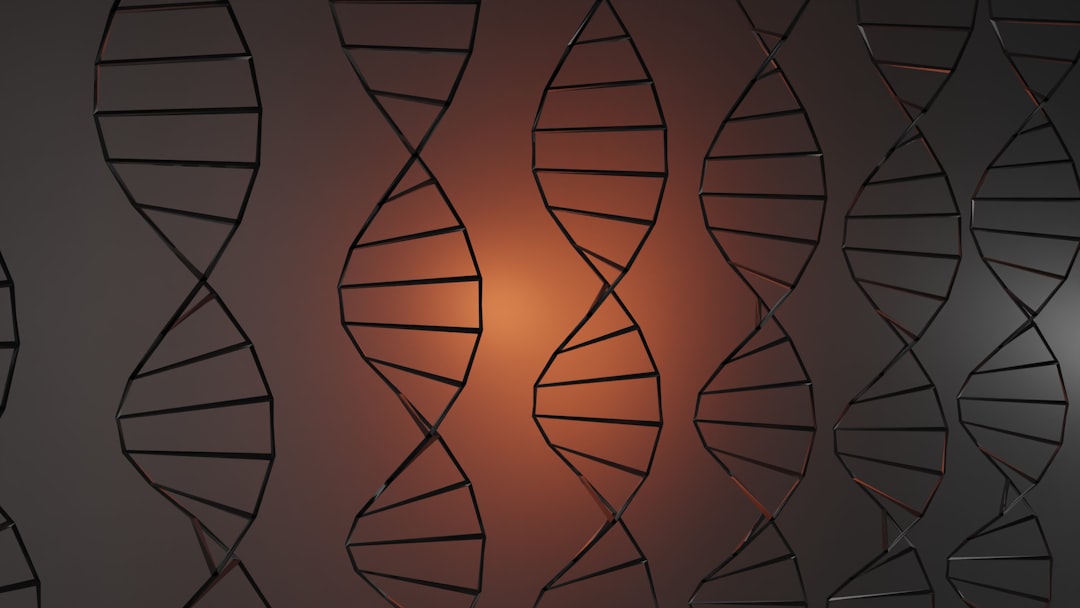
You carry within you a secret blueprint, an invisible architect that has orchestrated your entire existence. It’s a remarkable molecule, a double helix of staggering complexity, and its name is DNA. You might think of it as the code for your eye color, the reason your hair curls, or the predisposition to certain talents. But its power extends far beyond these superficial traits. DNA is the master controller, the ultimate conductor of your body’s symphony, dictating everything from the smallest cellular process to the grandest physiological functions. Understanding its power is to understand the very essence of you.
Imagine a microscopic library, meticulously organized and filled with an infinite amount of information. That’s a simplified, albeit potent, analogy for your DNA. It resides within the nucleus of almost every cell in your body, a tightly coiled package of genetic instructions. Its elegant structure, discovered by Watson and Crick, is fundamental to its function.
The Double Helix: A Twisted Ladder of Information
Your DNA is a double helix, resembling a twisted ladder. The “sides” of this ladder are made of sugar and phosphate molecules, providing a sturdy framework. The “rungs” of the ladder are where the real magic happens. These are formed by pairs of chemical bases: Adenine (A), Thymine (T), Guanine (G), and Cytosine (C). The order and arrangement of these bases along the DNA strand form the genetic code, the language that your body understands.
The Four Bases: The Alphabet of Life
Think of A, T, G, and C as the four letters in your body’s alphabet. They don’t just appear randomly; they pair up in a specific way: Adenine always pairs with Thymine (A-T), and Guanine always pairs with Cytosine (G-C). This complementary base pairing is crucial for DNA replication and for ensuring the accurate copying of genetic information. It’s like a built-in error-checking system, ensuring that when your cells divide, the next generation of cells receives an identical, faithful copy of your blueprint.
Genes: The Chapters of Your Blueprint
These sequences of bases aren’t just random strings of letters. Specific segments of DNA are called genes. Each gene contains the instructions for building a particular protein, and proteins are the workhorses of your cells. They perform a vast array of functions, from structural support to enzymatic activity, and are essential for virtually every process in your body.
From DNA to Protein: The Central Dogma
The process by which your DNA instructions are translated into functional proteins is known as the central dogma of molecular biology. It’s a multi-step journey that begins with transcription, where a segment of DNA is copied into a messenger molecule called RNA. This RNA then travels out of the nucleus to the ribosomes, where translation occurs. Here, the RNA sequence is read, and amino acids are assembled in a specific order to create a functional protein. Each gene, in essence, is a recipe for a specific protein, and the combination of all these proteins dictates the form and function of your entire body.
DNA plays a crucial role in controlling the functions and development of the body, acting as the blueprint for all biological processes. For a deeper understanding of how DNA influences various aspects of our physiology and behavior, you can explore the article on Freaky Science, which delves into the fascinating relationship between genetics and bodily functions. To read more, visit this article.
Directing Cellular Operations: Genes as Molecular Managers
Your genes are not passive entities; they are active directors of your cellular operations. They orchestrate a constant dance of production, consumption, and communication, ensuring that each component of your body functions optimally.
Protein Synthesis: The Foundation of Function
As mentioned, proteins are the direct product of gene expression. But the sheer variety and specialization of proteins is astounding. You have structural proteins like collagen that give your skin its elasticity and your bones their strength. You have enzymes, biological catalysts that speed up countless chemical reactions necessary for digestion, metabolism, and energy production. You have signaling proteins that act as messengers, communicating information between cells and coordinating complex bodily processes.
Enzymes: The Unsung Heroes of Metabolism
Consider the enzymes involved in breaking down the food you eat. Without them, the complex carbohydrates, fats, and proteins would be indigestible. Your body would starve, even if you consumed an abundance of nutrients. Similarly, enzymes are responsible for synthesizing energy-carrying molecules, building and repairing tissues, and detoxifying harmful substances. Every enzyme is a precisely folded protein, its shape determined by the gene that coded for it, and its function essential for your survival.
Cell Growth and Division: Orchestrating Replication
Your body is in a constant state of renewal, with cells dying and being replaced. Genes play a pivotal role in controlling cell growth and division, a process known as the cell cycle. Specific genes act as “on” and “off” switches, regulating when a cell should divide, how many times it should divide, and when it should undergo programmed cell death, or apoptosis.
The Cell Cycle: A Tightly Regulated Process
Imagine a meticulous factory assembly line. The cell cycle is similarly a highly regulated process involving distinct phases. Genes control the progression through these phases, ensuring that DNA is replicated accurately before cell division. Proteins encoded by “proto-oncogenes” promote cell growth, while those from “tumor suppressor genes” inhibit it or trigger apoptosis. When these genes are mutated or dysregulated, it can lead to uncontrolled cell proliferation, a hallmark of cancer.
Regulating Bodily Systems: DNA’s Master Control of Physiology
Beyond individual cells, your DNA’s influence extends to the complex interplay of your organ systems, orchestrating everything from your heartbeat to your brain function.
The Nervous System: Wiring Your Thoughts and Actions
Your nervous system, the command center of your body, is profoundly shaped by your DNA. Genes are responsible for the development of neurons, the specialized cells that transmit electrical and chemical signals throughout your brain and body. They also dictate the production of neurotransmitters, the chemical messengers that allow neurons to communicate with each other.
Neurotransmitters: The Chemical Messengers of the Mind
Think about the feelings of happiness, fear, or alertness. These sensations are mediated by neurotransmitters like dopamine, serotonin, and adrenaline, all of which are synthesized and regulated by genes. Your DNA determines not only the types of neurotransmitters you produce but also how efficiently they are released and how readily they bind to their receptors, influencing your mood, behavior, and cognitive abilities.
The Endocrine System: Hormonal Harmony
The endocrine system, a network of glands that produce hormones, is another area where DNA exerts significant control. Hormones are chemical messengers that travel through your bloodstream to target cells, regulating a vast array of bodily functions, including growth, metabolism, reproduction, and stress response.
Hormones: Chemical Cues for Bodily Processes
Your DNA holds the instructions for producing all the hormones that govern your life. The genes for insulin, for example, ensure you can regulate your blood sugar. Genes for growth hormone are essential for your development. Genes for cortisol are critical for managing stress. Any disruption in the production or function of these hormones, often due to genetic variations, can have profound impacts on your health.
The Legacy of Inheritance: Passing Down Your DNA
The power of DNA is not just about controlling your present; it’s also about connecting you to your past and shaping your future. Your DNA is the thread that weaves you into the tapestry of generations.
From Parents to Offspring: The Process of Heredity
Every organism inherits a unique combination of DNA from its parents. This inheritance is the foundation of heredity, explaining why you might share certain traits with your mother or father. During reproduction, specialized cells called gametes (sperm and egg) are produced. These gametes contain half the amount of DNA as a regular body cell. When fertilization occurs, the gametes fuse, creating a zygote with a complete set of chromosomes, half from each parent.
Chromosomes: The Organized Packages of DNA
Your DNA is packaged into structures called chromosomes. Humans typically have 23 pairs of chromosomes. One set of 23 comes from your mother, and the other set of 23 comes from your father. These chromosomes are like neatly organized folders, each containing thousands of genes.
Genetic Variation: The Source of Individuality
While you inherit a blueprint from your parents, it’s not an exact replica of either. Small variations in your DNA sequence, called genetic variations or polymorphisms, are what make you an individual. These variations can be as simple as a single base change or as complex as rearrangements of large DNA segments.
Mutations: Driving Evolution and Disease
Some of these variations are neutral, having no discernible effect on your health or characteristics. Others can have profound consequences. Mutations are changes in the DNA sequence that can arise spontaneously or be caused by environmental factors. While some mutations can be detrimental, leading to genetic disorders, others can be beneficial, providing an evolutionary advantage. Over vast stretches of time, the accumulation of beneficial mutations is what drives the process of evolution.
DNA plays a crucial role in controlling the functions of the body, acting as the blueprint for all living organisms. It dictates everything from physical traits to the biochemical processes that sustain life. For a deeper understanding of how DNA influences our biology, you can explore a related article that delves into the intricate relationship between genetics and bodily functions. This insightful piece can be found here, offering valuable information on the subject.
Customizing Your Body: The Future of DNA Control
| Data/Metric | Description |
|---|---|
| Gene Expression | The process by which information from a gene is used in the synthesis of a functional gene product, such as proteins or RNA. |
| Protein Synthesis | The process by which the genetic code carried by mRNA is used to produce proteins in the cell. |
| Cell Differentiation | The process by which a cell becomes specialized in order to perform a specific function, controlled by gene expression. |
| Regulation of Metabolism | DNA controls the production of enzymes and other proteins involved in metabolic pathways, influencing the body’s metabolism. |
| Cell Division | DNA controls the process of cell division, ensuring proper replication and distribution of genetic material. |
The understanding of DNA’s power is not just a scientific marvel; it’s a beacon of hope for the future. We are increasingly gaining the ability to not only understand this code but to interpret and even rewrite it.
Genetic Engineering: Rewriting the Blueprint
Genetic engineering, a field that allows for the modification of an organism’s genes, is rapidly advancing. This technology holds immense potential for treating genetic diseases, developing disease-resistant crops, and even creating new forms of life. By precisely editing DNA sequences, scientists can correct faulty genes or introduce beneficial ones.
Gene Therapy: Correcting Genetic Errors
Gene therapy, a promising branch of genetic engineering, aims to treat diseases by introducing new genes or modifying existing ones within a patient’s cells. For individuals suffering from inherited disorders caused by a single faulty gene, gene therapy offers the possibility of a cure, replacing the defective gene with a functional copy.
Personalized Medicine: Tailoring Treatments to Your DNA
Your DNA holds the key to understanding your unique susceptibility to certain diseases and how you might respond to different medications. Personalized medicine leverages this information to tailor medical treatments to your individual genetic makeup. This means not just treating a disease, but treating your specific version of that disease, with a higher likelihood of success and fewer side effects.
Pharmacogenomics: The Science of Drug Response
Pharmacogenomics is the study of how your genes affect your response to drugs. By analyzing your genetic profile, doctors can predict whether a particular medication will be effective for you, how much of it you will need, and if you are at risk of experiencing adverse reactions. This revolutionizes drug prescription, moving away from a one-size-fits-all approach to a highly individualized one.
In conclusion, you are a testament to the astonishing power of DNA. It is the silent maestro, conducting every beat of your heart, every thought in your mind, and every cell in your body. From the fundamental building blocks of life to the intricate symphony of your organ systems, DNA is the ultimate controller. As our understanding deepens, so does our ability to harness this power, opening up avenues for healing, for innovation, and for a future where we can truly customize our existence, guided by the incredible blueprint held within you.

Your Body Knows Something You Don’t
FAQs
1. What is DNA and how does it control the body?
DNA, or deoxyribonucleic acid, is a molecule that contains the genetic instructions for the development, functioning, growth, and reproduction of all known living organisms. It controls the body by providing the instructions for the production of proteins, which are essential for the structure and function of cells and tissues.
2. How does DNA determine traits and characteristics?
DNA determines traits and characteristics through the sequence of its nucleotide bases. These bases form genes, which are the instructions for making specific proteins. The combination of genes inherited from parents determines an individual’s traits and characteristics, such as eye color, hair texture, and susceptibility to certain diseases.
3. How does DNA replication and gene expression contribute to body function?
DNA replication is the process by which a cell makes an identical copy of its DNA. This is essential for growth, development, and repair of the body. Gene expression is the process by which the information in a gene is used to synthesize a functional gene product, such as a protein. This contributes to body function by regulating the production of proteins necessary for cellular processes.
4. How do mutations in DNA affect the body?
Mutations in DNA can affect the body in various ways. Some mutations may have no effect, while others can lead to genetic disorders or diseases. Mutations can alter the structure and function of proteins, disrupt normal cellular processes, and increase the risk of certain health conditions.
5. Can DNA be modified to treat genetic diseases or improve body function?
Advances in genetic engineering and gene therapy have made it possible to modify DNA to treat genetic diseases and improve body function. Techniques such as CRISPR-Cas9 allow for precise editing of DNA, offering potential treatments for genetic disorders. However, ethical and safety considerations must be carefully evaluated when considering DNA modification for medical purposes.