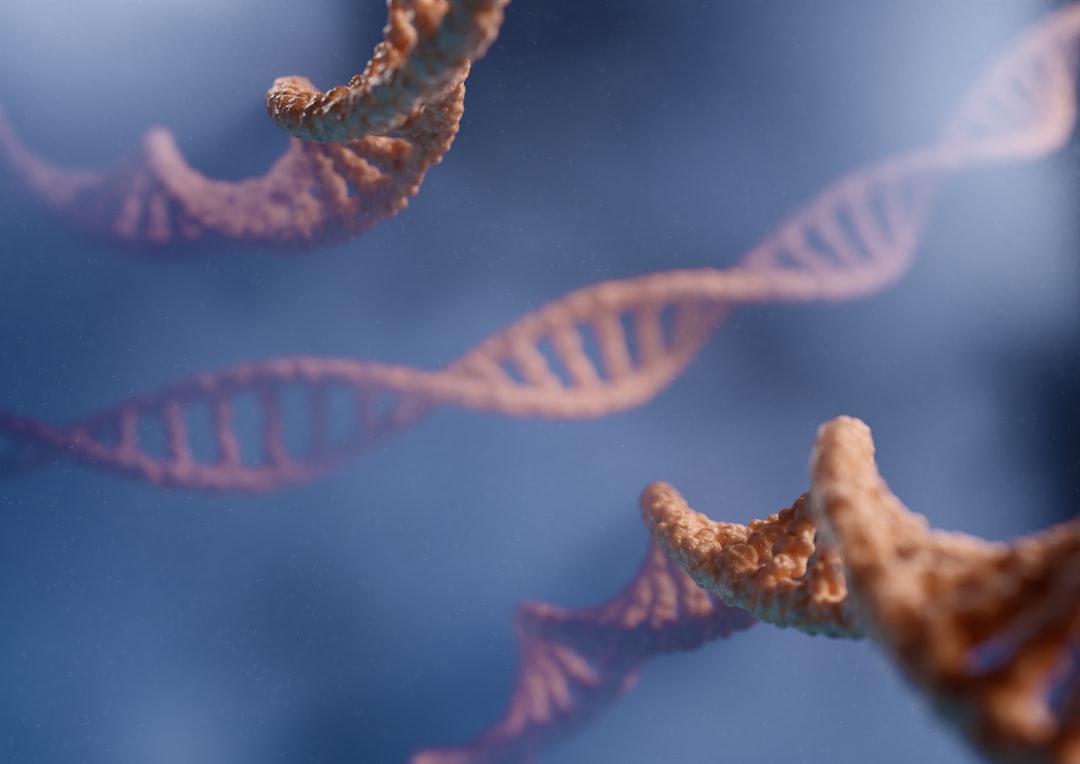
You’ve probably heard it before, splashed across documentaries, whispered in evolutionary biology discussions, maybe even seen it on a t-shirt: DNA is the blueprint of life. It’s a catchy phrase, a powerful metaphor that implies a direct, one-to-one instruction manual dictating precisely who you are, from the color of your eyes to your propensity for a certain hobby. This blueprint analogy, while useful for a simplified introduction, is fundamentally flawed. It leads you down a garden path of understanding, offering a polished, easily digestible image that masks a far more complex, dynamic, and frankly, more fascinating reality. Your DNA isn’t a static blueprint; it’s a living, breathing, interactive script that is constantly being read, reinterpreted, and even rewritten. Understanding this fallacy is crucial to truly grasping the nature of your own biology and the intricate dance of life itself.
The blueprint analogy, at its core, suggests a rigid, pre-determined plan. Think of an architect’s blueprint for a house. Every beam, every wire, every pipe is laid out with absolute precision. You can’t just decide to add an extra floor halfway through construction if the blueprint doesn’t say so. The blueprint dictates the final outcome. When you apply this to DNA, it implies that your genes are the sole determinants of your traits, and that the final product – you – is an inevitable consequence of this genetic inheritance. But life, as you experience it, is anything but static and predictable.
The Static Image of a Rigid Plan
When you envision a blueprint, you picture something fixed, something unchangeable. A document that, once drawn, remains the same until the project is complete. This is the illusion that the DNA blueprint metaphor perpetuates. You are likely to think of your genes as pre-written code, a sequence of A’s, T’s, C’s, and G’s that are set in stone from the moment of your conception. This simplistic view leads to determinism – the idea that your fate, your health, your personality, are all predetermined by your genetic inheritance. You might even find yourself thinking, “Well, my genes say I’m likely to develop X, so there’s nothing I can do about it.” This is the dangerous power of the blueprint fallacy.
The Dynamic Reality of Gene Expression
The truth is, the vast majority of your DNA doesn’t directly translate into physical traits in the way a blueprint translates into structural components. Instead, your DNA contains instructions for building and regulating the machinery of your cells. Think of it less as a blueprint for a finished house and more as a recipe book, with each recipe (gene) detailing how to make a specific ingredient (protein). But here’s the crucial difference: the kitchen (your cell) and the cook (your environment and internal state) can decide which recipes to use, how much of each ingredient to make, and even adjust the cooking process. This is gene expression. Your genes are not constantly active. They are switched on and off, upregulated and downregulated, in response to a myriad of signals. This dynamic process is what allows a single fertilized egg to develop into a dazzling array of different cell types – from a neuron to a muscle cell – each performing vastly different functions, all from the same original genetic code.
The Illusion of Direct Causation
The blueprint metaphor implies a direct causal link: Gene X directly produces Trait Y. While some traits have strong genetic underpinnings, this is far from a universal rule. For instance, your genes might predispose you to a certain height, but your actual adult height will be significantly influenced by factors like nutrition during childhood. Similarly, your genes might influence your susceptibility to certain diseases, but environmental factors, lifestyle choices, and even the health of your gut microbiome can profoundly impact whether you actually develop that disease. The blueprint analogy flattens this complex interplay, presenting a misleadingly simple cause-and-effect relationship.
While many people often refer to DNA as a blueprint for life, this analogy can be misleading. A related article that explores this concept in depth is available at Freaky Science, which discusses how DNA functions more like a set of instructions that can be interpreted in various ways rather than a rigid blueprint. To learn more about this intriguing perspective, you can read the article here: Freaky Science.
Beyond the Genes: The Unseen Architects of Your Biology
If your DNA isn’t a rigid blueprint, then what is directing the construction of you? The answer lies in a complex interplay of factors that go far beyond the mere sequence of your genes. You are not just a product of your genetic inheritance; you are a product of your environment, your experiences, and the intricate regulatory mechanisms that control how your genes are used. These unseen architects are constantly shaping and refining your biology, making you a truly unique and adaptable organism.
The Epigenetic Symphony: Tuning the Genes
One of the most profound challenges to the blueprint metaphor is the field of epigenetics. Epigenetics refers to changes in gene expression that do not involve alterations to the underlying DNA sequence. Think of it as the “notes” written on the blueprint itself, indicating when, where, and how intensely a particular section should be read or ignored. Chemical tags can be added or removed from your DNA and the proteins it’s wrapped around, effectively silencing or activating genes without changing the genetic letters themselves.
Chemical Marks: The Activating and Silencing Glyphs
Imagine your DNA as a long scroll. Epigenetic markers are like sticky notes or highlights on that scroll. DNA methylation, for example, is a process where methyl groups are attached to certain DNA bases. This often acts like a “turn off” switch for genes. Conversely, the acetylation of histones (proteins that DNA wraps around) can loosen the DNA structure, making genes more accessible and thus more likely to be “turned on.” These chemical marks are not permanent. They can be influenced by your diet, stress levels, physical activity, and exposure to environmental toxins, meaning your lifestyle choices can directly impact which of your genes are expressed.
Environmental Influences: The External Directors
This is where the blueprint metaphor truly crumbles. Your environment isn’t just the backdrop against which your genetic destiny unfolds; it actively participates in shaping your genetic expression. Stressors during pregnancy, for instance, can lead to epigenetic changes in the developing fetus, affecting their susceptibility to various health conditions later in life. Even something as seemingly simple as sunlight exposure can influence gene expression related to skin pigmentation and vitamin D production. You are not merely existing within an environment; you are in a constant dialogue with it, and your genes are listening.
The Role of the Proteome: The Building Blocks and Workers
If DNA is the instruction manual for building proteins, then the proteome is the actual collection of all the proteins present in a cell or organism at a given time. Proteins are the workhorses of life, carrying out an astonishing array of functions: they are enzymes that catalyze biochemical reactions, structural components that give cells their shape, transporters that move molecules, and signaling molecules that allow cells to communicate.
Proteins: More Than Just Bricks and Mortar
The blueprint analogy might suggest that genes directly build specific structures. However, the reality is that a single gene can be responsible for producing multiple different proteins, or even just portions of proteins that are then assembled with others. Furthermore, the function of a protein is heavily dependent on its three-dimensional shape, which can be influenced by its cellular environment and interactions with other molecules. Simply having the gene for a protein doesn’t guarantee its proper function.
Protein Interactions: The Collaborative Network
Proteins rarely work in isolation. They form incredibly intricate networks, interacting with each other in complex ways to carry out cellular processes. The expression of one gene can trigger the expression of many others, and the activity of one protein can directly influence the activity of numerous others. This is a far cry from the solitary, direct instructions implied by a blueprint. These interactions create emergent properties, where the whole is far greater than the sum of its parts.
The Microbiome: The Unseen Passengers Steering the Ship
You are not just a single organism; you are a superorganism. Within and on your body reside trillions of microorganisms, collectively known as your microbiome. This diverse community of bacteria, viruses, fungi, and other microbes plays a crucial role in your health and well-being, influencing everything from digestion and immunity to mood and even the way your genes are expressed.
Gut Feelings: The Digestive Dynamo
Your gut microbiome is particularly influential. These microbes ferment food particles that you cannot digest, produce essential vitamins (like K and some B vitamins), and help train your immune system. Disruptions to this delicate ecosystem, often caused by antibiotics or poor diet, can have far-reaching consequences for your health. The type and abundance of microbes you harbor can even influence the expression of certain genes related to metabolism and inflammation.
Beyond the Gut: A Symbiotic Relationship
The influence of the microbiome extends beyond your digestive tract. Microbes on your skin, in your lungs, and in other parts of your body also contribute to your overall health. This symbiotic relationship suggests that your biology isn’t solely dictated by your own genetic code; it’s a collaborative effort, with your microbial partners acting as indispensable collaborators.
From Static Code to Dynamic Interaction: Rethinking Gene Function
The blueprint metaphor implies that genes are static entities, their instructions unchanging. This fails to capture the dynamic nature of gene function, which is influenced by a constant flow of information and cellular context. You are not a finished product; you are a process, and your genes are integral to that ongoing process.
The Complexity of Gene Regulation: The Fine-Tuning Mechanisms
Gene regulation is the intricate process by which cells control which genes are expressed, when, and at what level. This isn’t a simple on/off switch; it’s a sophisticated system of feedback loops, control elements, and signaling pathways that ensures the right proteins are produced at the right time and place.
Promoters and Enhancers: The Volume Knobs of Gene Expression
Think of promoters as the “start” buttons for genes, but also as volume knobs. They are DNA sequences located near a gene that signal where transcription should begin. Enhancers are DNA sequences that can be located far from a gene, but when bound by specific proteins, they can significantly increase the rate of gene transcription. These regulatory elements allow for precise control over gene expression, dictating whether a gene is transcribed at a low hum or a roaring chorus.
Transcription Factors: The Orchestrators of Activity
Transcription factors are proteins that bind to specific DNA sequences, including promoters and enhancers, to regulate gene transcription. They can act as activators, initiating or enhancing gene expression, or as repressors, blocking or reducing it. These molecular orchestrators respond to a vast array of signals from within and outside the cell, effectively translating environmental cues and internal cellular states into changes in gene activity.
Alternative Splicing: One Gene, Many Proteins
The blueprint metaphor suggests a one-to-one correspondence: one gene, one protein. While this is true for some genes, it’s far from the complete picture. Alternative splicing is a mechanism where different parts of a gene’s RNA transcript can be included or excluded, leading to the production of multiple distinct proteins from a single gene.
Unpacking the Exons and Introns: The Modular Assembly
Your genes are composed of coding regions called exons and non-coding regions called introns. During transcription, the entire gene is copied into an RNA molecule. Before this RNA can be translated into a protein, the introns are removed (spliced out), and the exons are joined together. Alternative splicing allows for different combinations of exons to be included in the final messenger RNA (mRNA) molecule. This means that one gene can encode a family of related proteins with subtly different functions, further highlighting the adaptability and complexity of your genetic machinery.
Gene Duplication and Mutation: The Evolutionary Innovations
The blueprint analogy suggests a pristine, unchanging plan. However, evolution is a process of change, and your genes have been shaped by millions of years of mutation and duplication. While mutations can introduce errors, they are also the source of genetic variation and innovation.
Accidental Edits: The Randomness of Change
Mutations are random changes in the DNA sequence. While some mutations can be harmful, others can be neutral or even beneficial. These changes can lead to new traits, enabling organisms to adapt to their environments. The very existence of diversity within humanity, and indeed across all species, is a testament to the role of mutation as a driver of biological change. This is not an accidental imperfection in a blueprint; it’s the engine of evolution.
Copying and Pasting: The Genesis of New Functions
Gene duplication is another important evolutionary mechanism. When a gene is accidentally duplicated, one copy can continue to perform its original function, while the other is free to accumulate mutations and potentially evolve a new function. This process has been instrumental in the evolution of complex gene families and the development of novel biological capabilities. This is less like a blueprint and more like a craftsman who can duplicate a valuable tool and then experiment with modifying the copy to create something entirely new.
The “Nature vs. Nurture” Fallacy: A False Dichotomy
The blueprint metaphor often fuels the “nature vs. nurture” debate, implying a strict division between what is determined by your genes (“nature”) and what is shaped by your environment and experiences (“nurture”). This is a misleading oversimplification. Your genes and your environment are not opposing forces, but rather deeply intertwined elements that constantly interact to shape who you are.
Genes are Not Destiny: The Interplay is Key
The idea that your genes dictate your destiny is a direct consequence of the blueprint fallacy. If DNA is a complete and unchangeable plan, then your fate is sealed at conception. However, as you’ve seen, your genes are not destiny. They provide predispositions, tendencies, and potentials, but it is the complex interplay with your environment, your choices, and your ongoing experiences that ultimately determine your phenotype – the observable characteristics of an organism.
Environmental Triggers: The Catalysts for Genetic Expression
Environmental factors act as triggers, catalysts, and modulators of gene expression. Imagine you have a gene that predisposes you to a certain disease. That gene alone doesn’t guarantee you’ll get the disease. However, exposure to specific environmental triggers – like a particular diet, a stressful lifestyle, or certain pathogens – can “switch on” that gene or its downstream effects, increasing your risk. This is not a predetermined outcome; it’s a conditional one, influenced by the environmental context in which your genes operate.
Lifestyle Choices: Active Participants in Your Biology
Your lifestyle choices are not merely passive consequences of your genetic makeup. They are active participants in shaping your biology. Regular exercise can influence gene expression related to muscle growth and metabolism. A healthy diet can positively impact your microbiome and reduce inflammation, influencing a wide range of genetic pathways. Even your social interactions and mental state can have tangible effects on your cellular processes and gene expression. You are an active agent in your own biological story, not just a passive recipient of genetic instructions.
Many people often think of DNA as a blueprint for life, but this analogy can be misleading. A related article explores the complexities of genetic expression and how environmental factors play a significant role in shaping an organism. This perspective challenges the traditional view of DNA as a simple instruction manual. For more insights on this topic, you can read the article here. Understanding the dynamic interplay between genetics and environment is crucial for a more accurate representation of biological development.
Embracing the Complexity: A More Accurate View of Yourself
| Reasons | Explanation |
|---|---|
| Environmental Influence | DNA can be influenced by environmental factors, leading to variations in gene expression. |
| Epigenetic Changes | Epigenetic modifications can alter gene expression without changing the underlying DNA sequence. |
| Complex Interactions | Genes interact with each other and with the environment in complex ways, making it difficult to predict outcomes based solely on DNA. |
| Non-Deterministic Nature | Gene expression and traits are not solely determined by DNA, but also by stochastic processes and random events. |
Moving beyond the flawed blueprint metaphor allows you to embrace a more nuanced, accurate, and empowering understanding of yourself. You are not a rigid, pre-programmed automaton. You are a dynamic, adaptable, and ever-evolving organism, a product of a constant dialogue between your genes and your environment. This understanding has profound implications for how you view health, disease, and your own potential.
A Shift in Perspective: From Determinism to Interactionism
This shift from a deterministic, blueprint-based view to an interactionist perspective is liberating. It means that while you may have genetic predispositions, you are not powerless. You have agency. By understanding the complex interplay of factors that shape your biology, you can make informed choices to influence your health and well-being. The focus shifts from lamenting what your genes might dictate to actively engaging with the myriad factors that influence how those genes are expressed.
Empowering Health and Well-being: Taking an Active Role
If you no longer see yourself as a fixed blueprint, then you understand that your health is not solely determined by your genetic inheritance. You can actively participate in maintaining and improving your well-being through lifestyle choices, environmental management, and a conscious understanding of your own biological processes. This empowers you to take a proactive stance, rather than a passive one, in the face of potential health challenges.
The Infinite Potential of a Dynamic System
The human body is not a finished product; it’s a continuously unfolding process. Your DNA, far from being a rigid blueprint, is a dynamic and responsive system that is constantly being shaped by your experiences, your environment, and your choices. This inherent dynamism is what makes life so resilient, so adaptable, and so full of potential. You are not defined by a static set of instructions, but by the ongoing, intricate dance of life itself. This is a far more awe-inspiring and empowering truth than any blueprint could ever convey.

Your Body Knows Something You Don’t
FAQs
1. What is DNA?
DNA, or deoxyribonucleic acid, is a molecule that carries the genetic instructions for the development, functioning, growth, and reproduction of all known living organisms and many viruses.
2. Why is DNA not a blueprint?
While DNA contains genetic information, it is not a simple blueprint for an organism. Unlike a blueprint, which provides exact instructions for construction, DNA is more like a recipe that can be interpreted and modified by the cell’s machinery.
3. How does DNA function in living organisms?
DNA functions in living organisms by providing the instructions for building and maintaining an organism’s cells and tissues. It does this through a process called gene expression, where the information in DNA is used to create proteins and other molecules essential for life.
4. What are some limitations of the “DNA as a blueprint” analogy?
The “DNA as a blueprint” analogy oversimplifies the complexity of genetic information and the way it is used by living organisms. It fails to capture the dynamic and interactive nature of DNA, as well as the influence of environmental factors on gene expression.
5. How should we understand the role of DNA in living organisms?
Instead of thinking of DNA as a static blueprint, it is more accurate to understand it as a dynamic and adaptable molecule that interacts with the environment and other cellular components to influence the development and functioning of living organisms.