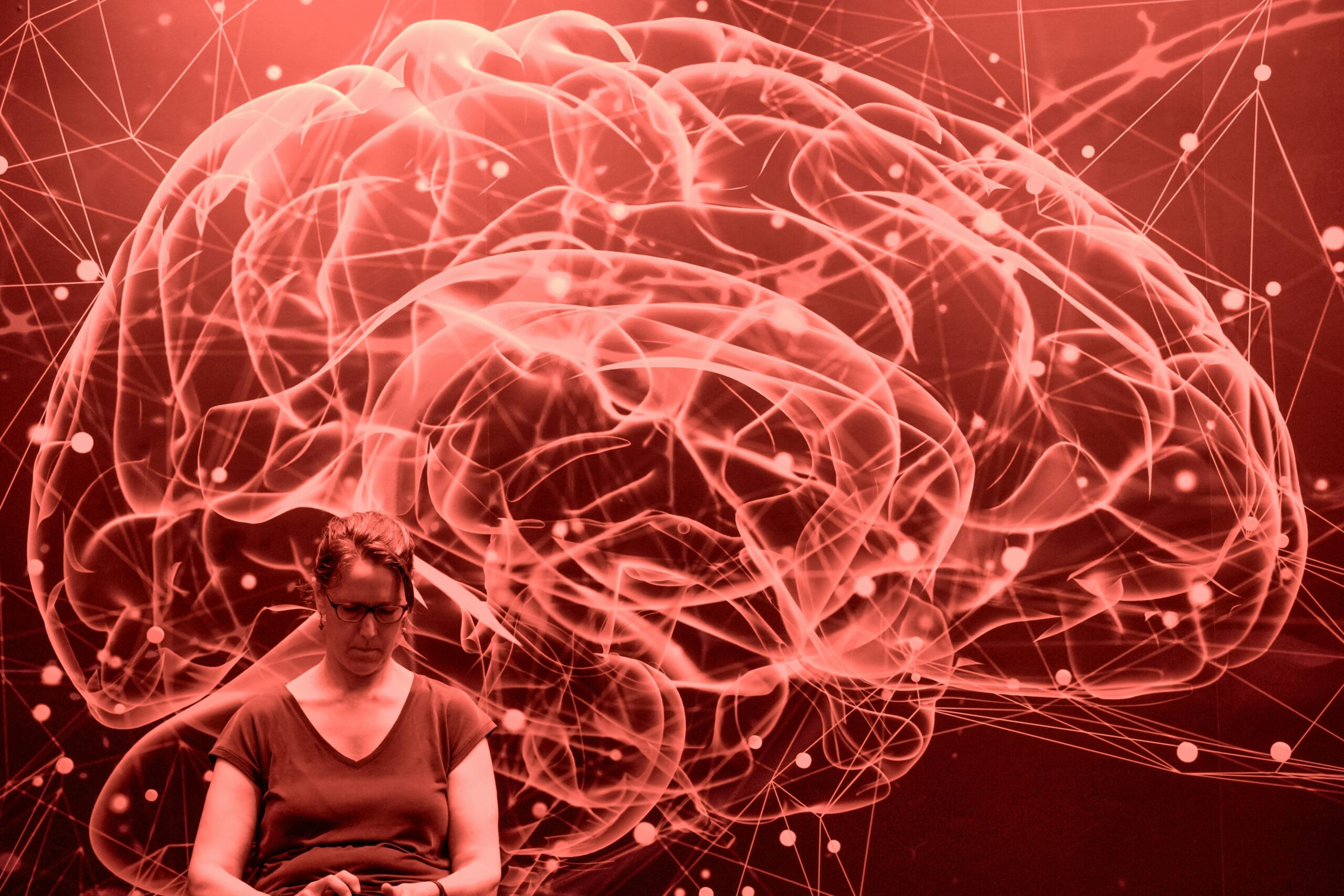
You stand at the precipice of self-awareness, a fleeting moment of “you” existing. But what orchestrates this profound experience? You might assume it’s a singular, mystical spark, but the truth you’re about to explore is far more intricate and deeply rooted in the biological marvel that is your brain. The journey into understanding consciousness isn’t just an academic pursuit; it’s a quest to unravel the very essence of your being, the foundation upon which your world is built. You’re not just alive; you are aware of being alive, and that awareness, that subjective experience, is the enigmatic frontier of neuroscience and philosophy.
Your consciousness isn’t an ethereal projection; it’s inextricably linked to the physical architecture of your brain. Imagine your brain as a vast, bustling metropolis, with billions of neurons acting as individual citizens, forging trillions of connections, or synapses, to relay information. This intricate network, constantly humming with electrical and chemical signals, is where the magic of your subjective experience takes place. You might think of your thoughts, feelings, and perceptions as abstract entities, but they are, in reality, the emergent properties of these complex neural interactions. Discovering the precise mechanisms behind this emergent property is the central challenge in understanding the brain’s role in consciousness.
Neurons: The Building Blocks of Your Experience
You’ve likely heard of neurons, but understanding their role in consciousness requires a deeper appreciation. These specialized cells are your brain’s primary communicators. Each neuron, with its unique structure of a cell body, dendrites, and axon, receives, processes, and transmits information. Dendrites act like antennae, receiving signals from other neurons, while the axon, a long projection, sends signals out to others. The space between an axon and a dendrite, the synapse, is where neurotransmitters are released, chemical messengers that bridge the gap and excite or inhibit the next neuron. You experience everything – the warmth of the sun on your skin, the melody of your favorite song, the pang of regret – through the sophisticated dance of these electrical and chemical signals propagating through your neuronal networks. This vast, interconnected web is the canvas upon which your conscious reality is painted.
The Action Potential: Your Brain’s Electrical Pulse
Consider the action potential, the fundamental unit of neuronal communication. It’s a rapid, transient electrical signal that travels down the axon. Think of it as a surge of electricity, a brief but crucial spark that allows information to be transmitted from one neuron to another. This electrochemical event is the backbone of all neural processing, from the simplest reflex to the most complex deliberative thought. Your entire sensory input, your motor commands, and your internal monologue are all built upon the coordinated firing of these action potentials across billions of neurons. The timing and patterns of these electrical pulses are critical, encoding the rich tapestry of your conscious awareness.
Neurotransmitters: The Chemical Messengers
Beyond the electrical impulses, neurotransmitters are the chemical couriers that facilitate communication at the synapse. Imagine them as tiny keys, fitting into specific locks on the receiving neuron, either opening the door for excitation or closing it for inhibition. Chemicals like dopamine, serotonin, and glutamate play crucial roles in shaping your mood, motivation, attention, and learning – all intrinsically linked to your conscious state. The delicate balance of these neurochemical messengers is vital; imbalances can lead to significant alterations in your conscious experience, highlighting their profound impact.
Neural Networks: The Symphony of Interaction
The true magic of consciousness, however, lies not just in individual neurons but in the intricate networks they form. These aren’t static connections; they are dynamic, adaptable, and constantly reconfiguring. Your brain is a masterpiece of distributed processing, meaning no single area is solely responsible for consciousness. Instead, it emerges from the synchronized activity of widespread neural assemblies. You can think of these networks as a symphony orchestra, where each instrument (neuron) plays its part, but it’s the conductor (emergent properties) and the harmonious interplay of all the sections that create the beautiful music of consciousness.
Functional Connectivity: The Flow of Information
Functional connectivity refers to the statistical interdependencies between different brain regions’ activity, often measured using fMRI or EEG. It’s about how different parts of your brain communicate and synchronize their firing patterns. When you’re engaged in a task, like solving a math problem or enjoying a conversation, specific neural networks become highly active and interconnected. You might notice increased communication between areas involved in language processing, working memory, and executive functions. This dynamic flow of information is what allows you to integrate different pieces of information into a coherent conscious experience.
Structural Connectivity: The Brain’s Wiring Diagram
Structural connectivity, on the other hand, refers to the physical pathways, the white matter tracts, that connect different brain regions. Imagine this as the actual wiring of your brain’s metropolis. These pathways are formed by bundles of axons, acting as highways for neural signals. Damage to these pathways, as seen in conditions like stroke or traumatic brain injury, can severely disrupt conscious function, demonstrating the foundational importance of this underlying infrastructure. The integrity of these structural connections directly influences how effectively information can be shared across your brain, shaping the very fabric of your awareness.
Recent discussions in the field of neuroscience have highlighted the intricate relationship between brain function and consciousness. For a deeper exploration of this topic, you can read an insightful article that delves into the latest research and theories surrounding how our brain processes thoughts and experiences. To learn more, visit this article on Freaky Science.
The Integrated Information Theory: Quantifying Your Awareness
One of the most compelling scientific theories attempting to explain consciousness is Integrated Information Theory (IIT). This framework posits that consciousness is a fundamental property of physical systems and can be quantified. IIT proposes that consciousness arises from the capacity of a system to integrate information, meaning that the system’s whole is greater than the sum of its parts. You are conscious to the extent that your brain can process information in a highly integrated and differentiated manner. This theory provides a mathematical framework for understanding how the complexity of your brain’s interconnectedness gives rise to your subjective experience.
Phi (Φ): The Measure of Consciousness
Central to IIT is the concept of Phi (Φ), a mathematical value representing the degree of integrated information a system possesses. The higher the Φ value, the more conscious the system is considered to be. This isn’t just an abstract concept; researchers are actively developing methods to measure Φ in biological systems. You can think of Φ as a unique fingerprint of your conscious state, reflecting the extent to which your brain’s various components are inextricably bound and contribute to a unified experience. This measure aims to bridge the gap between the physical brain and the subjective feeling of “being.”
Differentiation and Integration: The Duality of Experience
IIT emphasizes two key aspects: differentiation and integration. Differentiation refers to the number of distinct states a system can be in, and integration refers to how interconnected these states are. You experience a rich and varied world precisely because your brain can differentiate between countless sensory inputs, thoughts, and emotions, and then integrate them into a coherent, unified whole. If your brain were only highly differentiated but not integrated, you would experience a chaotic jumble of disconnected sensations. Conversely, if it were highly integrated but not differentiated, your experience would be monotonous and lacking in richness. The interplay between these two is crucial for the depth and breadth of your conscious awareness.
The Global Neuronal Workspace Theory: Consciousness as a Spotlight

Another influential theory, the Global Neuronal Workspace Theory (GNWT), offers a different perspective, likening consciousness to a spotlight that illuminates information for widespread access throughout the brain. You become consciously aware of something when that information is broadcast widely across your neural networks, becoming available for various cognitive processes like memory, decision-making, and planning. This theory suggests that unconscious processing occurs in specialized modules, but only information that gains access to the “global workspace” enters your conscious awareness.
Broadcasting Information: The Cognitive Spotlight
According to GNWT, certain brain regions, particularly in the prefrontal cortex and parietal lobes, act as the central hub for this information broadcasting. When you attend to something, that information is amplified and shared across these networks, making it accessible to the rest of your brain. Think of it as the difference between a whispered secret in a small room (unconscious processing) and a public announcement in a town square (conscious processing). Your conscious awareness is essentially the content that has been publicly announced within your brain’s internal communication system.
Attentional Mechanisms: The Gatekeepers of Awareness
Attention plays a critical role in this process. Your attentional mechanisms act as filters and gatekeepers, determining what information gets selected to enter the global workspace and thus become conscious. You can consciously direct your attention, choosing to focus on your surroundings or an internal thought. This selective attention allows your brain to prioritize information processing, preventing cognitive overload and ensuring that only the most relevant stimuli or thoughts enter your conscious awareness.
The Role of Prefrontal Cortex: Executive Control and Awareness
The prefrontal cortex, often associated with higher-level cognitive functions like planning, decision-making, and working memory, is believed to be a key player in GNWT. This region’s ability to integrate information from various sources and orchestrate cognitive processes makes it a prime candidate for the seat of the global workspace. Your ability to reflect on your experiences, to infer intentions, and to engage in complex problem-solving all rely heavily on the executive functions managed by your prefrontal cortex, which in turn shapes the nature of your conscious awareness.
The Predictive Processing Framework: Your Brain as a Prediction Machine

The predictive processing framework offers a novel and powerful way to understand how your brain generates your conscious experience. It proposes that your brain is constantly generating predictions about the sensory information it expects to receive, and consciousness arises from the interplay between these predictions and the actual sensory input. You aren’t passively receiving information; you are actively constructing your reality based on your brain’s ongoing efforts to minimize prediction errors.
Prediction Errors: The Drivers of Learning and Awareness
When the sensory information you receive doesn’t match your brain’s predictions, a “prediction error” occurs. These errors are crucial; they signal that your internal model of the world needs updating. Your brain then adjusts its predictions to better align with reality. This continuous cycle of prediction, sensation, and error correction is fundamental to your learning and your evolving conscious experience. Your perception of a solid object, for instance, arises from your brain’s successful predictions about its stability and impenetrability, refined by subtle prediction errors that keep your model accurate.
The Hierarchy of Predictions: From Lower to Higher Brain Areas
This predictive process operates in a hierarchical manner, from lower-level sensory areas to higher-level cognitive areas. Lower brain regions might predict simple features like edges and colors, while higher regions might predict more complex patterns, meanings, and even abstract concepts. This layered approach allows your brain to build increasingly sophisticated models of the world, leading to the rich and nuanced conscious experience you possess. Your experience of recognizing a familiar face, for example, involves a cascade of predictions and error corrections, starting with basic facial features and culminating in the recognition of an individual’s identity and emotional state.
Active Inference: Shaping Your Experience Through Action
The concept of active inference extends predictive processing by suggesting that your actions are also driven by your brain’s desire to minimize prediction errors. You don’t just react to your environment; you proactively shape it to confirm your expectations. If you predict you’ll feel cold, you might put on a sweater. This active engagement with the world is crucial for the stability and coherence of your conscious experience. Your very ability to interact with your environment in a meaningful way is a testament to your brain’s predictive capabilities and its drive to ensure that the sensory input it receives aligns with its internal models.
Recent studies in neuroscience have shed light on the intricate relationship between brain activity and consciousness, revealing how our thoughts and perceptions are intricately woven into the fabric of neural processes. For a deeper understanding of this fascinating topic, you can explore an insightful article that discusses the latest findings in the field. This article delves into the mechanisms of consciousness and its implications for our understanding of the mind. To read more, visit this link.
The Enigma of Qualia: The Subjective Feel of Experience
| Metrics | Data |
|---|---|
| Brain Size | Approximately 1.4 kilograms |
| Consciousness | Awareness of self and the environment |
| Neural Connections | Average of 100 trillion synapses |
| Brain Waves | Alpha, Beta, Theta, Delta, and Gamma |
| Neuroplasticity | Ability of the brain to reorganize and adapt |
Despite the impressive progress in understanding the neural correlates of consciousness, a persistent challenge remains: the “hard problem” of consciousness, which concerns the subjective, qualitative aspect of experience – what philosophers call qualia. You can describe the physical processes involved in seeing the color red, but you can’t fully convey the subjective “redness” to someone who has never experienced it. This irreducibly subjective nature of conscious experience is what makes it so profoundly mysterious.
The Hard Problem: Bridging the Explanatory Gap
The explanatory gap refers to the difficulty in explaining how physical processes in the brain can give rise to subjective experiences. While neuroscience can identify the neural activity associated with seeing red, it struggles to explain why that particular neural pattern should feel like “red” and not something else, or nothing at all. You can understand the biochemistry of taste, but the sweet sensation of chocolate is something more than just chemical reactions. This gap highlights the fundamental challenge of connecting the objective, physical world with the subjective, phenomenal world you inhabit.
Subjectivity: The Unseen Landscape
Your consciousness is inherently subjective. It is your unique perspective, your point of view. Even if two individuals are looking at the same object under identical conditions, their subjective experience of that object might differ due to their past experiences, memories, and emotional states. This individuality is what makes each of you a distinct conscious being. You don’t just process information; you experience it, and that experience is intrinsically tied to your unique biological makeup and personal history.
Emergence: Does Consciousness Arise from Complexity?
Many theories, including IIT and GNWT, suggest that consciousness is an emergent property of complex neural systems. This means that consciousness isn’t present in individual neurons but arises only when these neurons are organized and interact in specific, complex ways. You can’t find consciousness in a single atom, but you can experience it as a complex organism. The question is whether this emergence is fundamentally predictable from understanding the underlying components, or if there’s something truly novel and irreducible that appears at the level of the whole system.
The Unity of Consciousness: A Coherent Self
Despite the vast and distributed nature of neural processing, your conscious experience feels remarkably unified. You don’t experience a separate visual consciousness, an auditory consciousness, and a thought consciousness. Instead, these are integrated into a single, coherent sense of self and an integrated perception of the world. This unity of consciousness is one of its most striking features and a testament to the sophisticated integration capabilities of your brain. How your brain achieves this seamless integration remains a central question in understanding your conscious experience.

Why Paper Cuts Hurt (It’s Not What You Think)
FAQs
What is the relationship between the brain and consciousness?
The brain is the physical organ that enables consciousness. It processes sensory information and allows us to be aware of our surroundings, make decisions, and experience emotions.
How does the brain create consciousness?
The exact mechanisms by which the brain creates consciousness are still not fully understood. However, it is believed that consciousness arises from the complex interactions of neurons and neural networks in the brain.
Can consciousness exist without the brain?
There is currently no scientific evidence to suggest that consciousness can exist without the brain. Consciousness is closely tied to brain function, and damage to the brain can significantly alter or impair consciousness.
What are some theories about the nature of consciousness?
There are various theories about the nature of consciousness, including the integrated information theory, global workspace theory, and higher-order theories. These theories attempt to explain how consciousness arises from the physical processes of the brain.
How does the study of the brain and consciousness impact society?
Studying the brain and consciousness has implications for various fields, including neuroscience, psychology, philosophy, and medicine. Understanding the relationship between the brain and consciousness can lead to advancements in treating neurological disorders, improving mental health care, and enhancing our understanding of human cognition and behavior.